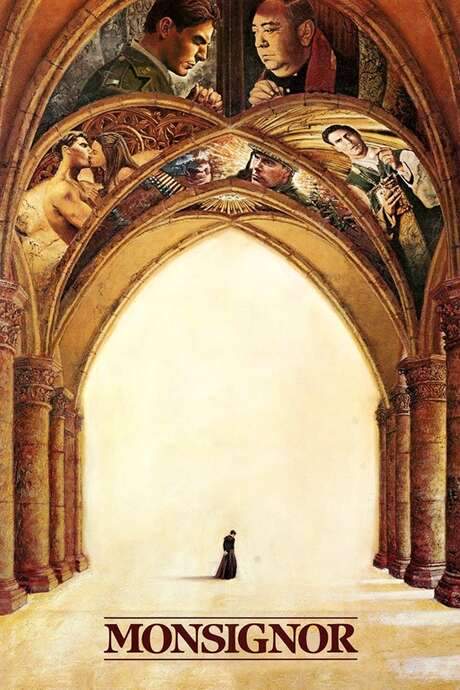
What Is Monsignor About?
The premise of Monsignor in 310 words, with nothing given away. The full story follows below.
In the midst of World War II, the Vatican finds itself grappling with an unexpected scarcity: money. The ancient walls of the Holy See, normally insulated from the chaos outside, echo with whispered concerns about how to keep the institution afloat while the world burns. Beneath the marble arches, a quiet war of bureaucracy and survival unfolds, setting a tone that is simultaneously reverent and restless, where every ledger entry feels as consequential as a battlefield order.
Father John Flaherty arrives as a young American priest whose sharp mind for numbers seems almost prophetic in these desperate times. Assigned as a chaplain, he quickly discovers that his talent for finance is a rare asset the hierarchy cannot ignore. Practical and earnest, he is drawn into a delicate balancing act—serving his faith, obeying his vows, and confronting the moral gray zones that emerge when the church’s very existence hangs in the balance.
The film’s emotional core sharpens with the introduction of a French nun, Clara, whose own crisis of faith mirrors Flaherty’s internal turmoil. Their connection, forged in the hushed corridors of the Vatican, hints at a love that must navigate the strict boundaries of religious life. Their tentative bond adds a human heartbeat to the larger, institutional struggle, suggesting that personal desire can become both a refuge and a source of conflict in an era defined by sacrifice.
“Monsignor” moves with a measured, almost lyrical pace, blending the hushed reverence of sacred spaces with the urgent, gritty undercurrents of wartime survival. The atmosphere is thick with ethical ambiguity, inviting the audience to contemplate how far one might stretch devotion when faced with existential threats. As the narrative unfolds, the interplay of faith, ambition, and forbidden affection creates an unsettling yet compelling portrait of a man striving to reconcile his spiritual calling with the relentless demands of a world at war.
What Happens in Monsignor?
The complete story of Monsignor, from the first scene to the last, in 621 words (about 3 minutes). Spoilers throughout.
Spoilers ahead
During World War II, the Vatican faces financial strain and looks for creative ways to keep its operations running. The mission falls to a young American priest with a rare talent for numbers: Father John Flaherty, [Christopher Reeve]. He enters the scene with a practical mindset and a willingness to bend rules if the end justifies the means. His first assignment, as a military chaplain, brings him to a dying soldier named Pvt. Joe Musso, [Joe Pantoliano], and to a moment that will redefine his path. When Musso dies, Flaherty witnesses a brutal turn of the war in which he steps into the dead man’s shoes as a machine gunner to repel a German assault, driving him out of combat but into a far more intricate fight—one rooted in finance, faith, and faction inside the Vatican.
Back at the Holy See, Flaherty’s sharp mind for figures becomes a resource the hierarchy can’t ignore. He quickly proves his ability to marshal funds and structure operations, but his methods are as murky as they are effective. To raise money for the church, he moves into a black market operation with organized crime, overseeing a vast cigarette-selling scheme that yields handsome percentages. This audacious venture sits at the heart of a larger question: can the church survive the war—and even grow—through any means, provided the result serves a greater good? Flaherty’s calculus is not just about money; it also pulls him into a dangerous emotional affair with Clara, a young nun grappling with a crisis of faith. Clara, [Geneviève Bujold], becomes entangled with his charisma and resolve, even as his true identity remains hidden from her.
The affair comes under scrutiny during a papal ceremony when Clara glimpses Flaherty in his clerical robes. The moment shatters her trust and tests the limits of forgiveness, casting a long shadow over Flaherty’s personal and professional ambitions. Yet his financial success earns him favor among some church superiors who view his aggressive methods as a necessary engine for a church under siege. As Flaherty rises from monsignor to cardinal, the reward for his audacity seems almost tangible, the kind of ascent that can only occur in times of crisis when the old rules are bent to fit new realities. The Vatican’s appetite for money and influence grows as fast as the risks it runs, and Flaherty becomes a symbol of that tension—the man who can translate numerical precision into spiritual leverage.
But the very engines that propelled his rise—risk, improvisation, and a willingness to push boundaries—also sow the seeds of catastrophe. A poorly conceived stock investment devastates the Vatican’s coffers, exposing the fragility of unchecked ambition and the cost of cutting corners. In the aftermath, Flaherty must confront the consequences of his decisions, facing the loss of trust, the unraveling of relationships, and the realization that the line between faith and folly can blur at the speed of a ledger. The story culminates in a stark reckoning: the same hands that once built a financial lifeline for the church must now pay the price for deeds that crossed ethical lines, leaving questions about loyalty, power, and what it means to serve a higher purpose.
The narrative threads through a cast of vivid figures, from the stern cardinalate to the bustling corridors of the Vatican, each contributing to a meditation on integrity in times of war and scarcity. The tension between devotion and expediency is palpable, as is the sense that even well-intentioned actions can lead to unintended consequences. Through Flaherty’s journey, the film examines how financial necessity can collide with spiritual duty, and how romance, ambition, and moral compromise can intersect in ways that redefine what it means to be a priest, a lover, and a leader.
Monsignor Timeline: Every Key Event in Order
12 key events in the order they happen, from “Vatican recruitment during WWII” to “Moral tension of wartime pragmatism”. 12 events name a place, across 4 locations.
- 1
Vatican recruitment during WWII
With World War II straining the Vatican's finances, Father John Flaherty, an American priest with exceptional accounting skills, is sent to assist. He has already broken the rules by serving as a military chaplain, but his talent for numbers makes him a valuable asset to the Church's finances. The assignment places him at the crossroads of war and piety as he arrives in Vatican City.
When:World War II era Where:Vatican City
- 2
First assignment as military chaplain
Flaherty's first assignment after ordination is serving as a military chaplain on the front. He tends to dying Private Musso, providing spiritual comfort as well as practical care. This frontline duty shows his unusual blend of faith and battlefield realism.
When:Early WWII Where:Battlefield
- 3
Takes Musso's position as machine gunner
After Musso dies, Flaherty takes his dead comrade's place as a machine gunner. He helps repel a German advance and destroys a squad, displaying a ruthless efficiency in combat. The act marks his break from a conventional clerical role and foreshadows the moral compromises to come.
When:During the same battle Where:Battlefield
- 4
Relieved to return to the Vatican
Relieved from frontline duty, Flaherty is sent back to the Vatican with his financial acumen in tow. He becomes a key figure in wartime fundraising and financial planning. This shift highlights how his talents are valued even as his methods stay morally ambiguous.
When:Post-frontline Where:Vatican City
- 5
Black market scheme for church funds
To raise funds for the church, Flaherty enters a shadowy scheme by partnering with the Mafia to smuggle and sell cigarettes for a percentage. He rationalizes the risk as a necessary evil to support the Vatican, blurring ethical lines. The venture cements his reputation as a maverick financier within the Church.
When:Wartime fundraising period Where:Vatican / Rome
- 6
Romantic affair with Clara
Flaherty develops a romantic relationship with Clara, a young nun, while keeping his true identity concealed. Their affair complicates his double life, pulling him between faith, desire, and ambition. The relationship tests his conscience as the war rages around them.
When:During fundraising period Where:Vatican City
- 7
Clara discovers his robes
During a papal ceremony, Clara catches sight of Flaherty in clerical robes, shattering her trust and faith in him. The revelation exposes the fragility of his cover and the personal cost of his deception. The event strains their bond and the integrity of his role in the Church.
When:Papacy ceremony scene Where:Vatican City
- 8
Rise to monsignor and cardinal
Despite moral compromises, Flaherty's fundraising success propels him up the hierarchy, eventually reaching monsignor and then cardinal. His rise demonstrates how financial influence can outpace ethical concerns within the Vatican. The leadership begins to depend on his financial acumen.
When:Following successful fundraising Where:Vatican City
- 9
Ill-advised stock investment costs millions
An ill-advised stock investment costs the Vatican millions, revealing the risks of mixing high finance with religious authority. The loss triggers scrutiny of his methods and prompts questions about accountability. Flaherty must confront the consequences of his gambles.
When:During tenure Where:Vatican City
- 10
Paying the price for his deeds
Facing the fallout, Flaherty pays the price for his deeds as superiors demand accountability and consequences for his actions. The church cannot shield him from responsibility, and his schemes come under examination. His fall from grace marks a turning point in his career and in Vatican finances.
When:After stock loss Where:Vatican City
- 11
Aftermath and reputation
The aftermath reshapes the Vatican's finances and Flaherty's reputation; he remains a controversial figure whose complex motives linger. The narrative suggests that survival during wartime sometimes requires questionable choices. The price paid serves as a cautionary note about power and pragmatism.
When:Aftermath Where:Vatican City
- 12
Moral tension of wartime pragmatism
Throughout the tale, the tension between moral codes and pragmatic needs during war is evident. Flaherty's numbers-driven approach helps the Church endure, even as it exacts an ethical toll. The story leaves the audience with a nuanced view of ambition, faith, and consequence.
When:Throughout Where:Various
Who Are the Main Characters in Monsignor?
6 characters, among them Father John Flaherty (Christopher Reeve), Clara (Geneviève Bujold) and Pvt. Joe Musso (Joe Pantoliano): who each one is and the part they play in the story. Every profile links to the actor’s page.
-

Father John Flaherty (Christopher Reeve)
Played by Christopher Reeve
A young American priest with a sharp head for numbers, Flaherty is sent to the Vatican for his accounting skills. He navigates wartime crises by bending rules, serving as a military chaplain and later leveraging illicit channels to raise funds. His charm and ambition propel him up the church ladder, but his deception strains relationships, especially with Clara.
- 💼 Ambitious
- ⚖️ Moral conflict
-

Clara (Geneviève Bujold)
Played by Geneviève Bujold
A young nun facing a crisis of faith, Clara becomes entangled with Flaherty. Their affair deepens as secrecy grows, and her trust is broken when she discovers his true role. Her character embodies faith tested by desire and concealment.
- 💞 Forbidden Love
- 🕊️ Faith under Strain
-

Pvt. Joe Musso (Joe Pantoliano)
Played by Joe Pantoliano
A dying soldier whom Flaherty tends to; his fate triggers Flaherty to assume Musso’s position. His presence accelerates Flaherty’s immersion in wartime violence and the consequences of his choices. Musso’s martyr-like moment catalyzes the priest’s moral descent.
- 🪖 War
- 💀 Tragedy
-
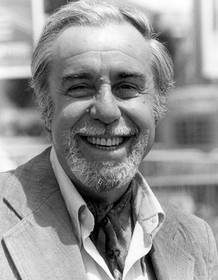
Cardinal Santoni (Fernando Rey)
Played by Fernando Rey
A powerful Vatican cardinal who oversees finances and policy, Santoni recognizes Flaherty’s talent while navigating the dangerous politics of wartime Rome. He views fundraising as a necessary tool, balancing prudence with opportunity. His authority underscores the institutional pressures behind Flaherty’s rise.
- 🏛️ Authority
- 💼 Finance
-
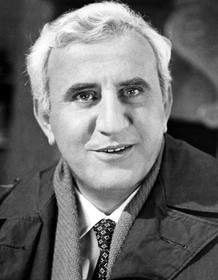
Cardinal Vinci (Adolfo Celi)
Played by Adolfo Celi
A Vatican cardinal who embodies caution and scrutiny, Vinci challenges Flaherty’s methods and tests their legality and ethics. He represents the conservative faction within the hierarchy, wary of reckless risk. His presence heightens the tension between innovative finance and canonical propriety.
- 🏛️ Intrigue
- 💰 Money
- TP
The Pope (Leonardo Cimino)
Played by Leonardo Cimino
The Pope stands at the spiritual apex, presiding over ceremonies and weighing the consequences of the Vatican’s financial gambits. He embodies authority, faith, and the ultimate responsibility for church welfare. His role anchors the drama as Flaherty’s actions ripple through the highest levels of the church.
- 👑 Leadership
- 🕊️ Spirituality
Where and When Is Monsignor Set?
Monsignor is set in Vatican City and Rome (World War II era (1940s)). Here is why the time and place matter to the story.
When
World War II era (1940s)
The events take place against the backdrop of the 1940s wartime Europe. The Vatican’s finances are strained by the war, pushing leaders to make high-stakes decisions. Wartime politics and the urgency to fund the church’s operations drive much of the drama and power dynamics in the story.
Where
Vatican City, Rome
Set in Vatican City during World War II, the narrative unfolds amid papal ceremonies and wartime financial strain. The Vatican is portrayed as a fortress of faith facing political pressure and scarce resources. The surrounding Rome environment and the Church’s assets appear as key factors shaping the plot as Flaherty navigates both sacred duties and secular schemes.
- 🏛️ Historical
- 🕊️ Religious
What Are the Themes of Monsignor?
4 ideas the story keeps returning to, among them Morality, Corruption and Romance.
-
01
Morality
The film centers on ethical conflict as Father Flaherty uses questionable means to support the Church. He justifies theft from the Mafia and risky financial gambles, arguing that ends justify means. His actions blur the lines between priestly duties, personal ambition, and institutional survival.
-
02
Corruption
Money and fundraising propel the plot, from illicit cigarette deals to high-stakes investments. Flaherty’s methods tempt others in the Vatican to bend rules for financial gain, testing loyalty and faith. The consequences of financial missteps threaten the church’s stability.
-
03
Romance
Flaherty’s affair with Clara exposes the personal costs of secrecy and desire. Clara’s trust is shattered when she discovers his true identity, highlighting the moral toll of concealment. The romance complicates decisions and accelerates the unraveling of Flaherty’s carefully constructed facade.
-
04
Duty
Duty to the Church clashes with personal gain, forcing Flaherty to weigh vows against ambition. The Pope and Cardinals must decide how far they will go to preserve the institution during wartime. The story probes whether fidelity to faith can coexist with pragmatic leadership.
What Kind of Film Is Monsignor?
Dark in tone, with steady pacing and a moderate story, going by the plot summary.
- Tone
- Dark
- Pacing
- Steady
- Story
- Moderate
- Intensity
- High
- Ending
- Bittersweet
A tense and morally fraught drama that follows a priest's descent into crime and forbidden love, creating a heavy atmosphere of guilt, betrayal, and spiritual corrosion.
- moral conflict
- betrayal
- guilty
- tense
- oppressive
- tragic
- catholic church
- black market
- corruption
- faith crisis
Content notes: war violence, murder, sexual content, religious crisis, betrayal.
Where to Watch Monsignor
. US availability and prices from JustWatch.
Streaming availability in the US, powered by