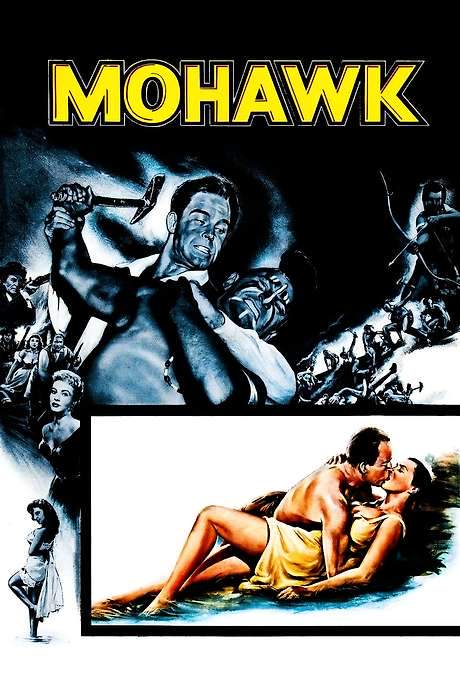
Mohawk 1956

Directed by

Kurt Neumann
Made by

Edward L. Alperson Productions
Where to Watch Mohawk
See current US streaming, rental, and purchase options for Mohawk (1956) via JustWatch.

Best Westerns Ever Amazon Channel
SD
FlixFling
SD
fuboTV
HD
MGM Plus
HD
MGM Plus Roku Premium Channel
HD
MGM+ Amazon Channel
SD
Philo
HD
FlixHouse
HD
Hoopla
SD
Cineverse
HD
DistroTV
HD
Mometu
HD
Plex
HD
Plex Channel
HD
Tubi TV
SD
Xumo Play
HD
Amazon Video
SD Streaming availability powered by 
Mohawk Plot Summary
Read the complete plot summary and ending explained for Mohawk (1956). From turning points to emotional moments, uncover what really happened and why it matters.
In late 18th-century upstate New York, Cynthia Stanhope, Lori Nelson, a society lady from Boston, travels with her Aunt Agatha, Barbara Jo Allen, to Fort Alden to surprise her fiancé, the artist Jonathan Adams, Scott Brady. Adams is away at the fort painting the local barmaid Greta Jones, Allison Hayes, with whom he shares more than a professional relationship. The fort sits at the edge of a tense frontier, where old resentments simmer beneath the surface of white settlement and Native presence.
A descendant of the first white family in the Mohawk Valley, Butler, John Hoyt, despises both the white settlers in “his” valley and the local Indians. He seeks out the Iroquois chief Kowanen, Ted de Corsia, to warn him about a party of armed white settlers. Kowanen shows little concern, but his teenage son Keoga, Tommy Cook, and the brave Rokhawah, Neville Brand, feel differently and hatch a plan to raid the fort to seize the settlers’ muskets. With help from Keoga’s sister Onida, Rita Gam, they slip into the fort through a tunnel dug by the garrison, but as they are leaving with the muskets they are discovered and several are killed. Onida is trapped inside the fort and is later found by Adams hiding in his quarters.
Adams helps her escape in his wagon the next morning, and as he escorts her back toward her people, a quiet, growing attraction develops between them. At the village, the unarmed Adams defeats knife-wielding Rokhawah in a tense exchange, earning the respect of Kowanen and the admiration of Keoga. Adams also offers to paint Kowanen’s portrait to show the whites a glimpse of how the Indians live, a gesture meant to bridge misunderstanding through art and empathy.
When Adams fails to return to the fort by sunset, as was required of all settlers, Butler urges Captain Langley, John Hudson, to attack the fort, but Langley refuses the rash move. After further agitation by Butler, Langley travels to the village and explains to Adams and Kowanen that Butler has stoked the conflict. Kowanen, seeking a path to peace, proposes that Keoga accompany Langley and Adams back to the fort as a sign of goodwill.
Langley returns to the fort with Adams and Keoga following later in the wagon. En route they are ambushed by Butler, who shoots and kills Keoga, leaving Adams stunned by the loss. Adams does not see who fired the shot. He retrieves Keoga’s body and returns it to his tribe, while Kowanen contemplates the possibility of renewed war. At Rokhawah’s suggestion, they even contemplate burning Adams at the stake, but Onida intervenes, helping him escape and killing Rokhawah in the process.
Adams finally reaches the fort, with the Indians in close pursuit. As the settlers retreat, the Indians burn homes and crops, escalating the sense that war might erupt at any moment. A troop is sent for reinforcements, and Butler makes a last attempt to slip back into the fort, but Adams confronts him and exposes his role in fanning the flames of violence. In the ensuing assault, Butler is cast out of the besieged fort and is killed by an arrow in his back when he pleads to be let back inside. After a series of fierce clashes, the Indians break the defenses, but reinforcements arrive just in time to prevent a complete catastrophe.
In the aftermath, Adams convinces Kowanen that Butler was responsible for inciting the war, and a fragile truce is declared. Cynthia eventually heads back to Boston with the paintings, while Adams stays behind to continue his work and his life with Onida, choosing a future that begins to heal decades of mistrust through art, courage, and reluctant reconciliation.
Mohawk Timeline
Follow the complete movie timeline of Mohawk (1956) with every major event in chronological order. Great for understanding complex plots and story progression.
Cynthia and Aunt Agatha arrive at Fort Alden to surprise Adams
In late 18th-century upstate New York, Cynthia Stanhope travels with her Aunt Agatha to Fort Alden to surprise her fiancé, the artist Jonathon Adams. They arrive to find Adams away from the fort, busy painting Greta Jones, a local barmaid with whom he has a more-than-professional relationship.
Butler warns Kowanen about the armed settlers' party
Butler, heir of the valley's earliest white settlers, despises white settlers and the Indians alike. He goes to Iroquois chef Kowanen to warn him about a party of armed white settlers heading toward the area. Kowanen remains unconcerned, but his teenage son Keoga and the warrior Rokhawah feel differently and plot a raid.
Keoga and Rokhawah plot a raid with Onida's help
With Onida's help, Keoga and Rokhawah plan to steal muskets from the fort. They enter the fort through a tunnel built by the garrison, but as they are leaving with the muskets, they are discovered and several attackers are killed.
Onida is trapped; Adams helps her escape
Onida is trapped inside the fort and is later discovered by Adams hiding in his quarters. He helps her escape in his wagon the next morning, and while escorting her back to her people, he begins to feel a romantic pull toward her.
Adams defeats Rokhawah and earns trust
In the village, Adams defeats knife-wielding Rokhawah, earning Kowanen's respect and Keoga's admiration. Adams also offers to paint the chief's portrait to show the whites how the Indians live.
Langley urged to attack; initial reluctance
Butler tries to incite Captain Langley to attack the fort; Langley initially refuses. After more agitation by Butler, Langley goes to the village and explains the situation to Adams and Kowanen.
Kowanen seeks peace; Keoga accompanies Langley and Adams back to the fort
Kowanen, seeking peace with the whites, offers to have his son Keoga accompany Langley and Adams back to the fort as a sign of good faith. This gesture is meant to show the whites that the Indians wish to avoid conflict.
Ambush on the road; Keoga is killed; Adams retrieves his body
Langley returns to the fort with Adams and Keoga following later in a wagon. Butler ambushes them and shoots Keoga. Adams takes Keoga's body back to his tribe, and Kowanen contemplates war.
Rokhawah's plan to burn Adams; Onida helps him escape
Rokhawah, at Rokhawah's suggestion, intends to burn Adams at the stake. Onida helps him escape, killing Rokhawah in the process.
Fort siege begins; Indians burn homes and crops
Adams reaches the fort as the Indians close in and the settlers retreat to safety. The Indians burn homes and crops in retaliation. Butler tries to leave the fort as well.
Adams confronts Butler; Butler killed
Adams confronts Butler and exposes his knowledge of the murder that sparked the war. As the siege continues, Butler is cast out of the fort and killed by an arrow in his back.
Indians breach the fort; reinforcements arrive
The Indians attack, and after several assaults they begin to breach the fort. Just in time, reinforcements arrive to turn the tide and drive them back.
Adams convinces Kowanen; a truce is declared
Adams convinces Kowanen that Butler was responsible for inciting the war. With the threat neutralized, a truce is declared and hostilities cease.
Cynthia departs for Boston; Adams stays with Onida
Cynthia returns to Boston with the paintings, while Adams remains behind to be with Onida. The two couples part ways as peace settles over the valley.
A fragile peace settles over the Mohawk Valley
With the truce in place and Adams choosing a life with Onida, the valley moves toward a fragile peace. The frontier tension eases as the fort stands as a symbol of a hard-won coexistence.
Mohawk Characters
Explore all characters from Mohawk (1956). Get detailed profiles with their roles, arcs, and key relationships explained.
Jonathan Adams (Scott Brady)
A fort painter and cautious mediator who earns the Mohawk's respect after a courageous confrontation. He seeks peaceful resolutions and forms a romantic connection with Onida, navigating loyalty to both his people and the Mohawk.
Cynthia Stanhope (Lori Nelson)
A Boston society lady visiting Fort Alden, whose presence underscores the clash between refinement and frontier violence. She accompanies Aunt Agatha and ultimately leaves with Adams' paintings.
Aunt Agatha (Barbara Jo Allen)
Cynthia's aunt whose stern, protective stance reflects settler anxieties amid frontier tensions.
Onida (Rita Gam)
A Mohawk woman who guides Adams through cross-cultural spaces and assists in his escape, becoming a pivotal bridge between communities—and a romantic thread for Adams.
Kowanen (Ted de Corsia)
Mohawk chief torn between peace with settlers and his son's militant impulses. He weighs war against diplomacy and ultimately negotiates a possible truce through Adams' actions.
Keoga (Tommy Cook)
Kowanen's teenage son who plots to seize muskets with Rokhawah, embodying the younger generation's resistance to settler encroachment.
Butler (John Hoyt)
The settler antagonist whose manipulative tactics ignite fear and escalate tensions, driving the fort's siege and the ensuing tragedy.
Captain Langley (John Hudson)
Fort captain who resists sensationalism, attempts to balance force with restraint, and ultimately guides the fort through the siege.
Mohawk Settings
Learn where and when Mohawk (1956) takes place. Explore the film’s settings, era, and how they shape the narrative.
Time period
Late 18th century
The narrative unfolds at a frontier outpost amid colonial expansion and frontier conflict. Tensions between settlers and the Mohawk are inflamed by leaders who seek peace and those who push for retaliation. The era's social dynamics provide a backdrop for cross-cultural encounters, propaganda, and escalating violence.
Location
Fort Alden, Mohawk Valley, upstate New York
A frontier fort in the Mohawk Valley of upstate New York during the late 18th century. The fort is a hub for white settlers and soldiers, adjacent to Mohawk villages and a landscape ripe for raids and tense diplomacy. The setting blends fortified walls, river corridors, and the pressure of encroaching settlement on Indigenous lands.
Mohawk Themes
Discover the main themes in Mohawk (1956). Analyze the deeper meanings, emotional layers, and social commentary behind the film.
🕊️
Peace and Trust
Adams pursues dialogue and a painting-based diplomacy to bridge cultures. The trust between Adams and Kowanen solidifies when Kowanen sends his son as a gesture of goodwill, signaling a possible peace.
⚔️
Incitement and War
Butler manipulates fear and prejudice to spark conflict, driving the siege and the losses that follow. The plot shows how political scheming can transform a frontier dispute into all-out war.
❤️
Cross-Cultural Love
Adams' relationship with Onida introduces a personal bond across cultural divides. The romance adds emotional stakes to the conflict and influences decisions during the siege.

Coming soon on iOS and Android
The Plot Explained Mobile App
From blockbusters to hidden gems — dive into movie stories anytime, anywhere. Save your favorites, discover plots faster, and never miss a twist again.
Sign up to be the first to know when we launch. Your email stays private — always.
Explore the mobile appMohawk Spoiler-Free Summary
Discover the spoiler-free summary of Mohawk (1956). Get a concise overview without any spoilers.
The film opens on a rugged, late‑18th‑century outpost perched on the edge of the Mohawk Valley, where the pine‑scented air is thick with the uneasy mix of military drums and the distant echo of tribal drums. This remote frontier settlement is caught between the steady push of colonial ambition and the enduring presence of the Iroquois peoples who have called the land home for generations. The atmosphere is simultaneously breathtaking and fraught, a place where the beauty of untamed wilderness is shadowed by the ever‑present possibility of conflict.
At the heart of the story is Jonathan Adams, a talented painter drafted into the army to document life on the frontier. Though his brush captures the stark landscape, his own heart is pulled in three different directions. He is courted by Cynthia Stanhope, a polished Bostonian who arrives with hopes of marriage, while the spirited storekeeper’s daughter, Greta Jones, offers a more earthy, familiar affection. Adding a deeper layer of intrigue, the chief’s daughter, Onida, represents a bridge to the neighboring tribe and awakens in him a yearning for understanding beyond his own culture. This delicate love triangle fuels the emotional core of the narrative, setting the stage for personal choices that echo the larger tensions around him.
Meanwhile, a resentful settler known only as Butler begins to fan the flames of distrust, manipulating the fragile peace between the soldiers and the Native warriors. His scheming creates a volatile backdrop in which the outpost teeters on the brink of open hostility. Jonathan finds himself drawn into a perilous struggle that forces him to balance his artistic sensibilities, his duties as a soldier, and the competing affections of the three women. The film’s tone blends sweeping frontier romance with the gritty uncertainty of a world on the cusp of war, inviting the audience to wonder how love, art, and loyalty will survive amid the looming clash of cultures.
Featured on this page

What's After the Movie?
Not sure whether to stay after the credits? Find out!
Check out our other apps:

SAT Sphere
Build confidence for the Digital SAT.

Mori Atlas
Discover wild places worth protecting.

Luntero
Search smarter for a home in Amsterdam.

Plot Explained
Unravel movie endings and hidden clues.

Pokechamp
Dive into Pokémon data and battle logic.

Driving Theory
Get ready for your European theory test.

Movie Dust
Plan your next cinema trip with ease.

Musemap
Find art and culture as you travel.

Selkobase
Compare credentials before committing.

Local Manual
Turn an unfamiliar country into practical next steps.

Lernavi
Compare school systems before your next move.

GymRoam
Find a workout stop wherever your plans take you.
Explore Our Movie Platform
New Movie Releases (2026)
Famous Movie Actors
Top Film Production Studios
Movie Plot Summaries & Endings
Major Movie Awards & Winners
Best Concert Films & Music Documentaries
Movie Collections and Curated Lists
© 2026 What's After the Movie. All rights reserved.
Privacy Policy