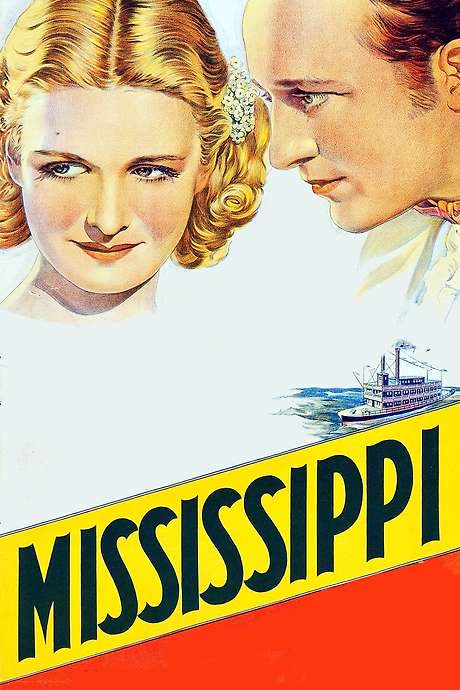
Mississippi 1935

Directed by

Jerome Storm
Made by

Paramount Pictures
Where to Watch Mississippi
See current US streaming, rental, and purchase options for Mississippi (1935) via JustWatch.

Amazon Video
HD
Apple TV Store
HD
Fandango At Home
HD Streaming availability powered by 
Mississippi Plot Summary
Read the complete plot summary and ending explained for Mississippi (1935). From turning points to emotional moments, uncover what really happened and why it matters.
Set on a Mississippi showboat in the late nineteenth century, Commodore Jackson, W. C. Fields commands the ship as a roaming stage where romance, bravado, and danger mingle with the music that keeps the riverboat’s world spinning. Tom Grayson, [Bing Crosby], is a man faced with a harsh public judgment after he refuses to duel with Major Patterson, a decision that brands him a coward and casts a long shadow over his future. To escape the sting of disgrace, Grayson signs on with the Commodore’s showboat, stepping into a world he hadn’t planned to inhabit.
As the riverboat travels from town to town, Jackson fuels a growing disinformation campaign around Grayson, labeling him as The Notorious Colonel Steele and the Singing Killer. The Commodore even stages “duelling victories” for him by dragging corpses from the river beside the boat and presenting them as victims—yet another chapter in the legend of the supposed killer. The rumor mill does more than ruin Grayson’s reputation; it begins to reshape him from the inside, turning the once-meek man into someone who must decide what he truly believes about courage, loyalty, and love.
Lucy, [Joan Bennett], Grayson’s fiancée, watches these events unfold with a mix of concern and hope, hoping that the truth about the man she loves will prevail over the tall tales that keep swirling around him. The showboat becomes a crucible where Grayson’s character is tested, not by external duels but by the pressure of living up to a persona that others insist he must embody. The river and the performance space grow into a backdrop for a quiet transformation: from a restrained, almost passive figure into a man who begins to push back against a narrative that has defined him.
The film intertwines light entertainment with sharper social undertones, giving Crosby room to shine as a performer who can deliver warmth, wit, and a touch of melancholy. He sings Rodgers and Hart throughout the story, with the centerpiece number Soon providing a melodic thread that contrasts with the harsher flavors of rumor and reputation. The musical moments aren’t mere spectacle; they help illuminate Grayson’s inner shifts and the way art can both soothe and embolden a person under pressure.
Fields—who brings his hallmark humor and eccentric storytelling to the role of the Commodore—gets to play both raconteur and provocateur. There’s a memorable scene where he tries to coach Crosby on how to act tougher, a playful clash of temperaments that highlights the dynamic between the ship’s stern command and the younger man’s evolving resolve. The on-screen chemistry between Crosby and Fields—juxtaposing earnestness with sly bravado—gives the film its most enduring charm, especially as Crosby performs several sight gags that involve a chair and a bowie knife, moments that mix comedy with a touch of danger.
Beyond the central relationship, the narrative celebrates the endless color and bustle of showboat life—an ensemble of guests, gamblers, and performers moving through the ship’s decks, the dining room, and the opening nights. The tale is anchored by the tension between character and legend: Tom Grayson’s struggle to reclaim his name and his future, Lucy’s steadfast support, and the Commodore’s relentless push to shape a narrative that suits his theater of river life. In the end, the story offers a portrait of how reputations are built, contested, and sometimes reinvented on a stage where every gesture can be read as a declaration of courage or a fragile, performative lie.
With its blend of romance, humor, and melodrama, the film presents a vivid snapshot of a rowdy, romantic era on the Mississippi, where a showboat is more than a vessel—it is a moving arena for fame, fear, and the enduring question of what it means to be truly brave.
Mississippi Timeline
Follow the complete movie timeline of Mississippi (1935) with every major event in chronological order. Great for understanding complex plots and story progression.
Setting and cast on the Mississippi showboat
Set in the late nineteenth century, a Mississippi showboat serves as the floating stage for the story. Commodore Jackson is the captain who steers the troupe's performances. Tom Grayson is introduced in the shadow of a public disgrace. The showboat's atmosphere frames the conflicts and ambitions that drive the plot.
Grayson is disgraced for refusing to duel
Grayson is engaged to be married, but his reputation is wrecked after he refuses to duel with Major Patterson. The refusal labels him a coward in the eyes of society and triggers his social downfall. This disgrace becomes the catalyst for his decision to leave for the showboat.
Grayson joins Commodore Jackson's showboat
To escape the scandal and prove his worth, Grayson signs on with the showboat's troupe. He enters the world of stage performances and riverfront entertainment. The union begins his transformation.
Jackson markets Grayson as a sensational persona
Jackson brands Grayson as The Notorious Colonel Steele to draw crowds. The moniker casts him as a dangerous figure while he remains physically mild. This marketing tactic begins to reshape Grayson's public image and self-perception.
Dueling myths rise with corpses as props
Jackson proclaims that Grayson earned dueling victories against unnamed foes. The twist is that these victories are publicly credited to corpses dragged from the river beside the showboat as yet another victim of Colonel Steele, the Singing Killer. The deception blurs lines between performance and reality.
Grayson's inner change begins
As the false persona grows, Grayson's meekness gives way to a more unsettled confidence. The constant public misrepresentation gnaws at his sense of self. The transformation marks the start of a deeper personal journey.
Crosby performs 'Soon' on the showboat stage
Bing Crosby delivers Rodgers and Hart songs, with Soon serving as the centerpiece. The music elevates the show and anchors the emotional arc of the character. The stage performances become a core pillar of the narrative.
Fields regales the crowd with outrageous stories
W. C. Fields fills the evening with outlandish tales that capture the audience's imagination. One notable anecdote recounts exploits among a notorious Indian tribe. The storytelling adds humor and color to the show's dynamic.
Fields teaches Crosby how to act tougher
There is a memorable scene where Fields attempts to coach Crosby on acting tougher. The interaction highlights their onscreen chemistry and dynamic. It serves as a mini-lesson in performance under the pressures of showmanship.
Crosby-Fields onstage chemistry strengthens the act
The pairing of Crosby's vocal performances and Fields' storytelling creates a strong performing partnership. Their banter and timing are showcased as proof of their successful collaboration. The duo becomes a highlight of the show's appeal.
Public perception and the toll of deception
The audience's growing fascination with Colonel Steele's legend mirrors Grayson's internal turmoil. The line between truth and showmanship becomes increasingly blurred. The deception exerts a mounting pressure on everyone involved.
Grayson confronts the consequences of the deception
Grayson struggles with living under a manufactured killer persona while his actual courage is tested. The narrative emphasizes how reputations built on deceit shape a man's identity. The arc centers on the clash between perception and reality.
Mississippi Characters
Explore all characters from Mississippi (1935). Get detailed profiles with their roles, arcs, and key relationships explained.
Tom Grayson — Bing Crosby
A once-proud fiancé whose supposed cowardice is weaponized by Commodore Jackson. He begins meek and is reshaped by the showboat's narratives, wrestling with his public image and private integrity. The arc examines how external labels can become a self-fulfilling prophecy.
Commodore Jackson — W. C. Fields
A charismatic, calculating showboat captain who uses Grayson's reputation as a tool for entertainment and control. He spouts tall tales and drags corpses from the river to confirm his narratives, turning spectacle into manipulation. His behavior anchors the film's satire of fame and bravado.
Lucy — Joan Bennett
Tom Grayson's fiancée, caught in a web of social expectations and the captain's schemes. Her loyalties and judgments are tested as reputations and romances collide aboard the showboat. She represents the personal stakes behind public spectacle.
Major Patterson — John Miljan
A rival figure whose honor code and presence provoke Tom's crisis. His challenges and authority reflect the old-world codes clashing with showboat theatrics. Patterson's role fuels the danger and moral tension at the story's core.
Elvira — Gail Patrick
A member of the showboat's social circle who interacts with passengers and performers. Her presence adds to the riverhouse dynamics of flirtation, competition, and social maneuvering. She contributes to the atmosphere of live entertainment and intrigue.
Rumbo — John Larkin
A crew member whose role helps anchor the ensemble of performers and guests. His small presence adds texture to the riverboat's micro-society. He participates in the crowd dynamics that propel the plot.
Miss Markham — Theresa Maxwell Conover
A social observer who embodies genteel scrutiny of the showboat's antics. Her perspective highlights the tension between refinement and adventurism on the river. She serves as a contrast to the show's rough-and-tumble energy.
Mississippi Settings
Learn where and when Mississippi (1935) takes place. Explore the film’s settings, era, and how they shape the narrative.
Time period
Late 19th century
Set in the late 1800s along the Mississippi, the story leverages the era's touring showboats and their blend of music, spectacle, and social maneuvering. Duels and codes of honor still exercise influence, even as entertainment becomes a primary livelihood. Public personas are crafted and contested as the river world watches.
Location
Mississippi River showboat
The action unfolds aboard a late-19th-century Mississippi showboat cruising along the river. The floating venue blends theater, gambling, and social gathering, reflecting the river town culture of the era. The Mississippi River serves as a backdrop for spectacle, rumor, and rivalry that drive the plot.
Mississippi Themes
Discover the main themes in Mississippi (1935). Analyze the deeper meanings, emotional layers, and social commentary behind the film.
🎭
Identity
Tom Grayson's public persona is manufactured by Commodore Jackson, turning a shy fiancé into a controversial figure. The contrast between his inner self and the roles imposed on him drives his transformation. Performance, reputation, and personal truth collide on the showboat stage.
🗣️
Reputation
Rumors and storytelling wield power, shaping reality more than any single deed. Jackson weaponizes Grayson's reputation to entertain crowds and control others. The film explores how a name can become a fate under relentless public scrutiny.
🎶
Entertainment
Music and performance drive the plot, with Crosby singing and Fields delivering tall tales. The showboat's acts create a spectacle that blurs line between amusement and danger. The era's culture of entertainment influences trust, romance, and rivalry.

Coming soon on iOS and Android
The Plot Explained Mobile App
From blockbusters to hidden gems — dive into movie stories anytime, anywhere. Save your favorites, discover plots faster, and never miss a twist again.
Sign up to be the first to know when we launch. Your email stays private — always.
Explore the mobile appMississippi Spoiler-Free Summary
Discover the spoiler-free summary of Mississippi (1935). Get a concise overview without any spoilers.
Set against the rolling backdrop of the late nineteenth-century Mississippi, the film invites audiences into a world where the currents of romance, bravado, and danger mingle with the rhythms of a traveling showboat. Commodore Jackson commands this floating stage, a raconteur whose humor and eccentricity set the tone for the strange theater of river life. Into this vibrant atmosphere steps Tom Grayson, a young pacifist facing a harsh judgment from the world ashore. After making a decision that brands him a coward and casts a long shadow over his future, he signs on with the Commodore’s troupe, seeking escape from the sting of public disgrace.
The riverboat offers more than just employment; it becomes a place where reputation is malleable and truth is often a matter of performance. As the vessel travels from town to town, Jackson spins a new identity for Tom, fueling a campaign of rumors that transforms the mild-mannered singer into a figure of fear and legend. Amidst the songs of Rodgers and Hart—most notably the melodic centerpiece Soon—Tom finds himself caught in a dissonance between his gentle nature and the tall tales that swirl around him, forcing him to navigate a persona he never asked for.
The tension between the man and the myth provides the story’s heartbeat, explored through the contrasting temperaments of the ship’s stern command and Tom’s evolving resolve. With his fiancée, Lucy, watching with hope and concern, Tom must weather the expectations of a world that demands a specific kind of bravery. The showboat becomes a moving arena where character is tested not by external duels, but by the pressure of living up to a dangerous lie, offering a vivid portrait of an era where courage is a performance and redemption is a journey downriver.
Movies with Similar Twists and Themes
Uncover films that echo the narrative beats, emotional arcs, or dramatic twists of the one you're exploring. These recommendations are handpicked based on story depth, thematic resonance, and spoiler-worthy moments — perfect for fans who crave more of the same intrigue.


Featured on this page

What's After the Movie?
Not sure whether to stay after the credits? Find out!
Check out our other apps:

SAT Sphere
Build confidence for the Digital SAT.

Mori Atlas
Discover wild places worth protecting.

Luntero
Search smarter for a home in Amsterdam.

Plot Explained
Unravel movie endings and hidden clues.

Pokechamp
Dive into Pokémon data and battle logic.

Driving Theory
Get ready for your European theory test.

Movie Dust
Plan your next cinema trip with ease.

Musemap
Find art and culture as you travel.

Selkobase
Compare credentials before committing.

Local Manual
Turn an unfamiliar country into practical next steps.

Lernavi
Compare school systems before your next move.

GymRoam
Find a workout stop wherever your plans take you.
Explore Our Movie Platform
New Movie Releases (2026)
Famous Movie Actors
Top Film Production Studios
Movie Plot Summaries & Endings
Major Movie Awards & Winners
Best Concert Films & Music Documentaries
Movie Collections and Curated Lists
© 2026 What's After the Movie. All rights reserved.
Privacy Policy