What Is Meet Me in the Bathroom About?
The premise of Meet Me in the Bathroom in 273 words, with nothing given away. The full story follows below.
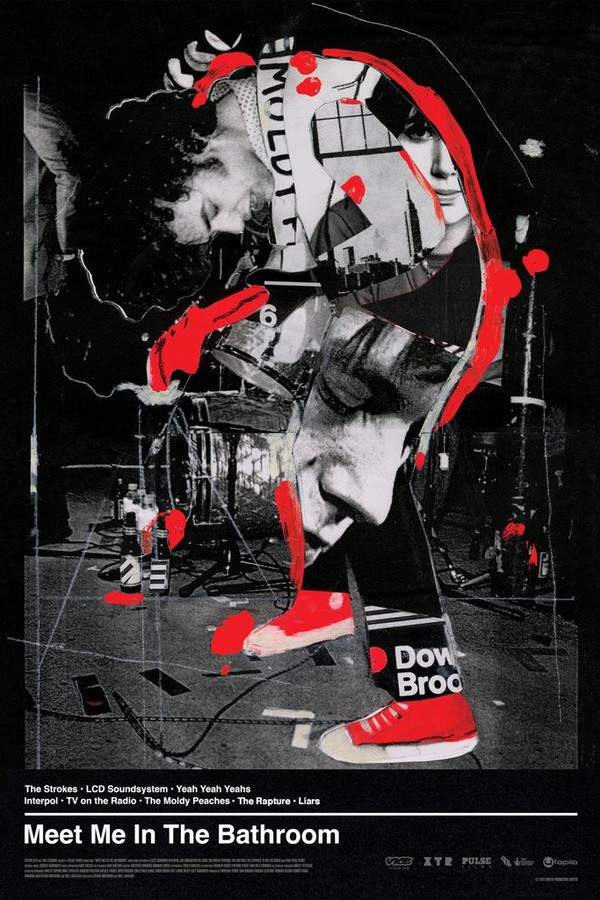
In the charged aftermath of 9/11, New York becomes a proving ground for a new wave of music. Through concert footage, intimate interviews, and shared memories, Meet Me in the Bathroom captures the city’s creative surge and the loose collective that defined early-2000s indie rock. At the center are Adam Green and Julian Casablancas, whose friendship connects the Moldy Peaches with the emergent identity of the Strokes. Their dynamic introduces a scene hungry for authenticity, close-knit collaboration, and a sound capable of restoring a sense of possibility to the city.
The documentary then widens its portrait to the artists navigating that volatile landscape. Karen O, already performing in bars, forms the Yeah Yeah Yeahs with Brian Chase and Nick Zinner, bringing her own anxieties about identity, isolation, and belonging to the band’s commanding public presence. Her striking stage persona draws attention while complicating her struggle to be regarded as a serious artist. Meanwhile, Paul Banks channels his depression, ambition, and desire for belonging into Interpol, whose members look to the Strokes as proof that a place exists for them within the city’s larger rock movement.
Another strand follows James Murphy and Tim Goldsworthy as their work together leads to DFA Records and the early support of the Rapture. The project reflects Murphy’s forceful vision and the growing distance between a label’s ambitions and its artists’ needs. As that arrangement fractures, music made for the dance floor begins to take shape, giving rise to LCD Soundsystem. Throughout, the film blends nostalgia with unresolved creative tension, presenting New York’s nightlife as both a refuge and an arena where friendships, identities, and ambitions are constantly tested.
What Happens in Meet Me in the Bathroom?
The complete story of Meet Me in the Bathroom, from the first scene to the last, in 312 words (about 1 minute). Spoilers throughout.
Spoilers ahead
The film opens with a performance by The Moldy Peaches, detailing the early connection between them and The Strokes after Adam Green met Julian Casablancas at a rooftop gathering. This relationship eventually led to The Moldy Peaches serving as a supporting act during the 2001 tour for the album Is This It. The narrative then shifts to the darker side of the scene, exploring Albert Hammond Jr’s struggles with heroin—allegedly encouraged by Ryan Adams—and Casablancas’ feelings of disconnection amidst his rising fame.
The documentary further explores the rise of the Yeah Yeah Yeahs. It depicts Karen O’s journey from playing bars to forming a band with Nick Zinner and Brian Chase. Karen O reflects on her struggles with anxiety and the insecurities surrounding her racial identity. To cope, she adopted a bold stage persona that led to self-destructive behavior and unwanted sexualization by the press. After a notable incident where she smashed her head on a speaker during a festival performance, she began to move away from this persona.
Attention then turns to Paul Banks and the band Interpol. The film highlights their early struggles to secure a record deal and Banks’ battle with depression, noting how he found inspiration in The Strokes. Despite a failed initial tour in the UK, they eventually found success through the label Matador. However, the band faced the emerging challenge of peer-to-peer file sharing, which resulted in their second album being leaked online.
Finally, the film covers the 2001 inception of DFA Records by James Murphy and Tim Goldsworthy. After signing The Rapture, Murphy was criticized for being too domineering, with the band urging him to create his own music. Following The Rapture’s departure to find a new distributor after the success of “House of Jealous Lovers,” Murphy channeled his depression into songwriting, ultimately leading to the formation of the electronic indie rock project LCD Soundsystem.
Meet Me in the Bathroom Timeline: Every Key Event in Order
17 key events in the order they happen, from “The Moldy Peaches Meet The Strokes” to “LCD Soundsystem Is Born”. 4 events name a place, across 4 locations.
- 1
The Moldy Peaches Meet The Strokes
The film opens with a performance of The Moldy Peaches before shifting to the rooftop party where Adam Green met The Strokes' Julian Casablancas. The meeting formed a genuine friendship between the two artists and their bands. This connection became the thread binding the Moldy Peaches to the epicenter of New York's rock scene.
Where:New York City rooftop
- 2
Supporting The Strokes on the Is This It Tour
Fresh off releasing their self-titled album, the Moldy Peaches were tapped as the supporting act for The Strokes' 2001 tour in support of Is This It. Riding alongside the era's biggest new band exposed them to much larger audiences. The tour cemented the two bands' intertwined place in the early-2000s New York rock scene.
When:2001
- 3
Albert Hammond Jr.'s Heroin Struggle
The documentary examines a darker chapter for The Strokes, focusing on guitarist Albert Hammond Jr.'s experience with heroin. His drug use came at the alleged encouragement of singer-songwriter Ryan Adams. The segment reveals the destructive forces lurking beneath the scene's glamorous surface.
- 4
Casablancas Disconnected from Fame
Even as The Strokes ascended, frontman Julian Casablancas is shown feeling disconnected from the fame surrounding the band within the scene. His detachment from celebrity became a notable thread in the story of the New York rock revival. It offered a candid look at the isolating weight of sudden stardom.
- 5
The Yeah Yeah Yeahs Are Formed
The focus shifts to the formation of the Yeah Yeah Yeahs. Karen O had been playing guitar and singing in bars before joining forces with her friend Brian Chase and Nick Zinner to form the band. The trio would soon become one of the most electrifying live acts of the scene.
Where:New York City
- 6
Karen O Confronts Anxiety and Identity
Karen O opens up about her relationship with anxiety, tracing it to insecurity over her racial identity and her sense of being a loner. These raw vulnerabilities shaped her complicated relationship with performing and public life. Her candor grounds the band's story in deeply personal experience.
- 7
A Stage Persona Is Born
To deal with her inner turmoil, Karen O adopted an outsized persona for the stage. The character empowered her performances, but it also caused her to develop self-destructive tendencies. The mask that freed her on stage slowly began to consume her privately.
- 8
Sexualized by the Press
As the band's profile grew, the press sexualized Karen O instead of engaging with her as an artist. She pushed back against that framing, insisting she wanted to be taken seriously for her creativity. The treatment spoke to the broader gendered pressures women faced in the rock scene.
- 9
A Terrifying Fall at a Festival
While performing at a festival, Karen O fell off the stage and smashed her head against a speaker. The alarming accident laid bare the physical toll of her chaotic persona. In its aftermath, she began easing away from the character that had defined her live shows.
Where:Festival stage
- 10
Interpol Struggles to Get Signed
Attention turns to Paul Banks, frontman of Interpol, as he recalls the band's struggle to get signed to a record label. In those early days, Banks battled depression and desperately wanted to be part of the larger rock scene. He found inspiration in the rise of The Strokes, fueling his determination to break through.
Show the other 7 events of Meet Me in the Bathroom Hide the last 7 events
- 11
A Failed UK Tour
Before the release of their first album, Interpol emerged on a tour across the UK that proved to be a failure. The disappointing stretch tested the young band's resolve at a fragile moment. Nevertheless, they pressed on toward the record that would change everything.
Where:United Kingdom
- 12
Breakthrough with Matador Records
Interpol's fortunes turned with the release of their debut album, which found success through the record label Matador. Landing on Matador gave the band a platform and validation after years of rejection. It firmly established them as pillars of the New York rock revival.
- 13
File Sharing Leaks the Second Album
The band was greatly affected by the rise of peer-to-peer file sharing culture that was reshaping the music industry. Their second album was leaked online before its official release, disrupting the rollout. The experience reflected a wider crisis confronting artists at the dawn of digital music.
- 14
DFA Records Is Founded
DFA Records was created in 2001 by James Murphy and Tim Goldsworthy, following the pair's collaboration on David Holmes' album Bow Down to the Exit Sign the year before. The founding turned their studio partnership into a full-fledged label. It would soon become a defining force in the city's dance-rock movement.
When:2001
- 15
The Rapture Signs to DFA
The label signed the then-small band The Rapture, whose members later described Murphy as domineering during their time working together. They went so far as to tell him to create his own music instead of shaping theirs. The friction planted the seed for Murphy's next move.
- 16
The Rapture Departs the Label
After the breakout success of their single 'House of Jealous Lovers,' The Rapture left DFA to find a distributor. Their withdrawal left Murphy reeling and depressed. It was a bitter moment, even as the hit single proved the label's sound resonated far and wide.
- 17
LCD Soundsystem Is Born
Rather than wallow, Murphy poured his depression over The Rapture's departure into writing his own music. This creative response led to the creation of the indie rock electronic band LCD Soundsystem. Out of a painful setback came one of the era's most celebrated acts.
Quiz
How well do you remember Meet Me in the Bathroom? Test yourself on the story.