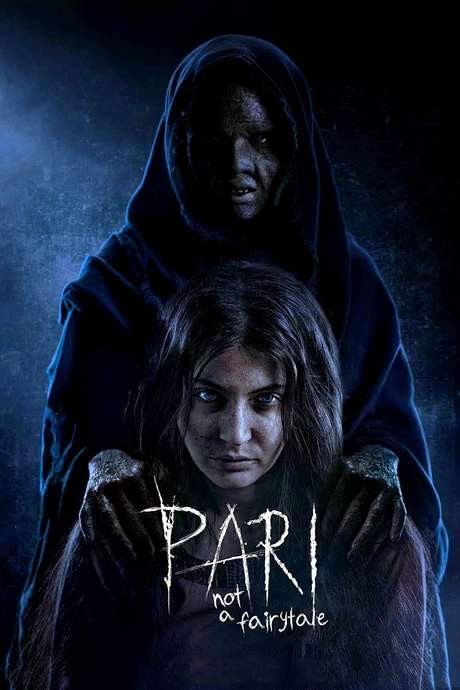
Pari 2018

Directed by

Prosit Roy
Made by

Clean Slate Films
Pari Plot Summary
Read the complete plot summary and ending explained for Pari (2018). From turning points to emotional moments, uncover what really happened and why it matters.
The story weaves a chilling tale around a demonic figure named Ifrit and a Bangladesh-based satanic cult, the drive of which is to perpetuate Ifrit’s bloodline. This cult would kidnap women and conjure a male demon to mate with them, hoping to bear offspring that carried the demon’s seed. A vigilante faction led by Professor Qasim Ali [Rajat Kapoor] operates against this horror, tracking down the impregnated women, holding them captive until they give birth, and then violently killing the demonic babies by decapitating them and sealing the heads in glass jars. The community wrestles with this brutal method—some supporting the effort, others denouncing the extremism—and the group is ultimately shut down for its radical and blood-soaked approach.
Rukhsana [Anushka Sharma] is the daughter of one of those women, who managed to escape captivity before Professor Ali could destroy her child. Her backstory is a ghostly thread that runs through the narrative, haunting her as she encounters the ordinary world outside her trauma. The film follows her as she becomes central to a new, unintended bond.
Arnab, a young man who runs a printing press, leads a quieter life until fate intervenes. He and his parents, on a night of heavy rain, strike an old woman with their car. When the police search the woman’s home, they uncover a secluded hut in the forest where a chained Rukhsana lies hidden. Feeling a deep pull of compassion and responsibility, Arnab [Parambrata Chatterjee] welcomes her into his life, and Rukhsana, who has seen visions the living world cannot explain, begins to view him with a mix of fear and affection. To Arnab, she appears strange yet endearing, and their time together blossoms into something gentler and more intimate than either expected.
On this arc of trust, a morgue worker [Dibyendu Bhattacharya] who has long been entangled with the cult’s shadowy history brings a troubling truth to light: Rukhsana’s mother bore the cult’s mark, linking her fate to the vigilante’s decades-long pursuit. This revelation drives Professor Ali back into the foreground, reigniting the chase as she and Arnab grow closer.
As their bond deepens, Rukhsana falls ill in a way that reveals the demon-blood reality burning inside her. Arnab initially mistakes it for a menstrual problem, but she reveals that she is carrying a demon’s child, and she secretly kills a dog by biting it to release the poison she carries. She confesses her love for Arnab, and the two share a moment of tenderness that is quickly overshadowed by fear and danger. The next morning, the professor confronts Arnab with the truth, and a violent altercation ensues with the morgue worker. In the ensuing chaos, Rukhsana kills the assistant and protects Arnab from danger, even as jealousy flares and she physically asserts herself against him.
Armed with the grim knowledge of Ifrit’s true biology, Arnab reaches out to Professor Ali [Rajat Kapoor], and the story pivots toward a devastating revelation: Ifrit babies are born in just one month, not nine. The professor’s men converge on the couple just as Rukhsana reveals she is pregnant with Arnab’s child. The professor’s cohort tortures Rukhsana to death, and Arnab leaves the scene in despair, unable to intervene as the life he helped create hangs in the balance. Weeks pass, and Piyali [Ritabhari Chakraborty], a nurse and Arnab’s confidante, visits his family home, where he finally confesses the truth about Rukhsana. Their conversation makes Arnab realize that, in a cruel irony, he bears responsibility for the pregnancy and that the baby is, in fact, human.
Rukhsana, battered and broken, breaks free from her captors and journeys toward a last, desperate act. She kills the professor and heads toward Piyali’s home, where she wounds Piyali and enters labor. Piyali, drawing on her medical past, cannot bring herself to kill her patient. Instead, she helps deliver the baby, a moment of fragile humanity amid horror, and the infant is born with an umbilical cord—an emblem of life tethered to both worlds. Rukhsana leaves the newborn with Piyali before disappearing.
Arnab hurries to the old hut and finds Rukhsana gravely injured. He embraces her in a quiet, heartbreaking moment, and she resists using her venom on him, choosing to keep it inside. In her final breath, she declares that their baby is human, not the demon’s progeny. Arnab’s voice gathers the last thread of resolve: it is Rukhsana’s love that rendered the child human, not Ifrit’s hatred. He vows to raise the baby and care for them both, stepping into a fragile future shaped by love, loss, and a new, uncertain hope.
Pari Timeline
Follow the complete movie timeline of Pari (2018) with every major event in chronological order. Great for understanding complex plots and story progression.
Founding of Ifrit cult and vigilante reprisals
The film introduces Ifrit, a demonic force, and Auladhchakra, a satanic cult in Bangladesh bent on continuing Ifrit's bloodline. Professor Qasim Ali leads a vigilante group that hunts down women who have been impregnated by the demon. The group abducts newborn demonic babies and kills them by decapitation, sealing their heads in glass jars, a brutal practice that stirs fear and controversy among villagers.
Village opposition and the vigilante group's shutdown
Despite some support in the village, the cult's violent methods spark widespread opposition. The vigilante group's ruthlessness attracts condemnation and eventually leads to its shutdown. The underlying fear of the demonic is kept alive by rumors of the cult's ongoing influence.
Rukhsana's discovery and Arnab's rescue
In heavy rain, Arnab and his parents accidentally strike an old woman; police discover an abandoned forest hut where Rukhsana is chained. Arnab takes pity and brings her to live with his family, offering her safety she has never known. Rukhsana's lack of exposure to the modern world and her frightening visions set the tone for their fragile bond.
Rukhsana forms a bond and falls in love
As Arnab and Rukhsana spend time together, she grows to care for him. She is drawn to his kindness and begins to fall in love, even as her mind frets over the frightening images she experiences. The unlikely romance deepens despite her otherworldly origins.
Ali learns of the cult's mark and closes in
A mortuary assistant reveals that Rukhsana's mother bears the cult's mark, alerting Professor Ali who has been pursuing Rukhsana for years. Ali threatens to close in on her, determined to end the demonic lineage. The news intensifies the chase and raises the stakes for Arnab and Rukhsana.
Rukhsana's illness and the first confession
One night, Rukhsana falls sick from the poison her demon blood produces. She secretly bites a dog and releases the poison, signaling the dangerous power within her. She admits that she loves Arnab and the two share an intimate moment, complicating the growing peril around them.
Ali's confrontation and the murderous distraction
The morning after, Ali confronts Arnab with the truth about Rukhsana, but Arnab refuses to believe him. The morgue assistant attacks Arnab, injuring him, and Rukhsana retaliates by killing the assistant. She then positions herself between Arnab and Piyali, riled by jealousy.
Arnab learns of the prophesied birth window and seeks help
Disturbed by the revelations, Arnab researches Ifrit and learns that Ifrit-born babies emerge within a month rather than nine months. He contacts Ali to understand the threat and seek guidance. The knowledge tightens the timeline around the couple's peril.
Ali's siege and Rukhsana's pregnancy revelation
Ali arrives with his men to confront Rukhsana, but she reveals she is pregnant. The confrontation escalates as the professor’s team ties her up and tortures her to death by her own poison. A broken Arnab leaves, unable to save her.
Piyali learns the truth and Arnab's guilt
Three weeks later, Piyali visits Arnab at his parents' house and learns the truth about Rukhsana and the baby. Arnab wrestles with guilt, realizing that he was the one who impregnated her and that he should not have abandoned her to die. Piyali's presence forces him to confront the consequences of his choices.
The birth drama and Rukhsana's final act
Rukhsana breaks free after being beaten, kills Professor Ali, and makes her way toward Piyali's home. She injures Piyali and goes into labor, with Piyali—herself a nurse—helping deliver the baby, who still has an umbilical cord. Rukhsana leaves the baby with Piyali and disappears.
Truth, death, and the human baby
Arnab rushes to the old forest hut and finds Rukhsana near death. He cradles her as she resists biting him and releasing her poison, choosing to keep it inside. Before dying, she tells him the baby is human, and Arnab realizes their love produced a human child.
A new life and a fragile hope
In the aftermath, Arnab resolves to raise their human baby, honoring Rukhsana's love rather than Ifrit's hatred. He forgives himself for past decisions and accepts his new responsibility. The film ends with the newborn child symbolizing a fragile hope beyond the demon's legacy.
Pari Characters
Explore all characters from Pari (2018). Get detailed profiles with their roles, arcs, and key relationships explained.
Rukhsana (Anushka Sharma)
Daughter of a woman who fell victim to Ifrit; demon-blooded and initially unaware of the world beyond captivity. She falls in love with Arnab, fights to protect their unborn child, and ultimately dies after giving birth, with the twist that the baby is human thanks to love.
Arnab (Parambrata Chatterjee)
Young owner of a printing press who feels responsible for Rukhsana. He grapples with moral conflict after learning her origins, impregnates her, and ultimately chooses to care for their child.
Piyali (Ritabhari Chakraborty)
A nurse in an arranged marriage with Arnab, she embodies compassion and bravery. She helps deliver the baby and, despite a painful past, protects Rukhsana and the newborn.
Professor Qasim Ali (Rajat Kapoor)
Leader of the vigilante group seeking to eradicate the demon-bloodline. His extreme methods lead to brutal outcomes and raise questions about justice and ethics.
Morgue Worker (Dibyendu Bhattacharya)
A morgue assistant who uncovers the cult’s marks and informs Professor Ali, linking the investigation to the cult’s dark past.
Arnab’s Mother (Mithu Chakrabarty)
Arnab’s mother, offering family support amid the crisis and representing the ordinary family’s stake in protecting loved ones.
Pari Settings
Learn where and when Pari (2018) takes place. Explore the film’s settings, era, and how they shape the narrative.
Time period
Contemporary (21st century)
The events take place in modern times, with present-day institutions like the police, hospitals, and morgues forming the backdrop. Rainy nights and village life intermingle with urban workplaces to ground the story in the present day.
Location
Bangladesh
The story unfolds across rural Bangladesh with a secluded forest hut at its core, where the Ifrit cult operates. The village atmosphere, rumors, and fear around the cult shape the community’s reactions to the events. Key locations also include Arnab's urban printing press and deathly quiet mortuary spaces that anchor the plot in a contemporary setting.
Pari Themes
Discover the main themes in Pari (2018). Analyze the deeper meanings, emotional layers, and social commentary behind the film.
💔
Love vs Horror
Love challenges the boundaries between human and monstrous origins, as Rukhsana and Arnab form a bond that humanizes the demon-blooded world. Their relationship forces characters to confront ethical limits amid violence. The narrative uses their connection to ask what makes someone truly human.
👁️
Otherness
Rukhsana’s demon-blood marks her as an outsider, highlighting fear and prejudice towards the unknown. The film examines how society defines humanity and how love can blur the line between monster and person. It invites reflection on acceptance versus ostracism.
⚖️
Vigilantism vs Justice
The vigilante group led by Professor Ali embodies radical, extrajudicial action with deadly consequences. The story questions whether taking the law into one’s own hands can ever be justified, illustrating how cycles of violence perpetuate harm.

Coming soon on iOS and Android
The Plot Explained Mobile App
From blockbusters to hidden gems — dive into movie stories anytime, anywhere. Save your favorites, discover plots faster, and never miss a twist again.
Sign up to be the first to know when we launch. Your email stays private — always.
Explore the mobile appPari Spoiler-Free Summary
Discover the spoiler-free summary of Pari (2018). Get a concise overview without any spoilers.
In a rain‑soaked corner of Bangladesh, a modest printing press hums quietly beneath the weight of ordinary life. Arnab, a young man who tends the shop with diligent hands, lives a routine existence with his parents, his days marked by the steady rhythm of ink and paper. One storm‑laden night, fate intervenes when a sudden accident leads him to a hidden part of the forest where a woman lies bound by circumstances far beyond the ordinary. The encounter pulls him out of his insulated world and onto a path edged with uncertainty.
The woman he discovers is Ruksahana, a figure who moves between the familiar and the uncanny. Her presence is marked by a quiet intensity, a blend of vulnerability and an almost otherworldly awareness that hints at a past shrouded in mystery. Drawn by a compelling mix of compassion and curiosity, Arnab offers her shelter in his home, setting the stage for an uneasy partnership that blurs the boundaries between caretaker and confidant. Their early interactions are steeped in hesitant trust, each trying to decipher the other’s hidden layers while navigating the subtle tension that lingers in every shared glance.
The film unfolds with a slow‑burning atmosphere that balances the mundane textures of daily life against a backdrop of whispered enigmas. Shadows linger in the forested outskirts, and the ordinary sounds of the town seem to echo with unseen stories. As Arnab and Ruksahana grow closer, strange and unsettling events begin to surface, suggesting that reality may be more pliable than it appears. The tone remains a delicate dance of suspense and emotional intimacy, inviting the audience to wonder what lies beneath the surface of this fragile, rain‑drenched world.
Featured on this page

What's After the Movie?
Not sure whether to stay after the credits? Find out!
Check out our other apps:

SAT Sphere
Build confidence for the Digital SAT.

Mori Atlas
Discover wild places worth protecting.

Luntero
Search smarter for a home in Amsterdam.

Plot Explained
Unravel movie endings and hidden clues.

Pokechamp
Dive into Pokémon data and battle logic.

Driving Theory
Get ready for your European theory test.

Movie Dust
Plan your next cinema trip with ease.

Musemap
Find art and culture as you travel.

Selkobase
Compare credentials before committing.

Local Manual
Turn an unfamiliar country into practical next steps.

Lernavi
Compare school systems before your next move.

GymRoam
Find a workout stop wherever your plans take you.
Explore Our Movie Platform
New Movie Releases (2026)
Famous Movie Actors
Top Film Production Studios
Movie Plot Summaries & Endings
Major Movie Awards & Winners
Best Concert Films & Music Documentaries
Movie Collections and Curated Lists
© 2026 What's After the Movie. All rights reserved.
Privacy Policy