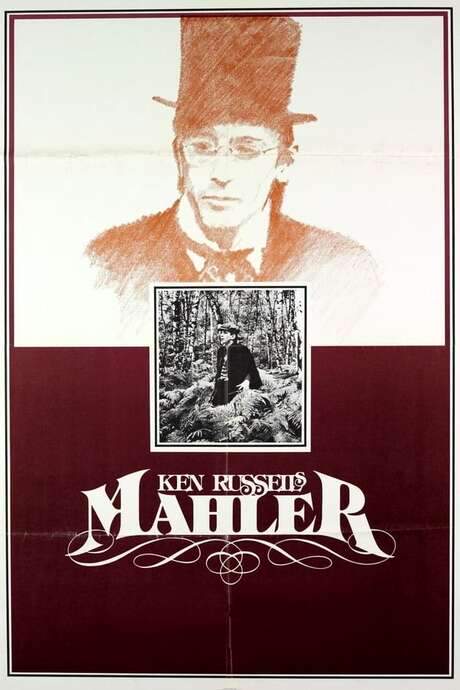
Mahler 1974


Made by

Goodtimes Enterprises
Where to Watch Mahler
See current US streaming, rental, and purchase options for Mahler (1974) via JustWatch.

Streaming availability powered by 
Mahler Plot Summary
Read the complete plot summary and ending explained for Mahler (1974). From turning points to emotional moments, uncover what really happened and why it matters.
The film follows Gustav Mahler Robert Powell and his wife Alma Mahler Georgina Hale as they travel back to Europe from the United States, aboard a train bound for Vienna. The crowds greet them at every station, but Mahler shuts out the speeches and bouquets, urging Alma to draw the blinds. Instead, the journey becomes a moving gallery of memories and visions, with each station and carriage stop sparking a new scene from the past or a projection of the future. On board, Alma’s lover Max [Richard Morant] appears, pressing Alma to leave Mahler at a couple of stops before Vienna.
In a lakeside memory, a small hut serves as a makeshift studio where Mahler tries to compose while Alma rounds the lake, quieting animals and people and sharing beers to hush the world. A woman who swaps compartments with the couple notes that his newly written Ninth Symphony is about death, a thought that unsettles him. A doctor on the train tends to him after a heart attack, and he is revived, but the vision that follows shows him alive in a windowed coffin while Alma and Max ignore him as they carry on and eventually cremate him.
Other memories unfold: a visit to the Emperor of Austria about a music-director job, only to reveal that the scene is a delirious fantasy in which Hugo Wolf [David Collings] imagines himself as the Emperor, set in an asylum. In another episode, Alma longs to compose and Mahler’s lead singer performs a song of hers, but Mahler insists her true role is wife and mother, warning that composition is too stressful; he cites a mad friend and his brother’s suicide as cautionary tales, and Alma sadly buries her song in the woods.
Mahler’s conversion to Catholicism appears as a surreal baptism of fire on a mountaintop, presided over by Cosima Wagner [Antonia Ellis], whose influence in the music world is depicted through stark, provocative imagery—goose-stepping, a Prussian helmet, and a cross-embellished bathing suit with a swastika on the rear—reflecting the era’s dark currents.
In a final flashback, Alma is deeply upset when Mahler writes the song cycle Kindertotenlieder (Songs on the Death of Children). This memory is tied to the later real life tragedy, adding emotional weight to their dynamic. The on-train doctor, Doctor Roth [George Coulouris], confirms that Mahler appears to be in excellent health. Mahler tells Alma she must decide whether to stay with him or leave with Max at the next stop; he declares that all his music is for her, even claiming that the second theme of his Sixth Symphony is her. They kiss, and Max departs, while Alma stays aboard.
They arrive in Vienna, where the regular doctor informs them that Mahler is gravely ill with only a week or two to live. The train doctor relays the grim prognosis, but Mahler chooses a defiant optimism, insisting that he and Alma will live forever. With that resolve, they step into the station together, facing a future that art and memory keep alive despite time.
Mahler Timeline
Follow the complete movie timeline of Mahler (1974) with every major event in chronological order. Great for understanding complex plots and story progression.
Opening credits: hut on pier bursts into flame
The film opens with a small hut on a pier burning dramatically as opening credits roll. A cocooned woman struggles to break free of white wrappings in an outdoor setting near a rough rock carving of Mahler's head. The image hints at themes of transformation and mortality that will thread through the story.
On the train to Vienna, crowds greet Mahler
On the train back to Europe, Mahler and Alma journey toward Vienna while crowds throng the platforms to greet him. Alma's lover Max is aboard, urging her to leave Mahler and run away with him. Across the moving carriage, memories and visions begin to interrupt the journey.
Lake hut flashback: hush the noise
A flashback reveals the idyll of a hut by the lake where Mahler tries to compose. Alma persuades and hushes animals and people around the lake, giving beer to keep them quiet. The memory frames their creative and personal dynamic at the root of the story.
Ninth Symphony and death discourse
A woman changing compartments remarks that Mahler's Ninth Symphony is all about death, unsettling him. The notion that after Beethoven no composer can write more than nine symphonies haunts his self-image. The moment foregrounds the fragility and pressure surrounding his art.
Heart attack and coffin vision
Mahler experiences a heart attack, and a doctor on the train revives him. He then imagines himself alive in a windowed coffin while Alma and Max ignore his pleas and carry on with their relationship. The vision deepens the tension between life, death, and desire.
Emperor illusion in asylum (Hugo Wolf)
In a flashback, Mahler seeks a music-director job with a figure presented as Emperor Franz Josef, who is far too young for the era and makes outrageous demands while pressing his Jewish identity. It turns out the 'Emperor' is Mahler's friend Hugo Wolf, impersonating the ruler in an asylum. The scene plays with delusion, status, and anti-Semitic pressures in the music world.
Alma yearns to compose and is told her role
Alma longs to compose, and Mahler's lead singer performs her song, but Mahler tells her her job is wife and mother and that composition is too stressful. He cites their mad friend and his brother's failed artistic career as cautionary tales. Alma buries her song in the woods and mourns its loss.
Cosima Wagner baptism fantasy
In a fantasy sequence, Mahler undergoes a baptism of fire and blood on a mountaintop as Cosima Wagner presides. Cosima's influence and anti-Semitic attitudes loom over the music world, depicted through goose-stepping imagery and loaded symbols. The surreal sequence signals a crisis of faith and artistic identity.
Alma attacks over Kindertotenlieder
In a final flashback, Alma attacks Mahler in the hut on the pier after he wrote Kindertotenlieder, conflating it with the death of one of his children. The scene links personal grief to his music and reveals strains in their marriage. The event foreshadows tragedy within the larger story.
Train doctor: health vs. vitality
A doctor on the train declares Mahler to be in perfect health, creating a stark contrast with the looming illness later revealed. Mahler tells Alma that he will live forever with their bond and music, resisting medical verdicts. The moment heightens the tension between mortality and artistic immortality.
Choice: Max off, Alma stays; music as love
Mahler gives Alma the choice to disembark with Max or stay aboard with him. He proclaims that all his music is for her and that she is his music. They kiss as Max exits the train, leaving Alma and Mahler together.
Vienna arrival and prognosis
They arrive at Vienna, and a doctor reports to Mahler's regular physician that he is very ill with only a week or two to live. Mahler declines to hear the prognosis, telling Alma they are going to live forever. The film closes on a defiant note of mortal defiance.
Mahler Characters
Explore all characters from Mahler (1974). Get detailed profiles with their roles, arcs, and key relationships explained.
Gustav Mahler (Robert Powell)
A renowned composer journeying back to Vienna, Mahler is introspective and haunted by memories that surface as visions on the train. His fierce commitment to music clashes with personal desires, revealing vulnerability, resolve, and a complex relationship with Alma and Max. He negotiates fidelity, legacy, and mortality while balancing public acclaim with private doubt.
Alma Mahler (Georgina Hale)
Mahler’s wife and an artistic presence in her own right, Alma is torn between her role as wife and mother and her own creative ambitions. She wrestles with Mahler’s priority to his music and with Max’s enticements to abandon him, seeking validation and connection in a life that centers on art.
Max (Richard Morant)
Alma’s lover on the train, he urges Alma to leave Mahler and run away with him. His presence intensifies the love-triangle dynamic and adds pressure on Alma’s decisions about fidelity, independence, and loyalty.
Doctor on Train (Andrew Faulds)
The physician who tends to Mahler aboard the train, he assesses Mahler’s health and provides a clinical, calming counterpoint to the film’s mystic and memory-laden imagery. He asserts a surface health that contrasts with the deeper existential concerns raised by the memories.
Doctor Roth (George Coulouris)
A physician figure encountered in flashbacks, contributing to Mahler’s world of medical and existential scrutiny. He represents the rational voice against the backdrop of the pupil’s inner storms and symbolic visions.
Cosima Wagner (Antonia Ellis)
In a fantasy sequence, Cosima Wagner embodies the powerful but controversial influence of Wagner’s widow, whose anti-Semitic and paternalistic authority casts a shadow over the music world. She symbolizes the cultural and ideological power that shapes Mahler’s career and identity.
Hugo Wolfe (David Collings)
A friend who, in a dreamlike turn, is perceived as the Emperor but is actually a fellow figure in Mahler’s psyche, highlighting the fragile line between reality and illusion in the asylum-like memories. He represents the social theater that surrounds Mahler’s life.
Aunt Rosa (Miriam Karlin)
A family confidante who appears in flashback scenes, offering background and a sense of lineage to Mahler’s emotional world. She anchors the personal history that informs his choices and responses to Alma and Max.
Grandfather (Arnold Yarrow)
A veteran presence in Mahler’s memory, providing generational context and grounding Mahler’s narrative in family history. His presence reinforces themes of legacy and continuity through time.
Mahler Settings
Learn where and when Mahler (1974) takes place. Explore the film’s settings, era, and how they shape the narrative.
Time period
Early 20th century (circa 1900s)
The story is set in the fin-de-siècle era of the Austro-Hungarian Empire, a time when Vienna was a cultural capital and modernist ideas were emerging. The film places Mahler within a world of imperial politics, aristocratic expectations, and evolving artistic norms. Historical touches include the figure of Franz Josef and a climate that hints at rising anti-Semitic attitudes that artists like Mahler faced. Flashbacks anchor the personal drama within this specific historical context.
Location
Vienna, Austria; European train journey; Lakeside hut by a pier (flashback)
The narrative largely unfolds aboard a European train bound for Vienna, with crowds at platforms signaling Mahler’s fame and public adulation. Scenes shift across train compartments and stations throughout Europe, punctuated by memories that flash back to past lives and choices. A memorable lakeside hut and pier appear as a pivotal memory trigger, tying Mahler’s creative world to intimate, rural imagery. The setting blends transport, culture, and personal memory into a traveling, memory-soaked journey.
Mahler Themes
Discover the main themes in Mahler (1974). Analyze the deeper meanings, emotional layers, and social commentary behind the film.
🧠
Memory
Memory drives the film’s structure, turning present travel into a mosaic of past events. Mahler’s life unfolds through vivid visions triggered by events on the train, revealing childhood, career struggles, and intimate relationships. The memories complicate our view of who he is, showing how recollection shapes identity and influence on decisions about love and art. The memories function as a narrative engine that blurs the line between what is lived and what is imagined.
⚰️
Mortality
Mortality is a persistent undercurrent, expressed through visions of death and the fragility of life. The doctor’s assessment of Mahler’s health contrasts with ominous cues about an imperiled future, creating tension between vitality and finitude. Imagery of the death of a child through Kindertotenlieder haunts the emotional landscape and informs Mahler’s artistic preoccupations. The film uses mortality to interrogate the cost of greatness and the meaning of living with the knowledge of death.
🎼
Music
Music is the core of Mahler’s identity and the lens through which the narrative is understood. The story asserts that much of his life is shaped by music, including Alma’s role and the tension between personal love and artistic duty. Alma’s own aspirations are weighed against her marriage, illustrating how art and life intertwine and compete. The music becomes a living force that both sustains and destabilizes relationships, especially as Mahler claims that his work is for Alma.
⛪
Religion
Religious authority and cultural power shape the world around Mahler, as illustrated by Cosima Wagner’s domineering, anti-Semitic aura in fantasy sequences. The film probes how religious and aristocratic hierarchies gatekeep who may compose, perform, or be recognized, echoing Mahler’s own obstacles. A dreamlike baptism of fire underscores a struggle with faith, identity, and belonging within a society that scrutinizes Jewish composers. The intertwining of religion, art, and politics reveals how belief systems influence creative life.

Coming soon on iOS and Android
The Plot Explained Mobile App
From blockbusters to hidden gems — dive into movie stories anytime, anywhere. Save your favorites, discover plots faster, and never miss a twist again.
Sign up to be the first to know when we launch. Your email stays private — always.
Explore the mobile appMahler Spoiler-Free Summary
Discover the spoiler-free summary of Mahler (1974). Get a concise overview without any spoilers.
In a world where the rhythm of a train’s wheels becomes a conduit for memory, a restless composer and his wife embark on a transatlantic voyage that feels less like travel than a moving gallery of the past. The cinematography turns the carriage into a kaleidoscope of light and shadow, each station whispering a fragment of a life lived in the margins of history. The film is an electro‑visual odyssey that immerses the audience in the fevered pulse of music and a romance that teeters on the edge of obsession.
Gustav Mahler sits at the heart of the journey, a towering figure whose genius is matched only by the weight of his own inner turbulence. He carries the echo of symphonies that grapple with mortality, love, and the relentless demand for creation. Beside him, Alma Mahler radiates both affection and an unspoken yearning for her own artistic voice, her presence a mirror and a counterpoint to Gustav’s relentless drive. Their conversations flicker between tenderness and tension, hinting at a partnership that is as fragile as the notes they cherish.
The train’s compartments become stages for fleeting encounters, the most striking of which is Max, a charismatic interloper whose allure threatens to shift the balance of the couple’s fragile equilibrium. As the locomotive hurtles toward Vienna, the surrounding world blurs into a series of vivid tableaux—lakeside cabins, imperial audiences, surreal baptisms—each reflecting the turbulent currents that shape the composer’s art. The atmosphere is charged with a savagely beautiful romance, a sense that every glance and whispered word could spark a new melody or a new wound.
Through its relentless visual poetry and a soundtrack that pulses with the same urgency as the characters’ hearts, the film invites viewers to sit beside the travelers and feel the silhouette of a life composed in motion. It promises an exploration of how memory, love, and artistic obsession intertwine, leaving the audience eager to hear what the next station will reveal.
Featured on this page

What's After the Movie?
Not sure whether to stay after the credits? Find out!
Check out our other apps:

SAT Sphere
Build confidence for the Digital SAT.

Mori Atlas
Discover wild places worth protecting.

Luntero
Search smarter for a home in Amsterdam.

Plot Explained
Unravel movie endings and hidden clues.

Pokechamp
Dive into Pokémon data and battle logic.

Driving Theory
Get ready for your European theory test.

Movie Dust
Plan your next cinema trip with ease.

Musemap
Find art and culture as you travel.

Selkobase
Compare credentials before committing.

Local Manual
Turn an unfamiliar country into practical next steps.

Lernavi
Compare school systems before your next move.

GymRoam
Find a workout stop wherever your plans take you.
Explore Our Movie Platform
New Movie Releases (2026)
Famous Movie Actors
Top Film Production Studios
Movie Plot Summaries & Endings
Major Movie Awards & Winners
Best Concert Films & Music Documentaries
Movie Collections and Curated Lists
© 2026 What's After the Movie. All rights reserved.
Privacy Policy