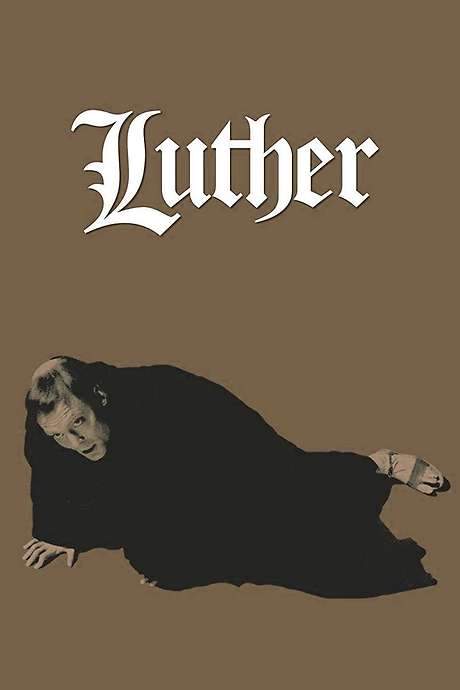
Luther 1974

Directed by

Guy Green
Made by

The American Film Theatre
Where to Watch Luther
See current US streaming, rental, and purchase options for Luther (1974) via JustWatch.








Luther Plot Summary
Read the complete plot summary and ending explained for Luther (1974). From turning points to emotional moments, uncover what really happened and why it matters.
Luther Timeline
Follow the complete movie timeline of Luther (1974) with every major event in chronological order. Great for understanding complex plots and story progression.
Luther becomes a monk in Erfurt
The film opens in 1506 with Luther at the Augustinian monastery in Erfurt, choosing to become a monk. He endures rigid ascetic discipline and relentless self-scrutiny as he wrestles with inner demons and mounting doubt. Overwhelmed by sin, he collapses at the edge of the monastic stalls, consumed by fear and the feeling that there is no bottom to it.
Forgiveness and paternal reassurance before Mass
Before his first Mass, Brother Weinand informs him that his father will attend and that he should confess the Apostles' Creed, hearing that forgiveness comes from God. The exchange is meant to quiet Luther's fear and remind him that anger comes from within him, not from God. The moment highlights the friction between his need for ritual comfort and his emerging sense of divine mercy.
Vision of judgment and vow to St. Anne
Luther envisions Jesus as a fearsome judge perched on a rainbow, sword in hand. In the Mass he appears forgetful, and his father Hans Luther scolds him for abandoning his duty and hints he may be murdering himself. He recalls a vision that moved him to promise St. Anne to become a monk and to stay close to his father.
Staupitz challenges Luther's rules
Johann von Staupitz confronts Luther's reliance on rigorous rule, accusing him of resenting authority and turning devotion into mere performance. He urges Luther to critique the church in Latin rather than German in order to avoid stoking revolt. The scene sets up the tension between personal piety and reform from within the institution.
Ninety-Five Theses posted
On All Saints' Eve, 1517, Luther preaches about justification by faith and declares that forgiveness comes through faith rather than works. He hints that his inner discovery on the latrine sparked the reform and posts the Ninety-Five Theses for scholarly debate. The act signals a turning point that challenges church authority and inflames controversy.
Augsburg confrontation with Cajetan
At Augsburg in 1518, Luther faces Tetzel's successor, Cardinal Cajetan, who demands he retract his 'errors and sermons.' The confrontation exposes a growing rift between church authority and Luther's emerging doctrine. Luther refuses to recant, deepening his resolve to challenge papal prerogative.
Burning Exsurge Domine
Luther publicly burns the pope's bull Exsurge Domine in a bold act of defiance and prays for strength. He confronts a moment of doubt, asking if God is dead, then affirms that God cannot die, only seem hidden. The act intensifies the conflict with Rome and solidifies his reformist stance.
Diet of Worms: Here I Stand
During the Diet of Worms, Inquisitor Eck interrupts Luther's 'Here I Stand' speech with warnings that recantation could incite revolt. Luther remains steadfast, declaring his conscience is captive to God rather than to men. The emperor and princes depart, signaling a dangerous stalemate and the threat of further suppression.
Peasants' Revolt aftermath
Luther wanders a devastated marketplace filled with the slaughter of peasants, declaring that 'God is the butcher' and that humanity must answer to him. He cites the Sacrifice of Isaac to argue that God gives life in the face of death. The scene contrasts his moral stance against mob violence with ongoing calls for reform.
Dialogues with Staupitz and Katie
Confronted by Staupitz visiting Martin and his wife Katie, Luther concedes that the peasants had cause but insists mobs remain irreligious. Staupitz is relieved to hear Luther was unsettled at Worms, recognizing that uncertainty can temper zeal. The moment marks a shift toward a more cautious, nuanced reforming voice.
Help my unbelief
Luther prays, 'Help my unbelief,' acknowledging lingering doubt. He muses that true change requires more than ritual; he longs for a transformation of heart as he faces the devil's temptations. The inner struggle becomes a source of resolve to stand by his beliefs.
Katie's baby and a message of hope
Luther takes Katie's baby into his pulpit and reassures him that 'the dark isn't quite as thick as all that,' offering hope in Christ's promises. He cites John 16:16 to remind himself of the coming reunion and future revelation of Christ. The scene fuses personal faith with family life and seals his resolve to persevere.
Luther Characters
Explore all characters from Luther (1974). Get detailed profiles with their roles, arcs, and key relationships explained.
Martin Luther (Stacy Keach)
A brilliant but tortured monk who wrestles with sin, doubt, and fear of divine judgment. His journey moves from ascetic perfectionism to a faith-centered conviction as he clashes with church authority and defies it publicly. He embodies resilience and a relentless drive to align belief with personal conscience.
Katharina von Bora (Judi Dench)
Luther's wife, a stabilizing presence who helps ground him during his spiritual and doctrinal crises. She embodies resilience and offers a practical, compassionate counterweight to his intense introspection. Her presence signals the human dimension of reform within a clerical world.
Knight (Julian Glover)
A wounded knight who embodies loyalty and serves as a moral witness to Luther's impact. He recites loyalties and adds a martial tone to the religious conflict, highlighting the era's mix of faith and fealty. His presence frames the threat and consequence of Luther's ideas.
Hans Luther (Patrick Magee)
Luther's father, a stern authority figure who clashes with his son's decision to join the monastery. He represents the weight of familial expectation and the pressure to conform to conventional paths. His reactions illuminate the personal cost of Luther's religious awakening.
Johann von Staupitz (Maurice Denham)
Luther's mentor and Vicar General who counsels him to refine his critique and seek reform through careful scholarship. He is a sympathetic, guiding presence who understands the tension between obedience and theologizing rebellion. His guidance helps Luther articulate his doubts and beliefs.
Johann Tetzel (Hugh Griffith)
Indulgence preacher who embodies the church's monetized approach to forgiveness that Luther challenges. He represents the commercially driven theology that triggers Luther's critique and the wider reform movement. His presence highlights the clash over monetized salvation.
Cardinal Cajetan de Vio (Alan Badel)
A church official who confronts Luther with the threat of doctrinal censure. He embodies ecclesiastical authority and the pressure to retract, representing the institutional counterforce to reform. His exchanges underscore the high-stakes theological dispute.
Luther Settings
Learn where and when Luther (1974) takes place. Explore the film’s settings, era, and how they shape the narrative.
Time period
Early to mid-16th century
The film unfolds during the early to mid-16th century, a period of intense religious upheaval in the Holy Roman Empire. It traces Luther's journey from monk to reformer as he challenges indulgences and the authority of Rome. The era features theological debate, political power struggles, and upheaval among peasants and princes.
Location
Erfurt, Augsburg, Worms
Primary setting is the Augustinian monastery in Erfurt (1506), where Luther wrestles with sin and doubt. The drama also moves to Augsburg (1518) for a confrontation with church authorities, and to Worms for the Diet where he refuses to recant. A devastated marketplace scene later recalls the Peasants' Revolt of 1525, underscoring the social consequences of reform.
Luther Themes
Discover the main themes in Luther (1974). Analyze the deeper meanings, emotional layers, and social commentary behind the film.
🕯️
Faith and Doubt
Luther's inner struggle with sin and fear of divine judgment drives much of the film. He battles darkness and unbelief, yet clings to a sense of mercy and personal faith. The tension between private doubt and public reform illuminates the path from fear to conviction.
⚖️
Authority vs Conscience
The story pits institutional authority—indulgences, church hierarchy—against Luther's conscience and calls for reform. Counsel like Staupitz urges measured critique, and Luther's bold stand at the Ninety-Five Theses and Worms tests the limits of obedience. The conflict asks whether truth should bend to power or power to truth.
🔥
Conflict and Consequences
Reform ignites social upheaval, culminating in the Peasants' Revolt and harsh responses from authorities. The film shows mobs and political pressure, including the line about God in the face of violence, highlighting the cost of dissent. It frames reform as both spiritual awakening and societal clash.
🎯
Words and Stand
Central to the drama are the power of words and public declarations—the Ninety-Five Theses and the refusal to recant at Worms. The narrative emphasizes faith grounded in scripture, not merely ritual. Luther’s public stand marks a turning point in religious history.

Coming soon on iOS and Android
The Plot Explained Mobile App
From blockbusters to hidden gems — dive into movie stories anytime, anywhere. Save your favorites, discover plots faster, and never miss a twist again.
Sign up to be the first to know when we launch. Your email stays private — always.
Explore the mobile appFeatured on this page

What's After the Movie?
Not sure whether to stay after the credits? Find out!
Check out our other apps:

SAT Sphere
Build confidence for the Digital SAT.

Mori Atlas
Discover wild places worth protecting.

Luntero
Search smarter for a home in Amsterdam.

Plot Explained
Unravel movie endings and hidden clues.

Pokechamp
Dive into Pokémon data and battle logic.

Driving Theory
Get ready for your European theory test.

Movie Dust
Plan your next cinema trip with ease.

Musemap
Find art and culture as you travel.

Selkobase
Compare credentials before committing.

Local Manual
Turn an unfamiliar country into practical next steps.

Lernavi
Compare school systems before your next move.

GymRoam
Find a workout stop wherever your plans take you.
Explore Our Movie Platform
New Movie Releases (2026)
Famous Movie Actors
Top Film Production Studios
Movie Plot Summaries & Endings
Major Movie Awards & Winners
Best Concert Films & Music Documentaries
Movie Collections and Curated Lists
© 2026 What's After the Movie. All rights reserved.
Privacy Policy