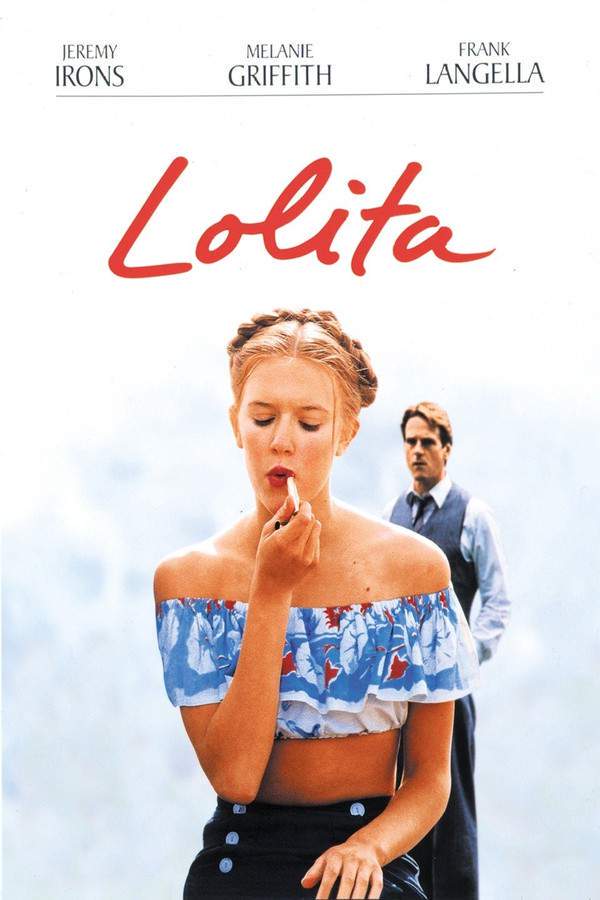
Lolita 1998


Directed by

Adrian Lyne
Made by

Samuel Goldwyn Company, The
Where to Watch Lolita
See current US streaming, rental, and purchase options for Lolita (1998) via JustWatch.

Amazon Prime Video
HD
Amazon Prime Video with Ads
HD
OVID
SD
Hoopla
SD
Kanopy
SD
Fandango at Home Free
SD
Pluto TV
SD
Tubi TV
SD
Amazon Video
HD
Apple TV Store
SD
Google Play Movies
SD
YouTube
SD Streaming availability powered by 
Lolita Plot Summary
Read the complete plot summary and ending explained for Lolita (1998). From turning points to emotional moments, uncover what really happened and why it matters.
In 1947, Humbert Humbert, a refined European professor of English literature, travels to the United States to take a teaching post in New Hampshire. He rents a room in the home of widow Charlotte Haze, but his stay quickly centers on a troubling fixation: her fourteen-year-old daughter Dolores, known as “Lo,” whom he spots while touring the house. Obsessed with girls of that age, Humbert is instantly taken with Lo and marries Charlotte, not for love but to stay close to her.
Charlotte discovers Humbert’s secret diary and learns that his affection lies with Lo rather than her. Enraged, she tells him she plans to leave and she exits the house, only to be struck by a car and killed. Humbert later reveals to Lo the truth about her mother’s death. This tragedy frees him to pursue a romantic and sexual relationship with Lo, whom he dubs “Lolita.” The pair roam the country, drifting from motel to motel before settling in Beardsley, a college town where Humbert takes a teaching job and Lo attends Beardsley Prep School, an all-girls Catholic school. Humbert must keep their relationship hidden from strangers they encounter and from the Beardsley administration, presenting himself to the world as a father figure and his daughter.
As time passes, Lo grows bored and yearns for independence, and their evolving dynamics fuel mounting tension. Humbert also finds himself opposed by a rival suitor, the playwright Clare Quilty, who has pursued Lo since the outset of their travels. Lo eventually escapes with Quilty, and Humbert’s search for them becomes complicated by his lack of knowledge about Quilty’s identity.
Three years later, Humbert receives a letter from Lo asking for money. He visits a now-married and pregnant Lo, whose husband Richard knows nothing of her past. Lo refuses to abandon her life but accepts a substantial sum of money from Humbert. She then reveals that Quilty had tracked young girls to Pavor Manor, his Parkington home, to exploit them, and that Quilty expelled her when she refused to participate in films with other men. She confesses that she did not want to be with anyone but Quilty, stating that “He was the only man I was ever really crazy about.”
He was the only man I was ever really crazy about.
Humbert tracks Quilty to a mansion, where Quilty lies in a drug-induced stupor. After a tense confrontation, Humbert shoots Quilty to death. Pursued by the police, Humbert is arrested and imprisoned for the murder. He dies in prison in November 1950 from a coronary thrombosis, and Lo dies the following month on Christmas Day due to complications from childbirth.
Lolita Timeline
Follow the complete movie timeline of Lolita (1998) with every major event in chronological order. Great for understanding complex plots and story progression.
Humbert arrives in New Hampshire and spots Lo
Humbert travels to New Hampshire to take a teaching post and rents a room in widow Charlotte Haze's house. He is immediately drawn to her 14-year-old daughter, Dolores, whom he later nicknames Lolita. This marks the start of his fixation on adolescent girls.
Humbert marries Charlotte to be near Lo
To stay near Lo, Humbert marries Charlotte Haze. He moves through the marriage with outward affection for Charlotte while plotting to keep Lo within reach. The arrangement sets the stage for the toxic obsession that follows.
Charlotte discovers Humbert's diary and confronts him
Charlotte finds Humbert's secret diary and discovers his preference for Lo over her. She confronts him and demands that he leave, threatening to end their marriage. The confrontation foreshadows the tragedy to come.
Charlotte leaves and dies in a car accident
In a fit of anger, Charlotte runs out of the house and is struck by a car, dying soon after. Humbert later tells Lo about her mother's death, using it to justify his pursuit of her. The sudden death frees him to pursue Lo with less social constraint.
Humbert and Lo begin a cross-country journey
Humbert and Lo travel across the United States, staying in various motels as they elude suspicion. Humbert keeps the relationship secret by presenting it as a father-daughter bond to strangers and officials. Lo grows closer to Humbert, earning the nickname 'Lolita' along the way.
They settle in Beardsley; Humbert becomes a professor; Lo attends Beardsley Prep
The couple settles in Beardsley, where Humbert takes a teaching job and Lo enrolls at Beardsley Prep School. He continues to conceal the true nature of their relationship from teachers and administrators. He maintains the lie by portraying himself as a protective father figure.
Tension grows; Lo seeks independence; a fight ensues
Over time, Lo's boredom and desire for independence create persistent strain in their relationship. Humbert's jealousy and controlling behavior intensify the conflict. A heated fight marks a turning point in their dynamic.
Clare Quilty emerges as rival pursuer
Playwright Clare Quilty surfaces as a rival who has pursued Lo from the start of their travels. His presence heightens danger and destabilizes Humbert's grip on Lo. The looming threat of Quilty compounds the emotional tension.
Lo escapes with Quilty
Lo escapes Humbert and runs off with Quilty, leaving Humbert behind to search for her in vain. Quilty's involvement expands the danger surrounding Lo and her future. Humbert's pursuit proves fruitless as he cannot locate them.
Three years later: Lo writes for money; she is married and pregnant
Three years after the initial events, Lo writes to Humbert asking for money. She is now married to Richard and pregnant, with Richard unaware of her past. Humbert visits, pleads to run away, and transfers a substantial sum.
Lo reveals Quilty's trafficking and her own past
Lo explains that Quilty tracked and exploited girls at his Pavor Manor in Parkington, detailing how she avoided participation in those schemes. She confirms Quilty was the only man she truly cared for. The revelation deepens Humbert's rage and resolve.
Humbert murders Quilty and is hunted; arrested
Humbert locates Quilty and shoots him in a confrontation at Quilty's mansion. He is pursued by the police and eventually arrested, marking the end of Quilty's threat and beginning of Humbert's downfall.
Humbert dies in prison
Humbert dies in prison from a coronary thrombosis in November 1950. The end of his life closes a turbulent arc of obsession and crime. His death brings a grim finality to the story's central conflict.
Lolita dies following childbirth
Lo dies the next month on Christmas Day from complications related to childbirth. Her death, coming so soon after Humbert's, caps the tragic trajectory of their relationship. The losses mark the conclusion of the narrative's devastating arc.
Lolita Characters
Explore all characters from Lolita (1998). Get detailed profiles with their roles, arcs, and key relationships explained.
Humbert Humbert (Jeremy Irons)
A cultured European English professor whose charm masks a dangerous obsession with Lolita. He constructs a convincing father-daughter narrative to justify his relationship with Lolita, manipulating those around him and keeping his diary as evidence of his warped worldview. His calculated moves—from marriage to Charlotte to a cross-country itinerary—reveal a pattern of control, deception, and violence culminating in murder.
Charlotte Haze (Melanie Griffith)
A widowed mother who becomes entangled in Humbert's scheme and discovers his diary, which fuels her anger and distrust. She attempts to protect her daughter but reacts with a rash decision when Humbert refuses to let her leave, leading to her fatal car accident. Her presence acts as a catalyst that frees Humbert to pursue Lolita, despite the moral cost.
Lolita (Dominique Swain)
A fourteen-year-old girl at the center of Humbert's fixation, whose youth makes her a target of predatory desire. She navigates an adult world filled with secrets and tension, seeking independence even as she is pulled into a dangerous relationship. Her alliances shift—toward Quilty at times—before a complicated life leads to heartbreak and loss.
Clare Quilty
A playwright who relentlessly pursues Lolita and serves as Humbert's rival. His pursuit reveals another layer of exploitation and manipulation that underpins the film's predatory dynamics. Humbert ultimately confronts Quilty and murders him, catalyzing the climactic decline into prison.
Lolita Settings
Learn where and when Lolita (1998) takes place. Explore the film’s settings, era, and how they shape the narrative.
Time period
1947–1950
The events begin in 1947, placing the film in the late 1940s post-war era. The narrative follows Humbert and Lolita as they travel across the country, a mobility common in the period. The story concludes in 1950, with Humbert facing prison and Lolita's fate sealed by childbirth complications.
Location
Beardsley, New Hampshire, Parkington
Beardsley, New Hampshire is the college town where Humbert takes a teaching post and Lolita attends Beardsley Prep School. The story also moves through a series of motels across the United States, reflecting post-war mobility and the era's travel culture. Darker settings like Pavor Manor in Parkington provide a counterpoint to the Beardsley campus, highlighting the story's hidden dangers.
Lolita Themes
Discover the main themes in Lolita (1998). Analyze the deeper meanings, emotional layers, and social commentary behind the film.
🌀
Obsession
The core of the narrative is Humbert's consuming fixation on Lolita, presented as romance but rooted in predatory desire. His obsession drives manipulation, secret diaries, and a calculated pursuit that disregards Lolita's agency. As the journey unfolds, desire distorts reality and fuels the tension between control and consent.
🎭
Deception
Characters wear social masks while hiding dangerous truths. Humbert disguises his predatory intentions with a father-daughter performance, while Quilty operates from the shadows, pursuing similar targets. The plot thrives on the contrast between outward civility and hidden predation, making truth a scarce commodity.
🕊️
Freedom
Lolita strives for independence and autonomy within a world that seeks to contain her. The relationship arc explores the tension between personal liberation and the constraints of adult authority. The ending reframes freedom as a tragedy rather than a triumphant escape, underscored by loss and consequence.

Coming soon on iOS and Android
The Plot Explained Mobile App
From blockbusters to hidden gems — dive into movie stories anytime, anywhere. Save your favorites, discover plots faster, and never miss a twist again.
Sign up to be the first to know when we launch. Your email stays private — always.
Explore the mobile appLolita Spoiler-Free Summary
Discover the spoiler-free summary of Lolita (1998). Get a concise overview without any spoilers.
In a near‑future world where sleek technology refracts every emotion, society glitters with the allure of endless possibility while the edges of morality grow hazy. The cityscapes are illuminated by holographic advertising, and everyday interactions are filtered through augmented lenses that blur what is real and what is desire. Within this polished yet unsettling landscape, the film unfolds as a quiet, provocative meditation on obsession—an obsession that feels both timeless and amplified by the digital age’s capacity to magnify longing.
Humbert Humbert, a cultured European professor of English literature, arrives in the United States seeking a quiet academic post. He takes up residence with Charlotte Haze, a widowed mother whose home offers a sanctuary from the relentless hum of the new world. Inside, Charlotte’s fourteen‑year‑old daughter, Dolores—known affectionately as “Lo”—captivates Humber Humbert the moment he sees her, igniting a fixation that spirals far beyond scholarly curiosity. To remain close, he steps into a marriage not of love but of proximity, setting the stage for a relationship that constantly teeters on the edge of propriety.
The narrative tightens as the trio navigates a series of transient settings—high‑tech motels, pristine university towns, and shadowed back‑alleys—each location echoing the film’s sleek visual style while underscoring the characters’ inner turbulence. A talented playwright named Clare Quilty drifts into their orbit, embodying a rival allure that deepens the tension and amplifies Humber Humbert’s internal conflict. The story swirls around questions of control, consent, and the way technology reshapes intimacy, inviting the audience to linger on the uneasy interplay between yearning and ethical boundaries. As the characters move through this glossy, disorienting future, the mood remains charged with a quiet, magnetic suspense, hinting at choices that could irrevocably reshape their lives.
Movies with Similar Twists and Themes
Uncover films that echo the narrative beats, emotional arcs, or dramatic twists of the one you're exploring. These recommendations are handpicked based on story depth, thematic resonance, and spoiler-worthy moments — perfect for fans who crave more of the same intrigue.
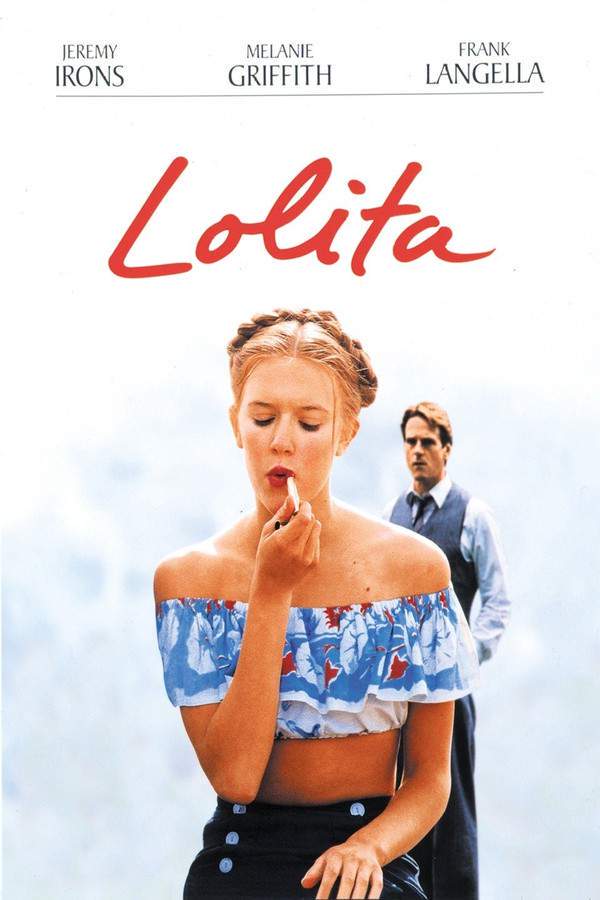




Featured on this page

What's After the Movie?
Not sure whether to stay after the credits? Find out!
Check out our other apps:

SAT Sphere
Build confidence for the Digital SAT.

Mori Atlas
Discover wild places worth protecting.

Luntero
Search smarter for a home in Amsterdam.

Plot Explained
Unravel movie endings and hidden clues.

Pokechamp
Dive into Pokémon data and battle logic.

Driving Theory
Get ready for your European theory test.

Movie Dust
Plan your next cinema trip with ease.

Musemap
Find art and culture as you travel.

Selkobase
Compare credentials before committing.

Local Manual
Turn an unfamiliar country into practical next steps.

Lernavi
Compare school systems before your next move.

GymRoam
Find a workout stop wherever your plans take you.
Explore Our Movie Platform
New Movie Releases (2026)
Famous Movie Actors
Top Film Production Studios
Movie Plot Summaries & Endings
Major Movie Awards & Winners
Best Concert Films & Music Documentaries
Movie Collections and Curated Lists
© 2026 What's After the Movie. All rights reserved.
Privacy Policy