
La Commare Secca 1962


Directed by
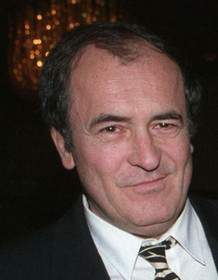
Bernardo Bertolucci
Made by

Cineriz
Where to Watch La Commare Secca
See current US streaming, rental, and purchase options for La Commare Secca (1962) via JustWatch.


Streaming availability powered by 
La Commare Secca Plot Summary
Read the complete plot summary and ending explained for La Commare Secca (1962). From turning points to emotional moments, uncover what really happened and why it matters.
The film opens with a stark, arresting image: a prostitute’s corpse lying on the riverbank of the Tiber in Rome. From there, the story unfolds through a sequence of police interrogations, as investigators question suspects who were known to be in a nearby park at the time of the murder. Each suspect offers a personal, day-in-the-life recounting, and every narrative functions as a self-contained slice of urban existence rather than a single, linear truth.
- A young man recounts his quest for a job recommendation from priests, yet the footage reveals that he and his friends spent the day and evening scheming to rob lovers in the park.
- A gigolo is shown treating his girlfriends badly, exposing a pattern of careless cruelty beneath smooth charm.
- A soldier struggles to connect with women, ultimately failing in his advances and collapsing onto a park bench in exhaustion.
- Two teenage boys share a pleasant afternoon with two teenage girls, only to end up stealing from a homosexual man they meet in the park.
The final flashback centers on the moment of the prostitute’s murder, carried out by a man in clogs who had already been interrogated and who is later apprehended at a dance. Each narrative is punctuated by a sudden thunderstorm, and whenever the storm breaks, the story retreats to the prostitute’s apartment as she prepares for her evening, creating a rhythmic interruption that links the various perspectives.
The film’s structure draws a clear line to Rashomon in its collage of viewpoints, even as director Bernardo Bertolucci later denied having seen Kurosawa’s classic at the time. Rather than presenting a single, authoritative account, it weaves together conflicting memories and subjective truths, inviting viewers to weigh how each character’s mood, bias, and personal desire color what they claim to have experienced. The result is a moody, textured portrait of a city and a crime, where the boundaries between truth and perception blur as the rain-soaked narrative cycles back to the apartment where the evening begins. Through these interwoven testimonies, the film paints a broad, if fragmented, portrait of human behavior—desire, envy, fear, and the unpredictable twists of fate that can accompany a single, tragic act.
La Commare Secca Timeline
Follow the complete movie timeline of La Commare Secca (1962) with every major event in chronological order. Great for understanding complex plots and story progression.
Discovery of the prostitute's body
The film opens with the brutal image of a prostitute's corpse lying on the bank of the Tiber in Rome. This shocking scene triggers the police investigation and sets a somber mood for the rest of the story. The investigators begin to piece together what happened that night.
Police begin interrogations
Detectives interview suspects who were known to be in the nearby park at the time. Each confession is filtered through memory and motive as the investigators try to reconstruct the events of the day. The interrogations reveal a web of partial truths and personal motives.
Young man claims job lead with priests
A young man tells the police he was meeting with priests to get a job recommendation. In truth, his confession hints that he and his friends spent the day roaming the park looking to rob couples. The scene foreshadows the moral ambiguity at the heart of the case.
The gigolo's misrule
A gigolo recounts his relationship with two girlfriends, but the tale exposes how he treats them badly. The narrative explores manipulation and shallow desire that surrounds the park's nightlife. This episode highlights vulnerability within the social circle of the crime.
The soldier's failed pick up
A soldier describes his failed attempts to charm women and his eventual fall asleep on a park bench. The story reveals loneliness and the routine disappointments that punctuate the day in the city park. It also hints at the absence of a solid alibi.
Teens and a theft in the park
Two teenage boys spend a pleasant afternoon with two teenage girls, but their excursion ends with them stealing from a homosexual man in the park. The incident adds a layer of social complexity and cruelty to the day’s events. The audience learns that crime and desire mingle in this crowded public space.
The murder flashback
The final flashback shows the prostitute's murder committed by a man in clogs who has already been interrogated. The scene connects the earlier testimonies to the killing and begins the path toward justice. His act is central to identifying the killer and unlocking the truth of the case.
Arrest of the killer at a dance
The murderer is finally apprehended at a dance, tying together the threads of the various testimonies. The arrest brings closure to the interrogation process and reveals how the truth can emerge through conflicting memories. The dance setting also underscores the film's themes of performance and disguise.
Thunderstorms interrupt each narrative
Throughout each testimony, sudden thunderstorms interrupt the storytelling. These storms create rhythm in the film and trigger transitions between stories. They physically lead to a recurring interlude in the prostitute's apartment as she prepares for her evening.
Interludes in the prostitute's apartment
The thunderstorms send the action to the prostitute's apartment, where she prepares for her evening. These interludes provide a counterpoint to the park stories and offer a glimpse into the prostitute's own perspective and routine. They reinforce the film's narrative framework of interruptions and storytelling.
The park as shared ground
Despite the different perspectives, each confession orbits the park as the shared setting of the day. The suspects' timelines intersect with the place where the crime occurred, highlighting the film's Rashomon-like structure. The park becomes a character in its own right.
Killer identity and justice
Through the juxtaposition of stories and the killer-proofs, the police converge on the man in clogs as the murderer. The final truth comes from examining the contradictions in memory and motive across the suspects. The film resolves with the killer finally facing justice.
La Commare Secca Characters
Explore all characters from La Commare Secca (1962). Get detailed profiles with their roles, arcs, and key relationships explained.
Bruna (Marisa Solinas)
Bruna is a central figure in the film’s social web surrounding the murder; her actions illuminate class dynamics, desire, and social reputation. Her testimony, like the others, is colored by memory and bias, showing how truth emerges through subjective storytelling.
Esperia (Gabriella Giorgelli)
Esperia is part of the network of characters implicated in the case; her park presence and subsequent recounting contribute to a mosaic of perspectives. She embodies the tension between appearance and truth as her narrative shapes the viewer’s understanding.
Serenella (Carlotta Barilli)
Serenella is a figure within the intertwined social circles around the murder; her actions illustrate the film’s focus on interpersonal dynamics and moral judgments in everyday life.
Teodoro, the soldier (Allen Midgette)
Teodoro represents male vulnerability and the failures of bravado, as the soldier’s attempts to charm or dominate women are exposed in the park and through the testimonies. His behavior reveals masculine fragility within the social setting.
Bostelli (Alfredo Leggi)
Bostelli is among the suspects whose actions are recalled in police interrogations, contributing to the mosaic of motives and opportunities surrounding the murder.
Homosexual (Silvio Laurenzi)
The character labeled 'Homosexual' highlights social attitudes and prejudices in interactions around the park and the crime, showing how sexuality intersects with reputation in the narrative.
Francolicchio (Alvaro D'Ercole)
Francolicchio is a figure within the suspect circle whose recollections contribute to the film’s mosaic of truth, desire, and guilt within the urban milieu.
Soraya (Clorinda Celani)
Soraya participates in the web of relationships and social interactions surrounding the murder, illustrating how rumor and memory shape the narrative.
Mayor (Vincenzo Ciccora)
The Mayor appears as a local authority figure within the social milieu, grounding the setting in a mid-20th-century Italian town and reflecting civic concerns in the case.
Milly (Lorenza Benedetti)
Milly is part of the social circle whose presence and reactions contribute to the film’s portrait of judgment and communal behavior.
Nino (Giancarlo De Rosa)
Nino is one of the younger figures whose actions and perspective are revealed through the testimonies, highlighting youth within the urban setting.
Elena Fontana
Elena Fontana is a character in the narrative who contributes to the mosaic of testimonies and social interactions around the crime.
Maria Fontana
Maria Fontana is another figure in the circle of witnesses and acquaintances whose memories and statements feed the film’s structure of competing versions.
Pipito (Romano Labate)
Pipito is part of the network of people in the park and surrounding area whose stories intersect, adding to the film’s layered narrative voice.
Esperia’s mother (Santina Lisio)
Esperia’s mother represents the older generation’s perspective and concern with social reputation, adding moral weight to the testimonies and reactions.
Maria (Ada Peragostini)
Maria is a character involved in the network of relationships around the case, contributing to the web of recollections and motives examined by the police.
La Commare Secca Settings
Learn where and when La Commare Secca (1962) takes place. Explore the film’s settings, era, and how they shape the narrative.
Location
Tiber River banks, Rome, city park, apartment interiors
The film unfolds in a dense urban Rome, anchored by the banks of the Tiber and a central city park. Scenes shift between public outdoor spaces and intimate interiors, including the prostitute's apartment that punctuates the narratives. The urban backdrop highlights social contrasts and the claustrophobic atmosphere of a city under scrutiny.
La Commare Secca Themes
Discover the main themes in La Commare Secca (1962). Analyze the deeper meanings, emotional layers, and social commentary behind the film.
🎭
Subjectivity
The story unfolds through multiple testimonies, with each suspect recounting portions of the day. These competing accounts reveal how memory, bias, and social judgment shape perceived truth. The film uses this structure to explore how truth becomes fragmented amid ambiguity.
⛈️
Storm Interludes
Thunderstorms interrupt each narrative, creating dramatic pauses that lead to scenes inside the prostitute's apartment. The weather functions as a narrative device that reframes events and underscores the fragility of the testimonies.
🔎
Interrogation
Police interrogations drive the plot, pressing suspects and exposing gaps in their stories. This mechanism reveals social tensions, class anxieties, and the ethical murkiness of the characters as they grapple with guilt and reputation.

Coming soon on iOS and Android
The Plot Explained Mobile App
From blockbusters to hidden gems — dive into movie stories anytime, anywhere. Save your favorites, discover plots faster, and never miss a twist again.
Sign up to be the first to know when we launch. Your email stays private — always.
Explore the mobile appLa Commare Secca Spoiler-Free Summary
Discover the spoiler-free summary of La Commare Secca (1962). Get a concise overview without any spoilers.
In a rain-soaked Rome, where the Tiber riverbank offers little solace, the discovery of a young prostitute’s body in a park triggers a tense police investigation. The city is wrapped in a moody atmosphere, its streets slick with rain and shadows, as detectives work to reconstruct the timeline of a brutal crime. With the elements closing in, the authorities turn their attention to a series of potential witnesses, each of whom holds a piece of the puzzle but none of whom seems willing to offer the whole truth.
The investigation brings a diverse cross-section of Roman society under the microscope, including Nino, a teenager preoccupied with girls; Canticchia, a weary pickpocket; a soldier on leave; a curious tourist; and a local pimp. As each suspect recounts their day, the film unfolds as a collection of personal vignettes, shifting perspectives to reveal the distinct worlds these characters inhabit. Their stories are defensive and subjective, forcing the detectives—and the viewer—to sift through a web of contradictory accounts and hidden motives to find a coherent narrative amid the chaos.
Bernardo Bertolucci shapes this mystery into a meditation on perception, where the boundaries between reality and memory blur under the weight of a passing thunderstorm. The narrative weaves these individual testimonies together, interrupting the flow of interrogations with glimpses of the victim’s preparations, creating a rhythmic contrast between life and death. As the storm rages outside, the film captures the texture of a city on edge, leaving the audience to navigate a landscape where envy, desire, and fate collide in the pursuit of a single, elusive truth.
Movies with Similar Twists and Themes
Uncover films that echo the narrative beats, emotional arcs, or dramatic twists of the one you're exploring. These recommendations are handpicked based on story depth, thematic resonance, and spoiler-worthy moments — perfect for fans who crave more of the same intrigue.


Featured on this page

What's After the Movie?
Not sure whether to stay after the credits? Find out!
Check out our other apps:

SAT Sphere
Build confidence for the Digital SAT.

Mori Atlas
Discover wild places worth protecting.

Luntero
Search smarter for a home in Amsterdam.

Plot Explained
Unravel movie endings and hidden clues.

Pokechamp
Dive into Pokémon data and battle logic.

Driving Theory
Get ready for your European theory test.

Movie Dust
Plan your next cinema trip with ease.

Musemap
Find art and culture as you travel.

Selkobase
Compare credentials before committing.

Local Manual
Turn an unfamiliar country into practical next steps.

Lernavi
Compare school systems before your next move.

GymRoam
Find a workout stop wherever your plans take you.
Explore Our Movie Platform
New Movie Releases (2026)
Famous Movie Actors
Top Film Production Studios
Movie Plot Summaries & Endings
Major Movie Awards & Winners
Best Concert Films & Music Documentaries
Movie Collections and Curated Lists
© 2026 What's After the Movie. All rights reserved.
Privacy Policy