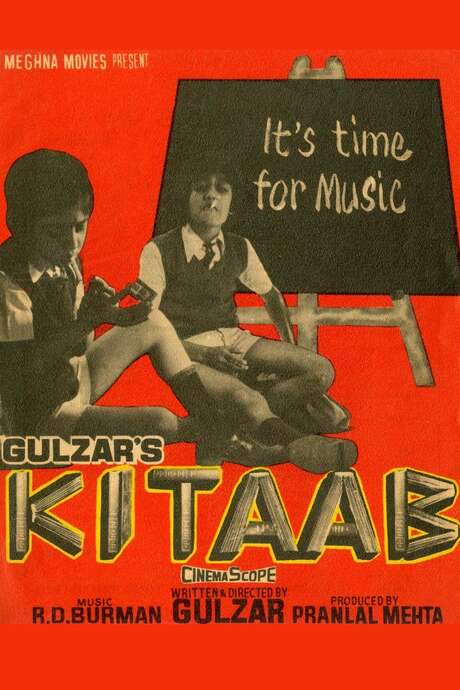


Where to Watch Kitaab
See current US streaming, rental, and purchase options for Kitaab (1977) via JustWatch.





Kitaab Plot Summary
Read the complete plot summary and ending explained for Kitaab (1977). From turning points to emotional moments, uncover what really happened and why it matters.
Babla, Raju Shrestha, is a curious kid who grows up in a quiet village with his mother, Dina Pathak. To give him a chance at a better education, his mother sends him to stay with his sister in the city, Vidya Sinha, where a wider world awaits. At first, Babla loves both school and his sister’s bustling home, and he quickly befriends his classmate, Pappu, Master Tito. The two rove through the streets, watch street magic shows, marvel at how sweets are made, and tease teachers, soaking up the small, bright wonders of everyday life. Their days unfold with laughter, carefree questions, and a sense that anything is possible.
But the glow fades as his sister and brother-in-law begin to scold him for his supposed disinterest in studies and for classroom antics. Babla starts to sense that adults may not understand the innocence and unfiltered view of life that children carry, and he confronts a growing realization: growing up means balancing joy with responsibility. The realization lands hard, and he feels the pull of a simpler life back with his mother in the village, even as he knows the decision won’t be easy.
One night, he decides to leave and boards a train without a ticket; the ticket-master, Asit Sen, quickly stops him at the next station. In the chill of night he seeks shelter and finds an old woman sleeping under a blanket, lying down beside her to share warmth. In the morning, when the old woman is still asleep, he slips a coin from her container to buy water, only to discover a crowd gathering around the elderly woman—she has died. The weight of what he witnesses shakes him to his core, and he comes to understand, perhaps for the first time, that life is not simply fair or easy for those who are poor. He quietly returns the coin and hurries back toward the familiar safety of his mother’s home.
Back with his family, Babla is met with a mix of worry and relief. His mother, Dina Pathak, his sister, Vidya Sinha, and her husband greet him with open arms, grateful that he is safe. He promises that he will study more earnestly and refrain from causing trouble, acknowledging that the road ahead will require patience, effort, and a broader understanding of life. The film closes on a note of mature resolve: a child who has touched the edges of wonder and danger, learning that growing up means honoring responsibility while preserving the curiosity that gives life its color.
Kitaab Timeline
Follow the complete movie timeline of Kitaab (1977) with every major event in chronological order. Great for understanding complex plots and story progression.
Babla leaves village for schooling in the city
Babla's mother Dina Pathak decides he should go to his sister Vidya Sinha in the city so he can attend a better school. She hopes the change will help him grow and learn. Babla is initially excited about leaving the village for urban life.
Arrives at Vidya's home; city life begins
Babla arrives at his sister's home in the city and feels welcomed at first. He loves the city and instantly makes friends, enjoying the new freedoms. The home becomes a base for his early exploration and adaptation.
Babla befriends Pappu and explores the city streets
Babla befriends his classmate Pappu and the two roam the busy streets together. They watch street magic shows, peek at how sweets are made, and imagine performing similar tricks themselves. The pair revel in carefree city life away from rules.
Discipline and school trouble
As school starts, Babla's carefree attitude clashes with expectations. His sister and brother-in-law scold him for seeming disinterested in studies and for antics in class. The school also flags complaints, making him feel misunderstood by adults who can’t see his innocence.
Realisation of harsh city life
Babla begins to grasp the harsh realities hidden behind city life. He realizes that many people struggle, and his own comfort hides deeper hardships. This insight shatters his earlier carefree view and pushes him toward longing for home.
Decision to return to village
Feeling overwhelmed, Babla resolves that life with his mother might be easier and more honest. He decides to leave the city and go back to his village. The choice marks a turning point in his understanding of where he truly belongs.
Runs away and boards a train without a ticket
Babla runs away from Vidya's home and sneaks onto a train without a ticket. He hopes to return to his mother, but the journey is uncertain and risky. The act shows his desperation to escape the pressure and find a simpler life.
Caught at the next station
The ticket-master catches him and forces Babla to alight at the next station. The humiliation of being caught marks a harsh moment in his escape. He finds himself stranded with only his resolve to guide him.
Night on the platform; cold and alone
On the platform at night, Babla feels cold and searches for a safe place to sleep. He endures the chill while wondering what his next move will be. The platform becomes an unfamiliar, precarious space far from home.
Old woman and her death
He finds an old woman sleeping under a blanket and lying down beside her, sharing the warmth. In the morning, he wakes up to the crowd gathered around the sleeping elder and learns she has died. The moment starkly reveals the vulnerability of the poor.
Coin incident and realisation of hardship
In the commotion, Babla spots a coin in the old lady's container and pockets it briefly before putting it back. He goes to drink water and is startled by the growing crowd around the scene. The episode cements his understanding that life is not simple for those with little.
Return to his mother's home
Feeling shaken, Babla returns to his mother's village home and finds his mother, sister, and brother-in-law worried and overjoyed to see him. The family reunion underscores the closeness of home life. He realizes the distance he created could have been avoided.
Reunion and relief
The family expresses relief at his return, with the mother, sister, and brother-in-law embracing him warmly. They worry about the dangers he faced on the journey, but their joy at his safe return outweighs their concerns. Babla admits that he wants to take his studies seriously and make his family proud.
Promise to study sincerely
Back home, Babla makes a firm pledge to study sincerely and avoid causing trouble. The vow marks his commitment to maturing while staying connected to his family. The story solidifies a plan to balance innocence with responsibility.
Closing: growth and hope
Babla's journey ends with a realization that innocence must be balanced with responsibility. The film closes on a note of hope as he resolves to pursue his education while preserving his sense of wonder. The cycle of childhood and hardship continues, but with a plan to grow.
Kitaab Characters
Explore all characters from Kitaab (1977). Get detailed profiles with their roles, arcs, and key relationships explained.
Babla (Master Raju)
A curious village boy who longs for freedom and new experiences. He enjoys the antics of street life, street magic, and companionship with Pappu, yet he is unsettled by the discipline and expectations of schooling. His journey hints at a shift from playful innocence to a sense of responsibility as he navigates between two worlds.
Babla's Mother (Dina Pathak)
A loving and pragmatic mother who sends Babla to his sister in the city for better schooling. She hopes for his growth and safety, yet she remains a steady anchor for him and ultimately welcomes his return. Her actions reflect a balance between care and discipline.
Mrs. Komal Gupta (Vidya Sinha)
Babla's sister in the city who hosts him and represents adult expectations and boundaries. She and her husband press for academic success and proper conduct, illustrating the push-and-pull between a child's dreams and real-world pressures. Her presence marks the shift from village naivety to urban responsibility.
Pappu (Master Tito)
Babla's classmate and friend, a playful and inquisitive companion who shares in the urban adventures and curiosity about life beyond the village. Their friendship highlights the joys of childhood discovery and the allure of the unknown. Pappu helps fuel Babla's sense of wonder and mischief.
Train Passenger (Asit Sen)
A fellow traveler encountered during Babla's train journey back towards the village. This moment on the train underscores the film's themes of travel, transition, and the unpredictability of life on the rails. The encounter serves as a quiet counterpoint to the bustling city and the quiet village.
Ticket Collector (Ranvir Raj)
The authority who catches Babla for riding the train without a ticket, embodying the consequences of breaking rules. This moment exposes the vulnerability of a child caught between need, curiosity, and the system's rigid structure. His scene reinforces the film's realism about systemic discipline and its impact on the young.
Kitaab Settings
Learn where and when Kitaab (1977) takes place. Explore the film’s settings, era, and how they shape the narrative.
Location
Village, City
The story shifts between a rural village and a bustling city in India, highlighting the contrast between simplicity and modern pressures. The village life is close-knit and protective, while the city offers schooling and opportunity but also greater scrutiny. Trains linking the two spaces act as a conduit for travel, transition, and growth.
Kitaab Themes
Discover the main themes in Kitaab (1977). Analyze the deeper meanings, emotional layers, and social commentary behind the film.
👶
Innocence
Babla's childlike curiosity drives his exploration of street magic, sweets, and classroom dynamics. The film contrasts innocence with the harsher judgments of adults and the schooling system. This tension reveals how innocence meets the real world and shapes his coming-of-age.
🌱
Growing Up
The story tracks a transition from carefree play to responsibility as Babla faces rules, expectations, and consequences. He learns that life is not as simple as it seems and that happiness often requires effort and discipline. His decision to return home embodies a maturing choice between family and personal aspirations.
💸
Socioeconomic Reality
The narrative unfolds against a backdrop of poverty and inequality, underscored by moments of fear and vulnerability. Babla witnesses how economic conditions shape opportunity and dignity, especially when he is caught between two worlds. The film uses these experiences to critique how society treats children who wander from the expected path.

Coming soon on iOS and Android
The Plot Explained Mobile App
From blockbusters to hidden gems — dive into movie stories anytime, anywhere. Save your favorites, discover plots faster, and never miss a twist again.
Sign up to be the first to know when we launch. Your email stays private — always.
Explore the mobile appKitaab Spoiler-Free Summary
Discover the spoiler-free summary of Kitaab (1977). Get a concise overview without any spoilers.
In a sleepy village where the rhythm of life is set by seasons and simple chores, a bright‑eyed boy named Babla dreams of a world larger than the fields he knows. His devoted mother, Dina Pathak, sees education as the key to a better future and sends him to stay with his sister in the bustling city, a place where the streets pulse with noise, colour, and endless possibility. The film opens with a gentle, comedic tone that invites the audience to view everyday ordinary moments through the fresh, unfiltered eyes of a child discovering the extraordinary hidden in the mundane.
Arriving in the city, Babla is welcomed into a lively household run by his sister, Vidya Sinha, whose home bustles with the chatter of relatives and the clatter of urban life. At school he quickly befriends a spirited classmate, Pappu, and together they roam the alleys, watch street performers, and marvel at the alchemy of candy‑making. Their playful adventures are set against a backdrop of bright market stalls and crowded classrooms, creating a tableau that balances humor with a poignant sense of wonder. The city feels both inviting and bewildering, a kaleidoscope of sights and sounds that fuels Babla’s curiosity while gently nudging him toward new responsibilities.
As the days pass, the gentle comedy deepens into a quiet drama of expectations. Adults around him begin to question his carefree approach to study and conduct, prompting the young protagonist to sense the subtle tension between his innate joy and the demands of growing up. This emerging awareness introduces a thoughtful layer to the story, hinting at the universal challenge of reconciling a child’s boundless imagination with the growing weight of duty.
The film hovers in that delicate space where innocence meets the first stirrings of maturity. Its tone remains warm and observational, inviting viewers to linger on the small miracles of daily life while feeling the soft pull of responsibility that begins to shape Babla’s journey. The story promises a heartfelt exploration of how a young mind navigates the bright edges of wonder and the quiet shadows of adult expectation.
Movies with Similar Twists and Themes
Uncover films that echo the narrative beats, emotional arcs, or dramatic twists of the one you're exploring. These recommendations are handpicked based on story depth, thematic resonance, and spoiler-worthy moments — perfect for fans who crave more of the same intrigue.





Featured on this page

What's After the Movie?
Not sure whether to stay after the credits? Find out!
Check out our other apps:

SAT Sphere
Build confidence for the Digital SAT.

Mori Atlas
Discover wild places worth protecting.

Luntero
Search smarter for a home in Amsterdam.

Plot Explained
Unravel movie endings and hidden clues.

Pokechamp
Dive into Pokémon data and battle logic.

Driving Theory
Get ready for your European theory test.

Movie Dust
Plan your next cinema trip with ease.

Musemap
Find art and culture as you travel.

Selkobase
Compare credentials before committing.

Local Manual
Turn an unfamiliar country into practical next steps.

Lernavi
Compare school systems before your next move.

GymRoam
Find a workout stop wherever your plans take you.
Explore Our Movie Platform
New Movie Releases (2026)
Famous Movie Actors
Top Film Production Studios
Movie Plot Summaries & Endings
Major Movie Awards & Winners
Best Concert Films & Music Documentaries
Movie Collections and Curated Lists
© 2026 What's After the Movie. All rights reserved.
Privacy Policy