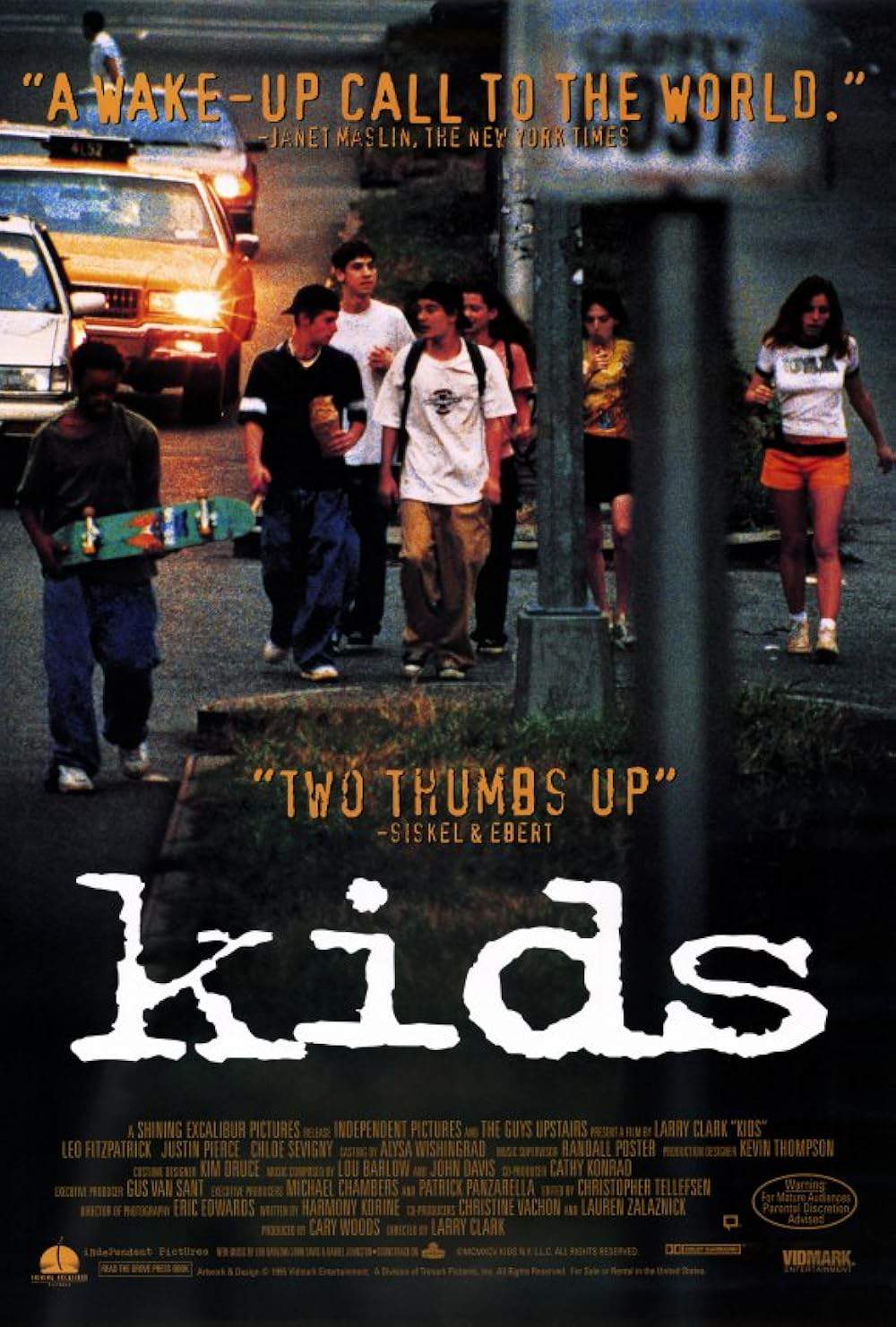
Kids 1995

Directed by

Larry Clark
Made by

Miramax
Kids Plot Summary
Read the complete plot summary and ending explained for Kids (1995). From turning points to emotional moments, uncover what really happened and why it matters.
Telly, Leo Fitzpatrick, a scrawny 16-year-old, and a virgin 12-year-old girl lie on a bed as they share a moment of intimacy. After their encounter, he talks with his best friend, Casper, Justin Pierce, about what just happened, and it becomes clear that Telly has started to seek out sexual experiences with virgins. They head to a local store where Casper shoplifts a 40 oz bottle of malt liquor, and on the way out, he also grabs two peaches from a Korean fruit vendor. In search of drugs, food, and a place to hang out, they make their way to their friend Paul’s apartment, though they don’t really like him. Seated there, they watch skaters on the TV and Casper quietly indulges in a whippet, while the group boasts about their sexual exploits, their casual attitude toward unprotected sex, and their lack of concern for venereal disease.
Across the city, a group of girls talk about sex, offering a contrasting voice to the boys’ bravado. Two of the girls, Ruby, Chloë Sevigny and Jennie, mention that they were recently tested for STDs: Ruby tests negative despite numerous encounters, while Jennie tests positive for HIV. Jennie confides that her infection came from a single sexual experience with Telly and she desperately tries to locate him to prevent further spread. In the meantime, Telly and Casper steal money from Telly’s mother as they continue to drift through the night.
After purchasing marijuana from a Rastafarian drug dealer, the pair gathers with a few friends and together they taunt a gay couple passing by. While Casper rides a skateboard, he carelessly bumps into a man who becomes violent; the man is knocked unconscious when Casper’s friend Harold strikes him with another skateboard, and the beating continues until the final blow renders him unconscious. Jennie is later seen in a cab, and the taxi driver offers her advice about finding happiness.
Telly and several skaters then pick up a 13-year-old girl named Darcy, Adriane Brown—the virginal younger sister of an acquaintance—whom Telly wants to have sex with, though Darcy resists at first. The group sneaks into a pool to swim with a few more friends, while Harold showboats his genitals for the others. Later, they head to an unsupervised party at the house of their friend Steven.
Jennie meets Misha, a girl who dislikes Casper and notes Telly’s possible whereabouts at The Shelter. When Jennie arrives at the club, she runs into a boy named Fidget; they go into a backroom and witness someone making out with three girls at the same time, and Fidget pushes a pill into her mouth. Jennie learns that Telly is at Steven’s house. On the way there, she drifts in and out of consciousness due to the effects of the pill, a roofie.
Inside Steven’s house, Telly is in his parents’ room trying to persuade Darcy to have sex with him; Darcy eventually agrees. Jennie arrives too late and discovers Telly having sex with Darcy, failing to intervene as Telly exposes Darcy to HIV. Jennie cries and collapses among the partygoers after the roofie takes effect.
The next morning, a drunken Casper rapes an inebriated Jennie, unknowingly exposing himself to HIV. A montage then shows homeless people and drug users across New York City, and a voiceover by Telly proclaims that sex is the only worthwhile thing in his life. The film closes on a stunned Casper, naked, asking, “Jesus Christ, what happened?”
Kids Timeline
Follow the complete movie timeline of Kids (1995) with every major event in chronological order. Great for understanding complex plots and story progression.
Telly and Casper seek a night of rough crowd and drugs
Telly and his friend Casper roam the city looking for drugs, food, and a place to hang out. They move through the streets with aimless energy, feeding their urge for thrills. The scene establishes a rebellious dynamic that drives much of what follows.
The store thefts
Casper shoplifts a 40 oz bottle of malt liquor, and the group exits with peaches from a vendor. Their petty theft marks a shift toward increasingly risky behavior. The act foreshadows later consequences of their actions.
Casper uses drugs and watches skate videos
The friends head to Paul’s apartment to hang out, watch skaters on the TV, and take nitrous from a whippet. The moment emphasizes their detachment from responsibility and their appetite for reckless fun. It also hints at how quickly their party atmosphere can escalate.
Across-the-city concerns about sex and health
Across the city, a group of girls discusses sex and STD testing, revealing varied attitudes toward risk and health. Ruby tests negative despite multiple encounters, while Jennie learns she is HIV positive. The revelation intensifies concern about who might be affected after sharing information.
Telly and Casper steal from Telly's mother
Telly and Casper sneak money from Telly’s mother, illustrating how far their behavior has spiraled. The act deepens the characters' moral decline and compounds the consequences of their choices. It also raises stakes for the rest of the night.
Rastafarian dealer and a violent confrontation
After buying marijuana from a Rastafarian dealer, the group taunts a nearby gay couple, prompting a confrontation when Casper bumps into a man. The altercation ends with the man being knocked unconscious by a response from the group, underscoring the escalating violence around them.
Darcy introduced and the pool scene
The group visits Darcy, the younger sister of an acquaintance, and they head to a pool. The scene captures their carefree, reckless approach to relationships and boundaries. It foreshadows the looming consequences of their peers' influence.
Unsupervised party at Steven's house
They attend an unsupervised party at Steven’s house, where alcohol and drugs flow and safety boundaries blur. The atmosphere spirals into chaos as the night continues. The gathering marks a turning point toward more dangerous behavior.
Jennie seeks information and encounters danger
Jennie heads toward the party after learning troubling information about HIV and the others’ whereabouts. She encounters danger and becomes entangled in the night’s escalating risk. The sequence heightens tension and shows how information travels through the social circle.
Morning aftermath and social bleakness
In the morning, the characters confront the aftermath of the night’s actions. The film expands to show broader social hardship, including homelessness and drug use in New York City. A stark voiceover from Telly closes with a grim reflection on his worldview.
Casper's confusion after the night
Casper wakes disoriented, trying to make sense of what happened. The moment underscores the emotional toll of the night’s reckless choices. It hints at the fragile line between bravado and reality.
Closing montage and aftermath
The closing montage depicts the harsh realities faced by homeless and drug-using populations. It emphasizes the consequences of reckless behavior and social neglect. The final images leave the audience with a bleak, unresolved sense of the characters’ futures.
Kids Characters
Explore all characters from Kids (1995). Get detailed profiles with their roles, arcs, and key relationships explained.
Telly (Leo Fitzpatrick)
Telly is a scrawny 16-year-old who pursues sexual experiences with a mix of bravado and insecurity. He defines himself through sexual conquest and aligns with a group that prizes risk-taking and boastful attitudes. His apparent confidence masks a lack of guidance and a susceptibility to peer pressure.
Casper (Justin Pierce)
Casper is Telly's best friend, drawn to thrill-seeking and impulsive behavior. He shoplifts, uses drugs, and participates in escalating acts of aggression and sexual coercion. His reckless bravado hides insecurity and a dependence on the group for validation.
Jennie (Chloë Sevigny)
Jennie is part of the girls' circle discussing sex and HIV risk. She tests HIV positive after a single encounter with Telly and tries to locate him to protect Darcy; she arrives at Steven's house too late. Her experiences reflect fear, stigma, and the consequences of unprotected sex.
Ruby
Ruby is one of the girls discussing sex and testing; she tests negative for HIV despite multiple encounters, offering a counterpoint to the HIV-positive narrative. She contributes to the conversation about sexual status, trust, and risk among teens.
Darcy
Darcy is a 13-year-old virgin, the younger sister of an acquaintance, whom Telly tries to coerce into sex. She shows restraint and is the object of the group’s predatory behavior, underscoring the vulnerable position of younger teens in the culture depicted.
Kids Settings
Learn where and when Kids (1995) takes place. Explore the film’s settings, era, and how they shape the narrative.
Time period
1990s
Set in the mid-1990s in New York City, the film captures the era’s street culture, casual attitudes toward sex and drugs, and the frenetic pace of adolescence. There are no adults monitoring the characters, a factor that accelerates risky decisions. The time period reinforces the sense of fearless experimentation and the consequences that follow.
Location
New York City
New York City serves as the sprawling backdrop, with scenes unfolding in skate parks, rooftops, a local store, a pool, and a crowded party house. The urban environment functions as a rough, exhilarating playground where teens seek belonging and momentary escape. The city’s anonymity and crowded streets amplify risk, vulnerability, and the pressure to perform.
Kids Themes
Discover the main themes in Kids (1995). Analyze the deeper meanings, emotional layers, and social commentary behind the film.
💋
Sexuality
The film centers on teenage sexuality, examining curiosity, first experiences, and the thrill of rebellion. It portrays how peer pressure, bravado, and the lack of guidance drive risky choices and the pursuit of sexual status. The narrative challenges conventional notions of innocence by presenting acts and conversations about sex in blunt terms.
🦠
STD & HIV
The plot juxtaposes HIV testing results among girls with the consequences of unprotected sex. Jennie tests HIV positive after a single encounter with Telly, while Ruby tests negative, highlighting stigma, fear, and misinformation surrounding HIV in the mid-1990s. The interactions reveal how disclosure and judgment complicate relationships and decisions.
💥
Violence
The story includes violent acts and coercive behavior among the teens, from theft and intimidation to rape. These events illustrate how aggression and entitlement escalate into real harm and reflect the consequences of unsupervised adolescence in a permissive social environment.

Coming soon on iOS and Android
The Plot Explained Mobile App
From blockbusters to hidden gems — dive into movie stories anytime, anywhere. Save your favorites, discover plots faster, and never miss a twist again.
Sign up to be the first to know when we launch. Your email stays private — always.
Explore the mobile appKids Spoiler-Free Summary
Discover the spoiler-free summary of Kids (1995). Get a concise overview without any spoilers.
In the heat‑baked streets of 1990s New York, a restless summer stretches out for a group of teenagers whose world is defined by skateboards, cheap liquor and an unfiltered soundtrack of youthful bravado. The city pulses around them, a gritty backdrop where every corner feels both a playground and a warning sign. The film captures that raw, documentary‑style atmosphere, letting the camera linger on cracked sidewalks, dimly lit basements and the neon glow of after‑hours clubs, all while a steady, sometimes dissonant score underscores the uneasy freedom of adolescence.
Telly, a lanky sixteen‑year‑old, navigates this world with a disturbing certainty about what “safe” sex means—namely, a relentless pursuit of encounters with girls who are inexperienced. His best friend, Casper, mirrors his reckless energy, and together they drift through parties and impromptu gatherings, swapping jokes and rumors while barely skimming the surface of the risks they take. Among the circle is Jennie, a girl whose own experiences begin to clash with the boys’ cavalier attitudes, hinting at a tension that will test the fragile codes they live by. The characters are drawn with a stark realism that feels both journalistic and deeply personal, revealing the fragile ego, the search for validation, and the looming presence of consequences that they barely acknowledge.
The tone is unapologetically honest, mixing gritty realism with moments of dark humor, and the narrative steadies itself on the contrast between the teens’ invincibility and the unseen dangers that linger in the shadows of their night‑time escapades. As the summer unfolds, the film invites viewers to contemplate how a generation’s misconceptions about intimacy, responsibility, and safety can swirl into something far more unsettling than they ever imagined, leaving an echo of doubt that lingers long after the last song fades.
Movies with Similar Twists and Themes
Uncover films that echo the narrative beats, emotional arcs, or dramatic twists of the one you're exploring. These recommendations are handpicked based on story depth, thematic resonance, and spoiler-worthy moments — perfect for fans who crave more of the same intrigue.

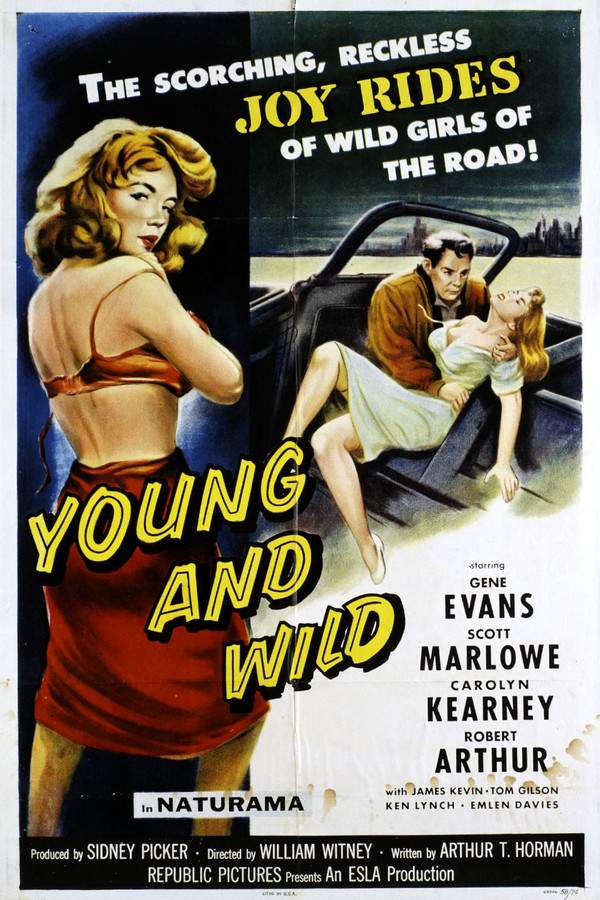
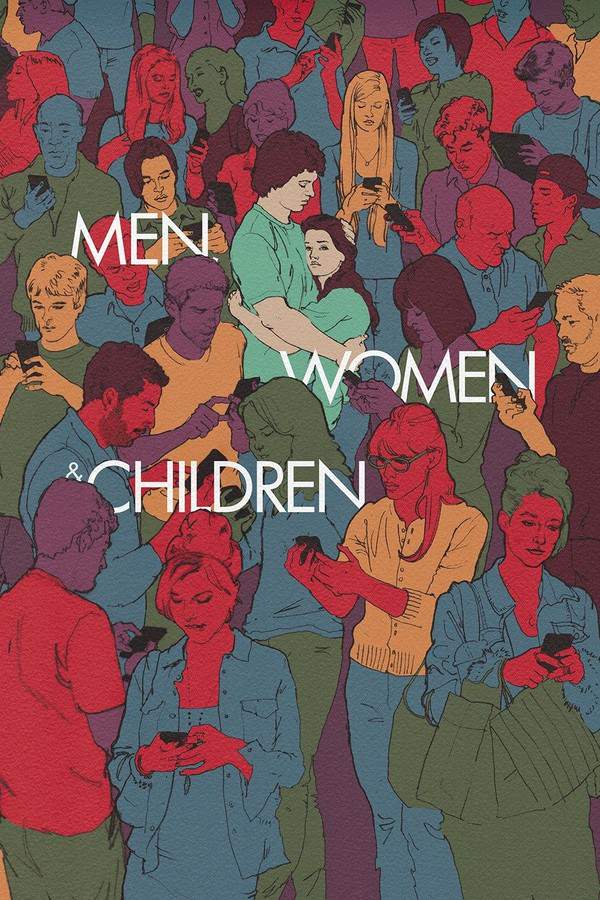
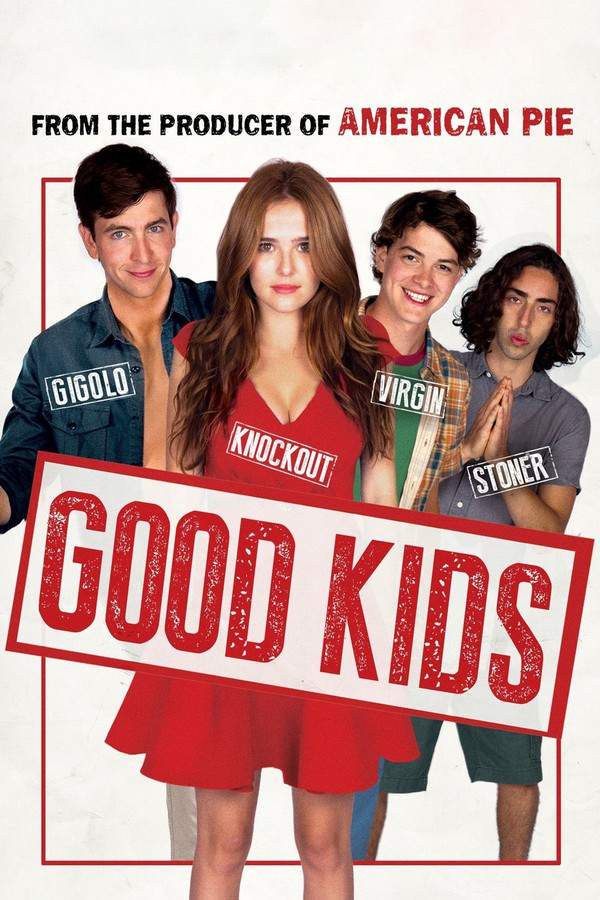

Featured on this page

What's After the Movie?
Not sure whether to stay after the credits? Find out!
Check out our other apps:

SAT Sphere
Build confidence for the Digital SAT.

Mori Atlas
Discover wild places worth protecting.

Luntero
Search smarter for a home in Amsterdam.

Plot Explained
Unravel movie endings and hidden clues.

Pokechamp
Dive into Pokémon data and battle logic.

Driving Theory
Get ready for your European theory test.

Movie Dust
Plan your next cinema trip with ease.

Musemap
Find art and culture as you travel.

Selkobase
Compare credentials before committing.

Local Manual
Turn an unfamiliar country into practical next steps.

Lernavi
Compare school systems before your next move.

GymRoam
Find a workout stop wherever your plans take you.
Explore Our Movie Platform
New Movie Releases (2026)
Famous Movie Actors
Top Film Production Studios
Movie Plot Summaries & Endings
Major Movie Awards & Winners
Best Concert Films & Music Documentaries
Movie Collections and Curated Lists
© 2026 What's After the Movie. All rights reserved.
Privacy Policy