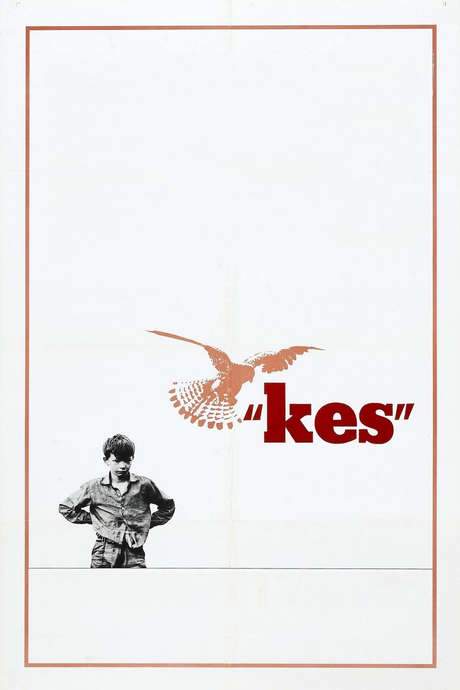
Kes 1969


Directed by

Ken Loach
Made by

Woodfall Film Productions
Where to Watch Kes
See current US streaming, rental, and purchase options for Kes (1969) via JustWatch.

Amazon Prime Video
HD
Amazon Prime Video with Ads
HD
fuboTV
HD
MGM Plus
HD
MGM Plus Roku Premium Channel
HD
MGM+ Amazon Channel
HD
Philo
HD
Tubi TV
SD
YouTube Free
HD
Amazon Video
SD
Apple TV Store
HD
Google Play Movies
SD
YouTube
SD Streaming availability powered by 
Kes Plot Summary
Read the complete plot summary and ending explained for Kes (1969). From turning points to emotional moments, uncover what really happened and why it matters.
Fifteen-year-old Billy Casper grows up in a late-1960s South Yorkshire town where the coal mining industry casts a long shadow over everyday life. He faces constant pressure at home from his older half-brother, a mine worker, and endures taunts and rough treatment at school from peers and some teachers. With his father long gone, his mother speaks of their prospects in a hushed, hopeful tone at times, but more often she frames their situation as a difficult reality, a “hopeless case” that seems hard to escape. Billy is marked as someone who will soon leave school as an “Easter Leaver”, without public examinations or qualifications, and he isn’t sure what kind of work might wait for him—indeed, Jud hints he may end up down the mine with him, while Billy himself resists that fate.
One day, Billy’s life takes a small but meaningful turn when he enters a farm yard and takes a kestrel, nicknamed Kes, from a nest. His curiosity about falconry grows into a real project as he borrows books on training the bird from a secondhand shop and tries to obtain library access against the odds of his age. As Kes becomes a companion and a channel for his ambitions, Billy’s outlook shifts: he begins to taste a sense of purpose and competence that has been missing for a long time. This spark earns him a rare moment of praise from his English teacher after he gives an spontaneous talk about training Kes, a moment that stands out as a rare highlight in his rough-and-tumble world.
Meanwhile, Jud’s world remains harsh and practical. He gives Billy money and instructions to place a bet on two horses, but after consulting a fellow punter who doubts the odds, Billy ends up spending the money on fish and chips with the intention of buying meat for Kes. The unexpected win of the horses leaves Jud furious and feeling betrayed, and he retaliates in a cruel, final act by releasing Kes into the wild. Yet the bird’s loyalty and desperation drive it back toward Jud; the moment ends with the kestrel’s claws slashing toward him, and Jud, in a brutal act, kills the bird. Grief-stricken, Billy retrieves the bird’s broken body from a waste bin and brings it to the attention of Jud and his mother, a quiet, painful confrontation that lays bare the fragility of hope in the face of loss.
In the aftermath, Billy and his family collide with the hard truths of their environment. The bird’s death becomes a catalyst that seals the emotional distance between Billy and the adults around him, while reinforcing his own longing for something more than a life mapped by mine work and daily struggle. The hillside above the fields, where Billy had once flown Kes, becomes a quiet setting for reckoning and memory. The story lingers on the tension between aspiration and adversity, showing how a young boy can find a brief, bright spark in a forbidden kind of friendship and skill, even as the larger forces of poverty, family strain, and social neglect threaten to snuff it out.
Throughout, the film portrays Billy with a careful, observant eye, balancing moments of tenderness and resilience with the unflinching toughness of working-class life. The bond with Kes is portrayed as a meaningful escape, a doorway to responsibility, patience, and a broader sense of possibility. The narrative remains grounded in realism, yet it allows glimpses of beauty and personal growth to shine through the otherwise stark landscape.
Kes Timeline
Follow the complete movie timeline of Kes (1969) with every major event in chronological order. Great for understanding complex plots and story progression.
Billy Casper's bleak home life
In the late 1960s in South Yorkshire, Billy Casper grows up in a poor community overshadowed by the coal mine. His father has left, and his mother speaks of their situation as a hopeless case while Jud, his abusive half-brother, looms over them. The home life is harsh and full of doubt about any bright future.
Easter Leaver and uncertain future
Billy is due to leave school as an Easter Leaver, with no public examinations and thus no qualifications. Jud expects him to soon join the mine workforce, while Billy admits he doesn't know what kind of job he'll take but rejects the idea of working in the mine. The opening scenes establish the limited opportunities he faces.
Stealing eggs and milk
Billy steals eggs and milk from milk floats, using small thefts to cope with his grim life. He is frequently provoked in school and faces abuse from teachers and classmates. These acts reveal his stubborn resilience amid a cycle of neglect.
Kes: taking the kestrel
One day Billy takes a kestrel from a nest on a farm, sparking an unlikely bond. The bird becomes a focal point of his life and a source of hope he has not experienced before. He feels drawn to the possibility of training and caring for Kes.
Launching falconry: book and library
Eager to learn falconry, Billy steals a book on the subject from a secondhand shop and tries to borrow a library card, since he is underage. He invests in knowledge and dreams of training Kes properly. This pursuit signals a shift from petty acts toward a longer-term goal.
First training sessions
Training Kes begins in earnest, and the bird gradually responds to Billy's handling. The practice deepens their bond and gives Billy a new focus in life. The improving trust between boy and bird starts to brighten his outlook.
Teacher's praise
For the first time, Billy is praised by his English teacher after delivering an impromptu talk about training Kes. The recognition offers a rare glimpse of his potential being seen by others. The moment stands in contrast to the rest of his harsh daily life.
Jud's bet money
Jud leaves money and instructions for Billy to place a bet on two horses, but a punter warns that the horses are unlikely to win. Billy follows the plan but ends up spending the money on fish and chips, hoping to buy meat for Kes. The butcher later gives him scrap meat for free, adding a small twist to the hardship.
The win and the revenge
The horses win, contradicting the doubts about the bet, and a payout would be due. Jud is outraged at losing the potential money and retaliates by releasing Kes into the wild. In a brutal turn, Kes flaps toward Jud with claws and he kills the kestrel.
Retrieving the broken body
Billy finds Kes's broken body in a waste bin and retrieves it, showing it to Jud and his mother. He is grief-stricken by the loss, though the act also demonstrates how deeply he cared for the bird. The moment crystallizes the tragedy that has closed a window of hope.
Burial on the hillside
Grief leads Billy to bury Kes on the hillside overlooking the field where he had flown. The burial becomes a solemn ritual and a quiet farewell to what Kes represented. The event marks the end of the hopeful horizon Kes opened in his life.
Kes Characters
Explore all characters from Kes (1969). Get detailed profiles with their roles, arcs, and key relationships explained.
Billy Casper (David Bradley)
Fifteen-year-old Billy is a quiet, stubborn boy navigating a harsh, working-class world. He is physically and verbally abused by his half-brother Jud and feels the weight of limited future prospects. His growing bond with Kes offers him hope and a sense of purpose beyond the mine. His sensitivity and determination to find something better drive the story forward.
Jud Casper
Billy's older half-brother, a rough, controlling figure who works at the mine. He resents Billy yet keeps him in line through intimidation and petty cruelty. His actions push Billy toward more desperate choices and contribute to a cycle of anger and resignation. He ultimately reacts violently when his control is challenged.
Mrs. Casper
Billy and Jud's mother, overwhelmed by financial stress and family struggles. She calls her children a 'hopeless case' at times, revealing the pressure of providing for a working-class family. She shows moments of concern and care, but the economic reality limits what she can do. Her fragile stance highlights the film's theme of precarious family life.
Kes (the kestrel)
Kes becomes Billy's catalyst for hope, curiosity, and personal growth. The training process nourishes Billy's self-esteem and opens his mind to new possibilities. The bird's fate also marks an emotional turning point that exposes Billy's vulnerability and capacity to feel deeply. The kestrel embodies the fragile potential of a better future.
Kes Settings
Learn where and when Kes (1969) takes place. Explore the film’s settings, era, and how they shape the narrative.
Time period
late 1960s
The story unfolds in the late 1960s, a period of economic struggle and limited opportunities for young people in northern England. Education often ends early for many, shaping Billy's uncertain future as an Easter Leaver. The town's social fabric is defined by coal, work, and the pressure to join the mine.
Location
South Yorkshire, England
A bleak coal-mining town in South Yorkshire, characterized by rows of terraced houses and industrial surroundings near the mine. The landscape blends smoky streets with open hillside spaces where fields meet the edge of town. Life centers on the mine and the social rhythms of a working-class community.
Kes Themes
Discover the main themes in Kes (1969). Analyze the deeper meanings, emotional layers, and social commentary behind the film.
🌱
Coming of age
Billy's fascination with Kes gives him a glimpse of a wider world beyond the coal town. Training the kestrel brings him praise from a teacher and a sense of purpose he lacks at home. The relationship with Kes lets him imagine choices and personal growth that previously seemed out of reach. The film frames adolescence as a fragile, hopeful journey amid hardship.
🏭
Socioeconomic struggle
The town's economy revolves around mining, limiting opportunities for Billy and his friends. Poverty and social constraints shape behavior, schooling, and family dynamics. The absence of a clear path forward pushes Billy toward risky acts, like petty theft, and intensifies the pressure from adults who expect him to join the mine. The story uses daily life in a mining community to critique class stagnation.
💔
Loss and grief
The death of Kes becomes a devastating blow that encapsulates Billy's vulnerability. Releasing and then killing the kestrel marks a turning point in his relationship with loss and his world. The film delves into how grief shapes Billy's outlook and his reactions to hardship. It suggests resilience can emerge from sorrow, even in an unforgiving environment.

Coming soon on iOS and Android
The Plot Explained Mobile App
From blockbusters to hidden gems — dive into movie stories anytime, anywhere. Save your favorites, discover plots faster, and never miss a twist again.
Sign up to be the first to know when we launch. Your email stays private — always.
Explore the mobile appKes Spoiler-Free Summary
Discover the spoiler-free summary of Kes (1969). Get a concise overview without any spoilers.
In a late‑1960s South Yorkshire town, the lingering presence of the coal mines colors every street, schoolyard, and home with a gritty, unvarnished realism. The community is tight‑knit yet strained, its rhythm dictated by the roar of machinery and the quiet desperation of families trying to make ends meet. Against this backdrop, the film watches everyday life unfold with a muted palette, allowing the starkness of the environment to breathe and shape the characters who inhabit it.
Billy Casper, a fifteen‑year‑old boy of working‑class roots, drifts through a world that offers him little encouragement. At school he is the target of relentless bullying, while at home the indifference of his mother and the hostility of his older half‑brother leave him feeling isolated and unloved. The prospect of becoming an “Easter leaver,” destined for a life without qualifications, hangs over him like a silent promise, reinforcing the sense that his future may be as bleak as the soot‑covered hills that surround him.
One quiet afternoon, Billy discovers a wounded kestrel in a farmyard and names it Kes. The bird becomes more than a creature in need of care; it offers a fragile thread of hope and a new focus for the boy’s restless energy. Encouragement from his English teacher and tentative support from a few classmates spark an unexpected curiosity in falconry, prompting him to seek out books, borrow tools, and experiment with training. Through this tentative partnership, a tentative sense of purpose begins to blossom, hinting at the possibility of a different path amid the oppressive routine of his surroundings.
The film’s tone balances stark social realism with lingering moments of quiet beauty, using the open fields and the fragile flight of a kestrel to suggest that even in the most constrained lives, a spark of aspiration can ignite. It invites viewers to linger on the subtle textures of everyday struggle while feeling the pull of a young boy’s yearning for something larger than the coal‑filled horizon that defines his world.
Movies with Similar Twists and Themes
Uncover films that echo the narrative beats, emotional arcs, or dramatic twists of the one you're exploring. These recommendations are handpicked based on story depth, thematic resonance, and spoiler-worthy moments — perfect for fans who crave more of the same intrigue.




Featured on this page

What's After the Movie?
Not sure whether to stay after the credits? Find out!
Check out our other apps:

SAT Sphere
Build confidence for the Digital SAT.

Mori Atlas
Discover wild places worth protecting.

Luntero
Search smarter for a home in Amsterdam.

Plot Explained
Unravel movie endings and hidden clues.

Pokechamp
Dive into Pokémon data and battle logic.

Driving Theory
Get ready for your European theory test.

Movie Dust
Plan your next cinema trip with ease.

Musemap
Find art and culture as you travel.

Selkobase
Compare credentials before committing.

Local Manual
Turn an unfamiliar country into practical next steps.

Lernavi
Compare school systems before your next move.

GymRoam
Find a workout stop wherever your plans take you.
Explore Our Movie Platform
New Movie Releases (2026)
Famous Movie Actors
Top Film Production Studios
Movie Plot Summaries & Endings
Major Movie Awards & Winners
Best Concert Films & Music Documentaries
Movie Collections and Curated Lists
© 2026 What's After the Movie. All rights reserved.
Privacy Policy