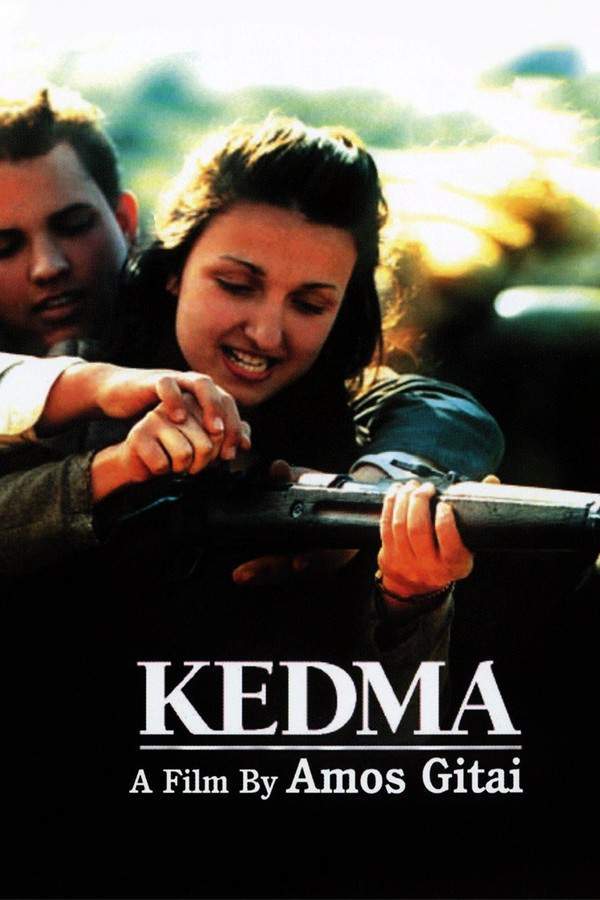
What Is Kedma About?
The premise of Kedma in 273 words, with nothing given away. The full story follows below.
In the waning days of the British Mandate, a wave of survivors from the Holocaust slips ashore on the rocky coastline of Palestine. Brought clandestinely by the Palmach, these refugees—speaking Polish, Russian, and Yiddish—step onto a land caught between the remnants of colonial rule and the promise of a new nation. The air is thick with the echo of gunfire and the murmur of distant prayers, a place where every horizon seems to hold both hope and uncertainty.
The film paints a stark, almost elegiac portrait of a country on the brink of independence. Mandatory Palestine is rendered as a patchwork of contested fields, abandoned villages, and makeshift camps, all humming with the restless energy of a people preparing for a war that will define their future. The tone is unflinching and grounded, deliberately steering away from cinematic myth‑making to reveal the gritty texture of daily survival, the weight of history, and the looming specter of conflict that touches every corner of the landscape.
At the film’s core is the intimate turmoil of the refugees themselves, a collective whose wounds are still raw from unimaginable loss. Their arrival is met with an immediate scramble for safety, a chase by British soldiers that forces them into the very front lines they had hoped to escape. Alongside them, an Arab peasant—portrayed with solemn intensity—offers a stark, poetic counterpoint, his voice echoing the deep‑seated grievances that have festered for generations. Through lingering monologues and understated performances, the story dwells on the fragile humanity that persists amid the clouds of war, inviting the audience to feel the tension between survival, memory, and the fragile dream of belonging.
What Happens in Kedma?
The complete story of Kedma, from the first scene to the last, in 490 words (about 2 minutes). Spoilers throughout.
Spoilers ahead
Kedma is a historical tragedy set in the opening days of Israel’s 1948 War of Independence, unfolding in the final stages of the civil conflict in Mandatory Palestine just before Israeli independence. The story follows a small, diverse group of Holocaust survivors—refugees who speak Polish, Russian, and Yiddish—who are secretly brought into the land by the Palmach, only to be hunted by British soldiers on arrival. Their escape plunges them directly into the raw, brutal reality of war, and they are soon drafted to participate in a grueling battle against Arab irregulars. The journey from perilous arrival to frontline struggle is depicted without gloss, highlighting how quickly refuge can become responsibility and danger.
As the narrative progresses, the film deepens its focus beyond immediate danger to explore themes of exile, memory, and belonging. The refugees’ multilayered backgrounds—linguistic and cultural diversity folded into a shared peril—illustrate how a people displaced by catastrophe find themselves pressed into a new historical moment. The tension between survival and identity threads through their experiences, as moments of solidarity are tempered by fear, loss, and the uncertain hope for a future in a land that is both promise and peril.
Toward its ending, Kedma centers on two long, clarifying monologues that crystallize its central tensions. The first comes from an Arab peasant, whose vow to oppose the Jews forever is presented as a modern reworking of a Tawfiq Ziad poem, imbuing the scene with a lyrical gravity that contrasts with the film’s harsh realities. The second is spoken by a refugee who is emotionally broken, lamenting the seemingly endless suffering of his people and giving voice to the human cost of the region’s turmoil. These speeches anchor the film’s intimate scale, even as they speak to broader, enduring conflicts that shape history.
Gitai positions Kedma as a more realist counterpoint to the romanticized portrayal of the war found in Exodus by Otto Preminger. The director’s aim is to render history with restraint and concrete human stakes, showing how a moment of national birth intersects with personal histories of persecution and loss. The final image—a procession of military vehicles receding into the horizon—mirrors the visual cadence of Preminger’s film, underscoring a shared cinematic impulse while leaving the viewer with a quiet, unresolved sense of how history moves forward, even as the dust settles on this chapter of the conflict.
In a broader sense, Kedma is a meditation on creation through crisis: a group of displaced people arriving at the threshold of a new nation, only to be shaped by the violence and uncertainty that attend the birth of a state. It invites reflection on the price of independence and the ways in which memory, identity, and survival are braided together in moments of upheaval. The film remains faithful to its historical setting while offering a stark, human-centered perspective on a pivotal moment in Middle Eastern history, presenting a narrative that is at once sobering and deeply human.
Kedma Timeline: Every Key Event in Order
12 key events in the order they happen, from “Refugees smuggled into Palestine by Palmach” to “Group's fate and moral legacy”.
- 1
Refugees smuggled into Palestine by Palmach
A group of Holocaust survivors from Poland, Russia, and Yiddish-speaking backgrounds are secretly brought into Mandatory Palestine by the Palmach. Their arrival marks the moment when personal survival becomes entangled with the looming conflict. The refugees carry hope for safety as the situation in the region grows increasingly tense.
When:early 1948
- 2
Chased by British soldiers on arrival
Upon landing, British forces pursue the refugees, aiming to control illegal immigration and maintain order. The group must evade patrols and checkpoints, highlighting the peril surrounding their entry. This encounter sets a grim tone for their immediate future in the conflict.
When:immediate after arrival
- 3
Escape into safety and shift toward frontline
The refugees slip away from pursuit and find precarious safety as the war's realities press in. Their escape marks a transition from mere survival to active involvement in a larger struggle. The experience hardens them and binds the group together in the face of danger.
When:shortly after escape
- 4
Immediate drafting into the War of Independence
Having escaped the pursuit, they are drafted into the fighting at once, thrusting them into a brutal conflict with little to no preparation. They enter a war theater where resources are scarce and the risks are high. This sudden enlistment places their fates on a fragile and dangerous edge.
When:early 1948
- 5
First frontline battle against Arab irregulars
They participate in a grueling frontline engagement against Arab irregular forces. The combat tests their endurance, resilience, and cohesion as a group of newcomers in a dangerous theater. The harsh conditions and relentless fire leave a lasting imprint on their collective memory.
When:early 1948
- 6
Frontline hardship and camaraderie
The refugees face hunger, fear, and shelling as they fight side by side. The shared trauma forges bonds and a stubborn resolve to endure despite mounting casualties. The experiences in combat redefine their sense of belonging and purpose.
When:during the conflict
- 7
Arab peasant's monologue pledging perpetual opposition
Toward the ending, an Arab peasant speaks in a long monologue and pledges to oppose the Jews forever, reframing the conflict as a personal vow. The speech echoes the poem by Tawfiq Ziad and intensifies the film's historical perspective. It contrasts with the refugees' own struggle for safety.
When:toward ending
- 8
Refugee's monologue lamenting suffering
In parallel, a refugee delivers a deeply emotional monologue lamenting the seemingly endless suffering of his people. The speech crystallizes the human cost of the conflict and the refugee experience. It marks a turning point toward reflection as the war nears its end.
When:toward ending
- 9
Closing act and transition toward a new era
As the civil war edge comes to a close, the group looks toward a future that is both hopeful and uncertain. The narrative emphasizes the transition from exile to nationhood as Israel prepares for independence. The atmosphere is thick with the weight of what has been endured.
When:late 1940s, just before independence
- 10
Final shot echoes Exodus
The film's closing sequence mirrors the final shot of Otto Preminger's Exodus, with a trail of military vehicles vanishing on the horizon. This deliberate parallel serves as a stark, modern counterpoint to the earlier romanticized portrayal. It reinforces Gitai's aim to ground the story in harsh historical reality.
When:end of film
- 11
Independence looming on the horizon
The narrative places the refugees on the threshold of a new state, highlighting how the events of the civil war culminate as the country moves toward independence. Their fate becomes inseparable from the birth of Israel itself. The final images tie personal histories to national destiny.
When:right before independence
- 12
Group's fate and moral legacy
The refugees’ journey moves from survival to active participation in state formation, leaving a lasting impression about the cost of war and displacement. The film closes with a reminder of those who shaped the early days of a nation. Their story remains a testament to resilience and memory.
When:end of story
Who Are the Main Characters in Kedma?
2 characters, among them Arab peasant (Yussuf Abu-Warda) and Refugee: who each one is and the part they play in the story.
- AP
Arab peasant (Yussuf Abu-Warda)
A fervent Arab farmer whose monologue crystallizes a stance of unwavering opposition to the Jews. His rhetoric embodies a personal and communal memory of dispossession, fueling a deep-seated resistance. He embodies the somber realism of those who feel their land is being irrevocably transformed by conflict. His presence anchors the film's perspective on Arab sentiment and the tragedy of ongoing hostility.
- ⚔️ Conflict
- 🕯️ Memory
- 🗨️ Propaganda
- R
Refugee
An emotionally shattered Holocaust survivor who laments the endless suffering of his people. His perspective reveals the refugee experience: displacement, fragility, and a relentless search for meaning amid chaos. Through his inner voice, the film probes the human cost of war and the persistence of hope despite despair.
- 💔 Trauma
- 🕰️ History
- 😟 Suffering
Where and When Is Kedma Set?
Kedma is set in Mandatory Palestine and Israel (1948). Here is why the time and place matter to the story.
When
1948
Set during the opening stages of Israel's War of Independence, the film traces a pivotal moment when the British mandate winds down and the region moves toward the creation of a new state. The narrative covers the tense lead-up to formal independence and the immediate militarization of refugees into combat.
Where
Mandatory Palestine, Israel
The story unfolds in the final stages of the civil war in Mandatory Palestine, on the cusp of Israel's independence. Refugees from the Holocaust are brought illegally to the land by the Palmach and then pursued by British soldiers. After escaping, they are thrust directly into the 1948 fighting against Arab irregulars.
- 🗺️ Historical setting
- 🕰️ 1948 period
- 🇮🇱 Israeli independence era
What Are the Themes of Kedma?
3 ideas the story keeps returning to, among them War Realism, Identity and Memory.
-
01
War Realism
Kedma presents a blunt, unromantic view of wartime action, contrasting heroic myths with the brutal realities faced by refugees. The narrative exposes how quickly civilians are pulled into battle and how struggle can erase personal identities. The monologues underscore the weight of survival, fear, and loss amid chaotic conflict. The film uses realism to challenge more idealized depictions of war.
-
02
Identity
The refugees carry multiple histories—Polish, Russian, Yiddish—yet their new national belonging is forged under pressure and displacement. The Palmach’s forced mobilization pushes them to redefine themselves in a landscape where loyalty and origin are constantly tested. The clash between different backgrounds highlights how identity can be both a source of strength and a burden. The film explores whether new beginnings can be separated from past traumas.
-
03
Memory
Two long monologues anchor Kedma in the memory of violence and loss—the Arab peasant's vow and the refugee's lament—emphasizing how memory shapes present choices. The film meditates on collective suffering and the persistence of trauma across generations. By reframing the conflict as a lived memory rather than a purely political struggle, Kedma invites reflection on what endures after war. The ending, echoing Exodus, ties personal memory to historical reenactment.
What Kind of Film Is Kedma?
Bleak in tone, with steady pacing and a moderate story, going by the plot summary.
- Tone
- Bleak
- Pacing
- Steady
- Story
- Moderate
- Intensity
- High
- Ending
- Bleak
A bleak and emotionally grueling journey into the harsh reality of Holocaust survivors immediately thrust into a new war, creating an atmosphere of profound trauma and relentless struggle without relief.
- grim
- somber
- desperate
- oppressive
- anxious
- tragic
- holocaust
- war survival
- immigration
- trauma
Content notes: war violence, shootout, death, trauma, holocaust.
Where to Watch Kedma
Stream it on Chai Flicks and Hoopla, or rent or buy it from Amazon Video. US availability and prices from JustWatch.
 Chai Flicks
  Hoopla
  Kanopy
  Kino Film Collection
 Rent or buy 1

Streaming availability in the US, powered by