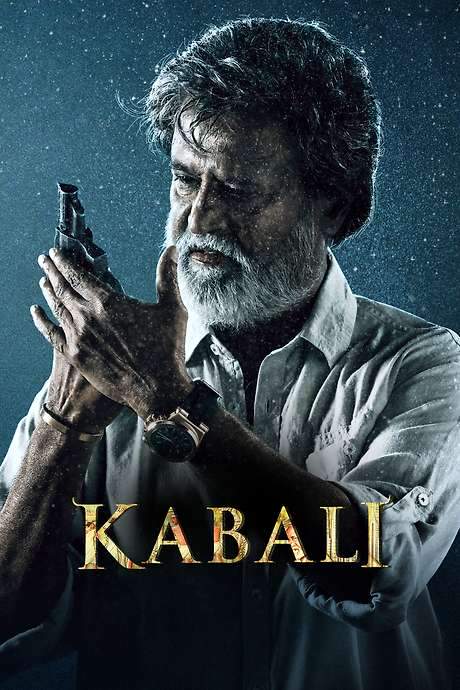
Kabali 2016


Directed by

Pa. Ranjith
Made by

V Creations
Where to Watch Kabali
See current US streaming, rental, and purchase options for Kabali (2016) via JustWatch.

Sun Nxt
HD
Apple TV Store
HD
Google Play Movies
SD
YouTube
SD Streaming availability powered by 
Kabali Plot Summary
Read the complete plot summary and ending explained for Kabali (2016). From turning points to emotional moments, uncover what really happened and why it matters.
Kabaleeswaran alias Kabali, a Kuala Lumpur–based gangster, walks free after 25 years in prison on a false charge of starting a massacre at a local temple that killed many, including his wife Kumudhavalli. The release sets him back into a world that has moved on without him, and the weight of the past collars him as he navigates a present ruled by the street’s rules and loyalties. Kabali Rajinikanth steps back into the city with a calm fury, determined to understand what really happened to the people he cared about and to reclaim the life that was taken from him.
On the streets, Kabali rekindles ties with his old ally John Vijay Ameer and discovers the remnants of his former gang—Tony Lee, Veerasekaran alias Veera, Loga, and Seeni—whose fates have become tangled with the underworld now far more ruthless and organized. The fragile reunion is tinged with old resentments as Loga Loganathan’s warning—if his wife were alive, Veera would have sold her for prostitution—hits Kabali with the brutal truth that his personal losses are still being weaponized by the men who betrayed him. The recollection of Kumudha’s supposed death haunts Kabali and, in a twist of fate, sows the seeds of a new, personal reckoning.
A brutal assassination attempt by Tamizh Kumaran alias Kumaran, whose father Tamilmaaran was killed by Kabali when Kumaran was only a child, tests Kabali’s resolve and sanity. Tamizh Kumaran—the man who would become a thorn in Kabali’s side—survives only to confront Kabali again, and the next day, their paths cross at a function run by the Free Life Foundation School, a project started by Kabali and Ameer to steer youths away from crime. There, Kabali uses a public moment to reflect on a recurring theme: the Tamil community’s “crabs in the bucket mentality” that he believes feeds their cycles of downfall and retribution.
In the backstory, Kabali’s ascent flows from the shadow of Tamilnesan, a Tamil gangster who fought for his people’s rights. Tamilnesan’s death at the hands of Veera, a member of his own crew who disapproved of his methods, sets Kabali on a path of leadership. Kabali’s decision to take charge after Tamilnesan’s death was contested by Veera, who believed Tamilnesan’s son should lead. The tension erupts at a temple function in Madurai, where a truce tentatively offered by Tamilmaaran collapses into violence: Kabali is brutally attacked, and Kumudha is shot and seemingly killed by Tony Lee. In the aftermath, Kabali is arrested on the false charge of instigating the massacre.
In the present, Kumaran confronts his past and learns the truth from Kabali’s oratory, realizing the depth of his mistake. He explains that Velu, a key figure present at the temple massacre, knows what happened to Kumudha. Kabali then travels to Thailand in search of Velu, hoping to uncover what became of his family. There, he encounters Yogi, a contract killer hired by Veera and Tony Lee. Yogi eliminates Seeni and his men, but in a surprising turn, she reveals herself as Kabali’s daughter, raised by Velu. This revelation adds a bitter layer to Kabali’s mission: the violence of his world is not just about revenge, but about the fate of a kinship he never fully understood.
A turning point arrives when Tony Lee’s henchman shoots Kabali, who is rushed to the hospital. Upon recovery, Kabali issues a direct warning to Tony Lee: the hunter has become the hunted. Yogi, now a bridge to Kabali’s family, informs him that Kumudha is alive and living with a French family in Puducherry. Kabali, Yogi, Kumaran, and a small band set out for Puducherry, where after days of searching they finally reunite with Kumudha. The emotional reconnection deepens Kabali’s resolve to dismantle the gang’s power and protect his family at every turn.
Back in Kuala Lumpur, the landscape shifts again. Ameer is severely injured in a car accident that Tony Lee’s crew orchestrates, Jeeva—one of Veera’s men—has been brutally dismembered for refusing to join Gang 43, and the Free Life Foundation School lies in ruins. With his family now safe, Kabali resolves to end Veera and Tony Lee’s hold on the city. He makes a bold appearance at Ang Lee’s 100th birthday party, a public stage that allows him to expose Gang 43’s corruption by tipping off the police. The move cripples the gang’s operations, and Kabali systematically eliminates Veera, igniting a gang war with Tony Lee’s faction.
The battle reaches a tense crescendo as Kabali and his allies—now aided by Yogi and Kumaran—press the assault on Tony’s men. In a final confrontation, Kabali corners Tony Lee and shoots him, ending a long chapter of vengeance that has haunted him since his release. Months later, a peaceful, almost ceremonial gathering organized by the Free Life Foundation marks a fragile attempt at closure, but a chilling moment disrupts the calm. Tiger, a volatile young ex-student of the Free Life program, strides toward Kabali and speaks to the police, a prelude to danger. The scene cuts to black with the sound of a gun clicking and a shot rang out, leaving the ending fraught with ambiguity and the implication that Kabali’s war may be far from over.
Throughout this saga, the movie blends memory and motive, tracing Kabali’s arc from a haunted prisoner to a man who rebuilds a family and a community under siege. The narrative threads link back to the crew Kabali once led and the new, younger forces that threaten to rewrite the city’s balance of power. In every turn, Kabali remains driven by a sense of justice, loyalty, and a stubborn commitment to protecting those he loves, even as the line between protector and predator grows increasingly blurred. The film ultimately presents a portrait of a man shaped by loss, who returns not merely to reclaim his past, but to redefine the future for his kin and the wider community he once fought to guard.
Kabali Timeline
Follow the complete movie timeline of Kabali (2016) with every major event in chronological order. Great for understanding complex plots and story progression.
Kabali's release from prison
Kabali walks free after 25 years in prison, returning to a Kuala Lumpur that has moved on without him. The city hums with unfamiliar rhythms, and old loyalties feel fragile. He steps back into the underworld with a calm, storm-forward resolve to uncover the truth behind his family's fate.
Reunion with old allies and gang remnants
Back on the streets, Kabali reconnects with his old ally Ameer and finds traces of his former gang—Tony Lee, Veera, Loga, and Seeni. The reunion is tense, stitched with old resentments and unspoken debts. Kabali carries a quiet fury as he gauges who remains loyal and who has betrayed him.
Loga's warning about Veera
Loga Loganathan delivers a brutal truth: if Kabali's wife were alive, Veera would have sold her into prostitution. The revelation compounds Kabali's grief and fuels a personal reckoning he must confront. The weight of the past tightens its grip as old enemies circle.
Temple function and Madurai massacre (backstory)
In flashback, Tamilnesan's struggle to lead the Tamil people ends with Veera's betrayal. A temple function in Madurai erupts into violence as a tentative truce collapses. Kumudha is shot and presumed dead, and Kabali is brutalized before being arrested on a false charge.
False arrest after the temple massacre
Kabali is arrested on false charges, his name tainted by the temple massacre. He endures years in prison while the networks that betrayed him hold power. The injustice hardens his resolve to reclaim his life and protect his kin.
Kumaran confronts Kabali and learns the truth
Kumaran confronts Kabali and, through Kabali's oratory, realizes the depth of his own mistake. He explains that Velu knows what happened to Kumudha, shifting the danger from memory to knowledge. The revelation fuels Kabali's determination to uncover the truth.
Kabali travels to Thailand to find Velu
Kabali journeys to Thailand in search of Velu, the keeper of his family's fate. There he encounters Yogi, a contract killer hired by Veera and Tony Lee; Yogi eliminates Seeni and his men. Yogi then reveals herself as Kabali's daughter, raised by Velu, adding a bitter new layer to his mission.
Kumudha is alive; Puducherry reunion in sight
Yogi reveals that Kumudha is alive and living with a French family in Puducherry. Kabali, Yogi, and Kumaran set out for Puducherry to reunite the family, reigniting a core motive behind his battle for justice. The journey deepens the emotional stakes of his crusade.
Violence returns to Kuala Lumpur
Back in Kuala Lumpur, Ameer is injured in a car crash orchestrated by Tony Lee, and Jeeva is brutally dismembered for refusing to join Gang 43. The Free Life Foundation School lies in ruins as Kabali steels himself to dismantle the gang's power and protect his expanding family.
Public exposure of Gang 43 at Ang Lee's party
Kabali makes a bold public stand at Ang Lee's 100th birthday party, tipping off the police to Gang 43's corruption. The exposure cripples the gang's operations and sets the stage for decisive confrontations. Veera's grip on the city begins to crumble as the war tightens.
Final assault on Tony Lee and Veera's faction
Kabali and his allies, now aided by Yogi and Kumaran, press the assault on Tony Lee's men as Veera's hold weakens. The city becomes a battlefield, and old loyalties are tested as the power structure collapses. The hunts culminate in a direct confrontation with Tony Lee.
The climactic shootout with Tony Lee
Kabali corners Tony Lee and shoots him, ending a long chapter of vengeance since his release. The moment brings a tense, fragile calm, even as danger lingers in the shadows. The city seems to hold its breath as the war calculates its next move.
Months later: a fragile peace and a jolt of danger
Months after the battles, a ceremonial gathering by the Free Life Foundation seems to promise closure. Tiger, a volatile ex-student, steps toward the police and a gun clicks in the dark, shattering the calm. The ending leaves Kabali and the city on a knife-edge, unsure if the war is truly over.
Kabali Characters
Explore all characters from Kabali (2016). Get detailed profiles with their roles, arcs, and key relationships explained.
Kabali (Rajinikanth)
A calm, disciplined former gangster who returns after 25 years to reclaim his family and confront the forces that betrayed him. His resolve is tempered by the weight of loss, making him both protector and predator as he navigates a ruthless underworld.
Kumudha (Kumudhavalli) (Radhika Apte)
Kabali’s wife, presumed dead but ultimately alive; her survival motivates Kabali’s journey. Her fate hints at the possibility of redemption and reconciliation within a violent world.
Tamizh Kumaran (Kumaran) (Kalaiyarasan)
Tamizh Kumaran, son of Tamilmaaran, becomes a thorn in Kabali’s side. He embodies the cycle of vengeance that haunts the street world, challenging Kabali’s choices and leadership.
Veerasekaran (Veera) (Kishore)
A former ally who breaks with Kabali and leads a ruthless faction. He embodies the new, organized underworld that supplants the old guard and tests Kabali’s authority.
Tony Lee (Winston Chao)
A major crime lord who orchestrates violence against Kabali’s circle. He represents a modern, internationalized underworld and a persistent threat to Kabali’s family.
Loga Loganathan (Loga) (Mime Gopi)
An old associate who tries to warn Kabali about the price of revenge and the betrayals that shape the present. His presence grounds Kabali’s historical ties to the gang.
Ameer (John Vijay)
Kabali’s ally who supports his mission and endures violence as the underworld fractures. He anchors the human side of Kabali’s crusade for justice.
Yogi (Sai Dhanshika)
A contract killer hired by Veera and Tony Lee who is revealed to be Kabali’s daughter. Her dual loyalties add a poignant twist to Kabali’s quest, linking personal fate with the broader conflict.
Velu (Amarendran Ramanan)
A key figure present at the temple massacre who holds crucial knowledge about Kumudha’s fate. Velu’s presence ties Kabali’s past to his present mission and to Kumudha’s survival.
Tamilnesan (Nassar)
A Tamil gangster who fought for his people’s rights and whose death fuels Kabali’s ascent. His legacy casts a shadow over Kabali’s decisions and leadership style.
Jeeva (Dinesh Ravi)
Veera’s man who is brutalized for resisting Gang 43’s recruitment. His fate underscores the brutality that Kabali aims to dismantle.
Tiger (Hari Krishnan)
A volatile young ex-student of the Free Life Foundation who looms as a new danger. He signals the ongoing threat of violence in the community Kabali seeks to protect.
Kabali Settings
Learn where and when Kabali (2016) takes place. Explore the film’s settings, era, and how they shape the narrative.
Location
Kuala Lumpur, Puducherry, Madurai, Thailand
Main action unfolds in Kuala Lumpur, a bustling Malaysian metropolis with a visible underworld. Key scenes shift between Madurai and Puducherry in India, highlighting regional gang networks and community dynamics. Thailand serves as a backdrop for crucial confrontations where Kabali uncovers family secrets and power struggles that drive his quest.
Kabali Themes
Discover the main themes in Kabali (2016). Analyze the deeper meanings, emotional layers, and social commentary behind the film.
⚖️
Revenge
The narrative centers on a quest for personal justice after years of imprisonment and betrayal. Kabali’s return forces him to navigate cycles of vengeance that threaten to consume him. The theme examines how revenge can shield and define a person while reshaping loyalties and alliances.
👪
Family Bonds
Kabali’s mission is driven by protecting his wife Kumudha and their family. The reveal that Yogi is his daughter deepens the stakes, linking personal fate to the broader conflict. The story explores how violence fractures families and how love can motivate resilience and rebuilding.
🌆
Power
Gang 43, Tony Lee, and their networks manipulate city loyalties to extend control. Kabali’s return disrupts the existing order, triggering public confrontations and strategic moves. The theme probes how power is exercised, contested, and resisted within a sprawling urban underworld.

Coming soon on iOS and Android
The Plot Explained Mobile App
From blockbusters to hidden gems — dive into movie stories anytime, anywhere. Save your favorites, discover plots faster, and never miss a twist again.
Sign up to be the first to know when we launch. Your email stays private — always.
Explore the mobile appKabali Spoiler-Free Summary
Discover the spoiler-free summary of Kabali (2016). Get a concise overview without any spoilers.
In the neon‑lit streets of Kuala Lumpur, a city where bustling markets sit beside shadowy alleys, a formidable presence steps back into the world after a quarter‑century behind bars. Kabali—once a notorious figure in the underworld—emerges with the weight of his past pressed against his shoulders, his reputation both a shield and a reminder of the life he once led. The urban landscape pulses with a rhythm that mirrors his own restless energy, hinting at the fine line he must walk between old loyalties and a world that has moved on without him.
The film is steeped in a gritty, atmospheric tone that blends raw street realism with moments of quiet introspection. Kabali carries an unspoken code of honor, a trait that draws both respect and wariness from those around him. As he reconnects with the community that once knew his name, the audience feels the pull of his personal quest—searching for the family he left behind, a yearning that lends a fragile humanity to his otherwise hardened exterior.
Among the faces he encounters is Ameer, an old confidant whose bond with Kabali offers a glimpse of camaraderie forged in hardship. Their interactions are laced with a mixture of camaraderie, unspoken debts, and the lingering echo of shared history. The narrative also subtly weaves the presence of Kumudha, the memory of a loved one whose absence fuels his determination, adding an undercurrent of longing that drives his every step.
Through richly textured cinematography and a soundtrack that captures both the bustling city and the quiet moments of reflection, the story paints a portrait of a man navigating the thin line between redemption and the pull of his former life. The atmosphere is charged with anticipation, inviting viewers to wonder how Kabali will reconcile his past with the hope of reunification, all while the streets around him whisper of unresolved mysteries and unseen threats.
Featured on this page

What's After the Movie?
Not sure whether to stay after the credits? Find out!
Check out our other apps:

SAT Sphere
Build confidence for the Digital SAT.

Mori Atlas
Discover wild places worth protecting.

Luntero
Search smarter for a home in Amsterdam.

Plot Explained
Unravel movie endings and hidden clues.

Pokechamp
Dive into Pokémon data and battle logic.

Driving Theory
Get ready for your European theory test.

Movie Dust
Plan your next cinema trip with ease.

Musemap
Find art and culture as you travel.

Selkobase
Compare credentials before committing.

Local Manual
Turn an unfamiliar country into practical next steps.

Lernavi
Compare school systems before your next move.

GymRoam
Find a workout stop wherever your plans take you.
Explore Our Movie Platform
New Movie Releases (2026)
Famous Movie Actors
Top Film Production Studios
Movie Plot Summaries & Endings
Major Movie Awards & Winners
Best Concert Films & Music Documentaries
Movie Collections and Curated Lists
© 2026 What's After the Movie. All rights reserved.
Privacy Policy