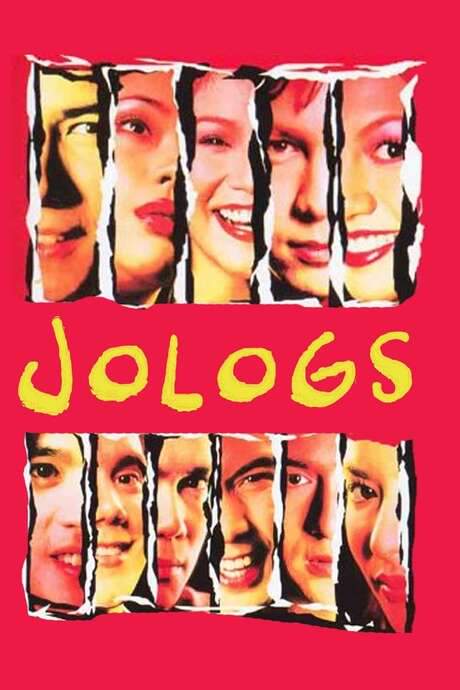
Jologs 2002

Directed by

Gilbert Perez

Where to Watch Jologs
See current US streaming, rental, and purchase options for Jologs (2002) via JustWatch.

Streaming availability powered by 
Jologs Plot Summary
Read the complete plot summary and ending explained for Jologs (2002). From turning points to emotional moments, uncover what really happened and why it matters.
Ruben, a college student, is introduced through his day-to-day grind at Barako Café, a place run by Trigger. His tuition worries mount after he loses his scholarship on a technicality, and the unpaid bills push him toward a desperate choice: burglary at his father’s house to cover the costs. The movie then tracks this turning point as a chaotic, humor-filled sequence—an over-the-top, choreographed fight scene with wire work and exaggerated martial arts—that foregrounds how a moment of pressure can cascade into a torrent of comic danger and consequence.
Shona leaves her daughter and her boyfriend Mando to return to Japan, where she works as an exotic dancer. Her departure serves as a window into a broader, real-world truth about life in the Philippines: the harsh economic reality that often pushes working people to seek opportunities abroad in order to save for a better future. The narrative uses this labor-export motif to highlight resilience and the costs that families pay when loved ones choose distant paths in pursuit of survival, all while maintaining a steady, observational tone.
In parallel, Cher is portrayed as a drag queen who becomes a target of violent homophobic aggression. The film’s portrayal, though heightened for comic effect, aims to illuminate the ugliness of prejudice and discrimination around sexuality. The conflict is presented without a clear punishment for the assailants, and the story leaves Shona’s choice to leave her child uncondemned, which in turn leaves Ruben’s moral and practical dilemma unresolved for the audience to ponder.
The narrative then threads through the lives of three couples: Iza and Iñigo, Kulas and Joan, and Dino and Faith. Each pair grapples with different facets of relationships—objectification, unrequited love, and first sexual experiences—within a tapestry that blends light romance with moments of honesty about desire, vulnerability, and growth. The film uses intimate, everyday interactions to reflect on how people relate to one another, sometimes with awkward humor, sometimes with surprising tenderness, and always with a sense of lived reality that avoids easy answers.
Jologs Timeline
Follow the complete movie timeline of Jologs (2002) with every major event in chronological order. Great for understanding complex plots and story progression.
Ruben starts a demanding job at Barako Café
Ruben is introduced as a college student who works at Barako Café to help pay his tuition. The income from the job isn't enough, leaving him anxious about his scholarship prospects. The café setting signals the film's light, comedic tone despite looming financial pressures.
Scholarship loss pushes Ruben toward burglary
After losing his scholarship on a technicality, Ruben's financial pressure intensifies. He decides to burgle his father's house to cover his educational expenses, crossing moral lines in desperation. The decision marks the beginning of a string of risky choices that drive the plot.
A wildly choreographed burglary fight
The burglary triggers a wildly choreographed fight sequence, complete with wire work and exaggerated martial arts moves. The scene blends comedy with danger as Ruben contends with the intruder and his own nerves. It serves as a stylized showcase rather than a grim crime.
Shona leaves for Japan to work as an exotic dancer
Shona leaves her daughter and her boyfriend Mando to return to work in Japan as an exotic dancer. Her departure highlights the economic pressures that push many Filipinos to seek work abroad. The choice strains family ties and foreshadows broader social issues.
Labor export reality illustrated by Shona's departure
The narrative uses Shona's labor-export journey to illustrate a recurring reality for many Filipinos: life at home is often unable to generate enough income. Her predicament represents the broader context behind the personal choices depicted in the film. The theme of emigration threads through the characters' stories.
Cher endures a violent homophobic assault
Cher, a drag queen, performs on stage while facing a violent homophobic assault from others. The scene uses exaggerated comedy to expose the ugliness of discrimination. Cher's experience underscores the film's critique of hate crimes, even though the attackers go unpunished.
Attacks go unpunished and Shona's abandonment is left unresolved
The attackers' violence is not punished, signaling a troubling reality the film critiques. The narrative also notes that Shona is not condemned for abandoning her child. These unresolved consequences highlight the film's ongoing social critique.
Iza and Inigo: objectification and tension
Iza and Inigo's relationship grapples with objectification and the complexity of attraction. They navigate being seen through lenses of desire rather than as whole people. Their dynamic contributes to the film's broader examination of relationships.
Kulas and Joan: unrequited love
Kulas harbors feelings for Joan that go unreciprocated, creating a quiet ache of unrequited love. The tension between desire and reality shapes their interactions. This storyline adds emotional texture to the ensemble.
Dino and Faith: first sexual experiences
Dino and Faith navigate their first sexual experiences, capturing the awkwardness, curiosity, and vulnerability of early intimacy. The scene portrays how youthful romance can be exploratory and emotionally charged. It complements the film's exploration of personal boundaries.
Ruben's unresolved moral and practical dilemma
Throughout the film, Ruben faces moral and practical dilemmas that remain unresolved by the end. His choices reflect the pull between necessity, loyalty, and conscience. The ending leaves questions about potential consequences and accountability.
A mosaic of social issues through intimate stories
The movie threads together personal tales of work, family, sexuality, and exploitation to critique social conditions. The timeline of events shows how one person's decisions ripple through a network of relationships. Taken together, the events form a mosaic of contemporary life.
Jologs Characters
Explore all characters from Jologs (2002). Get detailed profiles with their roles, arcs, and key relationships explained.
Ruben (John Prats)
A college student working at Barako Café to pay tuition after losing his scholarship. Desperate to fund his education, he resorts to burglary, showcasing a moral struggle between ambition and the law. His journey is marked by the chaotic, over-the-top fight scene that underscores the film's farcical tone.
Shona (Michelle Bayle)
Shona leaves her daughter to work in Japan as an exotic dancer, illustrating the harsh reality of labor export. Her choice embodies the tension between economic necessity and family responsibility. Her arc exposes the personal costs of pursuing better opportunities abroad.
Iza (Assunta de Rossi)
Iza navigates desire and social expectations within a developing relationship, highlighting themes of attraction and vulnerability. Her interactions explore how young women balance affection with personal boundaries. She contributes to the film’s broader commentary on love and self-identity.
Iñigo (Dominic Ochoa)
Iñigo is a romantic character who experiences the challenges of new love. His relationship dynamics reflect the era’s social norms and expectations. He embodies the emotional questions that arise when youth explore intimacy.
Kulas (Vhong Navarro)
Kulas serves as part of the group’s dynamic, providing humor and a counterpoint to more serious moments. His interactions with friends and lovers illuminate group dynamics and the comic side of adolescent misadventures. He embodies the film’s blend of comedy and heart.
Joan (Julia Clarete)
Joan is connected to Kulas and the group’s relationships, displaying warmth and curiosity within the romantic entanglements. Her experiences reflect themes of attraction, loyalty, and shared moments of vulnerability. She contributes to the film’s exploration of young love.
Dino (Patrick Garcia)
Dino is entwined in a storyline of love and sexual discovery, illustrating how first experiences shape character development. His journey highlights the film’s examination of desire, consent, and growing up.
Faith (Jodi Sta. Maria)
Faith is connected to Dino’s arc, representing a counterpart in the exploration of intimate relationships. Her experiences reflect the complexities of trust, affection, and personal boundaries within young romance.
Cher (Baron Geisler)
Cher is a drag performer who becomes a target of violent homophobic aggression. The character’s plight reveals society’s prejudice, while the performance aspect provides a platform for resilience and visibility in the face of bigotry.
Jologs Settings
Learn where and when Jologs (2002) takes place. Explore the film’s settings, era, and how they shape the narrative.
Time period
The narrative takes place in a contemporary setting, reflecting modern urban life in the Philippines and the global movement of workers. It shows current social and economic issues that resonate with audiences familiar with early 2000s to present-day realities. Specific year isn’t stated, but the events align with ongoing labor migration and youth culture.
Location
Barako Café, Ruben's father's house, Japan, Philippines
The story unfolds across multiple Philippine settings, anchored by Barako Café where Ruben works and a family home that reflects his financial pressures. It also follows Shona's journey to Japan for work, highlighting the labor-export dynamic that shapes many lives back home. The inclusion of Japan and Filipino urban spaces emphasizes the contrast between local life and international opportunities.
Jologs Themes
Discover the main themes in Jologs (2002). Analyze the deeper meanings, emotional layers, and social commentary behind the film.
💸
Economic Struggle
The film centers on how financial hardship drives character choices, such as Shona leaving her child to work abroad. It portrays the pressure to earn enough for education and basic living costs, revealing how economic forces shape relationships and life decisions. The story uses these pressures to critique the limits of opportunity within the Philippines.
🎭
Drag and Prejudice
Cher’s drag performance is depicted with humor, but the violence and discrimination he faces expose the ugliness of homophobia. The film uses exaggerated elements to spotlight social intolerance while leaving some consequences unresolved. This theme invites reflection on acceptance within a judgmental society.
💔
Love and Objectification
Interwoven couples experience objectification, unrequited love, and first sexual experiences, revealing how desire intersects with social expectations. The relationships probe vulnerability and power dynamics, highlighting the complexities of young romance. The outcomes balance humor with realism, without fully resolving everyone’s emotional tensions.

Coming soon on iOS and Android
The Plot Explained Mobile App
From blockbusters to hidden gems — dive into movie stories anytime, anywhere. Save your favorites, discover plots faster, and never miss a twist again.
Sign up to be the first to know when we launch. Your email stays private — always.
Explore the mobile appJologs Spoiler-Free Summary
Discover the spoiler-free summary of Jologs (2002). Get a concise overview without any spoilers.
In the bustling streets of Manila, a modest coffee shop becomes the quiet crossroads where the lives of several working‑class Filipinos intersect. The daily rhythm of this humble café frames a world that balances the ordinary grind of urban survival with moments of unexpected humor and heartfelt drama. The city’s heat and the shop’s steady hum create a backdrop that feels both intimate and expansive, hinting at countless stories waiting to be told beneath the aroma of freshly brewed beans.
At the heart of the narrative is Ruben, a college student whose tuition costs clash with the modest earnings from his part‑time shift behind the counter. His aspirations and the pressures of keeping his education afloat set the tone for a personal journey that mirrors the larger struggle of many young Filipinos chasing a better future. The café’s owner, a charismatic figure who keeps the place alive, adds a subtle layer of mentorship and community to Ruben’s world.
Shona arrives with a quiet determination, a mother caught between the pull of family responsibilities and the promise of work abroad, while Cher brings a vibrant, unapologetic presence as a performer navigating a society that often challenges their identity. Around them, couples such as Iza and Iñigo, Kulas and Joan, and Dino and Faith each grapple with their own versions of love, desire, and self‑discovery, from the sting of unreciprocated affection to the tentative steps of first intimacy. Their interactions are woven together by the café’s ever‑present hum, creating a tapestry of hopes and doubts.
The film balances wry comedy with poignant realism, letting each character’s quirks and struggles illuminate the larger portrait of urban Filipino life. As laughter bounces off the shop’s walls, the underlying currents of dignity, ambition, and the search for connection keep the audience subtly invested in the lives that converge in this singular, everyday setting.
Featured on this page

What's After the Movie?
Not sure whether to stay after the credits? Find out!
Check out our other apps:

SAT Sphere
Build confidence for the Digital SAT.

Mori Atlas
Discover wild places worth protecting.

Luntero
Search smarter for a home in Amsterdam.

Plot Explained
Unravel movie endings and hidden clues.

Pokechamp
Dive into Pokémon data and battle logic.

Driving Theory
Get ready for your European theory test.

Movie Dust
Plan your next cinema trip with ease.

Musemap
Find art and culture as you travel.

Selkobase
Compare credentials before committing.

Local Manual
Turn an unfamiliar country into practical next steps.

Lernavi
Compare school systems before your next move.

GymRoam
Find a workout stop wherever your plans take you.
Explore Our Movie Platform
New Movie Releases (2026)
Famous Movie Actors
Top Film Production Studios
Movie Plot Summaries & Endings
Major Movie Awards & Winners
Best Concert Films & Music Documentaries
Movie Collections and Curated Lists
© 2026 What's After the Movie. All rights reserved.
Privacy Policy