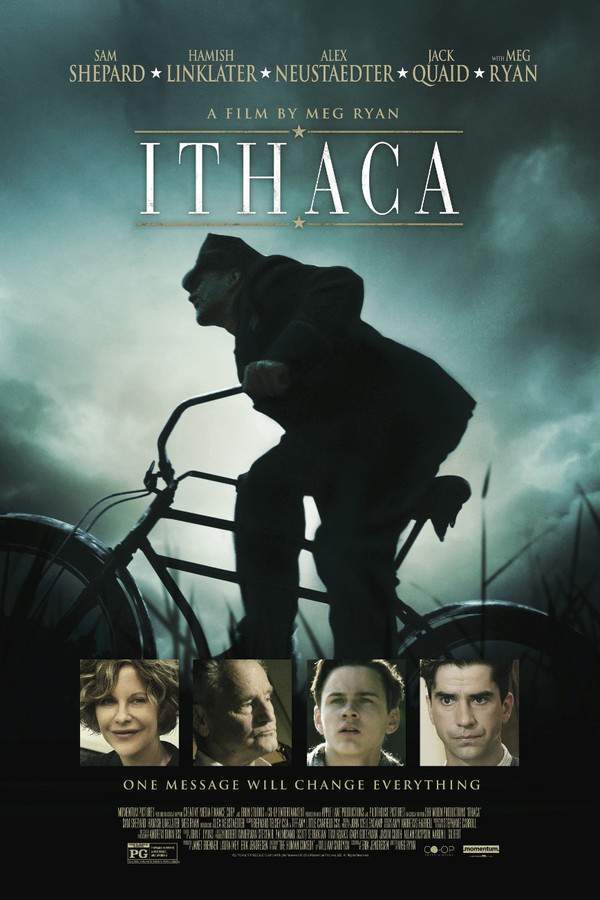
What Is Ithaca About?
The premise of Ithaca in 300 words, with nothing given away. The full story follows below.
In the summer of 1942 a modest town in California clings to a fragile normalcy as the distant drum of World War II beats ever louder. Along its tidy streets, a fourteen‑year‑old boy named Homer Macauley discovers an unexpected avenue to contribute: a bicycle messenger for the local telegraph office. The job, meant to be a swift rite of passage, quickly becomes a conduit for the community’s most private hopes and anxieties, letting the pulse of the front lines ripple through everyday life.
At home, Katie steadies the household after the loss of her husband, guiding Bess, the responsible older sister, and caring for the precocious four‑year‑old Ulysses. Homer also feels the weight of his older brother Marcus, who serves overseas, as letters from the front arrive like whispered promises of both pride and longing. The family’s dynamic is a quiet negotiation of duty, love, and the lingering ache of absence, each member finding a way to keep the home’s heart beating against the backdrop of global conflict.
Within the telegraph office, the seasoned operator Willie Grogan mentors the eager youth, their partnership a blend of seasoned routine and youthful vigor. Through the steady rhythm of keys and wheels, Homer learns that every telegram carries a story—of enlistments, reunions, and the ordinary moments that become extraordinary when framed by war. The town’s residents, from strangers to neighbors, come to rely on his speed and reliability, casting him as a small but vital thread in the larger tapestry of resilience.
The film paints a landscape where ordinary tasks acquire profound meaning, and a teenager’s yearning to prove himself evolves into a deeper, quieter courage. Amid the ever‑present hum of wartime uncertainty, Homer’s journey hints at how purpose, community, and a touch of youthful optimism can illuminate even the darkest of seasons.
What Happens in Ithaca?
The complete story of Ithaca, from the first scene to the last, in 694 words (about 3 minutes). Spoilers throughout.
Spoilers ahead
In 1942, a young boy named Homer Macauley, only 14 years old, takes on the work of delivering telegrams to help support his widowed mother, Katie, his older sister Bess, and his four-year-old brother Ulysses in the small fictional town of Ithaca, CA. His dream is simple yet brave: to become the best and fastest bicycle telegraph messenger in town, gliding through streets with a sense of purpose that belies his years.
The very first telegram Homer delivers lands with a heavy moment of truth. It is for a Hispanic woman who cannot read English well, and she asks him to read the message aloud. The content is stark and heartbreaking: a telegram from the Secretary of Defense announcing that her son has died in the war. That single moment plants a seed of seriousness in Homer’s heart, as he realizes that these messages are not just numbers and names but lives touched by distant conflicts.
Back home, the war’s reach continues to unfold through letters from Homer’s older brother, Marcus, who is serving far away. Marcus writes regularly, sharing stories of life on the front and the emotional weight of his absence. He also reminds Homer that, in his absence, he is the man of the house, a role that fills Homer with a mix of pride and pressure. The family’s burden is compounded by the recent death of their father in the war, leaving Katie to manage everything with courage but obvious strain.
On the job, Homer assumes a quiet responsibility beyond his years. He helps the telegrapher Willie Grogan stay alert—waking him with cold water and strong coffee when needed—so the office keeps moving smoothly. Through his rounds, Homer begins to hear and carry messages of love, longing, hope, pain, and death. Each day’s work chips away at his boyish innocence as he longs for a telegram that will bring Marcus back, a signal that the world continues to turn despite the heavy losses surrounding them.
Homer also wrestles with his feelings about his younger brother, Ulysses. He is envious of Ulysses’s apparent fearlessness and obliviousness to the war’s dangers. The contrast sharpens as Homer wrestles with the weight of responsibility and the pull of youthful curiosity. In the telegraph office, he often checks in, hoping to be called upon to prove his own courage or usefulness.
Katie, meanwhile, experiences moments that feel almost otherworldly—she sometimes believes she sees her late husband, Matthew. These glimpses speak to a family clinging to memory and faith in the midst of upheaval. The house is never free from little tremors of fear and superstition, like when the young Ulysses is startled by a half-man, half-machine window display that seems to loom over the storefronts and the street outside.
One night, Homer reads aloud a letter from Marcus to Mr. Grogan, sharing the heavy sentiment that if Marcus’s brother dies, he will shut himself off completely from the world. The letter reveals the deep emotional toll of war on a family’s morale and on the individual who imagines the future he will have to bear.
The story takes a poignant turn the following day when Homer goes to check on Mr. Grogan only to discover that the elder telegrapher has died after typing one last, dreaded message. The news hits with an abrupt finality: the war’s reach has claimed another life, another family’s calm, and another generation’s certainty. Toby, Marcus’s fellow soldier, and Homer then make their way to the Macauleys’ home to deliver Marcus’s death notice, a moment that seals Marcus’s absence and marks the family’s ongoing struggle to endure.
Through these events, the narrative threads together themes of duty, resilience, and the subtle heroism of everyday life during wartime. Homer grows from a boy who wants to impress with speed and efficiency into a young person who carries the weight of others’ stories—love, loss, and the fear of what the war will take next. The film offers a clear, human portrait of how a community responds to grief, how families support one another, and how a teenager’s sense of purpose can broaden to include tenderness, empathy, and courage in the face of uncertainty.
Ithaca Timeline: Every Key Event in Order
12 key events in the order they happen, from “Homer starts delivering telegrams” to “Atonement, resolve, and coming of age”. 12 events name a place, across 5 locations.
- 1
Homer starts delivering telegrams
In 1942, 14-year-old Homer Macauley takes a job delivering telegrams to support his widowed mother and siblings. He is determined to be the best and fastest bicycle telegraph messenger in Ithaca, CA, practicing his routes and learning to carry grown-up responsibilities. His ambition marks the beginning of a journey that mixes camaraderie, fear, and hard lessons.
When:1942 Where:Ithaca, CA
- 2
First delivery reveals the war's cost
On his very first delivery, Homer reads a telegram aloud for a Hispanic woman who cannot read English. The message, from the Secretary of Defense, informs her of her son's death in the war. The encounter forces him to confront the personal cost of global conflict.
When:Early 1942 Where:Hispanic woman's home, Ithaca, CA
- 3
The town braces for war, father dies
Marcus and many other young men have gone off to World War II, leaving families anxious and hopeful. Their father has died recently in the war, compounding the Macauleys' burden. The town collectively reckons with the distance of war and the daily need for news.
When:1942 Where:Ithaca, CA
- 4
Marcus' letters and the burden of duty
Marcus writes regularly from the front, describing life in the war and reassuring Homer that he must take care of the family in his absence. He reminds him that he's the man of the house now, increasing the weight Homer carries. These letters reshape Homer’s sense of responsibility.
When:1942-1943 Where:Ithaca, CA
- 5
The telegraph office routine
At the telegraph office, Homer helps keep Willie Grogan alert, waking him with cold water and strong coffee. He gradually assumes a larger role in the daily rhythms of the office and in the lives of those who rely on the messages. The work tightens his grip on his own childhood.
When:1942 Where:Ithaca telegraph office
- 6
Homer's innocence fades
As he transmits telegrams of love, longing, and news of death, Homer loses his boyish innocence and becomes aware of the harsher realities people endure. The stream of messages teaches him that happiness and tragedy can arrive on the same route. His perspective begins to harden while his empathy deepens.
When:1942 Where:Ithaca, CA
- 7
Katie sees Matthew; Homer confides
Homer's mother Katie sometimes 'sees' her late husband Matthew, a sign of their shared grief. The next day, Homer opens up to her about envying Ulysses' fearlessness, and Katie's vision deepens their bond as she recognizes his pain. Their conversations reveal how the war permeates home life.
When:1942-1943 Where:Macauley home
- 8
A small war sighting rattle the town
That evening, the little boy Ulysses is frightened by a half-man, half-machine window display in town, a surreal reminder of the era’s industrial pressure. The moment shows how even the youngest are unsettled by the war’s presence. The family and townsfolk absorb it as a symbol of looming danger.
When:That evening (1942) Where:Ithaca, CA
- 9
Homer reads Marcus's letter aloud
One night, Homer reads a letter from Marcus aloud to Mr. Grogan, sharing Marcus’s fear of losing his brother and his resolve to shut out the world if that happens. The moment crystallizes the intimate stakes behind the war’s distant headlines. It also deepens Homer's sense of responsibility and fear.
When:Night (1942) Where:Ithaca telegraph office
- 10
Grogan's last telegraph and death
The next afternoon, Homer checks on Mr. Grogan and discovers him dead after typing one last telegraph message he had dreaded. Grogan's death underlines the toll of war on ordinary workers who keep people connected. Homer is left to carry on without his mentor.
When:Afternoon, 1942 Where:Ithaca telegraph office
- 11
The news of Marcus's death comes
Toby, a fellow soldier, and Homer arrive at the Macauleys' home with the devastating news that Marcus has died in the war. The family is shattered, and the community is reminded of the war's cost. The moment marks a turning point for Homer as he confronts permanent loss.
When:Shortly after Grogan's death (1942-1943) Where:Macauleys' home, Ithaca, CA
- 12
Atonement, resolve, and coming of age
In the wake of a double loss—Grogan and Marcus—Homer stands at a threshold of adulthood, absorbing the responsibilities and heartbreak of a world at war. He continues delivering messages while carrying his family's sorrow and the memory of those who did not return. His experience consolidates his maturity and hints at the resilience of the town.
When:1942-1943 Where:Ithaca, CA
Who Are the Main Characters in Ithaca?
6 characters, among them Homer Macauley, Katie Macauley and Marcus Macauley: who each one is and the part they play in the story.
- HM
Homer Macauley
A determined 14-year-old telegraph messenger who dreams of being the fastest and best. He rapidly learns that delivering news means carrying the weight of others’ lives, love, and loss, pushing him toward adulthood.
- 🎯 Ambition
- 🧒 Coming-of-age
- 💪 Resilience
- KM
Katie Macauley
Homer's widowed mother who holds the family together after her husband's death. She balances grief with practicality, offering guidance while facing her own fears about the future.
- 💖 Family
- 🕊️ Grief
- 💪 Strength
- MM
Marcus Macauley
Homer's older brother serving in World War II, who writes home about life at the front. His letters remind Homer of his own responsibilities and the reality that he is now the man of the house.
- 📮 Letters
- 🧭 Duty
- 🕊️ Absence
- UM
Ulysses Macauley
Homer's 4-year-old brother, who appears fearless and largely oblivious to the war's reach. His presence contrasts with Homer’s growing anxiety and longing for safety.
- 🧒 Innocence
- 🧭 Fearlessness
- WG
Willie Grogan
The telegrapher at the office who becomes a steady, if taciturn, presence in Homer’s day. Homer wakes him with water and coffee, sharing in the rhythms of the job and the town.
- 🗒️ Telegraph
- 🤝 Mentor
- T
Toby
Marcus's fellow soldier who joins Homer to deliver the news of Marcus's death, underscoring the real cost of war for families and friends.
- 🪖 Soldier
- 💔 Loss
- 📨 News
Where and When Is Ithaca Set?
Ithaca is set in Ithaca and CA (1942). Here is why the time and place matter to the story.
When
1942
Set in 1942, the film places its events during World War II, when many young men are overseas and families face uncertainty at home. The era intensifies the characters' sense of duty, fear, and perseverance as letters and telegrams arrive with updates from the front. The period shapes daily life, economies, and emotional resilience on the home front.
Where
Ithaca, CA
The story unfolds in the small, fictional town of Ithaca, California, a close-knit community defined by local shops, schools, and a busy telegraph office. The daily rhythm is punctuated by incoming telegrams bearing news of the war, love, or loss. Ithaca serves as a microcosm of American life on the home front during World War II.
- 🏡 Small-town
- 🗺️ War-time backdrop
- 🧭 Family-centered
What Are the Themes of Ithaca?
4 ideas the story keeps returning to, among them Coming of Age, War's Reach and Loss and Grief.
-
01
Coming of Age
Homer's role as a bicycle telegraph messenger thrusts him into responsibilities that outpace his years. He confronts real-world emotions like loss, fear, and duty, marking a transition from boyhood to a more mature understanding of the world.
-
02
War's Reach
The absence of Marcus, the front-line updates, and the looming threat of casualties demonstrate how war reverberates through an ordinary town. The characters grapple with hope, worry, and the persistent presence of danger.
-
03
Loss and Grief
Messages announcing deaths and the ultimate loss of a father highlight how grief threads through the family. The story treats mourning as a daily presence that redefines relationships and priorities.
-
04
Duty and Resilience
Homer takes on household responsibilities while his mother navigates grief and precarious finances. The community and family learn to endure hardship with quiet courage and mutual support.
What Kind of Film Is Ithaca?
Melancholic in tone, with slow pacing and a straightforward story, going by the plot summary.
- Tone
- Melancholic
- Pacing
- Slow
- Story
- Straightforward
- Intensity
- Medium
- Ending
- Bittersweet
A quietly melancholic and heartfelt drama that immerses the viewer in the slow, somber rhythms of a small town grappling with the profound personal losses of World War II through the eyes of a boy forced to grow up too fast.
- melancholic
- nostalgic
- somber
- heartfelt
- quiet
- grieving
- coming of age
- grief and loss
- world war ii
- family bonds
Content notes: death of a sibling, war violence, grief.
Quiz
How well do you remember Ithaca? Test yourself on the story.