
Island in the Sun 1957

Directed by
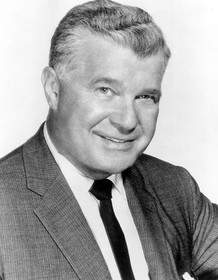
Robert Rossen
Made by

Darryl F. Zanuck Productions
Where to Watch Island in the Sun
See current US streaming, rental, and purchase options for Island in the Sun (1957) via JustWatch.






Island in the Sun Plot Summary
Read the complete plot summary and ending explained for Island in the Sun (1957). From turning points to emotional moments, uncover what really happened and why it matters.
Maxwell Fleury, a white plantation owner’s son, occupies a precarious space on a small West Indian island where the spring air is thick with social tension. The society around him is a tangle of rigid class lines and racial hierarchies, and his own sense of worth is always measured against the men and women who serve behind the scenes of the island’s wealth. Maxwell [James Mason] is haunted by an inferiority complex that drives him to reckless acts in a bid to prove he is more than a privileged son. His marriage to Sylvia [Patricia Owens], a woman who coldly guards her own fortress of pride, becomes one of the pressure points in a complicated set of loyalties. The two of them inhabit a house where affection flickers but never quite settles, and Sylvia’s suspicions about Maxwell’s fidelity gnaw at him as he spirals.
Across from Maxwell’s home sits the figure of his sister Jocelyn [Joan Collins], radiant and wary in equal measure, who has caught the eye of Euan Templeton [Stephen Boyd], a striking and openly ambitious young man just arrived on Santa Marta to visit his father, Lord Templeton [Ronald Squire], the island’s governor. Euan’s charm and energy offer a stark contrast to Maxwell’s simmering anxieties, and as he courts Jocelyn, the social gatekeepers tighten their grip around both of them. The gleam of Oxford prestige and the promise of a modern future bump against inherited titles and colonial power, and the future of the Fleury clan seems to hinge on a single decision that could tilt the balance of the island.
Meanwhile, a different current runs through the island’s political fabric. David Boyeur [Harry Belafonte], a rising and daring black union leader, moves into the center of power with both poise and menace. He is seen by some as a threat to the old white ruling class, yet Templeton himself seeks to court him as a potential ally—an offer that illustrates the intricate dance of diplomacy, race, and ambition that defines life on Santa Marta. Mavis Norman [Joan Fontaine], the widow of Arthur Fleury, the elder scion of the plantation line, finds herself drawn to David, and their growing rapport becomes a charged triangle of attraction, tension, and potential upheaval for the island’s carefully calibrated social order.
On the other side of the social spectrum, Denis Archer [John Justin], Governor Templeton’s aide-de-camp and an aspiring writer, notices Margot Seaton [Dorothy Dandridge], a mixed-race beauty determined to build a better life through hard work and opportunity rather than relying on charm alone. Denis wins her away from David and helps her secure a job as a secretary in the governor’s office. The budding romance between Denis and Margot underscores the way ambition and romance intersect with who gets to rise in a society built on inherited status.
The story takes a darker twist when Maxwell’s insecurities erupt into violence. In a moment of jealousy, he misreads a situation and strangles Hilary Carson [Michael Rennie], a former war hero who lives a single life and catches Maxwell’s eye in a way that unsettles him. Maxwell then tries to cover the crime by making it look like a robbery. Colonel Whittingham [John Williams], the island’s cunning police chief, begins to piece together the truth and tests Maxwell with questions and insinuations drawn from the darkest corners of human psychology. Whittingham’s method signals the novel’s philosophical center: the detective work is less about the crime itself than about the moral and existential questions raised by it, with hints that echo Dostoevsky’s Crime and Punishment.
As the relationships on the island intensify, Euan’s feelings for Jocelyn grow deeper, and she delays proposing marriage to ensure that “everything is right” before committing to a life that will bring her under the weight of titles and expectations. The tension between personal desire and social obligation becomes the central drumbeat of the island’s spring. Maxwell, meanwhile, decides to run for the legislature, hoping to prove his worth on the public stage. The political wind shifts abruptly when a visiting American journalist, Bradshaw [Hartley Power], publishes an exposé that reveals Maxwell’s paternal grandmother was part black—a fact that the world, and Maxwell himself, would rather pretend does not exist. The revelation lands with a heavy thud, and the island’s elite respond with a combination of denial and bravado, while the old guard looks for a way to preserve its legitimacy and control.
The revelation sets off a public crisis. In a moment of public ceremony, Maxwell first openly embraces his bi-racial heritage, a moment intended to signal progress and reconciliation, but it is met with jeers from a black crowd on the square, inadvertently manipulated by David’s provocations. The crowd’s reaction reveals how fragile even the appearance of unity truly is on this island. Humiliated, Maxwell backtracks, denounces his black heritage, and lashes out at those around him, showing how quickly pride can morph into repudiation in a society built on lines that cannot easily be crossed.
The plot thickens when Jocelyn discovers she is pregnant with Euan’s child. The looming question of lineage forces a dramatic and painful confrontation: Jocelyn’s mother reveals a long-hidden truth—that Julian Fleury [Basil Sydney], not her father, is the man who fathered the Fleury line, a revelation that ripples through the family and redefines the path forward for Jocelyn. The weight of this secret shifts the family’s dynamics and adds another layer to Maxwell’s already precarious sense of belonging. Maxwell, cornered by Whittingham’s steady pursuit and the blow of social disgrace, contemplates his fate and ultimately chooses to surrender to the police, a broken man seeking to end a spiral of judgment and retribution that he can no longer bear.
In the aftermath, Jocelyn and Euan wed and depart for England, followed by Margot and Denis, who also begin anew life across the ocean. Mavis continues to pursue a serious relationship with David, but his resolve hardens; he insists on staying within his own race to be accepted by his people, and, with reluctance and sadness, she accepts his decision. The couple parts at the beach as the sun sinks, and David walks back to town alone, the weight of unrequited love and the limits of social change pressing down on him as dusk settles on the island.
What remains is a portrait of a society at a crossroads, a place where love and ambition collide with inherited power and inherited bias. The island’s four couples map a spectrum of desire, loyalty, fear, and resignation, showing how the stinging ache of inequality can ripple through intimate relationships and alter the course of entire lives. The film’s coexistence of romance, violence, political maneuvering, and social critique creates a layered, morally complex narrative that asks not just what people do, but why they do it—and what it costs when the old order refuses to bend.
Island in the Sun Timeline
Follow the complete movie timeline of Island in the Sun (1957) with every major event in chronological order. Great for understanding complex plots and story progression.
Spring tensions ignite on Santa Marta
On the fictional Caribbean island of Santa Marta, the four couples and their unequal relationships expose the social divide between the white ruling class and the native population. Maxwell Fleury wrestles with an inferiority complex, Sylvia's jealousy, and the allure of Euan, Jocelyn's suitor. The stage is set for romance, ambition, and hidden rivalries to play out over the spring.
Maxwell murders Hilary Carson
During a quarrel, Maxwell strangles Hilary Carson and attempts to cover his crime as a robbery. The act stems from Maxwell's paranoia about his wife's fidelity and his need to prove himself. He then tries to hide the murder, setting off a murder investigation.
Colonel Whittingham takes on the case
Colonel Whittingham, the island's cautious police chief, investigates the apparent robbery turned murder. He drops hints to Maxwell and connects the crime to crime and punishment motifs from Dostoevsky. The case tightens the net around Maxwell as the truth edges closer.
Bradshaw uncovers Maxwell’s ancestry
A visiting American journalist, Bradshaw, writes an exposé confirming Maxwell's paternal grandmother was part black. The revelation becomes a political weapon that threatens Maxwell's carefully curated image. The story lands during Maxwell's campaign on Santa Marta.
Public embrace of mixed heritage and backlash
At a campaign rally, Maxwell publicly embraces his newfound mixed-race identity, seeking to connect with voters on equality. The black crowd is egged on by David Boyeur and jeers erupt as his rhetoric backfires. The moment exposes the fragility of his political stance across the island.
Maxwell denounces his heritage
Humiliated by the crowd, Maxwell renounces his black heritage and lashes out at everyone there. The reversal marks a pivotal turn away from his previous posture and toward a more desperate resolve. The incident deepens his isolation and foreshadows his downfall.
Jocelyn discovers she is pregnant
Jocelyn learns she is pregnant by Euan, complicating her plans for marriage and status. She contemplates the hurdles posed by social expectations and her own future. The pregnancy becomes a source of tension for both families.
Mother reveals Jocelyn's true paternity
Jocelyn's mother reveals that her father was not Julian Fleury but a white Englishman, altering Jocelyn's lineage and social standing. The revelation reshapes Jocelyn's prospects and the meaning of family on the island. It further complicates Euan's path to marriage and legitimacy.
Maxwell corners and surrenders
Cornered by Whittingham, Maxwell confronts his fate and contemplates suicide before deciding to surrender to the police. His decision marks the collapse of his plans and the end of his bid for power. The breaking man faces the consequences of his past actions.
Weddings and departure to England
Jocelyn and Euan wed, then board a plane to England for a new life. Margot and Denis also marry and follow, heading to their own life abroad. The island's characters are sent toward distant futures as colonial ties and social barriers remain unresolved.
Mavis seeks a serious relationship with David
Mavis Norman presses forward with her campaign to be serious with David Boyeur, hoping for political and romantic alignment. David's response is cautious and rooted in racial and societal constraints. The mismatch underscores the collision between personal desire and collective identity on the island.
David rejects Mavis and returns to town at dusk
David rejects Mavis's advances, insisting he must remain within his own race to be accepted by his people. He walks back to town alone as dusk settles over Santa Marta, leaving Mavis to face the consequences of the moment. The scene closes with a quiet, poignant ending for their relationship.
Island in the Sun Characters
Explore all characters from Island in the Sun (1957). Get detailed profiles with their roles, arcs, and key relationships explained.
Maxwell Fleury (James Mason)
The white plantation owner's son whose fragile sense of worth drives impulsive, jealous actions. He is tormented by fear of infidelity and envies his sister Jocelyn's youth and prospects. His attempt to cover a crime leads to murder and a desperate surrender to the police, exposing how insecurity can ignite violent consequences.
Sylvia Fleury (Patricia Owens)
Maxwell's wife, a focal point of marital strain shaped by Maxwell's mounting jealousy. She navigates a tense relationship under the pressure of suspicion and social expectations. Her position highlights how private insecurities reverberate through a public, colonial society.
Jocelyn Fleury (Joan Collins)
Maxwell's younger sister, courted by Euan Templeton and later revealed to be pregnant by him. Her mother's revelation about her paternity reshapes her sense of identity, and she ultimately marries Euan and leaves for England with Margot and Denis.
Euan Templeton (Stephen Boyd)
The Oxford-bound governor's son who falls for Jocelyn, navigating a romance under the watchful eye of colonial expectations. His pursuit of marriage is tempered by status and racial considerations, leading to a politically charged alliance with Jocelyn.
David Boyeur (Harry Belafonte)
An ambitious Black union leader emerging as a powerful political voice. Diplomatic in some circles, he is seen by many as a threat to the white ruling class, while developing a tense romance with Mavis that tests racial boundaries and political loyalties.
Mavis Norman (Joan Fontaine)
Widow of the island's aging elite, she develops a romantic interest in David Boyeur, creating attraction and tension within the colonial power structure. Her pursuit of meaningful connection intersects with the island's racial and political boundaries, culminating in a difficult rejection.
Margot Seaton (Dorothy Dandridge)
A mixed-race beauty striving to better her life through hard work and charm, eventually securing a secretary position in the governor's office. She forms a key alliance with Denis Archer and participates in the social weaving of power and opportunity on the island.
Denis Archer (John Justin)
Governor's aide who is smitten with Margot and wins her away from David, leading to a marriage and a life that carries them toward England. His ambitions intersect with personal desires, illustrating how professional roles mingle with romance in a colonial setting.
Governor Templeton (Ronald Squire)
The island's governor, a shrewd and polished figure who embodies colonial authority. He oversees the machinery of power, balancing public appearances with the complex social dynamics the island faces as legacy and change collide.
Colonel Whittingham (John Williams)
The cagey chief of police who investigates Hilary Carson's murder. He uses careful insinuations and psychological hints to press Maxwell toward truth, reflecting a methodical approach to crime within a rigid hierarchy.
Hilary Carson (Michael Rennie)
A handsome, single former war hero who attracts Margot and becomes a rival in the eyes of Maxwell. His untimely murder catalyzes the central tragedy and reveals the corrosive effects of jealousy and prestige.
Mrs. Fleury (Diana Wynyard)
The matriarch who holds family secrets and plays a pivotal role in revealing Jocelyn's true paternity. Her influence underscores how lineage and reputation govern social mobility and personal decisions.
Julian Fleury (Basil Sydney)
The upper-class Englishman believed to be Jocelyn's father, whose true paternity becomes a turning point for Jocelyn's identity and marriage prospects. His legacy factors into the island's complicated web of lineage and legitimacy.
Bradshaw (Hartley Power)
An American journalist visiting the island who uncovers Maxwell's mixed-race ancestry, triggering a public controversy and forcing a dramatic public embrace and rejection of race on Maxwell's part.
Island in the Sun Settings
Learn where and when Island in the Sun (1957) takes place. Explore the film’s settings, era, and how they shape the narrative.
Time period
1950s
The story unfolds in the spring of the 1950s, a period of rising political tensions and shifts in colonial power dynamics. Social codes and racial hierarchies reinforce access to wealth and influence, even as whispers of change begin to surface. Everyday life blends leisure with strict social rules, and public events become pressure cookers for personal and political conflict.
Location
Santa Marta, West Indies
A small fictitious West Indian island centered on a plantation economy and a sharp social divide between a white ruling class and a native population of mixed descent. The landscape spans grand estates, coastal towns, and public spaces where power is performed as much as it is policed. The governor's residence and the plantation houses dominate daily life, underscoring the gap between privilege and constraint.
Island in the Sun Themes
Discover the main themes in Island in the Sun (1957). Analyze the deeper meanings, emotional layers, and social commentary behind the film.
⚖️
Racial Identity
The narrative probes how heritage and race shape status on the island. Maxwell's insecurity drives him to publicly question and then reject parts of his own lineage, revealing how ancestry can be used to gain or deny power. Across relationships and public life, characters grapple with appearances, legitimacy, and the consequences of racial labeling.
🏛️
Power & Class
Colonial structures orient every facet of life, with white elites controlling resources, governance, and social advancement. The ascent of Black leadership, embodied by David Boyeur, tests a system built on privilege and fear of upheaval. Campaigns, elections, and public exposure lay bare the fragility of empire and the costs of preserving dominance.
💔
Love & Betrayal
Romantic ties cross race and class boundaries, intensifying loyalties and rivalries. Maxwell's jealousy catalyzes a chain of betrayals, from suspected affairs to secretive marriages that threaten social order. The emotional fallout culminates in murder, elopement, and the dissolution of several bonds as characters seek belonging beyond the island’s rigid codes.

Coming soon on iOS and Android
The Plot Explained Mobile App
From blockbusters to hidden gems — dive into movie stories anytime, anywhere. Save your favorites, discover plots faster, and never miss a twist again.
Sign up to be the first to know when we launch. Your email stays private — always.
Explore the mobile appIsland in the Sun Spoiler-Free Summary
Discover the spoiler-free summary of Island in the Sun (1957). Get a concise overview without any spoilers.
On a sun‑baked British Caribbean outpost, the rhythm of tropical mornings masks a fragile social order built on class, race, and colonial privilege. The island’s palm‑shaded plazas and genteel plantations buzz with whispered alliances and unspoken resentments, creating a mood that is both lush and taut, where every conversation feels like a negotiation of power.
Maxwell Fleury lives in the shadow of his father’s wealth, a white heir whose confidence is constantly tested by the expectations of a society that values lineage above all. His marriage to Sylvia is a careful performance of pride and restraint, each of them guarding hidden insecurities while the island’s rigid hierarchies press in from all sides. Their home becomes a quiet stage where affection flickers, never quite resolving the tensions that simmer underneath.
Across the street, Jocelyn Fleury radiates a cautious independence that draws the attention of the newly arrived Euan Templeton, a charismatic son of the island’s governor, Lord Templeton. Their budding romance hints at a clash between old‑world aristocracy and a younger, more ambitious generation seeking its own footing. Meanwhile, David Boyeur, a charismatic black union leader, navigates the delicate dance of confronting the entrenched white elite while attracting the eye of Mavis Norman, the widowed matriarch of the Fleury family. In the governor’s office, Denis Archer finds a kindred spirit in Margot Seaton, a mixed‑race woman whose aspirations challenge the very foundations of the island’s status quo.
Together these interlocking relationships sketch a portrait of a society at a crossroads, where love, ambition, and the yearning for change ripple through every interaction. The film’s tone blends seductive tropical beauty with a simmering undercurrent of unease, inviting the audience to feel the weight of tradition while sensing the inevitable push toward something new.
Movies with Similar Twists and Themes
Uncover films that echo the narrative beats, emotional arcs, or dramatic twists of the one you're exploring. These recommendations are handpicked based on story depth, thematic resonance, and spoiler-worthy moments — perfect for fans who crave more of the same intrigue.


Featured on this page

What's After the Movie?
Not sure whether to stay after the credits? Find out!
Check out our other apps:

SAT Sphere
Build confidence for the Digital SAT.

Mori Atlas
Discover wild places worth protecting.

Luntero
Search smarter for a home in Amsterdam.

Plot Explained
Unravel movie endings and hidden clues.

Pokechamp
Dive into Pokémon data and battle logic.

Driving Theory
Get ready for your European theory test.

Movie Dust
Plan your next cinema trip with ease.

Musemap
Find art and culture as you travel.

Selkobase
Compare credentials before committing.

Local Manual
Turn an unfamiliar country into practical next steps.

Lernavi
Compare school systems before your next move.

GymRoam
Find a workout stop wherever your plans take you.
Explore Our Movie Platform
New Movie Releases (2026)
Famous Movie Actors
Top Film Production Studios
Movie Plot Summaries & Endings
Major Movie Awards & Winners
Best Concert Films & Music Documentaries
Movie Collections and Curated Lists
© 2026 What's After the Movie. All rights reserved.
Privacy Policy