What Is Inside About?
The premise of Inside in 322 words, with nothing given away. The full story and the ending follow below.
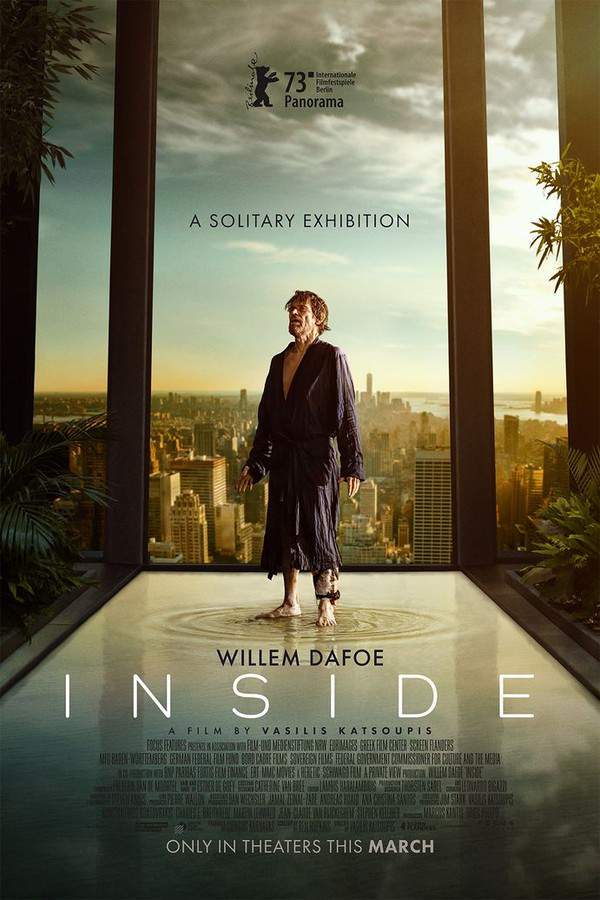
In the soaring height of Manhattan’s skyline, a luxurious penthouse becomes an unlikely prison after a botched art heist goes awry. The vast, meticulously designed space—filled with priceless works and shimmering modern décor—transforms from a coveted prize into a confining labyrinth where every wall and window feels both alluring and constricting. As the building seals itself, the silence is broken only by the hum of high‑tech security and the distant pulse of the city below, setting a tense, almost claustrophobic atmosphere that watches the intruder from every polished surface.
At the center of this confinement is Nemo, a seasoned art thief whose skill is matched only by a lingering, reflective past. He carries with him a childhood memory of choosing three items to save from a fire—a beloved cat, an AC/DC record, and a sketchbook—a story that underscores his deep‑seated belief that creation endures beyond destruction. This personal creed fuels his obsession with art, turning every stolen masterpiece into more than a loot‑bag; they become fragments of a larger narrative he feels compelled to protect and understand.
The film balances a sleek, high‑society aesthetic with a gritty, survivalist pulse, weaving together the elegance of the penthouse’s gallery spaces and the stark reality of being trapped within them. A constant cat‑and‑mouse tension builds as Nemo must rely on his intelligence, improvisation, and intimate knowledge of art to navigate an environment that is both his greatest prize and his most relentless adversary. The tone oscillates between quiet, almost reverent contemplation of the surrounding works and a frantic, breathless urgency to outwit unseen pursuers.
Throughout, the story invites viewers to linger on the paradox of creation amid confinement, hinting that the very walls designed to showcase beauty may also become the tools for a desperate escape. The interplay of art, isolation, and relentless ingenuity makes the penthouse feel like a living puzzle, promising that every brushstroke and whispered thought could be the key to survival.
What Happens in Inside?
The complete story of Inside, from the first scene to the last, in 605 words (about 3 minutes). Spoilers throughout. Names in the text link to 1 cast member page.
Spoilers ahead
Nemo, Willem Dafoe, is an art thief with a poignant and reflective past. In his storytelling, he recounts a childhood incident where a teacher asked him to select three possessions to save from a house fire. Instead of choosing his family, Nemo picked his beloved cat, an AC/DC record, and his sketchbook. He laments that the cat died, the record was lent to someone who never returned it, but his sketchbook remains—a symbol of his belief that “art is for keeps.” This anecdote hints at Nemo’s deep connection to art and the importance he places on creation and preservation.
In the present day, Nemo adopts the guise of a handyman to infiltrate a luxurious Manhattan penthouse owned by a wealthy collector. His goal is to steal three works by the renowned artist Egon Schiele, although he struggles to locate Schiele’s self-portrait within the lavish space. His daring attempt to steal the artwork triggers a security alarm, trapping him inside the apartment, which then seals itself off completely. As his contacts on the outside abandon him, Nemo finds himself increasingly isolated, facing the challenge of breaking free. The penthouse’s malfunctioning thermostat swings between scorching heat and freezing cold, adding to his physical torment. Food and water are scarce—apart from the timed sprinklers in the indoor garden—and Nemo’s psychological state begins to waver.
His entry into the apartment is dramatic; after climbing through bird netting over the balcony, a pigeon becomes trapped in the space, slowly starving to death while Nemo helplessly watches. Wasted and injured from repeated escape attempts, Nemo constructs a massive scaffold from furniture in a bid to reach a skylight, which he hopes will lead to his escape. Using improvised tools made from furniture, he gradually dismantles the frame around the skylight, inching closer to freedom. During this ordeal, he becomes obsessively fixated on Jasmine, a young housekeeper he observes via security cameras shown on the apartment’s television. Despite the frustration of hearing her nearby while she remains oblivious—wearing earphones and unaware of his desperation—Nemo’s desperation grows.
His discovery of a hidden passage in a closet leads him to a private room containing the self-portrait of Schiele and a collection of The Marriage of Heaven and Hell. In his desperation, Nemo turns to consuming the fish from the aquarium and even dog food, which ultimately leads to tooth decay and hallucinations. His physical decline worsens when he falls while removing bolts from the skylight, breaking his leg. Despite patching it up with a splint, his health and sanity continue to erode amid the deteriorating apartment environment.
Throughout his ordeal, Nemo immerses himself in studying the apartment’s artwork and creating his own drawings and art pieces on the walls—each a testament to his obsession with creation amid destruction. His attempts to seek help become increasingly desperate; he sets off a smoke alarm, flooding the penthouse in the process, but no aid arrives. In a final act of remorse and reflection, he leaves a message on the walls, recounting his childhood story once more, apologizing for breaking into and damaging his host’s home, and affirming that “there is no creation without destruction.” He explains that he has saved three pieces of artwork, symbolizing the core of his mission.
The film closes with a serene, lingering shot of the scaffolding now surrounding the open skylight, symbolizing Nemo’s potential escape. Through the skylight, a shadow is visible—suggesting Nemo has finally broken free from his prison, transcending his physical and psychological struggles. This ending leaves viewers with a sense of hope and the enduring power of art as a form of salvation, even in the midst of chaos.
Inside Timeline: Every Key Event in Order
13 key events in the order they happen. 12 events name a place, across 7 locations.
- 1
Childhood Fire Incident
Nemo recounts his childhood where a teacher asked him to choose three things to save from a house fire. He picked his cat, an AC/DC record, and his sketchbook, reflecting his values of loyalty, music, and art. The cat died, and the record was lent out and not returned, but he still keeps his sketchbook, emphasizing the idea that art is for keeps.
- 2
Planning the Heist
Disguised as a handyman, Nemo plans to break into a Manhattan penthouse belonging to a wealthy art collector. His goal is to steal three works by Egon Schiele, although he fails to find Schiele's self-portrait during the intrusion. His preparations involve navigating the apartment’s security system and challenges.
Where:Manhattan high-rise penthouse
- 3
Security Breach and Lockdown
Nemo’s attempt to steal the artwork triggers the security system, sealing the apartment in lockdown. His contacts abandon him, and he finds himself trapped inside with no immediate escape options, facing mounting frustration and danger as he tries to find a way out.
Where:Penthouse apartment
- 4
Environmental Challenges
A broken thermostat causes the apartment’s temperature to fluctuate wildly, making survival increasingly difficult. Nemo struggles to find food and water, which are scarce, with only timed sprinklers in an indoor garden providing some moisture, intensifying his physical and mental suffering.
Where:Penthouse apartment
- 5
Trapped Pigeon and Observation
Nemo observes a pigeon trapped on the patio after his entry through bird netting. Over time, the pigeon starves and dies while Nemo watches helplessly, symbolizing his own entrapment and the consequences of his actions.
Where:Apartment patio
- 6
Weeks of Isolation and Injury
Weeks pass as Nemo remains trapped, growing hungrier and more injured due to failed escape attempts. He tries to reach the skylight by building a scaffold from furniture, showing his increasing obsession and desperation to escape the confinement.
Where:Penthouse apartment
- 7
Watching Jasmine
Nemo becomes obsessed with Jasmine, a young housekeeper he's watched via security cameras on the apartment television. Multiple scenes show her outside the door, unaware of his desperate calls and banging, because she is listening to earphones, which deepens his loneliness and frustration.
Where:Apartment
- 8
Discovery of Hidden Room
Nemo finds a concealed passage in a closet that leads to a room containing the Schiele self-portrait and a collection of Werke von William Blake's 'The Marriage of Heaven and Hell'. This discovery represents his obsession with art and his longing to access what is hidden or forbidden.
Where:Hidden room within the apartment
- 9
To survive, Nemo eats fish from the aquarium and dog food, which damages his teeth and causes hallucinations. His health declines sharply as he attempts to remove the skylight bolts but falls and breaks his leg, worsening his physical state and mental stability.
Where:Penthouse apartment
- 10
As his situation worsens, Nemo creates artwork on the walls, studies the apartment's art collection, and confronts his obsession with destruction and creation. His mental state deteriorates amidst the chaos and isolation, symbolizing his internal struggle.
Where:Penthouse apartment
Show the other 3 events of Inside Hide the last 3 events
- 11
Nemo sets off a smoke alarm attempting to attract help, flooding the apartment with water in the process. Despite his efforts, no outside help arrives, reinforcing his deep isolation and despair.
Where:Penthouse apartment
- 12
He leaves a wall note explaining his story and apologizing for his destructive actions, asserting that destruction is part of creation. His final message emphasizes his belief that he has preserved three pieces of art in his actions.
Where:Walls of the apartment
- 13
The film ends with a view of the scaffolding and open skylight, suggesting Nemo finally escaped. A shadow seen through the skylight implies that he has broken free from his physical and emotional imprisonment, symbolizing liberation.
Where:Apartment rooftop and skylight
Who Are the Main Characters in Inside?
2 characters, among them Nemo and Jasmine: who each one is and the part they play in the story. Every profile links to the actor’s page.
-

Nemo
Played by Willem Dafoe
A passionate art thief who is deeply nostalgic about childhood and art. His obsession with saving art and his descent into madness reveal a character driven by loss and longing. Nemo’s determination ultimately underscores themes of obsession and the destructive power of fixation.
- 🎭 Complex
- 🔪 Obsessive
- 🖼️ Artistic
- J
Jasmine
Played by Eliza Stuyck
A young housekeeper who remains unaware of Nemo’s obsession and struggles. Her presence outside the apartment symbolizes the outside world and normalcy, which Nemo yearns to reach but cannot connect with. She represents innocence and the barrier between Nemo’s reality and his fantasies.
- 🌸 Innocent
- 🚪 Unreachable
- 👂 Distracted
Where and When Is Inside Set?
Inside is set in Manhattan high-rise, indoor garden, apartment and penthouse (Contemporary era). Here is why the time and place matter to the story.
When
Contemporary era
The story unfolds in the present day, reflecting modern technological elements such as security systems, cameras, and high-tech appliances. The contemporary setting highlights themes of privacy invasion, urban isolation, and the obsession with art in today's society.
Where
Manhattan high-rise, indoor garden, apartment, penthouse
The movie takes place mainly inside a luxurious Manhattan high-rise penthouse, known for its exclusivity and modern architecture. The indoor garden adds an element of tranquility and opulence, contrasting with Nemo's chaotic intrusion. The setting emphasizes wealth, privacy, and the vulnerability of the space amidst Nemo's escape.
- 🌆 Urban
- 🏢 High-rise
- 🖼️ Luxurious
- 🌿 Indoor garden
What Are the Themes of Inside?
3 ideas the story keeps returning to, among them Art and Destruction, Isolation and Mental Deterioration.
-
01
Art and Destruction
The film explores the relationship between creation and destruction, emphasizing that art often arises from chaos. Nemo's obsession with saving art pieces and his destructive actions in the penthouse symbolize the complex connection between artistic expression and upheaval.
-
02
Isolation
Nemo's confinement within the luxury apartment underscores themes of loneliness and the barriers created by wealth and security. His disconnection is heightened by his obsession with Jasmine and his struggle to reach the outside world.
-
03
Mental Deterioration
Throughout the movie, Nemo's physical injuries and the stressful environment lead to hallucinations and a breakdown of his mental state. The film depicts how obsession and isolation can destabilize one’s mind.
How Does Inside End?
The last act of Inside and what it means, in 271 words. The ending lands as ambiguous. Big spoilers: read the plot summary first if you have not seen it.
The final act, in full
Inside ends in a powerful and ambiguous way that leaves the viewer questioning what really happened. Throughout the film, Nemo, a trapped and desperate man, has been trying to escape from the luxurious but soul-less apartment after being locked in by an unknown owner. After weeks of isolation, suffering the extreme heat, cold, hunger, and despair, he finally reaches the skylight with the intent to break free. The climax suggests that Nemo either succeeded in escaping or succumbed to his circumstances. If he managed to unscrew the glass and escape, then the final image of him climbing through the broken panel symbolizes victory over his confinement and a reclaiming of agency. On the other hand, the scene can also be seen as a metaphor for surrender—after creating a chaotic and haunting masterpiece out of his suffering, Nemo might have given up on the idea of escape altogether, accepting his fate within the confines of the apartment.
The ending’s openness reflects the film’s broader themes about the human condition—our fight against despair, the inevitable passage of time, and the destructive nature of obsession. Nemo’s journey is as much about physical survival as it is about psychological resilience and the search for meaning in chaos. Whether he escapes or not, the film leaves us with a haunting image of a man pushed to his limits, forever marked by his ordeal—an artistic and existential statement on the importance of confronting one’s circumstances, even when escape seems impossible. Ultimately, the ending challenges viewers to interpret Nemo’s fate, emphasizing that sometimes, in the face of overwhelming adversity, survival itself becomes an act of defiance and art.
What Kind of Film Is Inside?
Tense in tone, with slow pacing and a moderate story, going by the plot summary.
- Tone
- Tense
- Pacing
- Slow
- Story
- Moderate
- Intensity
- High
- Ending
- Ambiguous
A slow-burning, intensely claustrophobic thriller that chronicles the psychological and physical decay of an isolated man, creating a desperate and anxious atmosphere where the creation of art becomes an act of survival.
- claustrophobic
- anxious
- desperate
- obsessive
- melancholic
- isolated
- survival
- art heist
- psychological torment
- descent into madness
Content notes: animal death, starvation, psychological distress, physical injury.
Quiz
How well do you remember Inside? Test yourself on the story.
Where to Watch Inside
Stream it on Peacock and YouTube TV, or rent or buy it from Amazon Video and Apple TV Store. US availability and prices from JustWatch.
 Peacock Premium
  Peacock Premium Plus
  YouTube TV




Streaming availability in the US, powered by