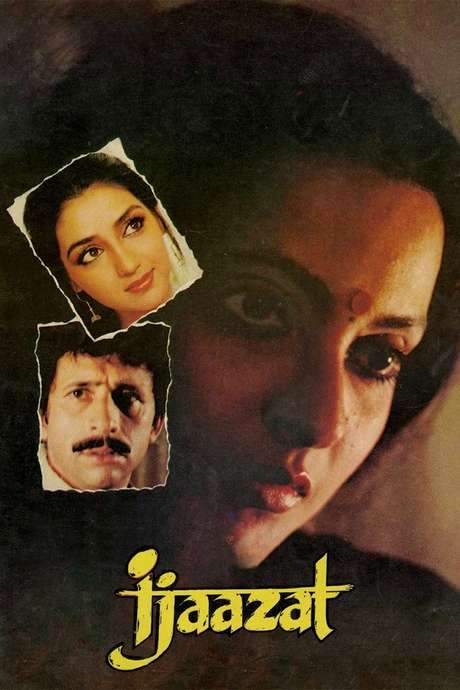


Ijaazat Plot Summary
Read the complete plot summary and ending explained for Ijaazat (1987). From turning points to emotional moments, uncover what really happened and why it matters.
The film unfolds as a present-day encounter between a divorced couple, Mahender Naseeruddin Shah and Sudha Rekha, interwoven with a tapestry of flashbacks that peel back the years of their marriage and reveal the stubborn, aching tides that pulled them apart. On a rain-soaked platform, Mahender steps off a train and makes his way toward the station waiting room, where Sudha sits, seemingly invisible to him at first as the rain drums a steady rhythm on the roof. The moment their eyes finally meet, a charged silence lingers before they stumble into a long, unsettled conversation about what they once meant to one another and what they still carry in common.
In the earliest flashback, Mahender encounters Sudha’s elder confidant and father figure, a moment that frames the social pressure and expectations pressing on their relationship. Sudha’s father figure, Shammi Kapoor, urges Mahender to honor the vow of marriage he once promised. The legend of a five-year engagement weighs heavy; Mahender has been postponing the wedding with excuses that sound hollow in retrospect. Yet Sudha remains a constant presence, and she asks him to confront a difficult truth: if he cannot fully commit to her, he must reveal his true intent. The scene shifts as Sudha asks Mahender to bring Maya Anuradha Patel to meet the family, to lay bare whether his heart still belongs to another woman. The request, simple in its phrasing, becomes a thunderbolt—one that unsettles the balance of two intertwined lives.
What follows is a series of intertwined choices. Mahender returns to Maya’s side, only to discover she has left him with a note that hints at a different future he could have chosen. Time moves on, and he marries Sudha, building a life that seems outwardly steady even as Maya remains a lingering, unspoken presence. Maya is not merely a memory; she remains a friend-like confidant who sometimes steadies him and sometimes pulls at the edges of his vows. Sudha, acutely aware of Maya, begins to feel the tremor of insecurity in her marriage, even as she strives to maintain a semblance of normalcy. The emotional weather is volatile, and the line between devotion and jealousy begins to blur.
Maya’s suicide attempt becomes a watershed moment. Guilt gnaws at Mahender, and his attention shifts more towards Maya, though he continues to live with Sudha. Sudha fails to see the full extent of the entanglement at times, misreading the intensity of Mahender’s attachment to Maya as mere friendship. The tension erupts when Mahender declares that he will bring Maya home to talk things through, but Sudha opposes this plan, fearing what Maya’s reappearance might do to their fragile marriage. The argument over Maya’s place in their lives becomes a test of trust, and Maya overhears a heated phone exchange between the two—an overheard conversation that crystallizes the distance between the partners. In a moment of impulsive resolve, Maya leaves, and soon after, Sudha departs as well, her own life path pulling away from the past they shared.
The consequences of those choices spiral into tragedy. Mahender’s shock at the ruptures leads to a heart attack, and Maya nurses him back to health while Sudha puts distance between them and life in Panchgani, where she continues to teach. The long arc of reconciliation seems possible in the mind, but the world does not yield easily to reconciliation. When Mahender finally believes the time has come to win Sudha back, he receives a letter that reveals Sudha’s decision to abandon the marriage altogether, severing contact once again. The sudden, brutal shift unsettles Maya, who feels estranged and rides away on her motorcycle at dawn. In the dawn light, a fateful accident occurs: Maya’s scarf tangles with the rear wheel, and she dies from injuries sustained in the crash.
In the present, Sudha’s sorrow deepens, and the memory of those events returns with a cruel, quiet force. Just as Mahender gathers the courage to seek forgiveness, Sudha’s new husband Shashi Kapoor enters the waiting room to take her away. The moment is charged with a tension that sits between apology and acceptance. Mahender, standing in the doorway of memory, asks for forgiveness, and Sudha responds in a gesture loaded with both humility and resolve: she touches his feet, a plea for permission—a final, unspoken Ijaazat. Her husband, returning briefly, smiles with a restrained acknowledgment, and Sudha and her new partner depart together, leaving Mahender to linger on the platform, the rain finally easing as the scene closes on a note of unresolved emotion.
Throughout, the narrative moves with a quiet, elegiac tempo that honors memory, obligation, and the precarious nature of forgiveness. The story never cups away from the pain at its center, yet it also refuses to deny the tenderness that lingers between two people who once vowed to share a life. In the end, the film leaves a lingering ache rather than a neat resolution, inviting audiences to consider the price of love when loyalty, fear, and hope collide within the heart’s many rooms.
Ijaazat Timeline
Follow the complete movie timeline of Ijaazat (1987) with every major event in chronological order. Great for understanding complex plots and story progression.
Rainy reunion at the station
Mahender steps off the train and makes his way to the station waiting room as heavy rain begins. Sudha is already there, trying to avoid him. They almost collide, setting the stage for the mixed present-day encounter.
Sudha's attempt to hide in the waiting room
Sudha hides from him, hoping to remain unseen, but the moment compels them to confront each other. Their brief interaction hints at a long, unsettled history. The encounter marks the uneasy balance of their current relationship.
Father figure pushes for the vow
In a flashback, Sudha's father figure urges Mahender to honor his vow to marry Sudha. He has been engaged for five years and the wedding date is fixed. The pressure underscores the social expectations surrounding their union.
Dilemma over Maya and the engagement
Mahender discusses his relationship with Maya with Sudha's father figure, revealing his inner conflict. Sudha asks him to bring Maya to reveal his intention of marrying Maya instead. He returns home to fetch Maya, only to find she has left, leaving behind a letter.
Maya joins the life of Sudha's marriage
Soon after, Mahender marries Sudha and tries to maintain a cordial bond with Maya. He treats Maya as a friend and hopes to lead a normal married life with Sudha. Yet Sudha remains wary of Maya's presence in their marriage.
Maya's suicide attempt and guilt
Maya's suicide attempt shocks Mahender, and he spends more time with her out of guilt. Sudha remains unaware of the attempt and suspects his faithfulness. The mounting tension strains their marriage further.
Plan to bring Maya home
Mahender tells Sudha he intends to bring Maya home to talk things through, despite her protests. She strongly objects to this plan, fearing the old wounds will reopen. Nevertheless, Mahender leaves to fetch Maya, determined to resolve the situation.
Maya overhears and vanishes
Maya overhears the heated phone exchange and leaves before Mahender can reach her. Returning home without Maya, he discovers Sudha has also left. The simultaneous departures plunge him into shock and fear for their fractured family.
Heart attack and Maya's nursing
Unable to bear the shock, Mahender suffers a heart attack. Maya nurses him back to health, while Sudha stays distant and continues her life as a teacher in Panchgani. The two women inhabit separate, parallel roles in his life.
Desire to reconcile and Sudha's letter
Mahender feels it is time to bring Sudha back, but he receives a letter from Sudha declaring her intention to abandon the marriage and cut off all contact. The abrupt shift deepens the emotional rift between them. Maya's position in the relationship becomes even more precarious.
Maya's dawn tragedy
Overcome by the strained relationship, Maya rides away on her motorcycle at dawn. Her scarf becomes entangled in the rear wheel, causing a crash that leaves her severely injured and eventually dead.
Present-day sadness at the waiting room
In the present day, Sudha is deeply saddened by the long-ago events. Mahender approaches to ask for forgiveness, but Sudha's new husband arrives to collect her and end the moment. The encounter leaves both men and Sudha with unspoken emotions.
Forgiveness and ijaazat requested
Sudha touches Mahender's feet, seeking forgiveness and permission to leave him, a gesture of closure. Her husband returns to escort her away, signaling the final separation. The moment underscores the enduring divisions between them.
Ending image: Mahender's quiet loneliness
As Sudha and her husband depart, Mahender lingers behind, watching them go. The film ends with his solitary, unresolved state, echoing the rain-soaked mood of the opening scene.
Ijaazat Characters
Explore all characters from Ijaazat (1987). Get detailed profiles with their roles, arcs, and key relationships explained.
Mahender (Naseeruddin Shah)
A complex, tormented husband who sustains two relationships, inwardly torn between duty to Sudha and lingering attachment to Maya. His guilt-driven decisions drive much of the drama, and his attempts at balancing loyalties often miss the mark. He is capable of tenderness yet sometimes acts out of self-interest, leading to tragedy.
Sudha (Rekha)
A resilient teacher in Panchgani who seeks stability after a difficult marriage. She remains wary of Maya’s presence and challenges Mahender’s choices, demanding honesty. Her arc centers on forgiveness, self-respect, and the cost of unresolved love.
Maya (Anuradha Patel)
The third person in the emotionally tangled triangle, whose vulnerability and attachment to Mahender trigger love, guilt, and desperation. Her actions reveal the fragility of fragile hopes and the consequences when desire overpowers prudence.
Father Figure (Shammi Kapoor)
An elder patriarch who embodies traditional expectations, pressing for commitment and the arranged marriage. He orchestrates pressure that accelerates the central conflict and reveals the social norms that govern the characters’ choices.
Sudha's Husband (Shashi Kapoor)
The steady, supportive partner who provides stability and legitimacy in the present-day arc. He re-enters Sudha’s life as a calm counterpoint to Mahender’s turmoil, underscoring themes of acceptance and forgiveness.
Ijaazat Settings
Learn where and when Ijaazat (1987) takes place. Explore the film’s settings, era, and how they shape the narrative.
Time period
Late 20th century
The narrative shifts between present-day scenes and flashbacks from the couple’s married years. These memories shape current decisions and reveal the lasting impact of past choices. The tone reflects a pre-digital era in Indian cinema, with traditional values colliding with personal desires.
Location
Panchgani, India, Train station waiting room
The story unfolds across the hill town of Panchgani and key transport hubs, notably a railway station waiting room where a chance encounter triggers the core emotional arc. Panchgani provides a calm, small-town backdrop that contrasts with the intensity of the relationships on screen. The film also highlights everyday spaces like the school where Sudha works, grounding the drama in ordinary Indian life.
Ijaazat Themes
Discover the main themes in Ijaazat (1987). Analyze the deeper meanings, emotional layers, and social commentary behind the film.
❤️
Love & Fidelity
Mahender’s arrangement of marrying Sudha while maintaining ties with Maya tests the boundaries of love and loyalty. The relationships explore how affection can coexist with betrayal and how social expectations influence personal decisions. The film questions whether true fidelity is possible when desire and obligation pull in different directions.
🕰️
Memory & Time
Flashbacks reveal how past vows and miscommunications continue to haunt the present. Memories of the marriage dictate present actions and emotional responses, blurring lines between guilt and justification. Time in the story acts as a steady force that can strengthen or sever connections.
🙏
Forgiveness & Consequence
Forgiveness is pursued but not guaranteed, as characters must live with the outcomes of their choices. The suicide attempt by Maya and Sudha’s evolving stance on the marriage test whether forgiveness can truly heal old wounds. The ending suggests closure is fragile and mutual forgiveness remains incomplete.

Coming soon on iOS and Android
The Plot Explained Mobile App
From blockbusters to hidden gems — dive into movie stories anytime, anywhere. Save your favorites, discover plots faster, and never miss a twist again.
Sign up to be the first to know when we launch. Your email stays private — always.
Explore the mobile appIjaazat Spoiler-Free Summary
Discover the spoiler-free summary of Ijaazat (1987). Get a concise overview without any spoilers.
In the gentle drizzle of a railway platform, an unexpected encounter brings two former partners together in the quiet hum of a waiting room. The scene is simple yet charged: a train has just pulled away, and the ordinary sounds of rain on the roof become the backdrop for a conversation that has been postponed for years. The film settles into this moment, using the transient space of the station to reflect the impermanence and possibility that linger in the lives of its characters.
Mahender and Sudha are the central figures, their marriage now a memory that both comforts and unsettles them. Once bound by vows and shared dreams, they have walked separate paths, yet the pull of what once was remains undeniable. Their dialogue is laced with the tenderness of familiarity and the sharp edges of unresolved grievances, hinting at the complex web of love, expectation, and sacrifice that shaped their years together. Their presence exudes a quiet dignity, each carrying the quiet weight of choices made long ago.
The narrative unfolds through lyrical flashbacks that weave between the present and the past, allowing the audience to glimpse the moments that defined the couple’s journey. A third woman, Maya, drifts in the periphery of their shared history, her influence subtly shaping the dynamics between Mahender and Sudha without ever dominating the story. This layered storytelling invites viewers to consider how friendships and past affections can linger, altering the contours of a marriage long after it has ended.
The film’s tone is contemplative and elegiac, moving with a measured pace that mirrors the rhythmic patter of rain. It balances melancholy with moments of quiet humor, creating a space where forgiveness feels possible even when resolution remains elusive. Through its restrained cinematography and intimate performances, the story captures the fragile beauty of reconnecting with a past love, leaving the audience with a lingering sense of both hope and unanswered questions.
Movies with Similar Twists and Themes
Uncover films that echo the narrative beats, emotional arcs, or dramatic twists of the one you're exploring. These recommendations are handpicked based on story depth, thematic resonance, and spoiler-worthy moments — perfect for fans who crave more of the same intrigue.







Featured on this page

What's After the Movie?
Not sure whether to stay after the credits? Find out!
Check out our other apps:

SAT Sphere
Build confidence for the Digital SAT.

Mori Atlas
Discover wild places worth protecting.

Luntero
Search smarter for a home in Amsterdam.

Plot Explained
Unravel movie endings and hidden clues.

Pokechamp
Dive into Pokémon data and battle logic.

Driving Theory
Get ready for your European theory test.

Movie Dust
Plan your next cinema trip with ease.

Musemap
Find art and culture as you travel.

Selkobase
Compare credentials before committing.

Local Manual
Turn an unfamiliar country into practical next steps.

Lernavi
Compare school systems before your next move.

GymRoam
Find a workout stop wherever your plans take you.
Explore Our Movie Platform
New Movie Releases (2026)
Famous Movie Actors
Top Film Production Studios
Movie Plot Summaries & Endings
Major Movie Awards & Winners
Best Concert Films & Music Documentaries
Movie Collections and Curated Lists
© 2026 What's After the Movie. All rights reserved.
Privacy Policy