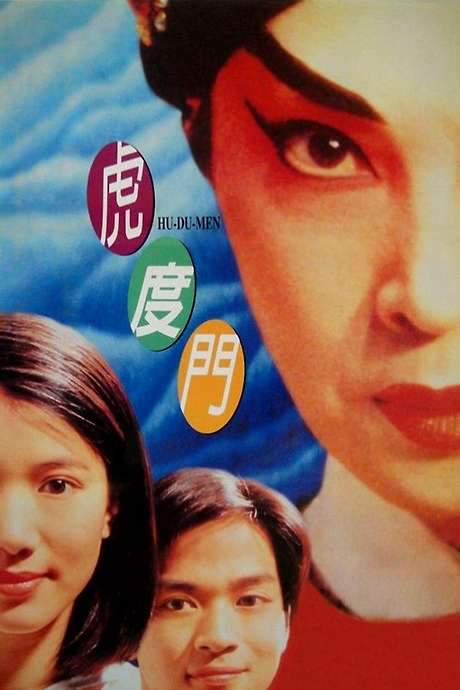
Hu-Du-Men 1996
Directed by

David Wu
Made by

Golden Harvest Productions
Hu-Du-Men Plot Summary
Read the complete plot summary and ending explained for Hu-Du-Men (1996). From turning points to emotional moments, uncover what really happened and why it matters.
Lang Kim-Sam has spent thirty years as a famous Cantonese opera actress in the theatre, and she now confronts the stage door of her life. Cantonese opera is at a crossroads, needing subtle reform, yet turning those changes into reality proves difficult.
Her husband Chan Yiu-Jo has hit a career dead end and dreams of moving to Australia. He urges Kim-Sam to leave the theatre troupe and join him overseas, sparking tension about loyalty, identity, and the future of her art.
Behind the scenes, the troupe’s male lead, Ah Lung, wrestles with a quiet crush on her, adding complexity to friendships and decisions at the heart of the company.
Kim-Sam’s fifteen-year-old daughter, Mimi Chan Man, faces troubling whispers about her sexuality and is said to have a girlfriend, a revelation that strains family bonds and the troupe’s dynamics.
The drama deepens with the arrival of Wong Man-Chun, Kim-Sam’s illegitimate son who was born and abandoned in Nanyang twenty-two years earlier. He travels from afar and falls in love with Yip Yuk-Seung, the troupe’s female lead, who had come to Canada to perform and to meet Kim-Sam for the first time.
From the moment they meet, the connection between mother and son remains shrouded in secrecy, and the tension of revelation weighs heavily on the stage. On Kim-Sam’s final performance, with her son in the audience and seemingly unaware of their shared lineage, she is overwhelmed by emotion. She fights back tears, steadies herself, and, with quiet resolve, steps out of the Hu-Du-Men and sees the role through to its completion, delivering a performance that feels earned and true to a life lived in the shadows and the spotlight alike.
Hu-Du-Men Timeline
Follow the complete movie timeline of Hu-Du-Men (1996) with every major event in chronological order. Great for understanding complex plots and story progression.
Career at the Crossroads
Lang Kim-Sam, a famed Cantonese opera actress with thirty years in the theatre, reaches a pivotal turning point as the form she loves faces subtle reform. She must balance tradition, audience expectations, and the realities of aging stars. The pressure mounts as the troupe debates how to reform without losing its essence.
Husband's Move to Australia
Chan Yiu-Jo tells Kim-Sam he wants to leave for Australia, urging her to quit the troupe and join him. He imagines a fresh, quieter life away from the spotlight. This plan strains their marriage and raises questions about what Kim-Sam values more: family or the stage.
Ah Lung's Unspoken Crush
Ah Lung, the troupe's male lead and Kim-Sam's ally, harbors a quiet crush on her. His feelings complicate professional dynamics and threaten the boundaries of friendship within the company. The unspoken attraction adds personal stakes to the ongoing artistic struggles.
Mimi's Secret
Kim-Sam's daughter Mimi Chan Man is suspected of having homosexual tendencies and has a girlfriend. The revelation challenges family norms and tests Kim-Sam's role as mother and matriarch in a conservative theater world. The tension spills into rehearsal rooms and public appearances.
Wong Man-Chun's Return from Canada
Wong Man-Chun, Kim-Sam's illegitimate son born and abandoned in Nanyang twenty-two years earlier, resurfaces. He travels from Canada to be near the world his mother inhabits and to meet the mother who never knew him. His arrival unsettles Kim-Sam and the troupe as their history begins to collide with the present.
Man-Chun Attends Yuk-Seung's Performance
Man-Chun flies from Canada to watch Yip Yuk-Seung, the troupe's female lead, perform and to observe Kim-Sam for the first time. The trip foreshadows the complex ties that will bind mother, son, and star. The theatre hums with anticipation as the show approaches.
In the Audience
In the audience, Man-Chun begins to piece together his connection to Kim-Sam as Yuk-Seung performs. He appears to know nothing about his biological mother performing on stage, creating an emotional undercurrent to the show. The audience's gaze becomes a catalyst for the drama offstage.
Kim-Sam's Last Performance Opens
Kim-Sam takes the stage for what will be her last performance, carrying decades of artistry and unresolved personal turmoil. The crowd senses something unusual is at play as the famous actress battles the weight of years behind every gesture. The moment sets the stage for a cathartic culmination.
The Sobs and a Break in the Curtain
Mid-performance, Kim-Sam chokes with sobs, struggling to continue as memories of her past and the presence of her son loom large. The moment tests her stamina and dedication to the role she has spent a lifetime perfecting. The audience is unaware of the deeper emotional storm raging on stage.
A Resolve to Finish
Kim-Sam dries her tears and gathers her resolve, choosing to press on and complete the role. She re-centers herself through discipline and breath, proving her commitment to art and audience. The moment marks a turning point in her relationship with the stage and her own identity.
She Steps Back into the World of Hu-Du-Men
With renewed focus, Kim-Sam steps back onto the stage and returns to the character, delivering the performance that solidifies her legacy. This act reframes her already storied career as one of endurance and resilience. The moment links personal reconciliation with professional triumph.
The Reform Dilemma Remains
Throughout, the tension between reform and tradition persists, casting a shadow over the troupe's future. Kim-Sam's experience embodies the struggle to modernize while honoring the craft's roots. The film ends with a sense that change is possible, but not without cost.
Hu-Du-Men Characters
Explore all characters from Hu-Du-Men (1996). Get detailed profiles with their roles, arcs, and key relationships explained.
Lang Kim-Sam (Josephine Siao Fong-Fong)
A legendary Cantonese opera actress nearing retirement after thirty years in the theater. She confronts the need for subtle reform in Cantonese opera and the difficulties of implementing it within her troupe. Her role as a mother—to Mimi and Wong Man-Chun—adds further complexity as fame and family collide during her final performance.
Yip Yuk-Seung (Anita Yuen Wing-Yee)
A famous Cantonese opera actress who travels from Canada to attend Kim-Sam's final performance. She is the troupe's female lead and becomes a focal point within the ensemble, influencing tensions and relationships around the show.
Wong Man-Chun (Daniel Chan Hiu-Tung)
Kim-Sam's illegitimate son, born and abandoned twenty-two years earlier. He attends the performance and unexpectedly falls in love with Yuk-Seung, complicating the past and present surrounding Kim-Sam.
Mimi Chan (Michelle Wong Man)
Kim-Sam's fifteen-year-old daughter, suspected of homosexual tendencies and has a girlfriend. She represents the younger generation grappling with her mother's legacy and her own identity within a tradition-bound world.
Chan Yiu Jo (Chung King-Fai)
Kim-Sam's husband who wants to move to Australia and urges her to leave the theatre. His plans highlight the pull of opportunity outside the arts and the strain it places on family and commitment to the troupe.
Director Lam (David Wu)
The troupe's director who oversees production and advocates for reform while maintaining the integrity of the performances. He represents the leadership challenge of balancing tradition with change.
Ah Lung (Waise Lee Chi-Hung)
The best friend and male lead in the troupe who harbors a crush on Lang Kim-Sam. His unrequited affection adds emotional tension to the ensemble's dynamics on and off the stage.
Auntie Ming (Tam Sin-Hung)
A veteran figure in the troupe who provides support and perspective amid auditions, performances, and family conflicts.
Sister Yin (Cheng Wing-Mui)
A member of the troupe whose role supports the ensemble’s performance and contributes to the internal drama surrounding Kim-Sam's final run.
Hu-Du-Men Settings
Learn where and when Hu-Du-Men (1996) takes place. Explore the film’s settings, era, and how they shape the narrative.
Location
Hong Kong, Canada
The story unfolds largely within Hong Kong's Cantonese opera scene, spotlighting backstage life and the theater world. A key thread travels to Canada when a principal performer arrives from abroad to witness a show. The setting highlights the tension between cherished tradition and evolving demands for reform in the art form.
Hu-Du-Men Themes
Discover the main themes in Hu-Du-Men (1996). Analyze the deeper meanings, emotional layers, and social commentary behind the film.
🎭
Opera Legacy
A veteran star anchors the narrative, embodying the endurance of Cantonese opera as it faces subtle calls for reform. The film examines how a long-standing tradition must adapt to survive, while personal loyalties test the resilience of the troupe. The stage becomes a vessel for memory, lineage, and the push-pull between old and new methods.
💔
Family and Sacrifice
The storyline threads through complex family dynamics, including Lang Kim-Sam's relationships with her daughter Mimi and her illegitimate son Wong Man-Chun. Fame imposes sacrifices on private life, and characters weigh personal happiness against commitment to the art. Emotions and secrets surface on and off the stage, revealing the cost of devotion to family and career.
🎶
Art and Reform
The troupe grapples with the balance between preserving musical and dramatic tradition and embracing modernization. The final performance becomes a crucible where legacy clashes with reform, testing the performers' dedication and artistry. The film uses rehearsal and performance to critique how Cantonese opera evolves without losing its essential spirit.

Coming soon on iOS and Android
The Plot Explained Mobile App
From blockbusters to hidden gems — dive into movie stories anytime, anywhere. Save your favorites, discover plots faster, and never miss a twist again.
Sign up to be the first to know when we launch. Your email stays private — always.
Explore the mobile appHu-Du-Men Spoiler-Free Summary
Discover the spoiler-free summary of Hu-Du-Men (1996). Get a concise overview without any spoilers.
In the glittering world of Cantonese opera, the stage itself feels like a living entity, its curtains parting on a tradition that balances spectacle with discipline. The legendary “Hu‑du‑men” – the stage door that separates performance from the ordinary – looms as a symbolic threshold, a place where every step can mark a point of no return. Within this vibrant arena, Lang Kim‑sum commands attention with a magnetic presence that has lit the boards for three decades, her voice and gestures embodying the very soul of the art form.
As the curtain prepares to close on her illustrious career, Chan Yiu‑Jo watches his beloved grapple with an industry at a crossroads. The troupe faces subtle yet urgent calls for reform, challenging long‑held conventions and testing the resilience of its veterans. Meanwhile, Ah Lung, the troupe’s steadfast male lead, harbors quiet admiration that adds an undercurrent of unspoken tension. Their circle expands with the youthful energy of Mimi Chan Man, a fifteen‑year‑old whose emerging identity hints at new possibilities, and Wong Man‑Chun, an unexpected son returning from abroad, whose arrival stirs both curiosity and uncertainty. The presence of Yip Yuk‑Seung, the troupe’s leading lady, further intertwines professional ambition with personal intrigue.
Against a backdrop of ornate costumes, resonant scores, and the relentless hum of an audience waiting for marvels, the film weaves a tapestry of ambition, loyalty, and the inevitable pull of change. The characters orbit around the same stage door that has defined Lang Kim‑sum’s life, each drawn by its promise and its perils. As the troupe navigates the delicate balance between honoring heritage and embracing evolution, the story invites viewers to contemplate what it means to step beyond the familiar and confront the irreversible moments that shape art and identity alike.
Movies with Similar Twists and Themes
Uncover films that echo the narrative beats, emotional arcs, or dramatic twists of the one you're exploring. These recommendations are handpicked based on story depth, thematic resonance, and spoiler-worthy moments — perfect for fans who crave more of the same intrigue.



Featured on this page

What's After the Movie?
Not sure whether to stay after the credits? Find out!
Check out our other apps:

SAT Sphere
Build confidence for the Digital SAT.

Mori Atlas
Discover wild places worth protecting.

Luntero
Search smarter for a home in Amsterdam.

Plot Explained
Unravel movie endings and hidden clues.

Pokechamp
Dive into Pokémon data and battle logic.

Driving Theory
Get ready for your European theory test.

Movie Dust
Plan your next cinema trip with ease.

Musemap
Find art and culture as you travel.

Selkobase
Compare credentials before committing.

Local Manual
Turn an unfamiliar country into practical next steps.

Lernavi
Compare school systems before your next move.

GymRoam
Find a workout stop wherever your plans take you.
Explore Our Movie Platform
New Movie Releases (2026)
Famous Movie Actors
Top Film Production Studios
Movie Plot Summaries & Endings
Major Movie Awards & Winners
Best Concert Films & Music Documentaries
Movie Collections and Curated Lists
© 2026 What's After the Movie. All rights reserved.
Privacy Policy