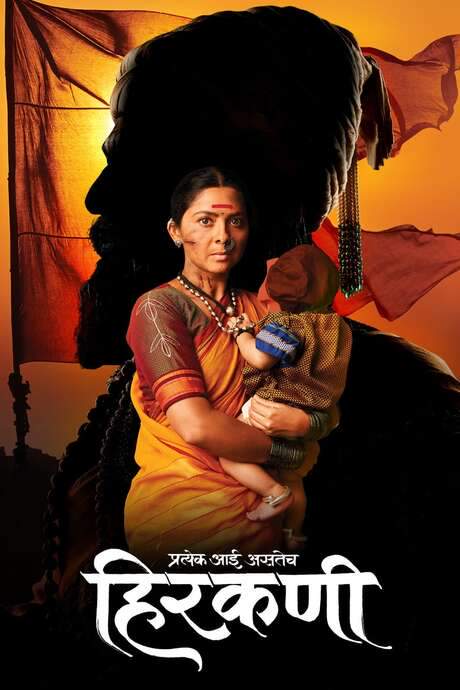


Where to Watch Hirkani
See current US streaming, rental, and purchase options for Hirkani (2019) via JustWatch.




Streaming availability powered by 
Hirkani Plot Summary
Read the complete plot summary and ending explained for Hirkani (2019). From turning points to emotional moments, uncover what really happened and why it matters.
Hirkani lived near Raigad fort, a fortress that Chhatrapati Shivaji Maharaj captured and made its capital in 1674. The fort sits high in the hills of the Western Ghats, ringed by stout ramparts that guard its secrets and its history. The village at the foot of the hill functioned as a daily market for the people who lived inside the fort, and the way in and out of this stronghold depended on a simple rhythm: stalls would set up near the gate to sell wares, and the gates would swing open each morning while they were shut tight at sunset, not to be opened again until the next dawn.
Like many others, Hirkani queued at the main entrance every morning, hoping to reach the fort’s bustling markets and to serve her own regular customers. She sold milk, tending to those familiar faces who depended on her everyday deliveries. On one particular day, she found herself delayed by the needs of her child, and the timing could not have been worse: by the time she hurried toward the gate, sunset had already closed the gates for the night, guarded by Mawla. The gate was shut, and there was no way to plead with the gatekeeper; the weight of the moment pressed on her, and she faced a difficult choice.
With resolve she had never shown before, she made a risky decision. She began the dangerous descent from the fort herself, moving carefully to avoid the peril of the rocky outcrops. The journey down proved painful and taxing—she felt the strain as she brushed against the rough surfaces and even sustained scratches on her hands and face from the uneven terrain.
The following day, Hirkani returned to the gate to resume her routine, and Mawla watched with a mix of surprise and concern as she appeared at the entrance. His reaction shifted quickly from disbelief to a summons to the fort’s ruler. He brought Hirkani before Chhatrapati Shivaji Maharaj to account for what was described as a breach of rules. The story of her late arrival, her risky descent, and the visible marks of her ordeal reached the ears of the wise and just king.
Listening to her account and seeing the scratches that marked her courage, the ruler did not condemn her. Instead, he acknowledged the courage and determination she displayed in defending her family’s livelihood. He praised her, recognizing that the act, though against the simplest of rules, sprang from a place of necessity and devotion. In a gesture that would honor her memory, he ordered a protective wall to be constructed on the unsafe vertical drop from the fort, and he named it after her, ensuring that her bold choice would be remembered as part of the fort’s enduring legacy.
In this story, the quiet persistence of a milk seller near a historic fortress becomes a testament to everyday bravery. It paints a picture of a community living under strict rules and protective walls, where a single act of courage can prompt a lasting improvement to safety and a lasting tribute to a woman who refused to abandon her responsibilities. The tale conveys respect for duty, the strength found in family care, and the idea that local acts of courage can reshape a community’s approach to risk, security, and daily life.
Hirkani Timeline
Follow the complete movie timeline of Hirkani (2019) with every major event in chronological order. Great for understanding complex plots and story progression.
Morning market routine at Raigad Fort
Villagers living at the foot of Raigad Fort gather at the main gate to trade with those inside the fort. Hirkani is part of this daily rhythm, often selling milk to her regular customers. The fort, perched on the Western Ghats, is surrounded by fortified ramparts that bound the market activity to the gate opening hours.
Hirkani delayed by her child
On a particular morning, Hirkani is kept from leaving home by her child. She rushes to join the market line but is late, delaying her usual milk-selling routine. The delay foreshadows the tension between family duties and gate timings.
Gate closes as the day ends
By the time she reaches the gate, sunset has already closed the doors for the day. The gate, protected by Mavla, remains shut until the next morning. This marks the risk Hirkani faces trying to balance livelihood with family needs.
Descent from the fort to reach her child
Unable to reach the village in time, Hirkani descends from the fort’s ramparts toward the hillside market. During the descent she gets itchy and strikes a rocky outcrop, injuring her hands and face. Her courage is evident as she continues despite the pain.
Next-day market at the fort gate
The next day, Hirkani appears at the fort gate for the daily market, intent on selling milk to her customers. The routine is a test of her resolve after the previous day’s setback. The gate stands ready to receive traders at dawn.
Gatekeeper confronts Hirkani
Mavla, the gatekeeper, is surprised to see Hirkani at the gate and alleges that she broke the rules by attempting to access the fort at the wrong time. He escorts her to higher authority to answer the charge. The tension between duty and compassion is already building.
Hirkani tells her story to Shivaji
Hirkani explains her situation to Chhatrapati Shivaji Maharaj, emphasizing her responsibility to feed her child and her customers. Shivaji listens carefully and regards her scratches as evidence of a dangerous descent. His response is guided by mercy and understanding.
Shivaji’s compassionate verdict
Rather than punishing her, Shivaji commends her bravery for risking herself to care for her family. He acknowledges the hardship faced by common people under the fort’s rules. The moment reframes law as a protection for people, not merely punishment.
Order to build a safety wall
Shivaji orders the construction of a wall along the dangerous vertical drop to prevent future incidents. The decision reflects practical leadership and a desire to safeguard traders and families. The wall is intended to keep the gate’s reopening safe for everyone.
Wall named after Hirkani
The new safety barrier is named in honor of Hirkani, ensuring her courage and sacrifice is remembered. The naming serves as a symbol for future generations to respect family responsibilities. The physical barrier also becomes a functional safeguard.
Legacy and legend
Hirkani’s act grows into a legend around the fort, illustrating how personal risk can protect a community. The wall and the story reinforce a culture of courage, care, and practical governance. Traders and residents repeat the tale to emphasize resilience.
Historical backdrop of Raigad Fort
Raigad Fort, captured by Shivaji and made his capital in 1674, sits atop the Western Ghats with fortified ramparts and a busy market at its foot. The fort’s legend and its gate signify the intersection of rule and daily life. The setting provides the historical context for Hirkani’s tale.
Hirkani Characters
Explore all characters from Hirkani (2019). Get detailed profiles with their roles, arcs, and key relationships explained.
Hirkani (Sonalee Kulkarni)
A milk seller living near the fort gate, she balances daily trade with caring for her child. On one day she is late and must descend the fort after sunset, risking injury to reach her customers and avoid leaving them without milk. Her courage and maternal devotion earn the praise of Shivaji Maharaj and prompt changes to fort safety.
Shivaji Maharaj (Prasad Oak)
A wise and capable ruler who values discipline as well as mercy. He listens to Hirkani’s account and recognizes courage over strict punishment. His decision to order a safety wall and name it after Hirkani reflects a leadership that balances justice with compassion.
Naik (Makrand Deshpande)
A fort gatekeeper who enforces the daily opening and closing schedule. He embodies duty and adherence to protocol, yet is confronted with the human story behind Hirkani’s act. His perspective shifts as he witnesses Shivaji’s merciful response.
Fakir (Jitendra Joshi)
A spiritual figure in the fort’s circle who offers counsel and moral framing for the events. He provides a calm, reflective presence that mediates the drama surrounding rules and compassion.
Jeeva (Ameet Khedekar)
An ally to Shivaji within the fortress realm, contributing to governance and decision-making during a pivotal moment in the fort’s history.
Hirkani Settings
Learn where and when Hirkani (2019) takes place. Explore the film’s settings, era, and how they shape the narrative.
Time period
17th century (1670s)
The events unfold during the mid-1600s, in the era of Shivaji’s rise and the Maratha kingdom. The fort becomes the capital in 1674, reflecting the period’s political dynamics. Daily life centers on the fort gates and market activity at the base, underscoring the era’s social and military context.
Location
Raigad Fort, Western Ghats, Maharashtra
Raigad Fort is a hill fortress perched in the Western Ghats of Maharashtra. It was captured by Chhatrapati Shivaji Maharaj and made the capital in 1674, surrounded by fortified ramparts. The nearby village at the foot of the hill supports daily trade through the fort gates, which open each morning and close at sunset.
Hirkani Themes
Discover the main themes in Hirkani (2019). Analyze the deeper meanings, emotional layers, and social commentary behind the film.
🛡️
Courage
Hirkani's decision to descend the fort after sunset shows personal bravery. She risks her safety to feed her child and serve her customers, embodying resilience under pressure. Shivaji Maharaj’s reaction—praising her courage—frames daring acts as a form of virtue and public duty.
⚖️
Duty vs Mercy
The tale pits strict gate rules against human needs, highlighting the tension between order and compassion. The gatekeeper adheres to procedure, while the ruler's mercy tempers punishment with recognition of a just cause. The resolution suggests leadership can honor both rule and humanity.
🏰
Legacy
Shivaji's decision to build a safety wall on the dangerous drop creates a lasting safeguard for fort life. The wall is named after Hirkani, turning a personal moment into a public symbol of prudent governance. The act cements Hirkani's memory in the fort’s history as a story of courage and care.

Coming soon on iOS and Android
The Plot Explained Mobile App
From blockbusters to hidden gems — dive into movie stories anytime, anywhere. Save your favorites, discover plots faster, and never miss a twist again.
Sign up to be the first to know when we launch. Your email stays private — always.
Explore the mobile appHirkani Spoiler-Free Summary
Discover the spoiler-free summary of Hirkani (2019). Get a concise overview without any spoilers.
In the mist‑shrouded Western Ghats, the stone walls of Raigad fort rise like a crown over a bustling village at its base. Captured and made the capital by Chhatrapati Shivaji Maharaj in the seventeenth century, the stronghold lives by a simple, unyielding rhythm: the massive gates swing open at dawn to welcome traders and close at dusk, sealing the hilltop until sunrise. The daily market that spills out from the gate is a tapestry of sounds, colors, and barter, a place where the lives of those inside the fort and the villagers below are tightly woven together by the cadence of entry and exit.
Amid the clamor of stalls, Hirkani makes her modest livelihood selling fresh milk to the fort’s residents. Her days are marked by early mornings, the soft jingle of goat bells, and the tender care of her infant son, who waits patiently for her return. The routine is familiar and comforting—until a sudden, unavoidable delay forces her to race toward the gate as the sun dips below the hills, and the massive doors are already sealed for the night. The gate, guarded by the watchful Mawla, stands as an unbending barrier between the fortified world above and the precarious descent that leads back to her home.
Faced with the stark choice of leaving her child on the hilltop or defying the daily law, she feels a surge of resolve that pushes her beyond the ordinary. The night air is thick with the scent of stone and pine as she contemplates the sheer cliff that drops from the fort’s walls, a silent, vertical passage that few would dare to navigate. In the glow of torches and the hush of night, the tension between duty and survival hangs heavy, hinting at a courageous act that will echo through the corridors of the fort and the hearts of those who watch.
Movies with Similar Twists and Themes
Uncover films that echo the narrative beats, emotional arcs, or dramatic twists of the one you're exploring. These recommendations are handpicked based on story depth, thematic resonance, and spoiler-worthy moments — perfect for fans who crave more of the same intrigue.


Featured on this page

What's After the Movie?
Not sure whether to stay after the credits? Find out!
Check out our other apps:

SAT Sphere
Build confidence for the Digital SAT.

Mori Atlas
Discover wild places worth protecting.

Luntero
Search smarter for a home in Amsterdam.

Plot Explained
Unravel movie endings and hidden clues.

Pokechamp
Dive into Pokémon data and battle logic.

Driving Theory
Get ready for your European theory test.

Movie Dust
Plan your next cinema trip with ease.

Musemap
Find art and culture as you travel.

Selkobase
Compare credentials before committing.

Local Manual
Turn an unfamiliar country into practical next steps.

Lernavi
Compare school systems before your next move.

GymRoam
Find a workout stop wherever your plans take you.
Explore Our Movie Platform
New Movie Releases (2026)
Famous Movie Actors
Top Film Production Studios
Movie Plot Summaries & Endings
Major Movie Awards & Winners
Best Concert Films & Music Documentaries
Movie Collections and Curated Lists
© 2026 What's After the Movie. All rights reserved.
Privacy Policy