
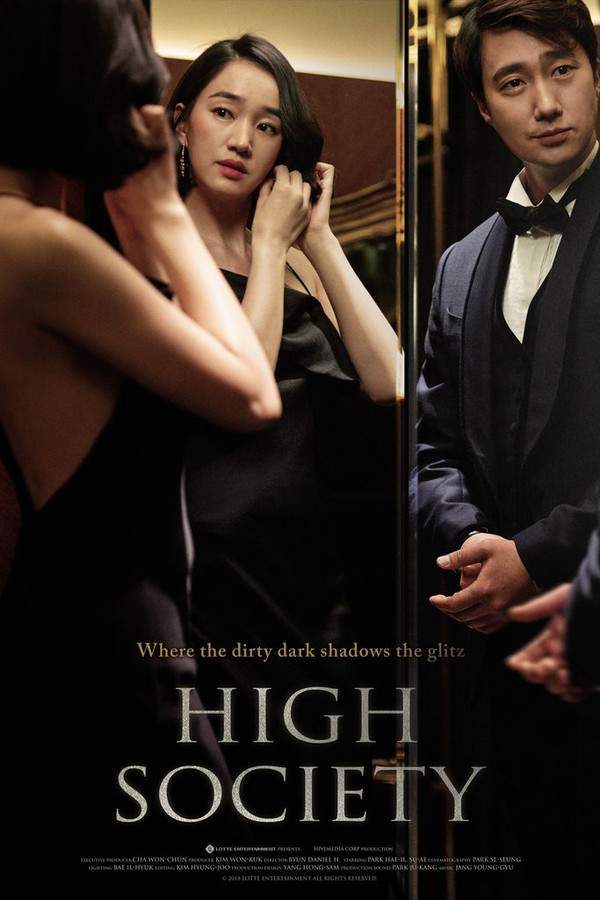
High Society 2017

Directed by

Anika Decker

High Society Plot Summary
Read the complete plot summary and ending explained for High Society (2017). From turning points to emotional moments, uncover what really happened and why it matters.
Tae-jun and Soo-yeon are a married couple who have swiftly climbed the ranks of high society through a rare blend of talent and ambition. He is a respected professor at Seoul National University, and she serves as the deputy director of a prominent art gallery. Together, they navigate the corridors of power with a shared eye to reach even greater influence, driven by the belief that their intelligence and drive deserve a greater share of the spotlight.
Tae-jun’s star rises when he proposes a low-interest citizen’s bank as a practical solution to the pressures of gentrification, a move that captures national attention. In a dramatic turn, he also saves an elderly man from a self-destructive act during a protest, a moment that helps him secure a nomination from a conservative party. His public image becomes a beacon for those who crave reform, and his name begins to echo through political and cultural circles.
Soo-yeon, meanwhile, contends with a ceiling that has long prevented her from attaining the director role she desires. She is surrounded by a conglomerate-backed director and a junior staff who seem to block her ascent at every turn. Rather than retreat, she decides to leverage her husband’s rising political profile to amplify her own influence, throwing her support behind Tae-jun’s bid for parliament and positioning herself to shape policy from behind the scenes.
But the couple’s ascent is complicated by the intimate consequences of their ambitions. Tae-jun embarks on an affair with a young aide who was once his student, a private transgression that nonetheless does not derail their public partnership. Soo-yeon, for her part, remains stoically pragmatic, choosing to overlook the affair in the name of power and opportunity.
Simultaneously, Soo-yeon rekindles a relationship with her ex-boyfriend, a talented artist whose promise continues to haunt her. Their renewed romance travels to Paris and culminates in a secretly filmed encounter—an explicit moment that ends up circulating as a shocking record of her private life. The footage lands in the hands of Chief Min, a rival in the race for the director’s chair, threatening to derail Soo-yeon’s plans just as they reach a critical moment.
Desperation leads Soo-yeon to a dramatic gambit: she targets the chairman of the conglomerate that owns the gallery, offering herself in exchange for the directorship. The chairman, who believes “art” can be produced by the intimate imprint of celebrity bodies on canvas, uses this transactional underworld to exert power. The plan is complicated by the director’s presence and the shifting loyalties within the hierarchy of the gallery.
On the political front, Tae-jun—now an aspirant for the conservative party—seeks corporate funding to anchor the citizen bank. He soon uncovers a troubling truth: the party is colluding with those same corporations, using the citizen bank as little more than a political tool. The plot twist deepens when it’s revealed that the elderly man Tae-jun rescued was also part of a staged arrangement designed to manufacture sympathy and legitimacy for political narratives.
Just as Soo-yeon prepares to seal her deal with the gallery’s chairman, the current director and his wife dramatically crash the room, turning the tables once more. In a bold counterstrike, Soo-yeon presents a compromising video of the chairman to the director, subverting the power balance and securing a position as co-director alongside the chairman’s own son.
In the climax, unable to tolerate the rot of their lives any longer, Soo-yeon and Tae-jun make a fearless choice. On the opening day of a new exhibition, Soo-yeon publicly screens her sex tape as a provocative work of art, delivering a candid self-confession that denounces the corruption simmering beneath the gallery’s glossy surface. The room erupts in applause, a moment that marks both defiance and reconciliation.
Tae-jun responds by relinquishing his parliamentary seat and providing prosecutors with evidence of the conservative party’s corruption. The pair emerge as transformed individuals, liberated from the trappings of ambition and elite status. Tae-jun begins again with a modest, citizen-focused bank, while Soo-yeon carves out her own independent exhibition space, turning away from the old power structures toward a more self-directed future. The story closes on a note of uneasy peace—two once-dominant figures choosing authenticity over ascent, and choosing to define success on their own terms.
High Society Timeline
Follow the complete movie timeline of High Society (2017) with every major event in chronological order. Great for understanding complex plots and story progression.
Tae-jun gains national attention and nomination
Tae-jun proposes a low-interest citizen's bank as a solution to gentrification and social inequality. He also heroically saves an elderly man who attempts self-immolation during a protest, drawing public admiration. These events culminate in a nomination from the conservative party, thrusting him into national politics.
Soo-yeon shifts to influence by backing her husband
Soo-yeon, initially aiming for the gallery director’s chair, realizes she can increase her power by backing Tae-jun’s parliamentary bid. She begins maneuvering behind the scenes, leveraging political and corporate ties to advance her husband’s profile. Her decision marks a shift from personal ambition to strategic alliance.
Tae-jun begins an affair with a former student
Tae-jun begins an extramarital affair with a young aide who was once his student. The liaison deepens despite risks of scandal and strain on their marriage. Soo-yeon outwardly tolerates the relationship, prioritizing her own ambitions over moral concerns.
Soo-yeon rekindles a relationship with her ex-boyfriend in Paris
Soo-yeon rekindles a relationship with her ex-boyfriend, a promising artist, and their affair travels to Paris, where they are filmed having sex on camera. The footage becomes a potential weapon in the power struggle inside the gallery and politics. Time: mid-story
Chief Min gains leverage from the sex tape
The sex tape ends up in the hands of Chief Min, a rival for the director position, threatening Soo-yeon’s ambitions. He uses the material to pressure her and influence the scramble for control of the gallery. Time: mid-story
Soo-yeon negotiates for the directorship with the conglomerate chairman
Soo-yeon seduces the gallery’s conglomerate chairman, offering herself in exchange for the directorship. The chairman defends an art ideology built on celebrity sex on canvas and preserving such imprints. The negotiations push her deeper into the corrupt orbit of power.
Tae-jun uncovers party-corporate collusion
As a conservative candidate, Tae-jun tries to secure funding for the citizen bank from corporations. He later discovers the party is colluding with those same corporations, using the bank as a political tool. It’s revealed that even the elderly man he rescued had been paid off to stage the incident.
The director confrontation and Soo-yeon’s power move
Just before Soo-yeon consummates her deal with the chairman, the current director storms in, turning the tables. She counters by offering the director a compromising video of the chairman in exchange for real power, and she becomes co-director alongside the chairman’s son. This marks a pivotal shift in the gallery’s leadership dynamic.
Opening day spectacle: Soo-yeon’s sex-tape art piece
On the opening day of a new exhibition, Soo-yeon publicly screens her own sex tape as an art piece, delivering a self-critical confession of her desires and exposing corruption within the gallery. The audience responds with applause, signaling a dramatic reversal of public perception. Time: final act
Tae-jun resigns and exposes party corruption
Tae-jun relinquishes his parliamentary seat and hands over evidence of the conservative party's corruption to a prosecutor. The bold move, paired with the exposure of gallery rot, frees him from political ambition. He shifts to running a small-scale citizen bank.
New parallel lives: independent ventures
With the corrupt system exposed and their ambitions redirected, Soo-yeon operates her own independent exhibition space while Tae-jun runs a modest citizen bank. They are depicted as liberated from elite trappings and pursuing more grounded paths.
Final transformation: liberation from ambition
Having rejected the political and art-world power games, the couple steadies into quieter, purpose-driven lives. They choose autonomy and integrity over public acclaim, signaling a lasting shift away from their former ambitions.
High Society Characters
Explore all characters from High Society (2017). Get detailed profiles with their roles, arcs, and key relationships explained.
Tae-jun
A university professor and political aspirant who champions a citizen's bank, only to discover party collusion and the manipulation of policy. He becomes entangled in an affair with a young aide, exposing vulnerabilities behind his polished public persona. His arc moves from idealistic ambition to a choice between integrity and power.
Soo-yeon
A deputy director of an art gallery who brokers influence through personal and professional moves, including supporting her husband’s bid while pursuing her own advancement. She rekindles a relationship with an ex-boyfriend, leading to a controversial sex tape that threatens her rivals. Ultimately she negotiates a replacement path to power, even as the moral price is paid.
Chief Min
An uncompromising rival for the gallery’s director position who seizes on the threat of exposure to maintain control. He embodies the competition and ruthless tactics within elite circles.
Chairman
Chairman of the conglomerate that owns the gallery; he claims to make 'art' by having celebrities on canvas and uses power to demand compliance.
Director
Current director of the gallery; storms in during the power struggle and is leveraged by Soo-yeon’s transactional approach, before being replaced.
High Society Settings
Learn where and when High Society (2017) takes place. Explore the film’s settings, era, and how they shape the narrative.
Time period
Contemporary (late 2010s–2020s)
Set in present-day times, the film chronicles modern politics, media manipulation, and elite culture. It shows campaigns funded by corporations, the commodification of art, and how reputation can be fragile in the digital age. Private desires collide with public performance, heightening the sense of a translucent, celebrity-led society.
Location
Seoul, Paris
Seoul anchors the story with its university and political scenes, highlighting elite circles in a modern city. Paris appears as a contrasting backdrop for a pivotal affair and the gallery’s international reach. The film juxtaposes the Korean capital’s institutions with the glamorous and dangerous art world that spans across borders.
High Society Themes
Discover the main themes in High Society (2017). Analyze the deeper meanings, emotional layers, and social commentary behind the film.
🏛️
Power
Ambition drives both Tae-jun and Soo-yeon as they chase political influence and control over institutions. The story exposes how parties, galleries, and conglomerates collude to shape policy and culture. Personal choices—affairs, secrets, and surveillance—reveal a system built on compromise rather than principle. In the end, the pursuit of power destabilizes the very elite it relies on.
🎭
Art
Art is treated as currency and spectacle, with the chairman claiming to create art through scandal and canvases that capture celebrity bodies. Soo-yeon's intimate footage is weaponized as leverage, turning private acts into public performance. The narrative critiques voyeurism and the commodification of art within a corrupt elite. The climactic exhibition reframes private desire as a critique of the gallery's ethics.
🔍
Exposure
Public exposure becomes a tool and a threat, capable of derailing careers and reshaping alliances. Evidence is manufactured, traded, and weaponized to bend power to the holders' advantage. The ending redefines confession as both guilt and emancipation, allowing the couple to abandon their pretensions. The film treats exposure as a catalyst for moral reckoning rather than pure triumph.

Coming soon on iOS and Android
The Plot Explained Mobile App
From blockbusters to hidden gems — dive into movie stories anytime, anywhere. Save your favorites, discover plots faster, and never miss a twist again.
Sign up to be the first to know when we launch. Your email stays private — always.
Explore the mobile appHigh Society Spoiler-Free Summary
Discover the spoiler-free summary of High Society (2017). Get a concise overview without any spoilers.
In the polished corridors of Seoul’s elite, ambition is a currency that fuels both public acclaim and private desire. Against a backdrop of sleek universities, bustling parliamentary halls, and the hushed reverence of a prestigious art gallery, the film paints a world where reputation is meticulously curated and every alliance whispers of power. The atmosphere is one of crisp modernity tinged with an undercurrent of moral complexity, where the glitter of success often masks the uneasy negotiations that keep it afloat.
At the center of this glittering tableau stand Tae‑jun, a charismatic professor whose intellect and drive have propelled him into the spotlight of national discourse, and Soo‑yeon, the sharp‑witted deputy director of a renowned gallery who navigates the labyrinth of corporate patronage. Both are united by marriage and a shared belief that their talents deserve a broader stage, yet each pursues influence on parallel tracks—one through the lofty arena of politics, the other through the subtle machinations of the art world. Their relationship is a study in complementary ambition, each partner’s aspirations both supporting and challenging the other’s climb.
The narrative tone balances sleek sophistication with an intimate, almost voyeuristic glimpse into the characters’ inner lives. It hints at the delicate dance between public persona and private yearning, suggesting that the pursuit of higher status is as much about self‑definition as it is about external validation. As the duo moves through gala openings, university lectures, and strategic meetings, the audience is invited to feel the tension between their polished exteriors and the lingering questions about what they are willing to sacrifice for the ultimate ascent.
Through its layered setting and sharply drawn protagonists, the film offers an immersive glimpse into a world where success is both a destination and a relentless, ever‑shifting pursuit, leaving viewers poised on the edge of curiosity about how far the pair will go to rewrite the rules of their high‑society stage.
Movies with Similar Twists and Themes
Uncover films that echo the narrative beats, emotional arcs, or dramatic twists of the one you're exploring. These recommendations are handpicked based on story depth, thematic resonance, and spoiler-worthy moments — perfect for fans who crave more of the same intrigue.


Featured on this page

What's After the Movie?
Not sure whether to stay after the credits? Find out!
Check out our other apps:

SAT Sphere
Build confidence for the Digital SAT.

Mori Atlas
Discover wild places worth protecting.

Luntero
Search smarter for a home in Amsterdam.

Plot Explained
Unravel movie endings and hidden clues.

Pokechamp
Dive into Pokémon data and battle logic.

Driving Theory
Get ready for your European theory test.

Movie Dust
Plan your next cinema trip with ease.

Musemap
Find art and culture as you travel.

Selkobase
Compare credentials before committing.

Local Manual
Turn an unfamiliar country into practical next steps.

Lernavi
Compare school systems before your next move.

GymRoam
Find a workout stop wherever your plans take you.
Explore Our Movie Platform
New Movie Releases (2026)
Famous Movie Actors
Top Film Production Studios
Movie Plot Summaries & Endings
Major Movie Awards & Winners
Best Concert Films & Music Documentaries
Movie Collections and Curated Lists
© 2026 What's After the Movie. All rights reserved.
Privacy Policy