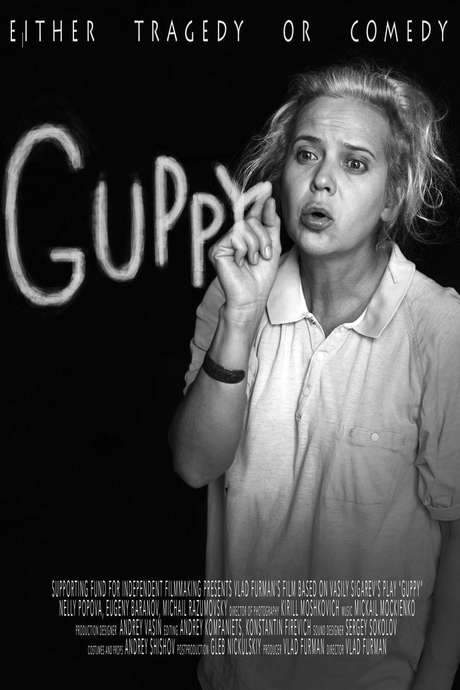
Guppy 2017

Directed by

Vlad Furman
Made by

السبكي فيلم للإنتاج والتوزيع
Guppy Plot Summary
Read the complete plot summary and ending explained for Guppy (2017). From turning points to emotional moments, uncover what really happened and why it matters.
Guppy, a bright schoolboy and gifted visual artist, uses his talent to brighten a modest life. He supports his disabled mother by breeding and selling ornamental fish, and he clings to a simple dream: someday buy her a motorized wheelchair so she can move with a little more ease. His days are filled with the lighthearted mischief of friends and the quiet charm of a village girl, Amina, who lives with her grandparents. In the background, the village nods toward a bigger change as the government approves a railway over-bridge project that will alter the landscape they’ve always known.
When the project’s lead, Thejus Varkey, arrives on a motorcycle from the Himalayas, tension ripples through the community. Their first meeting is prickly—Guppy offends him while serving tea, and a stubborn push-pull relationship quickly forms. A near accident becomes a pretext for Guppy and his friends to press Thejus for money, sharpening the clash between youthful bravado and professional duty. The dispute intensifies after Thejus pressures the village officer to pare down Guppy’s compensation for his fish, prompting Guppy to vandalize the engineer’s jeep. The conflict reaches a fever pitch when Thejus slaps Guppy, who retaliates by striking back with a stone. Soon after, the team’s tent is mysteriously burned, forcing Thejus to press on with the work largely alone.
As Thejus studies the canals, his actions escalate in a way that feels personal to the village. He orders the demolition of Guppy’s fish tanks and the roadside stall under the pretense of illegal construction, instantly wiping out the boy’s livelihood. Desperation leads Guppy to hire a thug to target the engineer, and the plan goes awry when Thejus is stabbed. The moment shakes Guppy to his core, and he realizes the fear of retaliation has deeper roots than he imagined. The true attacker turns out to be Uppooppa, the railway gate operator who faced losing his job once the bridge was built. The revelation drives Uppooppa to the hospital, where guilt weighs heavily on him and the village alike.
With time to recover, Thejus recognizes how his presence has torn at the fabric of Guppy’s family and Uppooppa’s. He comes to believe the bridge project is politically motivated and technically questionable, and he ultimately cancels it. In a bid for reconciliation, he forgives Uppooppa, pledges support for Amina’s education, and arranges to rebuild Guppy’s ruined livelihood by restoring the fish tanks. Guppy’s first instinct is to rush to tell his mother the good news, but the moment is heartbreakingly tempered by the news that she has died, and the long-sought wheelchair remains unfinished on the way.
As the story unfolds, an elderly villager, Tinku, reveals Thejus’s hidden history: years earlier, during the inauguration of the Omallur Bridge, Thejus lost his parents, wife, and young daughter Malu in a terrible accident. Riding becomes his coping mechanism, and in a strange, protective way he comes to see every child as Malu. The railway over-bridge project, in his mind, becomes his one major work since that tragedy, a way to reclaim some sense of purpose.
In the closing sequence, Thejus is shown moving forward through the Himalayas, carrying Malu’s memory as a quiet presence that finally allows him to find peace. Guppy, meanwhile, discovers a sense of belonging and care in the community’s renewed support, honoring his mother’s wish that he would not be left alone. The film ends on a note of quiet resolve: a boy who found strength in art and friendship, and a man who found healing in forgiveness, walking separate paths that have become inseparable in memory and meaning.
Guppy Timeline
Follow the complete movie timeline of Guppy (2017) with every major event in chronological order. Great for understanding complex plots and story progression.
Guppy's life and his dream
Guppy is a schoolboy and talented artist who supports his disabled mother by breeding and selling ornamental fish. He dreams of buying her a motorized wheelchair someday to ease her mobility. His life moves between mischief with friends and the budding affection of Amina in the village.
Arrival of Thejus Varkey
Project engineer Thejus Varkey arrives to supervise the railway over-bridge project. He travels by motorcycle from the Himalayas. At their first meeting, Guppy offends him while serving tea, igniting mutual resentment.
Guppy and gang threaten Thejus
A near accident gives Guppy and his friends an excuse to threaten Thejus and demand money. The tension between the boy and the engineer escalates as the project looms over the village.
Guppy retaliates against Thejus
Thejus pressures the village officer to cut the payment for Guppy's fish, and Guppy retaliates by vandalizing Thejus's jeep. The conflict shifts from words to direct acts of defiance.
Escalation of conflict
Thejus slaps Guppy, who in turn injures the engineer’s hand with a stone. The confrontation becomes personal and tests the bounds of authority and revenge.
Arson and isolation
The team’s tent is mysteriously burned, leaving Thejus to continue the work alone. The fire deepens the rift between the engineer and Guppy’s circle.
Demolition of Guppy's livelihood
Thejus arranges for the demolition of Guppy’s fish tanks and roadside stall, citing illegal construction. This act destroys the boy’s livelihood and livelihood becomes a battleground.
Guppy resorts to violence; stabbing
In desperation, Guppy hires a thug to harm Thejus, but Thejus is stabbed. Guppy discovers the attacker is Amina’s grandfather, Uppooppa, who is hospitalized after the incident.
Thejus reconciles and cancels the project
Recovering, Thejus realizes his presence has devastated both Guppy and Uppooppa’s families. He concludes the bridge is politically motivated and technically unfeasible, cancels the project, forgives Uppooppa, pledges to help Amina’s education, and rebuilds Guppy’s fish tanks.
Mother's death and unfinished dream
Guppy rushes to tell his mother the news, only to find that she has died, and the long-awaited wheelchair remains on the way, leaving a void in his life.
Thejus's past revealed
An elderly villager named Tinku reveals Thejus’s painful past: years earlier, during the Omallur Bridge inauguration, Thejus lost his parents, wife, and young daughter Malu in an accident. Riding became his coping mechanism, and he viewed every child he met as Malu.
Final peace and memory
In the final sequence, Thejus is seen riding through the Himalayas with Malu in his memories, now at peace, while Guppy finds solace in having been cared for, fulfilling his mother’s wish that he not be left alone.
Guppy Characters
Explore all characters from Guppy (2017). Get detailed profiles with their roles, arcs, and key relationships explained.
Guppy
A schoolboy and gifted artist who funds his disabled mother by breeding ornamental fish. He is mischievous yet deeply devoted to his mother, and his actions drive much of the early conflict before he learns to grow through responsibility.
Thejus Varkey
A project engineer who arrives to supervise the railway bridge. He clashes with Guppy at first, but later realizes his project devastated the village and chooses to cancel it. His grief over a personal loss informs his empathy and path to forgiveness.
Amina
A village girl living with her grandparents and a symbol of innocence and hope in the story. Her presence and family ties influence Guppy’s development, even as her own family’s choices complicate the situation.
Uppooppa
The railway gate operator whose actions, driven by fear of losing his job, inadvertently trigger harm. He is briefly antagonistic but shown to be a man of dignity, ultimately reconciled with Thejus.
The elderly villager Tinku
An elder who reveals Thejus’s past and anchors the narrative in the village’s memory. His presence links generations and emphasizes the impact of the engineer’s grief on the community.
Guppy’s mother
A disabled mother whom Guppy supports by fish breeding; her dream of a motorized wheelchair underscores the stakes of Guppy’s labor and the personal costs of failure and care.
Guppy Settings
Learn where and when Guppy (2017) takes place. Explore the film’s settings, era, and how they shape the narrative.
Location
Guppy Village, Himalayas
A rural Indian village built around canals and fish farming, where Guppy tends his tanks and dreams of support for his mother. The government plans a railway over-bridge that promises progress but disrupts livelihoods. The setting juxtaposes quiet waterways with noisy construction, highlighting how development affects daily life.
Guppy Themes
Discover the main themes in Guppy (2017). Analyze the deeper meanings, emotional layers, and social commentary behind the film.
🤝
Forgiveness
The film tracks how anger and retaliation ripple through families and communities. Through acts of contrition, Guppy, Thejus, and others learn to let go of past hurts. Reconciliation becomes a path to healing for both individuals and the village.
🛠️
Conflict
A conflict between progress and people drives the plot: a bridge project that threatens livelihoods forces characters to choose between sabotage and responsibility. Thejus's intervention reshapes outcomes, showing how technical decisions impact human lives. The story emphasizes the costs of aggressive ambition.
💔
Loss and memory
The narrative is framed by grief, from Thejus’s remembered daughter Malu to Guppy’s mother’s death. Memory haunts decisions and motivates change, allowing characters to find peace through reconciliation. By the end, past traumas soften into acceptance and care for others.

Coming soon on iOS and Android
The Plot Explained Mobile App
From blockbusters to hidden gems — dive into movie stories anytime, anywhere. Save your favorites, discover plots faster, and never miss a twist again.
Sign up to be the first to know when we launch. Your email stays private — always.
Explore the mobile appGuppy Spoiler-Free Summary
Discover the spoiler-free summary of Guppy (2017). Get a concise overview without any spoilers.
In a sleepy river‑side village, a bright schoolboy named Guppy spends his days sketching the world around him and tending a modest aquarium business that sustains his disabled mother. His artistry is as delicate as the ornamental fish he breeds, and beneath his quiet humor lies a simple, heartfelt ambition: to one day buy his mother a motorised wheelchair so she can move beyond the limits of her daily routine. The village itself feels timeless, its rhythm set by the gentle flow of water, the chatter of neighbors, and the soft glow of lanterns that illuminate Guppy’s modest home.
The calm is gently disturbed when a government‑backed railway over‑bridge project is announced, promising change that will reshape the landscape the villagers have known all their lives. Into this atmosphere arrives Thejus Varkey, an engineer who rides in from the Himalayas on a motorcycle, carrying the weight of his own past and the authority of the new construction. His presence brings a subtle clash of worlds: Guppy’s carefree creativity meets Thejus’s pragmatic determination, setting the stage for a nuanced dance of curiosity, misunderstanding, and tentative respect.
Amid the looming project, Guppy’s world is further colored by his quiet affection for Amina, a gentle village girl who lives with her grandparents. Their friendship, built on shared childhood moments and whispered dreams, adds a tender thread to the tapestry of village life. The film’s tone balances lyrical serenity with an undercurrent of anticipation, inviting viewers to sense the beauty of simple hopes while wondering how the arrival of progress will ripple through the lives of those who call this riverbank home.
Featured on this page

What's After the Movie?
Not sure whether to stay after the credits? Find out!
Check out our other apps:

SAT Sphere
Build confidence for the Digital SAT.

Mori Atlas
Discover wild places worth protecting.

Luntero
Search smarter for a home in Amsterdam.

Plot Explained
Unravel movie endings and hidden clues.

Pokechamp
Dive into Pokémon data and battle logic.

Driving Theory
Get ready for your European theory test.

Movie Dust
Plan your next cinema trip with ease.

Musemap
Find art and culture as you travel.

Selkobase
Compare credentials before committing.

Local Manual
Turn an unfamiliar country into practical next steps.

Lernavi
Compare school systems before your next move.

GymRoam
Find a workout stop wherever your plans take you.
Explore Our Movie Platform
New Movie Releases (2026)
Famous Movie Actors
Top Film Production Studios
Movie Plot Summaries & Endings
Major Movie Awards & Winners
Best Concert Films & Music Documentaries
Movie Collections and Curated Lists
© 2026 What's After the Movie. All rights reserved.
Privacy Policy