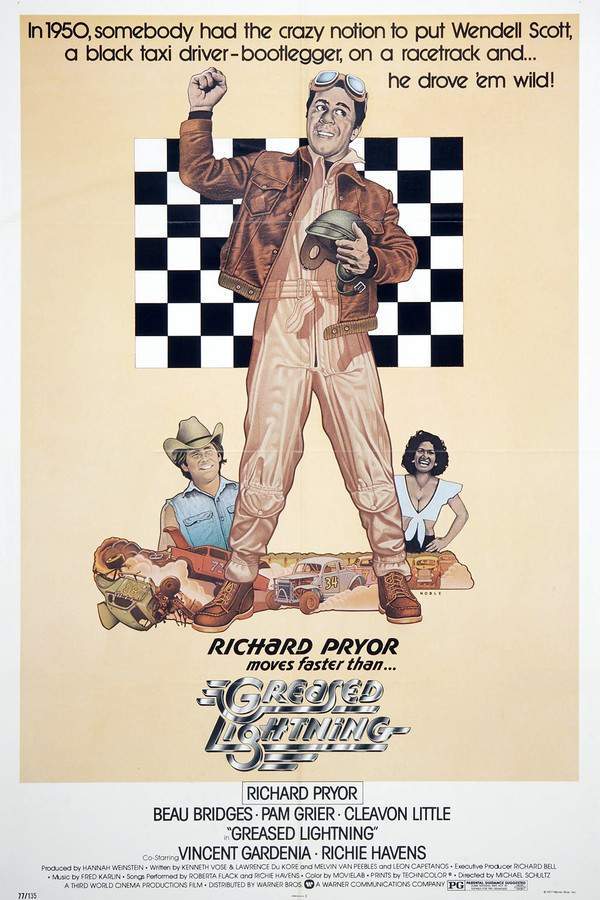
Greased Lightning 1977

Directed by
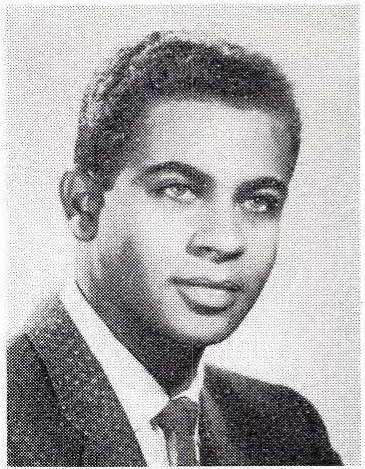
Michael Schultz
Made by
Warner Bros.
Where to Watch Greased Lightning
See current US streaming, rental, and purchase options for Greased Lightning (1977) via JustWatch.








Greased Lightning Plot Summary
Read the complete plot summary and ending explained for Greased Lightning (1977). From turning points to emotional moments, uncover what really happened and why it matters.
In 1930s Danville, Virginia, a young African-American boy named Wendell Scott catches the eye of local white boys with his fearless bike riding. Fifteen years later, after serving in World War II, he returns home to a warm family welcome and quickly falls for Mary Jones. Although society expects him to work at the cotton mill, Wendell harbors a bigger dream: to buy a taxi, open a garage, and, ultimately, become a champion racecar driver. The film features Beau Bridges among a strong cast, underscoring the sense that Wendell’s aspirations are both personal and historic.
As Wendell courts Mary, he shares his racing passion, but her family remains doubtful about a Black man pursuing such a path. He proposes at an abandoned racetrack, and the couple soon marries, though financial struggles threaten their new life together. The early years test their devotion as Wendell balances family responsibilities with the stubborn, burning wish to prove himself on the track.
To make ends meet, Wendell turns to bootlegging, working for Slack with his best friend Peewee while dodging Sheriff Cotton. Mary disapproves, yet Wendell believes that this risky route is the only way to finance his dream of owning a garage. When Slack is arrested five years later, Wendell finds himself ensnared in a setup of the town’s racial dynamics. The local racetrack owner, Billy Joe Byrnes, offers a deal: race in a stock car, and most charges will be dropped. Promoted as the first Black driver, Wendell endures aggressive sabotage from white racers but crosses the finish line and earns his freedom, discovering a deeper sense of purpose and a true calling on the track.
Determined to race, Wendell repairs his car with Woodrow, a skilled mechanic he meets at a junkyard. Mary remains wary, but Wendell persists, driven by the belief that skill and perseverance can rewrite expectations. In his early races, he earns a respectable fourth place and dines at whites-only restaurants where a sympathetic white driver, Hutch, befriends him. When Hutch’s car falters in a later race, he joins Wendell’s team as a mechanic, cementing a fragile but vital alliance that helps him navigate a landscape of prejudice and opportunity.
In 1955, Wendell faces rival Beau Welles at Middle Virginia Speedway. He wins a close race but is denied the trophy after a scoring error—an incident that exposes how systemic bias can shadow merit. Officials quietly acknowledge the mistake, yet the frustration lingers as Wendell’s breakthrough remains just out of reach. He urges Hutch to seek larger teams for financial stability, continuing his climb through regional circuits with quiet resolve and growing confidence.
Wendell’s ascent takes him to NASCAR’s Grand National division, where he competes at premier tracks across the country, including Daytona and Talladega. By 1965, he has become a local celebrity, while Sheriff Cotton—now mayor—works to harness Wendell’s influence to attract sponsorships. A severe crash at Talladega tests his resolve and leaves Mary urging retirement, but Wendell remains undeterred. He reunites with old friends, including Hutch, who leaves Beau Welles’ garage to rejoin his crew, inspired by Wendell’s persistence and grit.
Back in Danville, Cotton, now mayor, pushes to secure sponsorships so Wendell can compete with the sport’s top teams. On race day, Mary arrives at the last moment, filling in the emotional gap that has haunted him all season. In a tense final showdown against Welles, Wendell makes a risky pit stop, leaves with only three lug nuts on one tire, and battles for every inch over the last 20 laps. He roars ahead on the final lap, overtaking Welles to claim his first NASCAR victory, surrounded by a cheering crowd of family and friends who recognize the culmination of a lifelong dream realized through perseverance, community, and a stubborn refusal to yield.
Greased Lightning Timeline
Follow the complete movie timeline of Greased Lightning (1977) with every major event in chronological order. Great for understanding complex plots and story progression.
Childhood bike prodigy in Danville
In the 1930s in Danville, Wendell Scott astonishes local white peers with his bike-riding speed and control, hinting at a future in racing. His skill earns him admiring looks and mixed taunts from an entrenched spectator culture. The seeds of a lifelong dream begin to sprout as he proves racing isn't beyond him.
Homecoming after World War II
Fifteen years after his youth, Wendell returns from World War II to a warm, supportive family in Danville. He quickly falls for Mary Jones, and they begin planning a future built on independence and personal success. The homecoming marks the start of his pursuit of a dream that goes beyond factory work.
Proposal and marriage at the abandoned racetrack
Wendell proposes at an abandoned racetrack, sealing his bond with Mary and signaling a vow to chase a faster future. They marry soon after, but financial pressures strain their new life as Wendell wrestles with the gap between ambition and reality. The couple's sheltering hope remains, even as the road ahead looks tough.
Bootlegging years and financial risk
Seeking income to fund his racing dreams, Wendell turns to bootlegging under Slack, all while dodging Sheriff Cotton's attention. Mary disapproves of the illegal work, yet Wendell believes the risk is temporary and necessary to buy time to build his garage and career. The choice tests their marriage and his commitment to the track.
The setup and the racing deal
Five years into the illicit venture, Slack is arrested and Wendell finds himself caught in a setup. Local racetrack owner Billy Joe Byrnes offers a clean deal: race a stock car event and most charges will be dropped. The bargain places Wendell on the path to professional racing under scrutiny and prejudice.
Becoming the first Black driver on a race day
Wendell is promoted as the first Black driver and endures sabotage from white racers as he races on the track. He still crosses the finish line and earns his freedom, discovering a deep sense of purpose behind the wheel. The victory, though hard-won, begins to redefine his identity in the sport.
Repairing the car with Woodrow
Determined to race seriously, Wendell repairs his car with the help of Woodrow, a skilled mechanic he meets at a junkyard. Mary remains wary of the risks, but Wendell's persistence pushes him forward. The team begins to take shape around a shared dream.
Hutch befriends and joins the team
In these early races, Wendell earns modest finishes and is treated to steak dinners in whites-only restaurants. A sympathetic white driver, Hutch, befriends him, and later joins as a mechanic after Hutch's own car fails. The collaboration marks a turning point in Wendell's support network.
1955 Middle Virginia Speedway showdown
In 1955, Wendell faces rival Beau Welles at Middle Virginia Speedway and wins a close race, only to be denied the trophy due to a scoring error. Officials quietly admit the mistake, highlighting the prejudice he must endure. The incident becomes a stark example of the systemic obstacles in his path.
Rising through NASCAR Grand National
Wendell's persistence takes him onto NASCAR's Grand National division, racing across premier tracks such as Daytona and Talladega. He becomes a local celebrity despite ongoing barriers, signaling a turning point for Black drivers in the sport.
Talladega crash and push to retire
A serious crash at Talladega tests Wendell and Mary, who pleads with him to retire for safety. He remains undeterred, determined to chase the next big race and prove the doubters wrong. The crash sharpens his awareness of risk while fueling his determination.
Return to friendship and crew rebuild
Back in the mix, Wendell reunites with old friends, including Hutch, who leaves Beau Welles’ garage to rejoin the crew. They rally around his persistence and prepare for a major upcoming race. The team strength grows as they chase the dream together.
The final race day and first NASCAR victory
On race day at a final showpiece, Mary arrives just before the start and steadies the family nerves. Wendell makes a risky pit stop, leaving with only three lug nuts on one tire, but he pushes on for the last laps. Overtaking Beau Welles on the final lap, he seizes his first NASCAR victory amid a roar of celebration.
Greased Lightning Characters
Explore all characters from Greased Lightning (1977). Get detailed profiles with their roles, arcs, and key relationships explained.
Wendell Scott (Beau Bridges)
An ambitious Black driver whose early life in a Jim Crow South shapes his resolve and hunger for independence. He navigates systemic racism while pursuing his dream of owning a garage and becoming a champion racer. He is practical, resourceful, and relentlessly focused on turning opportunities into a lasting legacy.
Mary Jones (Pam Grier)
Wendell's wife who provides warmth and concern in equal measure. She wants a stable life for her family and questions the dangers of bootlegging and racing. She ultimately becomes a steady emotional anchor and supports his pursuit of independence, even attending the final race.
Hutch (Richie Havens)
A sympathetic white driver who befriends Wendell and helps bridge the divide between rival crews. He remains loyal and joins the team as a mechanic when his own car falters, contributing both skill and empathy. His alliance highlights the importance of friendship and mutual aid in a hostile environment.
Slack (Vincent Gardenia)
A local bootlegger who finances Wendell's early days and introduces him to the illicit income that supports his dream. He is ultimately arrested, illustrating the underworld's role in the story and the precarious means by which ambition sometimes begins.
Sheriff Cotton (Julian Bond)
The local lawman who embodies the racial tensions of the era and later becomes mayor, using his position to seek Wendell's support and sponsorship. His evolution mirrors the changing political landscape in the region and the leverage of national attention on local politics.
Greased Lightning Settings
Learn where and when Greased Lightning (1977) takes place. Explore the film’s settings, era, and how they shape the narrative.
Time period
1930s–1965
The film spans from the 1930s, through World War II, and into the mid-1960s, a period marked by Jim Crow laws, postwar growth, and the early era of NASCAR. It situates Wendell's rise within a changing America where racial barriers persist even as opportunities begin to expand. The timeline culminates with a defining 1965 championship race, reflecting mid-century shifts in sports and civil rights.
Location
Danville, Virginia, Middle Virginia Speedway, Daytona Beach, Florida, Talladega, Alabama
Danville, Virginia serves as the primary backdrop, a rural Southern town with a cotton mill economy and a segregated social order. The story tracks the local racetrack culture and the challenges Wendell faces within a tightly knit, prejudiced community. The journey also takes the narrative to prominent tracks like Middle Virginia Speedway, Daytona Beach, and Talladega, highlighting how regional venues become stages for his race career.
Greased Lightning Themes
Discover the main themes in Greased Lightning (1977). Analyze the deeper meanings, emotional layers, and social commentary behind the film.
✊🏾
Racial barriers
The film centers on the obstacles Wendell faces as a Black driver in a predominantly white sport. It portrays prejudice, biased officiating, and sabotage that test his resolve. Victory on the track becomes a statement of dignity, challenging the entrenched racism of the era. The narrative underscores that talent alone is not enough without perseverance in the face of systemic discrimination.
💪
Perseverance
Wendell's relentless drive pushes him from local circuits to NASCAR, despite financial strain and social opposition. He leverages mechanical skill and hands-on work to build a competitive team, turning obstacles into stepping stones. The theme celebrates grit, patience, and the relentless pursuit of a dream against long odds.
🤝
Allies & community
Friends, teammates, and supporters from across racial lines help him navigate hostile environments. The crew's loyalty and shared purpose demonstrate that solidarity can enable breakthroughs. The story emphasizes that progress in sport often depends on communal backing and supportive relationships.

Coming soon on iOS and Android
The Plot Explained Mobile App
From blockbusters to hidden gems — dive into movie stories anytime, anywhere. Save your favorites, discover plots faster, and never miss a twist again.
Sign up to be the first to know when we launch. Your email stays private — always.
Explore the mobile appGreased Lightning Spoiler-Free Summary
Discover the spoiler-free summary of Greased Lightning (1977). Get a concise overview without any spoilers.
In post‑war Virginia, the dusty backroads and humming garages of the 1950s serve as a restless playground for anyone daring enough to chase speed. Against this backdrop, a charismatic African‑American moonshiner discovers that the roar of his still‑filled barrels is only a prelude to the deeper thunder of a race‑track engine. The film blends the warm, irreverent humor of a biographical comedy with the grit of a period piece, painting a world where ambition collides with the stubborn traditions of a segregated South.
At the heart of the story is Wendell Scott, a free‑spirited, mechanically gifted dreamer whose love for racing erupts from childhood daring on a bike to the smoky evenings spent tinkering with engines. He is anchored by his steadfast partner, Mary Jones, whose practical sensibility and quiet resolve balance his restless pursuit. Their marriage becomes a tender, if sometimes strained, partnership that underscores the personal stakes of a larger, pioneering quest. Supporting figures—including a loyal best friend known as Peewee, a seasoned mechanic who offers both counsel and camaraderie, and a charismatic actor portraying a seasoned racer—populate the narrative, each adding texture to the close‑knit community that both shelters and challenges Wendell.
The tone constantly oscillates between light‑hearted banter and the weighty undercurrents of a society wrestling with its own prejudices. While comedy lights the way, the film never shies away from the subtle tensions that linger in racetracks, diners, and town meetings, hinting at the barriers Wendell must navigate without ever resorting to melodrama. The atmosphere is alive with the smell of gasoline, the clatter of tools, and the relentless hum of engines revving toward an uncertain horizon, inviting the audience to feel both the exhilaration of speed and the quiet determination that fuels it.
Through its vivid setting and richly drawn characters, the movie offers a portrait of a man whose drive transcends the track, suggesting that the true race is against expectation itself—leaving viewers eager to see how far his daring spirit will carry him.
Movies with Similar Twists and Themes
Uncover films that echo the narrative beats, emotional arcs, or dramatic twists of the one you're exploring. These recommendations are handpicked based on story depth, thematic resonance, and spoiler-worthy moments — perfect for fans who crave more of the same intrigue.


Featured on this page

What's After the Movie?
Not sure whether to stay after the credits? Find out!
Check out our other apps:

SAT Sphere
Build confidence for the Digital SAT.

Mori Atlas
Discover wild places worth protecting.

Luntero
Search smarter for a home in Amsterdam.

Plot Explained
Unravel movie endings and hidden clues.

Pokechamp
Dive into Pokémon data and battle logic.

Driving Theory
Get ready for your European theory test.

Movie Dust
Plan your next cinema trip with ease.

Musemap
Find art and culture as you travel.

Selkobase
Compare credentials before committing.

Local Manual
Turn an unfamiliar country into practical next steps.

Lernavi
Compare school systems before your next move.

GymRoam
Find a workout stop wherever your plans take you.
Explore Our Movie Platform
New Movie Releases (2026)
Famous Movie Actors
Top Film Production Studios
Movie Plot Summaries & Endings
Major Movie Awards & Winners
Best Concert Films & Music Documentaries
Movie Collections and Curated Lists
© 2026 What's After the Movie. All rights reserved.
Privacy Policy