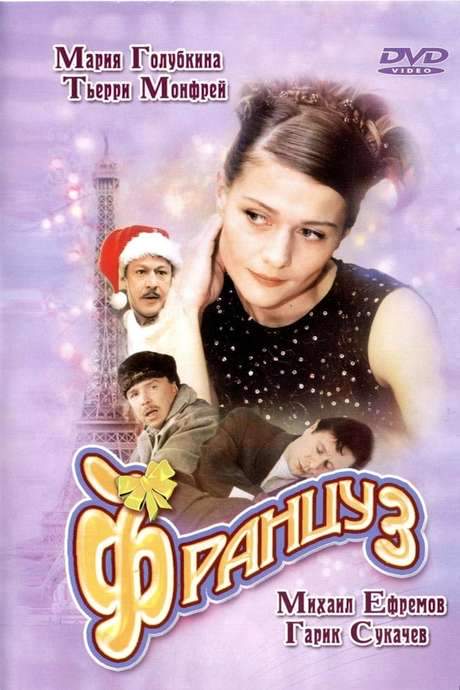
Frenchman 2004
Directed by

Vera Storozheva
Made by

Studio SLON
Frenchman Plot Summary
Read the complete plot summary and ending explained for Frenchman (2004). From turning points to emotional moments, uncover what really happened and why it matters.
In August 1957, three young left-wing Parisians — Nicole, Jean-Marie, and Pierre — meet for the last time at a café on the banks of the Seine. Jean-Marie is bound for service in the Algerian War, while Pierre, a student with roots in Russia, travels to the Soviet Union for an academic internship. This opening frame sets the stage for a Voyage through ideas, loyalties, and longing that stretches across continents and decades.
When Pierre arrives in Moscow, he takes up residence in the dormitories of Moscow State University and quietly immerses himself in Russian literature, while also conducting research for his thesis on the work of the French ballet master Marius Petipa. His stay is shaped not only by formal study but by the people he meets: Valery Uspensky, a photography student at VGIK, becomes a friendly guide; Valery introduces Pierre to Kira Galkina, a dancer at the Bolshoi Theatre. Through the relative cultural openness of the Khrushchev Thaw, Pierre—a Frenchman fluent in Russian—receives a curious and warmer reception from Muscovites than he might have anticipated. He discovers there is more to Soviet life than the official culture taught in classrooms: an underground life that coexists with the public face of the era. As Pierre grows closer to Kira, he begins to feel a quiet, growing romantic pull, which also stirs a subtle rivalry with his friend Valery as their paths cross and diverge.
Parallel to his scholarly pursuit, Pierre embarks on a deeply personal quest to locate his biological father, Tatishchev, a former White Army officer. Pierre’s mother, descended from an old Russian noble family, had a brief affair with Tatishchev in 1931. Concealing the pregnancy, she moved to Paris via a post at the Soviet trade mission in Berlin, ultimately escaping to France. The search unfolds with the help of former Smolny Institute alumni who had spent years in the Gulag, and Pierre finally finds Tatishchev—now working as a night watchman in a provincial town. The revelation of their lineage is loaded with irony: Tatishchev, who had survived the upheavals of the Civil War and the Red Terror, is astonished to meet a son who has embraced communism.
Tatishchev’s life story adds another layer of memory and survival to Pierre’s journey. He recounts a past marked by several imprisonments in the 1930s and 1940s, the period of the Gulag, and a curious, almost mythical claim about having mathematically proven the existence of God. The conversation between father and son is intimate and fraught with emotion—the aging officer’s revelation and his subsequent death leave Pierre with a sense of unfinished history and lingering questions about belief, politics, and fate.
Upon returning to Moscow, Pierre learns that Valery has been arrested, a stark reminder of how quickly the political climate can turn. The mix of personal longing, intellectual exploration, and political tension threads through Pierre’s experiences, shaping his understanding of both the city he loves and the life he leads. In the end, after these revelations and the upheavals of his friends’ fates, Pierre prepares to depart for Paris, carrying with him memories of a time when ideas, art, and human connections flowed freely yet faced the ever-present undercurrents of risk and repression.
This story remains drawn with a careful, balanced touch, staying true to its themes of cultural exchange, family history, faith and doubt, and the cost of political conviction. The film leaves the viewer with a contemplative sense of the long reach of history, and how a life connected to different worlds can influence where one ends up—not just geographically, but in belief, loyalty, and love.
Frenchman Timeline
Follow the complete movie timeline of Frenchman (2004) with every major event in chronological order. Great for understanding complex plots and story progression.
Paris cafe reunion of three left-wing friends
In August 1957, Nicole, Jean-Marie, and Pierre share one last meeting at a café on the banks of the Seine. Jean-Marie prepares for service in the Algerian War, while Pierre departs on a journey that will take him to the Soviet Union. The scene inaugurates a voyage through ideas, loyalties, and longing that will stretch across continents and decades.
Pierre arrives in Moscow and begins studies at MSU
Pierre lands in Moscow and takes up residence in the dormitories of Moscow State University. He immerses himself in Russian literature and conducts research for a thesis on the ballet master Marius Petipa. He also meets Valery Uspensky, a photography student who becomes his guide in the city.
Valery introduces Pierre to Moscow's world of culture
Valery helps Pierre navigate Moscow beyond classrooms, hinting at the country’s layered reality. Pierre senses the Khrushchev Thaw at work, where public culture hints at something more diverse than official narratives. He begins to see an underground life that coexists with the public face of the era.
Kira Galkina enters Pierre's orbit
Pierre grows closer to Kira Galkina, a dancer at the Bolshoi, and a quiet romantic pull develops. The budding romance runs alongside a subtle rivalry with Valery as their paths cross and diverge. The thawing atmosphere eases personal bonds while challenging loyalties.
Pierre begins the search for his biological father
Pierre learns about Tatishchev, the former White Army officer his mother concealed in 1931. He enlists the help of former Smolny Institute alumni who had spent years in the Gulag to aid the search. The pursuit becomes a personal journey that merges history with his own identity and politics.
The search leads to a provincial town
Pierre traces Tatishchev to a provincial town where he now works as a night watchman. The encounter exposes a different pace of life and the enduring scars of the era's upheavals. The meeting forces Pierre to confront a lineage shaped by Civil War and survival.
Tatishchev recounts his past
Tatishchev tells of his imprisonments during the 1930s and 1940s, the Gulag, and an almost mythical claim of having proven the existence of God. His memories illuminate the costs of the era and the toll it took on individuals. The tale adds a heavy layer of memory to Pierre's mission.
A profound father-son conversation ends in tragedy
The conversation is intimate and fraught with emotion as father and son grapple with belief, politics, and fate. Tatishchev's life story culminates in his death shortly after sharing his memories. Pierre is left with unfinished history and lingering questions about loyalty and faith.
Return to Moscow and a chilling reminder of repression
Returning to Moscow, Pierre learns that Valery has been arrested, underscoring how quickly the political climate can shift. The personal is overshadowed by the broader threat to intellectuals and artists. The episode deepens Pierre's understanding of risk in the era.
Memory and culture shape Pierre's view of the world
The story threads together cultural exchange, family history, faith and doubt, and the cost of political conviction. Pierre reflects on the long reach of history in his life and how a time in the Soviet Union informs his beliefs and loyalties. The experience broadens his perspective beyond Paris.
Pierre prepares to depart for Paris
Having navigated a time of ideas, art, and human connection under risk, Pierre prepares to depart for Paris. He carries with him the memories of a city that educated and unsettled him, along with a sense of the deeper history that links his life to two continents. The journey ends with a contemplative sense of departure rather than a simple return.
The voyage through ideas continues beyond the frame
The film closes with the impression that history, culture, and personal loyalties extend beyond borders. Pierre's experiences in Moscow reveal the long reach of memory and the cost of conviction, leaving the viewer with a contemplative sense of how a life connected to different worlds is shaped by love, faith, and doubt.
Frenchman Characters
Explore all characters from Frenchman (2004). Get detailed profiles with their roles, arcs, and key relationships explained.
Pierre (the French student)
A French-speaking student who travels to Moscow to study Russian literature and conduct his thesis research. He navigates the Khrushchev Thaw’s openness, building a friendship with Kira and a subtle romantic pull, while also searching for his Russian roots.
Kira Galkina
A dancer at the Bolshoi Theatre who becomes a close connection in Pierre’s Moscow experience. Her relationship with Pierre intersects with the city’s vibrant artistic life and the rivalries that arise with his other friend.
Valery Uspensky
A photography student who acts as a guide to Pierre while also embodying the era’s tension; his friendship with Pierre becomes competitive as paths diverge.
Tatishchev
Pierre’s biological father, a former White Army officer who endured the Gulag era and shares memories of imprisonment and a later claim about proving God. His revelations shape Pierre’s understanding of history, belief, and fate.
Frenchman Settings
Learn where and when Frenchman (2004) takes place. Explore the film’s settings, era, and how they shape the narrative.
Time period
1957
The events center on August 1957, placing the story within the waning years of Stalin’s era and the opening of the Khrushchev Thaw. It juxtaposes political risk with artistic exploration across the Soviet Union and France. The time period is defined by shifting loyalties, debates, and the gradual liberalization of culture.
Location
Paris, Moscow
The opening scenes unfold at a café on the banks of the Seine in Paris, a place where ideas and loyalties mingle over coffee. The narrative then shifts to Moscow, where Pierre enters the university dorms and the city’s cultural life around the Bolshoi Theatre and the Khrushchev Thaw. The settings contrast Parisian intellectual life with Moscow’s mix of study spaces and underground cultural currents. Together, these cities frame a cross-continental journey of art, politics, and personal discovery.
Frenchman Themes
Discover the main themes in Frenchman (2004). Analyze the deeper meanings, emotional layers, and social commentary behind the film.
🌐
Cultural Exchange
A French student’s immersion in Moscow’s literature, dance, and everyday life reveals how ideas travel across borders. The Khrushchev Thaw allows more openness, enabling Pierre to encounter a warmer, more nuanced Soviet society. The film highlights how language, art, and friendship cross political and geographic boundaries. It also shows the allure and costs of bridging two very different worlds.
🧭
Identity & Heritage
Pierre’s search for his father and his mother’s noble lineage expose a tangled history spanning Civil War, exile, and empire. The father’s revelations force Pierre to reconcile personal belief with historical memory. The narrative probes how lineage and choices shape one’s loyalties and sense of self. The journey becomes as much about self-discovery as about geography.
⚖️
Political Risk
Valery’s arrest and the looming shadow of repression show how quickly the climate can shift in the Khrushchev era. The story juxtaposes personal quests with the state’s power to suppress dissent and curiosity. It underscores the fragile balance between intellectual freedom and political control. The characters navigate a world where ideas are both a bridge and a risk.
🙏
Faith & Doubt
Tatishchev’s claim of having proven the existence of God introduces a strand of belief that survives amid upheaval. The intimate father–son talk carries themes of memory, faith, and the limits of rational explanation. The film juxtaposes spiritual questions with political realities, leaving a lingering sense of mystery. It suggests that belief, like history, outlives eras even when certainty fades.

Coming soon on iOS and Android
The Plot Explained Mobile App
From blockbusters to hidden gems — dive into movie stories anytime, anywhere. Save your favorites, discover plots faster, and never miss a twist again.
Sign up to be the first to know when we launch. Your email stays private — always.
Explore the mobile appFrenchman Spoiler-Free Summary
Discover the spoiler-free summary of Frenchman (2004). Get a concise overview without any spoilers.
In the frost‑bitten outskirts of a remote Russian town, a world of quiet snow and whispered histories unfolds, balancing the stark Soviet landscape with the lingering romance of handwritten correspondence. Into this delicate setting arrives Baron Paul, a French noble whose measured manners and lingering curiosity contrast sharply with the town’s slow‑moving rhythm. He carries with him a collection of letters that have become his only compass, each folded page a promise of connection across the miles.
The letters, however, are not as straightforward as they seem. Ania—the woman whose name glimmers through the ink—has been quietly assisting Irina, a local friend, in translating the messages that Baron Paul believes are meant for him alone. This subtle misdirection creates a gentle tension, hinting at hidden depths beneath the polite exchanges and the modest hospitality of the town’s residents. The atmosphere is tinged with the muted glow of lanterns and the distant echo of Orthodox bells, emphasizing a place where every gesture carries weight and every conversation hides a layer of unspoken longing.
As winter deepens, the town itself becomes a character, its cracked streets and snow‑capped roofs mirroring the internal chill and warm hopes of the visitors. The film’s tone is a delicate blend of wistful melancholy and quiet optimism, inviting the audience to feel the pull of a love that might blossom amid cultural differences and the lingering mystery of true intent. The interplay between Baron Paul’s aristocratic poise and the modest, earnest lives of Ania and Irina creates a subtle dance of words and glances, promising a journey where the heart may finally awaken to the possibilities hidden within the simple act of a shared letter.
Featured on this page

What's After the Movie?
Not sure whether to stay after the credits? Find out!
Check out our other apps:

SAT Sphere
Build confidence for the Digital SAT.

Mori Atlas
Discover wild places worth protecting.

Luntero
Search smarter for a home in Amsterdam.

Plot Explained
Unravel movie endings and hidden clues.

Pokechamp
Dive into Pokémon data and battle logic.

Driving Theory
Get ready for your European theory test.

Movie Dust
Plan your next cinema trip with ease.

Musemap
Find art and culture as you travel.

Selkobase
Compare credentials before committing.

Local Manual
Turn an unfamiliar country into practical next steps.

Lernavi
Compare school systems before your next move.

GymRoam
Find a workout stop wherever your plans take you.
Explore Our Movie Platform
New Movie Releases (2026)
Famous Movie Actors
Top Film Production Studios
Movie Plot Summaries & Endings
Major Movie Awards & Winners
Best Concert Films & Music Documentaries
Movie Collections and Curated Lists
© 2026 What's After the Movie. All rights reserved.
Privacy Policy