
Forever Female 1953

Directed by

Irving Rapper
Made by

Paramount Pictures
Forever Female Plot Summary
Read the complete plot summary and ending explained for Forever Female (1953). From turning points to emotional moments, uncover what really happened and why it matters.
A new Broadway play flops after a big promise: Beatrice Page, Ginger Rogers, stars alongside producer Harry Phillips Paul Douglas, but the critics and audiences fail to warm to it. The two former spouses are still a team in all but name, and they need a fresh project that can recapture their old magic. Their search leads them to the sharp-witted playwright Stanley Krown William Holden, who has drafted a script with a bold premise: the lead roles center on a mother and her 19-year-old daughter.
Beatrice, ever ambitious, insists on playing the daughter. She can’t convincingly pass for 19, but argues she could pass for 29, and she pushes for a rewrite that would let her age up the role. At the same time, Beatrice harbors a flutter of romantic interest in the playwright, which adds another layer of tension to the collaboration.
A young actress named Sally Carver, later known as Peggy Pruitt, shows up with ambitions of her own and asks for a chance to audition. Stanley gives her some typing work on his rewrite, while Beatrice, sensing a threat, channels jealousy into action by getting Sally an out-of-town acting job. The audition process becomes a battleground of age, vanity, and artistic control as the trio negotiates who should tell the story—and how.
The project advances to previews in Washington, where the reception is chilly and the production falters. Sally evolves in public as she adopts new identities—first Claudia Souvain, then, in another turn, Clara Mootz—adding both mystery and misgiving about whether the actress is truly right for the role. This push-and-pull forces Stanley to reevaluate the core of his script and the suitability of the leading woman, with Beatrice watching closely as the tension mounts.
As the town-and-gown decision-making unfolds, Beatrice reaches a turning point: she accepts that she must honor her age and humanity in the part. She agrees to take the mother’s role, stepping into a more mature characterization. On Broadway, the play lands with a powerful reception, proving that depth and age can illuminate a story just as brightly as youth and novelty. The curtain falls on a resounding success, and the uneasy alliance between Beatrice, Harry, and Stanley yields a sharp, satisfying payoff that underscores the film’s central themes: evolved collaboration, the truth of age, and the surprising strength that comes from letting actors tell the full truth of their characters.
Forever Female Timeline
Follow the complete movie timeline of Forever Female (1953) with every major event in chronological order. Great for understanding complex plots and story progression.
Beatrice Page and Harry Phillips seek a new project
After their flop, Beatrice Page and producer Harry Phillips decide they need a fresh project. They meet playwright Stanley Krown, who has written a play featuring a mother and a 19-year-old daughter. The encounter sets the plan in motion for a new collaboration.
Beatrice wants to play the daughter and proposes a rewrite
Beatrice believes she could pass for a 29-year-old and insists the lead should be rewritten to fit her. She expresses romantic interest in Stanley, complicating the creative negotiations. The rewrite becomes a central demand as they consider her casting as the daughter.
A young actress auditions under different names
An aspiring actress arrives, initially using the names Sally Carver and then Peggy Pruitt, seeking an audition. Stanley has her help with typing on his rewrite, using her presence to inform the script's adjustments. Jealous of the competition, Beatrice schemes to remove her influence by securing an acting job for the actress out of town.
Beatrice rigs the actress a remote job
Beatrice, feeling threatened, arranges for the actress to take an out-of-town acting job. The move isolates the young talent from the rehearsal room and stirs tensions between Beatrice and the other collaborators. The subplot heightens the stakes as the project progresses toward previews.
The play previews in Washington, D.C. and flops
Stanley's play makes its Washington, D.C. preview, but the performance is a flop, signaling serious trouble with the production. Critics and audiences respond coolly as the premise struggles to land. The setback forces the team to rethink casting and direction.
Sally/Claudia tries to sway Stanley about age
Sally, now calling herself Claudia Souvain, attempts to persuade Stanley that the actress is too old for the role. Stanley weighs age against the creative vision and the needs of the mother-daughter dynamic. The tension highlights the central casting dilemma.
Small-town viewing reveals the problem
In a small-town production, with Sally in the lead under her real name Clara Mootz, Stanley realizes the actress is indeed too old for the roles. The town's response underscores the mismatch between the casting and the characters. He begins to rethink the casting approach accordingly.
Beatrice concedes and accepts aging
Beatrice finally concedes that it's time for her to act her age, recognizing the need for a more mature portrayal. She agrees to take the mother's part, embracing the strength and experience the role requires. This decision redirects the production's trajectory toward a more plausible casting.
Beatrice accepts the mother's role and rehearsals begin
With the new casting in place, Beatrice commits to the mother's role and the company moves toward Broadway. Rehearsals resume with a renewed focus on the mother-daughter relationship, and the cast works to bring the updated vision to life. The mood shifts from doubt to determination as the team aligns around the changes.
Broadway premiere becomes a huge success
On Broadway, the play proves to be a huge success, validating the aging-conscious casting and Beatrice's performance. Audiences embrace the mother-daughter dynamic and the production's new energy. The team basks in vindication after an arduous journey from flop to triumph.
Forever Female Characters
Explore all characters from Forever Female (1953). Get detailed profiles with their roles, arcs, and key relationships explained.
Beatrice Page
Beatrice Page is a celebrated but aging star who insists she can pass for a younger generation for the right role. She is shrewd, flirtatious, and willing to manipulate circumstances to protect her status. Her romantic interest in Stanley adds tension to her professional ambitions.
Stanley Krown
Stanley Krown is a playwright who has written a mother-daughter story and believes in adapting it to fit the star's demands. He is pragmatic, perceptive, and drawn to Beatrice, blurring the line between professional collaboration and romance. His willingness to rewrite and stage a more marketable version drives the plot forward.
Clara Mootz
Clara Mootz is the young actress who travels through a string of stage names (Sally Carver, Peggy Pruitt, Claudia Souvain) as she pursues an audition. She embodies ambition and adaptability, using alias identities to navigate a fickle industry. Her evolving identity creates tension with Beatrice and tests the writer's instincts about the lead role.
Eddie Woods
Eddie Woods is a cohort in the show business world, providing support and stability in the backstage scramble. He represents the practical, steady-side of theatre life as productions stumble and recover. His perspective anchors the personal dynamics of the characters around the play.
Harry Phillips
Harry Phillips is the producer behind the ambitious, high-stakes project. He navigates the failures of the DC previews and pushes for changes that could salvage the production. His decisions reveal the tension between artistic desire and the demands of a Broadway-ready hit.
Forever Female Settings
Learn where and when Forever Female (1953) takes place. Explore the film’s settings, era, and how they shape the narrative.
Location
Sardi's, Washington, D.C., Broadway, New York
Sardi's is a famous theatre district restaurant in New York known as a gathering spot for Broadway talent. The film's plot moves from Washington, D.C. previews to Broadway's stage, highlighting the American theatre circuit. The settings show the contrast between backstage rooms, rehearsal spaces, and the public theatre experience.
Forever Female Themes
Discover the main themes in Forever Female (1953). Analyze the deeper meanings, emotional layers, and social commentary behind the film.
⏳
Age & Roles
Beatrice Page is driven by age-defying ambition, insisting she can pass for younger when it suits her career. The plot uses the theatre world to explore how age can press both the performer and the project. The tension between youthful perceptions and experience drives the rewriting of the play. The ending suggests that acting one's age can lead to true artistic resonance, as the Broadway production finally finds success.
🎭
Theatre vs Commerce
Stanley's rewrite shows the tension between artistic integrity and commercial success. The Washington, D.C. previews flop reveals the risk of audience tastes and market pressure. Behind the scenes, producers and writers negotiate changes to salvage a troubled project. The eventual Broadway hit underscores how practical decisions can align with talent.
🧭
Identity
The actress's multiple names—Sally Carver, Peggy Pruitt, Claudia Souvain, Clara Mootz—mirror the fluid identity many performers navigate in show business. The plot uses disguises and stage-name changes to explore authenticity versus image. As the female lead shifts from anonymity to a defined identity, the story tests what is true on stage and off. Ultimately, identity is negotiated through the roles one chooses to inhabit.

Coming soon on iOS and Android
The Plot Explained Mobile App
From blockbusters to hidden gems — dive into movie stories anytime, anywhere. Save your favorites, discover plots faster, and never miss a twist again.
Sign up to be the first to know when we launch. Your email stays private — always.
Explore the mobile appForever Female Spoiler-Free Summary
Discover the spoiler-free summary of Forever Female (1953). Get a concise overview without any spoilers.
In the glittering, high-stakes world of Broadway, the line between timeless talent and fading youth is perilously thin. Beatrice Page, portrayed by Ginger Rogers, stands at the center of this world, an accomplished actress determined to defy the relentless passage of time. Though she remains a formidable star, she struggles with an industry eager to relegate women of a certain age to the sidelines. Her professional journey is inextricably linked to her ex-husband and producer, Harry Phillips, played by Paul Douglas, resulting in a partnership that is as enduring as it is complicated.
Seeking a fresh project to recapture their past magic, the duo aligns with the sharp-witted playwright Stanley Krown, played by William Holden. His new script offers a bold premise focusing on a mother and her nineteen-year-old daughter. However, the collaboration is immediately complicated by Beatrice’s unwavering ambition. Refusing to accept that she has aged out of the youthful lead, she pushes for a rewrite that would allow her to play the daughter, setting the stage for a creative tug-of-war that challenges the boundaries of artistic integrity and personal vanity.
As the production begins to take shape, the atmosphere thickens with romantic tension and professional rivalry. A young, aspiring actress named Sally Carver enters the scene, embodying the very youth that Beatrice is trying to emulate, while the playwright finds himself caught between the script’s intent and the leading lady’s demands. The resulting dynamic creates a sharp, witty backdrop for a story about the illusions of the stage, the friction between truth and appearance, and the lengths to which a star will go to preserve her place in the spotlight.
Movies with Similar Twists and Themes
Uncover films that echo the narrative beats, emotional arcs, or dramatic twists of the one you're exploring. These recommendations are handpicked based on story depth, thematic resonance, and spoiler-worthy moments — perfect for fans who crave more of the same intrigue.




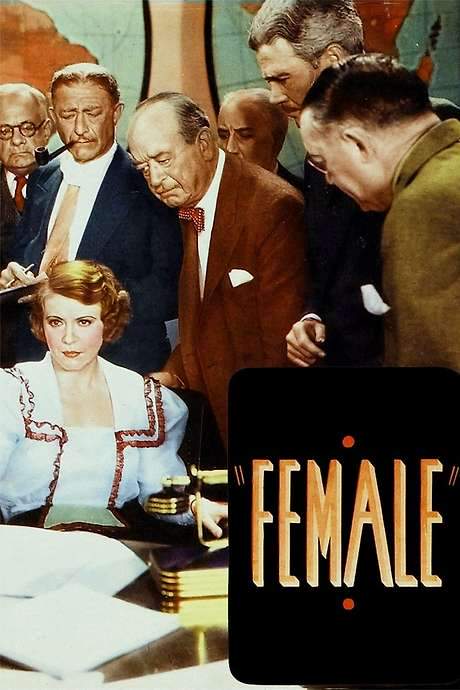
Featured on this page

What's After the Movie?
Not sure whether to stay after the credits? Find out!
Check out our other apps:

SAT Sphere
Build confidence for the Digital SAT.

Mori Atlas
Discover wild places worth protecting.

Luntero
Search smarter for a home in Amsterdam.

Plot Explained
Unravel movie endings and hidden clues.

Pokechamp
Dive into Pokémon data and battle logic.

Driving Theory
Get ready for your European theory test.

Movie Dust
Plan your next cinema trip with ease.

Musemap
Find art and culture as you travel.

Selkobase
Compare credentials before committing.

Local Manual
Turn an unfamiliar country into practical next steps.

Lernavi
Compare school systems before your next move.

GymRoam
Find a workout stop wherever your plans take you.
Explore Our Movie Platform
New Movie Releases (2026)
Famous Movie Actors
Top Film Production Studios
Movie Plot Summaries & Endings
Major Movie Awards & Winners
Best Concert Films & Music Documentaries
Movie Collections and Curated Lists
© 2026 What's After the Movie. All rights reserved.
Privacy Policy