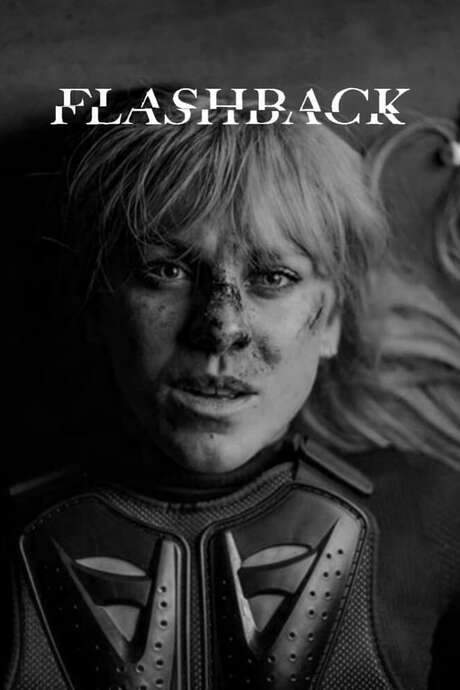
Flashback 2019

Directed by

Franck Marchand
Made by

Studio71
Flashback Plot Summary
Read the complete plot summary and ending explained for Flashback (2019). From turning points to emotional moments, uncover what really happened and why it matters.
Fred Fitzell and his wife Karen visit Fred’s mother in a hospital where she is slipping into a deep, difficult decline. Fred works at a regular office job, but his days start to unravel as vivid flashbacks pull him back to high school. He recalls a girl named Cindy Williams and, driven by curiosity, he travels to the old high school and asks a librarian about her disappearance. The librarian’s answer hints at a drug that circulated through the school, and Fred’s mind begins to stitch together more fragmented memories. A menacing, scarred homeless man reappears in his life, appearing in his car while he’s parked in a shadowy alley, and the encounter leaves him shaken.
As the memories sharpen, Fred recalls a distinct childhood figure—a boy who seemed to pass by in high school and who bears a striking resemblance to the homeless man. The two form a strange pairing of recollections, each muttering a single word that, when finally assembled, points toward a chilling message: “I’m/in/your/lobby.” This leads Fred to the apartment lobby where he confronts the unknown man with a baseball bat, only to be drawn into a cascade of visions—visions of a mouth, and of being on a floor under others’ gaze. The moment ends with a brutal wake-up call: Fred collapses, his mind splintering from the stress of what he’s witnessed.
The thread of memory refuses to stay tied. Fred reconnects with friends from his high school days, and the flashes return with increased intensity. He remembers the drug, merc ( mercury ), and how it was sought out at a club with friends, a place where the idea of release from confinement—of breaking free from a seemingly fixed timeline—gets discussed. Back in the present, his work performance suffers, and he finds himself scrambling to deliver a crucial presentation. With his high school crew, he returns to the now-abandoned club to uncover what really happened. Inside, Fred’s memories collide with the present as he relives taking uncut merc and encounters homeless squatters and the scarred man again. Cindy returns, insisting that he never truly left the world they shared. The lines blur between the man haunted by the homeless figure and the boy who once lived through merc, as visions of mouths and watchful eyes chase him through each moment.
From these overlapping memories, Fred pieces together a startling story. An invasive lifeform, he discovers, manipulates people to perceive time in a linear fashion, a control mechanism that makes outcomes appear inescapable. The merc drug, he learns, temporarily unlocks the ability to see all possible temporal paths. He grapples with the revelation that, in high school, a violent reaction to merc led him to strike a lamp into the face of the boy, leaving a lasting scar on the past. Awake in his own bed, Fred realizes he has little time to finish the presentation at work, intensifying the pressure of crucial choices he must face in the moment.
As the present and past collide, Fred experiences a fusion of timelines. He slips back to Cindy at the abandoned club, where the two fall in love again and begin to inhabit multiple lifetimes together, roaming from the Middle East to a sunlit Mediterranean villa. They awaken back at the club in the present, still tethered to the possibility of endless routes, yet Fred comes to understand that their journey cannot continue in the same way. He returns to the day of the final exam, where his focus sharpens and he performs well, then meets his wife afterward and delivers a strong presentation, ultimately helping them secure a new home together.
The narrative then threads Fred’s emotional arc into a bittersweet conclusion. He seeks a moment of reconciliation with his mother during a hospital visit, and the recurring vision of a mouth turns out to be the memory of his mother’s voice as she cried out during a frightening moment from his infancy. There, in a rare flash of lucidity, she recognizes him, and they share a fleeting, meaningful connection. But the moment fades as she dies not long after, leaving Fred with a sense of closure tempered by loss. The journey leaves him with a profound awareness of the past’s hold on the present, the power of choice, and the enduring human longing to love across time.
Flashback Timeline
Follow the complete movie timeline of Flashback (2019) with every major event in chronological order. Great for understanding complex plots and story progression.
Hospital visit grounds the present
Fred and his wife Karen visit Fred's mother in the hospital, where her mental decline is evident. The scene anchors the story in a tangible present and foreshadows the fragility of Fred's world. It sets up the personal stakes that drive the memory-driven unraveling to come.
First vivid high school flashbacks begin
Fred starts experiencing vivid flashbacks of his high school days, interrupting his office routine. The memories pull him away from the present and hint at a hidden history tied to Cindy Williams and the drug mercury. He struggles to separate these visions from reality as they intensify.
Cindy Williams' disappearance and library clue
Fred visits the high school library to ask about Cindy Williams, and the librarian reveals that Cindy went missing after a drug circulated through the school. The clue deepens the mystery and suggests a dangerous link between memory and time. The scene roots the mystery in a concrete location.
Scarred homeless man confronts him
While parked in an alley, Fred is accosted by a scarred homeless man. The encounter shakes his perception of reality and threads the figure into the central mystery. It hints that the man's presence is tied to the time-bending events Fred is experiencing.
A word puzzle reveals a hidden message
Fred recalls a child who walked past him in high school and the scarred man; both utter a single word. When he pieces these fragments together, they spell out a hidden message: I'm in your lobby. The moment hints at a location and a larger metaphysical puzzle.
Lobby confrontation with a bat
Fred goes to his apartment lobby with a baseball bat, hoping to confront the unseen threat. The scene triggers visions of mouths and watchers, further blurring the line between memory and reality. The confrontation ends with a mental breakdown and a sense of disorientation.
Breakdown and uneasy awakening
Fred experiences a full-blown breakdown in the lobby and awakens in the present, realizing his perception is fractured. This marks a turning point where memory and reality begin to interact in earnest. The event intensifies the time-bending premise of the story.
Friends and merc memory resurfaced
Fred reconnects with his high school friends and recalls the drug mercury, which was used in the boiler room. The memory explains aspects of his altered perception of time and hints at mercury's role in the past. The scene ties personal history to the drug's mystique.
Rooftop talk about merc at the club
Near a club, Fred and Cindy talk on a roof about how merc releases people from being trapped. The conversation foreshadows their later journeys through time and space. It frames merc as a key to freedom from a perceived temporal trap.
Investigation at the abandoned club
With his high school friends, Fred visits the abandoned club to uncover what happened to merc and Cindy. They encounter homeless squatters and Cindy, who tells him he never left. The revelation reinforces the ongoing time-loop premise and personal fate tied to the club.
Visions of the homeless man, the child, and the mouth
Fred experiences overlapping visions of the homeless man and the child, with the recurring motif of a mouth looming over scenes. The visions suggest an invasive lifeform manipulating time and perception. The imagery reinforces the film's core concept of narrative fluidity.
Lifeform and merc power revealed
Fred pieces together that an invasive lifeform forces people to perceive time linearly, while merc temporarily lets them glimpse all temporal possibilities. The realization reframes his past actions and explains the guilt he carries. The discovery ties memory, drug, and timetable into a single mechanism.
Lamp incident in high school
Fred remembers reacting badly to merc in high school, grabbing a lamp and striking the child in the face. The incident left a scar and becomes a focal point for his guilt across timelines. The memory anchors the consequences of his altered perception of time.
Timelines explored with Cindy
Fred discovers he can travel through multiple timelines and shares adventures with Cindy across places like the Middle East and a Mediterranean villa. They wake back at the abandoned club, realizing travel has limits. Eventually he returns to the final exam and performs better, then meets his wife and advances his life in the present.
Mother, memory, and the end
Fred reconnects with his mother at the hospital, and the mouth vision recurs as she yells at him as an infant near a staircase. She has a moment of lucidity and remembers Fred, but she dies shortly after. The scene closes the emotional arc by tying personal history to the larger time-bending quest.
Flashback Characters
Explore all characters from Flashback (2019). Get detailed profiles with their roles, arcs, and key relationships explained.
Fred Fitzell
An office worker whose life destabilizes under vivid high school flashbacks. He grapples with guilt over past violence and discovers an ability to glimpse multiple timelines, using it to navigate personal and professional pressures.
Cindy Williams
A central figure in Fred’s memories tied to the merc drug culture of their high school days. She catalyzes Fred’s exploration of time, love, and the consequences of his actions.
Karen Fitzell
Fred’s wife, who endures his emotional volatility and becomes entangled in the consequences of his time-bending experiences.
Librarian
A calm, authoritative figure who provides crucial clues about Cindy and the school’s hidden history.
Scarred Homeless Man
A menacing figure from Fred’s visions representing the city’s underbelly and the blurred boundary between memory and reality.
Fred's Mother
A maternal figure whose lucid moment in the hospital reveals deep emotional roots of Fred’s trauma and the recurring vision of a mouth.
High School Friends
A group that reconnects with Fred to uncover the truth behind the merc drug and the timelines he visits, bridging past and present.
Flashback Settings
Learn where and when Flashback (2019) takes place. Explore the film’s settings, era, and how they shape the narrative.
Location
Hospital, High School, Abandoned Club, Apartment Lobby, Office
The story unfolds across several key locations: a hospital where Fred’s mother declines, the high school where a dangerous drug culture circulates, and an abandoned club that becomes a nexus of memory and possibility. Additional settings include Fred’s apartment lobby, where visions erupt, and his office, portraying the pressures of present-day life. These places are connected by the threads of memory, trauma, and the uneasy pull between past and future.
Flashback Themes
Discover the main themes in Flashback (2019). Analyze the deeper meanings, emotional layers, and social commentary behind the film.
🕰️
Time Travel
The narrative bends time as Fred experiences non-linear memories and travels across possible timelines. The film explores how memory can be both a trap and a portal, allowing moments from the past to bleed into the present. The illusion of a linear timeline is challenged by rapid shifts between school days and adult life.
💊
Substance Abuse
Merc, the drug from Fred’s high school, becomes a catalyst that unlocks temporal awareness and offers a temporary escape from pain. Its effects intertwine with trauma memories, highlighting the lure and danger of altered perception. The film uses the drug to explore how substances can distort reality and fate.
👩👦
Family Bond
Fred’s relationship with his mother and memories of her shape his emotional journey. The hospital visit hints at reconciling past with present, while the infant memory adds a personal dimension to the broader questions of time and consequence. The narrative threads emphasize the fragility and resilience of family ties.

Coming soon on iOS and Android
The Plot Explained Mobile App
From blockbusters to hidden gems — dive into movie stories anytime, anywhere. Save your favorites, discover plots faster, and never miss a twist again.
Sign up to be the first to know when we launch. Your email stays private — always.
Explore the mobile appFlashback Ending Explained
Unravel the ending of Flashback (2019) with our detailed explanation. Understand the final scenes, character fates, and unresolved questions.
Flashback presents a mind-bending journey through memory and possibility, but at its core, the film offers a deeply human resolution. The story follows Fred Fitzell, a man approaching thirty who finds himself haunted by fragmented memories of Cindy, a high school classmate who disappeared after they experimented with a mysterious drug called Merc. Throughout the film, Fred experiences vivid visions of alternate lives he could have lived—lives where he pursued art, adventure, and romance with Cindy instead of settling into corporate work and an engagement to Karen.
The key to understanding the ending lies in the film’s exploration of what the Scarred Man calls an “invasive life-form.” While the film presents this concept through the lens of a reality-altering drug, the meaning becomes intensely personal for Fred. Throughout his life, Fred has been haunted by a recurring, terrifying image of an open mouth—a fragment of a buried childhood memory. When he finally visits his dying mother in the hospital, the truth crystallizes: that horrifying image belonged to her. As a baby, Fred once wandered off and fell, injuring himself. His mother’s terrified yell—her open mouth—became a formative memory that stuck with him, convincing him that the world was dangerous and that he should avoid taking risks.
This moment of realization transforms Fred’s understanding. He sees that his mother wasn’t trying to control him or limit his choices—she was trying to protect him. The “invasive life-form” that the Scarred Man described wasn’t an alien or a simulation; for Fred, it was his own fear and anxiety, planted in that childhood moment, that had been dictating his decisions and convincing him that his choices led to inescapable outcomes. In making peace with his mother, Fred is finally able to let go of that fear. He returns to his life with Karen, keeping his job and his relationship, but now with a renewed sense of appreciation rather than regret.
The film’s conclusion is poignant and quiet. Fred’s mother passes away, and in his final memory, he revisits that formative childhood moment—but this time, instead of the trauma of her yelling, he remembers crawling back into her arms. He replaces a painful memory with one of love and safety. Flashback ultimately argues that while it’s natural to wonder about the paths we didn’t take, the life we’re living isn’t a mistake to be fixed. Fred ends the film exactly where he started, but he has fundamentally changed. He has learned to stop running from his past and to start accepting his present. In saying a silent, grateful goodbye to Cindy—the embodiment of “what could have been”—Fred chooses what is.
Flashback Spoiler-Free Summary
Discover the spoiler-free summary of Flashback (2019). Get a concise overview without any spoilers.
In a quiet suburb, Fred Fitzell balances a modest office career with the demanding responsibilities of caring for his ailing mother. Their routine visits to the hospital are punctuated by Fred’s sudden, vivid flashbacks that pull him back to the corridors of his high‑school years, a time he thought he had left behind. Among the fragments of memory is a girl named Cindy Williams and a whispered rumor about a mysterious drug that once swept through the school, hinting at a hidden layer beneath everyday life.
These involuntary returns to the past begin to intersect with the present in unsettling ways. A scarred, homeless figure surfaces in both his current world and his recollections, delivering cryptic single‑word messages that seem to stitch together a larger, ominous phrase. As Fred navigates office deadlines and family obligations, he finds himself drawn into an almost dream‑like investigation of these echoing clues, wondering whether the boundaries of time and perception are as solid as they appear.
The film unfolds with a tone that blends psychological intrigue and haunting melancholy, rendering the ordinary uncanny. Ambient cityscapes, dimly lit hallways, and flickering memories create a visual palette that mirrors Fred’s inner turbulence. As he pieces together the disjointed whispers from his past, the audience is invited to contemplate how memory, trauma, and the unseen forces of habit shape the present, setting the stage for a journey that feels both deeply personal and unsettlingly universal.
Featured on this page

What's After the Movie?
Not sure whether to stay after the credits? Find out!
Check out our other apps:

SAT Sphere
Build confidence for the Digital SAT.

Mori Atlas
Discover wild places worth protecting.

Luntero
Search smarter for a home in Amsterdam.

Plot Explained
Unravel movie endings and hidden clues.

Pokechamp
Dive into Pokémon data and battle logic.

Driving Theory
Get ready for your European theory test.

Movie Dust
Plan your next cinema trip with ease.

Musemap
Find art and culture as you travel.

Selkobase
Compare credentials before committing.

Local Manual
Turn an unfamiliar country into practical next steps.

Lernavi
Compare school systems before your next move.

GymRoam
Find a workout stop wherever your plans take you.
Explore Our Movie Platform
New Movie Releases (2026)
Famous Movie Actors
Top Film Production Studios
Movie Plot Summaries & Endings
Major Movie Awards & Winners
Best Concert Films & Music Documentaries
Movie Collections and Curated Lists
© 2026 What's After the Movie. All rights reserved.
Privacy Policy