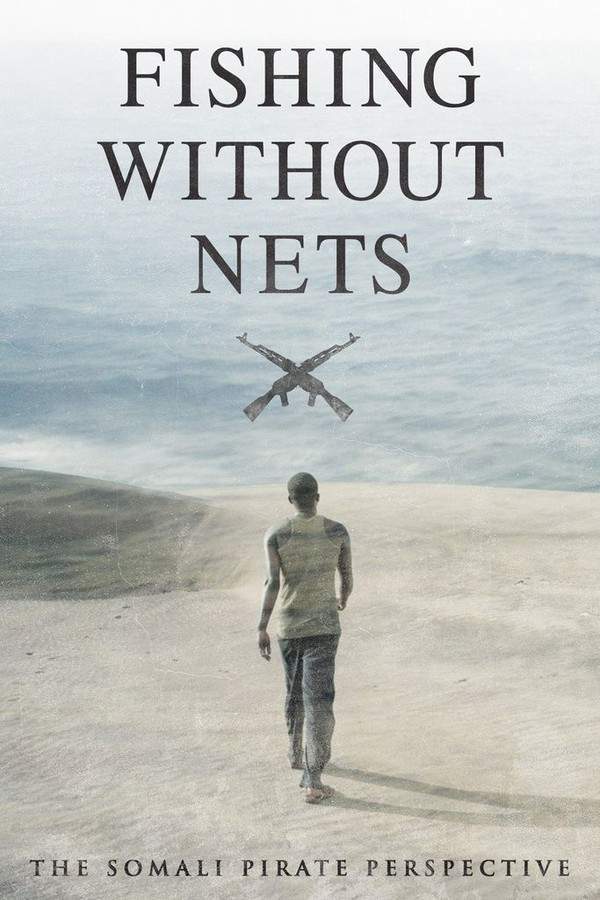
What Is Fishing Without Nets About?
The premise of Fishing Without Nets in 322 words, with nothing given away. The full story follows below.
In the sweltering heat of the Horn of Africa, the ocean is both a lifeline and a threat. Coastal villages cling to a battered economy, where dwindling fish stocks and polluted waters turn each day at sea into a gamble. The horizon is dotted with the silhouettes of fragile vessels, and the ever‑watchful drones above remind everyone that even this remote stretch is not beyond the reach of distant powers. The film opens on this stark landscape, immersing the viewer in a world where poverty and the promise of quick wealth push ordinary people toward desperate measures.
Abdi is a young fisherman whose daily routine is defined by the struggle to feed his family against the odds. He carries the weight of his community’s expectations while watching the sea grow harsher and less forgiving. When the simple act of casting a net no longer guarantees a catch, he is drawn toward a different kind of survival—joining a crew that navigates the same waters, this time not for sustenance but for the uncertain rewards that piracy seems to offer.
The pirates he encounters form a close‑knit, volatile brotherhood bound by shared hardship. Their world is one of constant peril: the relentless patrol of foreign vessels, the pressure of unseen eyes, and the ever‑present temptation of a life beyond scarcity. Within this lawless arena, the line between necessity and transgression blurs, creating an atmosphere thick with tension, mistrust, and fleeting moments of camaraderie that hint at humanity beneath the chaos.
Against this backdrop, Abdi wrestles with the pull of his roots and the allure of a different future. The film’s tone is gritty yet surprisingly lyrical, capturing the raw beauty of the coastline while exposing its unforgiving reality. It invites the audience to wonder how far a person will go when survival hangs on the edge of a blade, and whether a glimmer of hope can ever truly break through the shadows of desperation.
What Happens in Fishing Without Nets?
The complete story of Fishing Without Nets, from the first scene to the last, in 768 words (about 3 minutes). Spoilers throughout.
Spoilers ahead
Fishing Without Nets follows Abdi, a young Somali fisherman who faces a daily struggle against poverty and a sea that seems to betray him. The film opens by painting a portrait of a hard life near the coast, where Abdi tries to provide for his family despite scarce resources. The ocean, once a source of livelihood, is shown as polluted and treacherous, complicating every catch and making the prospect of a stable future even more fragile. Against this backdrop, the story gradually shifts from the rhythms of fishing to a drastic turning point: Abdi and his crew hijack a cargo ship and take its crew as hostages, hoping to force payment and secure a life they believe they deserve.
As the tension grows, Abdi’s perspective begins to shift. He forms a fragile bond with one of the hostages, a white man named Victor, whose presence tests Abdi’s loyalty to his comrades and to the life he’s trying to protect. The relationship introduces a human dimension to the crisis, revealing that even in the most desperate circumstances, individuals can seek connection and understanding across stark divides. This budding interaction is set against a backdrop of fear, uncertainty, and the ever-present threat of violence.
The atmosphere aboard the captured vessel grows increasingly unstable. Tensions among the pirates flare as some members grow frustrated with the lack of payment and the constant sight of planes passing overhead, a reminder that their operation is under scrutiny and far from private. The cracks in the group’s cohesion widen into sharper conflicts, culminating in a direct confrontation between Khadir and his faction and the rest of the crew aboard the cargo ship. One pirate even threatens Victor, pressing him to call for money under duress, a moment that starkly exposes the coercive reality of their predicament.
Abdi’s inner conflict intensifies when he contemplates leaving the camp to return to his family and give them a chance at a safer, more stable life. Yet he is accused of stealing money and of communicating with the drones that monitor their camp, accusations that paint him as a traitor in the eyes of some of his peers. The tension escalates further as the pirates, under the influence of khat and gasoline, become volatile and impulsive. In a disturbing sequence, they force Victor to recite the shahada, a moment that underscores the film’s quiet exploration of faith, fear, and coercion in a moment of extreme pressure.
Khadir and his men intervene at a critical juncture, sparing Victor from harm but not resolving the broader conflict. The situation soon spirals into a violent assault that gives the pirates control of the cargo ship, but the victory is pyrrhic. Khadir loses his life in the struggle, and Abdi finds himself trapped, locked in a room at the bottom of the vessel as an attempted escape falters. The same pirate who killed Khadir becomes responsible for killing Victor, deepening the tragedy and cementing the price of the group’s actions.
With Victor dead and Khadir gone, Abdi makes a harrowing escape and pays tribute to Victor with a proper burial, honoring his fallen ally even in the chaos of their grim circumstances. This act of respect becomes a personal turning point for Abdi, who then resolves to pursue the money that could secure his family’s future. He navigates the ship’s corridors and decks, tracing a path toward the area where the funds are kept, determined to reclaim a chance at a better life.
In a patient, arduous search, Abdi locates the money and seizes the opportunity to step out of the cycle of violence that has dictated so much of his life. The pursuit of the cash marks a full-circle moment for the narrative: the journey that started with a desperate hijacking ends with Abdi reclaiming his agency, albeit at a significant moral and personal cost. The film closes on a note that is both hopeful and ambiguous, emphasizing resilience in the face of exploitation and the heavy burden of choices made in the name of survival.
Overall, the story presents a stark, human portrait of piracy and its consequences, anchored by Abdi’s evolving conscience. It examines the way poverty, environmental degradation, and external pressures converge to push ordinary people toward extraordinary decisions, and it follows a single character’s path from desperation to a hard-won sense of agency. The ending, with Abdi having found the money and the tale coming full circle, leaves viewers with a lingering reflection on what it means to seek a future for one’s family within a world that continually tests the limits of mercy, loyalty, and hope.
Fishing Without Nets Timeline: Every Key Event in Order
12 key events in the order they happen, from “Abdi's struggle on polluted Somali coast” to “Final discovery: money found”. 12 events name a place, across 9 locations.
- 1
Abdi's struggle on polluted Somali coast
The film opens by showing Abdi's poverty and his family's precarious situation. He lives as a fisherman and must cope with a sea that is polluted, making his livelihood precarious and fraught with danger. The setting establishes the harsh environment that drives the later choices he makes.
Where:Somali coast
- 2
Abdi and his crew hijack a cargo ship
Abdi and his fellow pirates seize a cargo vessel, taking its crew as hostages. The hijacking marks a turning point, pulling Abdi into a dangerous power struggle on board and setting the stage for moral conflicts. The crew's fear contrasts with Abdi's growing concerns about the consequences of their actions.
Where:Open sea / cargo ship
- 3
Bond forms between Abdi and Victor
Among the hostages, Abdi begins to form a surprising bond with Victor, a white captive. The relationship complicates the pirates' dynamics and introduces a human element to their kidnapping. The story begins to ask whether Abdi will stay loyal to his crew or consider mercy.
Where:Cargo ship
- 4
Tensions rise among the pirates
Discontent grows among the pirate crew as payments falter and distant planes hover overhead, reminding them of the outside surveillance and lack of reward. Friction increases between hardliners and more pragmatic members, foreshadowing conflict. These tensions threaten to unravel the crew's cohesion.
Where:Pirate camp / aboard ship
- 5
Confrontation with Khadir
Khadir and his men confront the crew on the cargo ship over stolen money and the lack of payment. The dispute escalates into a standoff that tests loyalties and the threat of violence among the pirates. Victor watches the power struggle unfold from the hostage position.
Where:Cargo ship
- 6
Abdi considers leaving to save his family
Abdi contemplates abandoning the operation to return home and protect his family, but suspicion and accusations of stealing money and communicating with drones follow him. The plan exposes the moral cost of his choices and foreshadows a possible exit from the dangerous life. His inner conflict intensifies the narrative drive.
Where:Pirate camp
- 7
Khat, gasoline, and a chilling demand
Under the influence of khat and gasoline, the pirates force Victor to recite the shahada, illustrating the volatile mix of desperation and intoxication aboard the ship. Khadir and his men intervene to prevent harm, temporarily quelling the crisis. The moment heightens the tension and shows the fragility of control.
Where:On board the cargo ship
- 8
Violent assault and the death of Khadir
Tensions culminate in a violent assault as the pirates seize full control of the cargo ship. Khadir is killed in the ensuing chaos, leaving a power vacuum and escalating the danger for everyone else aboard. Abdi is forced to confront the consequences of the mutiny.
Where:Cargo ship
- 9
Abdi is locked away
In the turmoil, Abdi is confined to a room at the bottom of the ship as he attempts to escape. The imprisonment mirrors his sense of entrapment within the violent enterprise and tests his resolve. Victor remains among the hostages as the situation deteriorates.
Where:Bottom of cargo ship
- 10
Escape attempt and Victor's death
Abdi and Victor attempt to escape, but their plan is thwarted when Victor is killed by the same pirate who killed Khadir. The double tragedy underscores the brutal economics of piracy and the personal costs for both captor and captive. The event marks a turning point for Abdi's survival instincts.
Where:Cargo ship
- 11
Abdi buries Victor and vows to find the money
After escaping, Abdi gives Victor a proper burial and recommits to the mission of locating the ransom money. The burial ritual offers a moment of humanity amid chaos and reinforces his determination. The search for the money becomes the narrative through-line toward the film's end.
Where:Near ship's wreck / coast
- 12
Final discovery: money found
Abdi navigates the cargo ship to the area and ultimately finds the money, resolving the central conflict of the heist. The story closes with Abdi succeeding in his goal and the tale coming full circle, though the consequences of his choices linger. The ending reaffirms the themes of survival and transformation.
Where:Cargo ship vicinity
Who Are the Main Characters in Fishing Without Nets?
3 characters, among them Abdi, Victor and Khadir: who each one is and the part they play in the story.
- A
Abdi
A young Somali fisherman initially driven by poverty and family responsibility. As events unfold, his conscience wrestles with the piracy he becomes part of, revealing a nuanced internal struggle. He forms a fragile bond with Victor, which catalyzes his shift from mere survival to moral consideration.
- 🎣 Fisherman
- 🧭 Moral conflict
- 🕊️ Family
- V
Victor
A hostage whose presence humanizes the pirates and tests their resolve. His interactions with Abdi reveal shared humanity beyond the conflict, and his fate becomes a catalyst for Abdi’s eventual choices. He is honored by Abdi after death, underscoring themes of respect and memory.
- 🕊️ Hostage
- 🤝 Human connection
- 👤 Survivor memory
- K
Khadir
The pirate leader whose authority is challenged as tensions rise among the crew. His leadership remains authoritative but fragile, and his death marks a turning point in the dynamics aboard the cargo ship. His presence embodies the volatile mix of necessity, power, and risk in piracy.
- 🏴☠️ Leader
- 🧭 Power dynamics
- ⚔️ Conflict
Where and When Is Fishing Without Nets Set?
Fishing Without Nets is set in Somalia, Indian Ocean off the Somali coast, pirate camp at sea and hijacked… (21st century). Here is why the time and place matter to the story.
When
21st century
Set in contemporary times, the film features modern elements such as drones and military reconnaissance that heighten the stakes. The tensions among pirates and their interactions with hostages reflect current patterns of piracy and conflict in the region. The environment and technology place the story firmly in a modern, volatile era.
Where
Somalia, Indian Ocean off the Somali coast, pirate camp at sea, hijacked cargo ship
The story unfolds along the Somali coast and out on the open Indian Ocean, centering on a pirate camp and a hijacked cargo ship. The sea is a constant backdrop, shaping hunger, danger, and the fragile line between freedom and captivity. The ship itself becomes a claustrophobic stage where tides of fear and loyalty collide.
- 🧭 Maritime setting
- 🛢️ Coastal environment
- 🚢 Oceanic tension
What Are the Themes of Fishing Without Nets?
3 ideas the story keeps returning to, among them Moral Conflict, Freedom vs Control and Environmental and Societal Pressures.
-
01
Moral Conflict
Abdi begins as a desperate, poverty-driven fisherman, but the hijacking pushes him toward introspection about right and wrong. His bond with Victor complicates loyalties and exposes the consequences of violence. The film traces how moral choices hinge on personal stakes—family, survival, and the hope for a safer future.
-
02
Freedom vs Control
The crew's hunger for money and power clashes with the captor’s sense of control, creating escalating friction. Abdi's attempt to escape to save his family tests the limits of loyalty and autonomy within a coercive environment. The hostage situation becomes a crucible where autonomy, fear, and duty collide.
-
03
Environmental and Societal Pressures
The polluted sea underscores a harsh reality that feeds poverty and desperation in Abdi's world. Economic precarity and environmental degradation drive choices that lead toward crime and conflict. The film ties personal hardship to larger systemic neglect, illustrating how place shapes fate.
What Kind of Film Is Fishing Without Nets?
Tense in tone, with steady pacing and a moderate story, going by the plot summary.
- Tone
- Tense
- Pacing
- Steady
- Story
- Moderate
- Intensity
- High
- Ending
- Bittersweet
A tense and grim thriller that immerses viewers in the desperate world of Somali piracy, creating an atmosphere of constant anxiety and moral conflict as a man fights for survival.
- tense
- grim
- desperate
- anxious
- oppressive
- harrowing
- survival
- poverty
- moral conflict
- environmental degradation
Content notes: physical violence, hostage situation, death, psychological coercion, substance abuse.
Quiz
How well do you remember Fishing Without Nets? Test yourself on the story.
Where to Watch Fishing Without Nets
Buy it from Apple TV Store. US availability and prices from JustWatch.

Streaming availability in the US, powered by