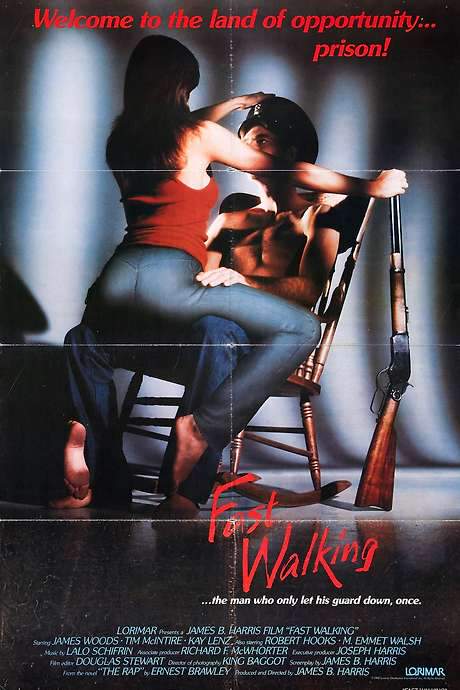
What Is Fast-Walking About?
The premise of Fast-Walking in 355 words, with nothing given away. The full story follows below.
In the harsh heat of an Oregon state penitentiary, the daily grind is a blend of concrete walls, echoing footsteps, and whispered deals. At the center of this world is Frank Miniver, a corrections officer whose nickname “Fast‑Walking” hints at his uncanny ability to move quickly between the official duties of a guard and the shadowy circuits of corruption that pulse beneath the surface. He carries a weary charm, a cigarette perpetually between his fingers, and an unspoken understanding that the rules of the institution are written in ink that can be easily smudged.
Beyond the yard, Frank pads the margins of his meager salary with a network of side hustles that includes small‑time drug peddling and an under‑the‑counter prostitution ring supplied by Mexican laborers. The operation is anchored at his cousin Evie’s modest convenience store, a place that doubles as a quiet hub where favors are traded and cash changes hands. Even while on the job, Frank stays in close contact with Wasco, his imprisoned cousin, whose own ambitions keep the underground currents flowing. The familial ties bind them together, creating a fragile alliance that hangs on loyalty, greed, and the promise of a better payday.
The prison itself is a microcosm of tension—race, politics, and survival intersect in cramped cells and guarded corridors. Among the inmates, a black political prisoner named William Galliot draws the attention of the prison’s informal power brokers, while a striking young woman known as Moke navigates the same dangerous currents with a mix of allure and cunning. Their presence adds layers of intrigue, hinting at hidden agendas and the ever‑present possibility that a single misstep could upend the delicate balance.
As the story unfolds, Frank must constantly weigh the price of each decision, juggling his personal ambitions against the unpredictable loyalties of those around him. The film drapes its narrative in a gritty, almost noir‑like atmosphere, where humor flickers amid the bleakness and every interaction carries the weight of unspoken threats. In this world, the line between protector and predator blurs, leaving the audience to wonder just how far Fast‑Walking will go when the right price is offered.
What Happens in Fast-Walking?
The complete story of Fast-Walking, from the first scene to the last, in 451 words (about 2 minutes). Spoilers throughout. Names in the text link to 5 cast member pages.
Spoilers ahead
James Woods as Frank Miniver, also known as Fast-Walking, is a corrupt but lovable Oregon state prison guard. He smokes, peddles marijuana, and supplements his meager salary by running prostitutes for Mexican laborers out of his cousin Evie’s convenience store, where Evie (played by Susan Tyrrell) helps keep the operation humming.
At work, he stays in close contact with Wasco, his other cousin who is incarcerated and deeply embedded in vice, both inside and outside the prison. Tim McIntire as Wasco peddles women and narcotics and even dreams of pulling off fraudulent banking schemes. He tries to force a rival, Bullet, into surrendering in-prison operations to Wasco, tightening his grip on the underground network. Bullet (portrayed by Timothy Carey) is the bold, dangerous competitor whom Wasco seeks to overtly outmaneuver.
An outside accomplice to Wasco is Moke, a striking young woman who does Wasco’s bidding and doesn’t shy away from using her wiles to influence the inside game. Kay Lenz plays Moke, a key player who even seduces Fast-Walking to serve the larger scheme.
Into the tense, racially charged environment of the prison arrives Galliot, a black political prisoner who becomes a focal point of Wasco’s lethal plotting. Robert Hooks takes on the role of William Galliot, whose presence sparks a dangerous chain of moves. Wasco hatches a plan to have Galliot killed, a scheme that sets off a volatile sequence of avoidances and confrontations within the prison’s walls.
Fast-Walking responds by arranging to have Galliot sprung from the facility, drawn by the lure of a half-whispered reward—$50,000 and a secret key tucked away in a belt buckle that supposedly opens a safe-deposit box. The offer injects a tantalizing but perilous motive into the already precarious web of loyalties and betrayals.
As the plot thickens, Wasco discovers the intense relationship between Fast-Walking and Moke and feels jealousy flare up, turning fear into a new kind of threat. He masterminds a scheme to enlist Moke in killing Galliot, a plan that unfolds with chilling precision: Moke fires a high-powered rifle, catching Galliot as he fumbles his escape—dressed as a prison guard, yet suddenly vulnerable to the consequences of the plan. The moment underscores how quickly power, sex, money, and survival blur into a single, dangerous game.
In the aftermath, the balance of power shifts once more as Fast-Walking confronts the consequences of the players’ choices. The story closes on a note that echoes the old adage that what goes around, comes around, leaving a stark reminder that debts—whether paid in cash, violence, or deception—do not fade away. Throughout, the film paints a raw portrait of ambition, corruption, loyalty, and the high price of crossing lines that were never meant to be crossed.
Fast-Walking Timeline: Every Key Event in Order
12 key events in the order they happen, from “Introduction of Fast-Walking” to “Final moral: what goes around comes around”. 12 events name a place, across 6 locations.
- 1
Introduction of Fast-Walking
Frank Miniver, known as Fast-Walking, is introduced as a corrupt but oddly likable Oregon state prison guard. He supplements his meager salary by illegal means, including smoking marijuana and running prostitution for Mexican laborers from Evie's convenience store. This dual life sets up the web of vice that surrounds the prison.
Where:Oregon State Prison vicinity and Evie's Convenience Store
- 2
Wasco's vice network and rival control
At work, Frank is in close contact with his cousin Wasco, who is incarcerated but runs vice operations inside and outside the prison. Wasco bullies Bullet to hand over his in-prison operations, expanding Wasco's criminal empire. The setup marks a power struggle behind the prison walls.
Where:Prison
- 3
Moke arrives and seduces Fast-Walking
Outside the prison, Wasco's accomplice Moke collaborates with the operation and begins to influence Frank. She seduces Fast-Walking, drawing him deeper into Wasco's schemes. Her presence tightens the web of loyalties and complicates Frank's choices.
Where:Outside prison (likely Evie's store area)
- 4
Galliot's arrival and Wasco's plan
Galliot, a black political prisoner, arrives at the prison, igniting the racially tense atmosphere. Wasco plots to have him killed to consolidate power inside the facility. The plan unfolds amid the prison's volatile dynamics.
Where:Prison
- 5
Galliot's deal: release for money and a belt buckle key
Frank arranges to have Galliot sprung from prison, motivated by personal gain. Galliot offers Frank $50,000 and a secret key hidden in his belt buckle to a safe-deposit box. The arrangement links Frank's corrupt leverage to a potential external treasure.
Where:Prison
- 6
Wasco's jealousy and new scheme
Wasco learns of Frank and Moke's intense relationship and grows jealous. He hatches a plan to have Moke kill Galliot, leveraging the outside connection to eliminate a rival. The scheme deepens the conflict between the players.
Where:Prison/Outside
- 7
Moke kills Galliot
Moke executes Wasco's plan by killing Galliot with a high-powered rifle as the prisoner nearly escapes in disguise as a guard. The act removes a political threat and demonstrates Wasco's tightening grip. The assassination escalates the tension to a breaking point.
Where:Near the prison walls
- 8
Retribution and moral reckoning
Fast-Walking's cunning and dark alliance begin to collide with the consequences of their actions. He hints that what goes around comes around, signaling a moral reckoning for Wasco and the others. The balancing force asserts itself as loyalties are tested.
Where:Prison
- 9
Bullet's surrender to Wasco
Wasco uses intimidation to force Bullet to surrender his in-prison operations to Wasco. The power shift consolidates Wasco's control over the vice economy inside the prison. The momentum of illicit operations grows stronger under Wasco's leadership.
Where:Prison
- 10
The belt buckle key and the safe-deposit box
The belt buckle key promised by Galliot points to a safe-deposit box with valuable consequences. This key embodies the transactional nature of the characters' alliances and hints at what might come next outside prison walls. The key becomes a symbol of leverage and potential treasure.
Where:Prison / belt buckle
- 11
Cracks in Wasco's scheme
Wasco's schemes begin to crack under pressure from Frank and the unfolding events. The environment grows tenser as loyalties shift and the true costs of treachery surface. The careful manipulation risks unraveling.
Where:Prison
- 12
Final moral: what goes around comes around
The story closes with the reminder that what goes around comes around. The players face consequences for their corruption and vice as the prison ecosystem continues to hum with danger. The conclusion emphasizes the uneasy balance of power in the facility.
Where:Prison
Who Are the Main Characters in Fast-Walking?
6 characters, among them Moke (Kay Lenz), Fast-Walking (James Woods) and Wasco (Tim McIntire): who each one is and the part they play in the story. Every profile links to the actor’s page.
-
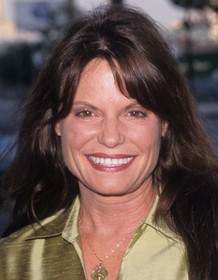
Moke (Kay Lenz)
Played by Kay Lenz
Moke is Wasco’s outside accomplice who exerts considerable influence through seduction and calculated manipulation. She navigates the prison-prostitution ecosystem with cool composure, using sex as a tool to advance schemes. Her loyalty is pragmatic, driven by payoff and power rather than ideology.
- 💄 Seductive
- 🎭 Manipulative
-
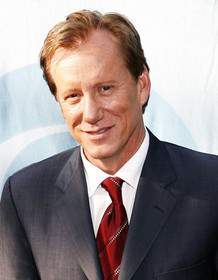
Fast-Walking (James Woods)
Played by James Woods
Fast-Walking is a corrupt but likable Oregon state prison guard who supplements his salary by enabling vice operations. He relies on charm and proximity to power to smooth over illicit deals, making him a pivotal connector between inmates and outsiders. His loyalties are tested as Wasco’s scheming spirals out of control.
- 💼 Corrupt
- 🔥 Charismatic
- W(
Wasco (Tim McIntire)
Played by Tim McIntire
Wasco is a power-hungry figure inside and outside the prison, orchestrating vice networks and using violence to enforce control. He bullies competitors and seeks to expand operations, all while stoking rivalries within the inmate population. His jealousy and ambition drive much of the conflict in the story.
- 💰 Power-hungry
- 🎭 Violent
-

William Galliot (Robert Hooks)
Played by Robert Hooks
William Galliot is a Black political prisoner who arrives at the facility, becoming a valuable target and bargaining chip. His presence catalyzes schemes among guards and inmates, offering a tempting five-figure payoff and a secret key to a safe-deposit box. He embodies the high-stakes tension at the core of the plot.
- ✊🏿 Political prisoner
- 💡 High-stakes
-

Bullet (Timothy Carey)
Played by Timothy Carey
Bullet is a rival figure in the prison economy whom Wasco coercively forces to yield control of in-prison operations. He is depicted as aggressive and unreliable, a foil to Fast-Walking’s more calculating approach. His involvement amplifies the violence and risk in the criminal network.
- 💥 Violent
- 🧭 Rival
-

Evie (Susan Tyrrell)
Played by Susan Tyrrell
Evie is Fast-Walking’s cousin who runs a convenience store and acts as a key conduit for money flows connected to prostitution and narcotics. She embodies a pragmatic, survive-by-any-means mindset, navigating loyalty, sex, and business with sharp pragmatism.
- 🏪 Storefront
- 💰 Connector
Where and When Is Fast-Walking Set?
Fast-Walking is set in Oregon state prison and Evie's convenience store. Here is why the place matters to the story.
Where
Oregon state prison, Evie's convenience store
The primary setting is an Oregon state prison, where security routines and inmate factions shape every move. Off prison grounds, Evie's convenience store serves as a cover for prostitution and narcotics operations orchestrated by Wasco and his allies. The atmosphere is racially tense, fueling power struggles among guards, inmates, and outside partners.
- 🏛️ Prison
- 🗺️ Oregon
- 🔗 Organized crime
What Are the Themes of Fast-Walking?
3 ideas the story keeps returning to, among them Corruption, Power and Revenge.
-
01
Corruption
Corruption saturates the narrative as guards skim money from illicit operations and leverage their positions. Fast-Walking is a corrupt yet charismatic figure who uses bribery and sexual leverage to advance his interests. Wasco extends his vice network beyond the prison walls, relying on outside associates like Moke. The arrival of Galliot intensifies the schemes, offering a lucrative payoff that tests loyalties.
-
02
Power
Power dynamics drive the relationships between guards, inmates, and outside collaborators. Wasco manipulates both sides to expand his control, while Fast-Walking navigates the tension between obedience and profit. The pursuit of influence explains many betrayals and shifting alliances within the story. The moral balance is fragile, with decisions often serving short-term gains.
-
03
Revenge
A plan to kill Galliot sets off a chain of retaliation born from jealousy and ambition. Moke’s actions, spurred by Wasco’s jealousy, nearly seal Galliot’s fate, illustrating how personal vendettas fuel systemic crimes. Fast-Walking’s response to the crisis leads to a karmic reckoning, reminding characters that crimes against others eventually circle back. The climactic sequence emphasizes the consequences of manipulation and murder.
What Kind of Film Is Fast-Walking?
Dark in tone, with steady pacing and a moderate story, going by the plot summary.
- Tone
- Dark
- Pacing
- Steady
- Story
- Moderate
- Intensity
- Medium
- Ending
- Mixed
A gritty and cynical crime drama set within a corrupt prison system, where self-serving characters betray each other in a steady-paced plot filled with tension and moral ambiguity.
- corrupt
- cynical
- tense
- grungy
- suspenseful
- duplicitous
- prison corruption
- murder plot
- criminal schemes
- betrayal
Content notes: murder, prison violence, sexual content.
Quiz
How well do you remember Fast-Walking? Test yourself on the story.