What Is Farming About?
The premise of Farming in 298 words, with nothing given away. The full story follows below.
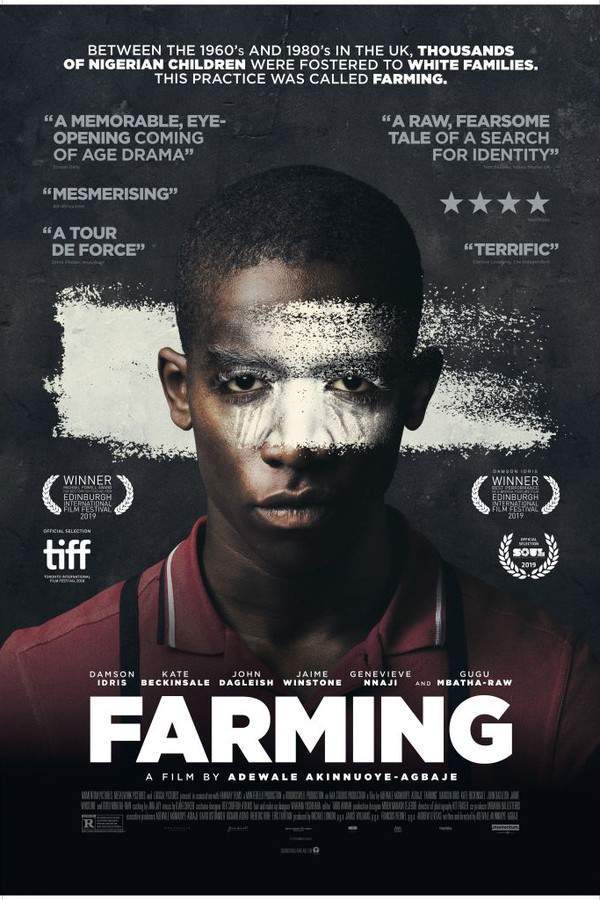
In the late‑1960s, a quiet English suburb becomes the unlikely backdrop for a cross‑continental experiment known as “farming,” where hopeful Nigerian families place their children with white foster households in the hope of a brighter future. The atmosphere is a mix of muted post‑war British suburbia and the lingering echo of a distant, sun‑soaked homeland, a contrast that flavors every scene with a sense of both possibility and displacement.
Enitan arrives as a young boy, his dark skin setting him apart in a world of pale brick houses and reserved manners. Placed under the strict but well‑meaning care of Ingrid Carpenter, a foster mother whose affection is often expressed through discipline rather than warmth, he oscillates between the familiarity of his Nigerian roots and the alienation of his new environment. School corridors, neighborhood streets, and even the kitchen table become stages where cultural friction and yearning for belonging play out in quiet, often painful ways.
As adolescence looms, Enitan seeks any foothold that might grant him acceptance, leading him toward a charismatic group of local youths whose camaraderie masks a harsh, confrontational outlook. Drawn by their sense of belonging, he is forced to navigate a bewildering maze of loyalty, identity, and prejudice, confronting questions about who he is and who he wants to become. The tone is tense yet intimate, threading together the stark realism of racism with a lingering hope for self‑realization.
The film’s mood balances stark social realism with a reflective, almost lyrical curiosity about the inner life of a boy caught between two worlds. Its visual palette moves from the bleak greys of suburban streets to fleeting bursts of colour that hint at a cultural heritage waiting to be reclaimed, inviting the audience to wonder how Enitan will negotiate his place within these divergent landscapes.
What Happens in Farming?
The complete story of Farming, from the first scene to the last, in 365 words (about 2 minutes). Spoilers throughout. Names in the text link to 3 cast member pages.
Spoilers ahead
In 1967 Nigeria, Enitan is born to Nigerian parents who send him to Britain as part of a widespread practice called farming, where families place their children with white foster families in the hopes of a better life. Enitan’s parents leave him in the care of Ingrid Carpenter, a strict foster mother in Tilbury, England. They frequently bring him back to Nigeria for visits, a pattern that creates confusion and abandonment issues as he grows up.
As a young child, he struggles to fit in with both his foster family and his peers. He faces racism at school, and his dark skin makes him a target for local white supremacists. Isolated and desperate for belonging, he begins to internalize the racist attitudes thrown at him. Ingrid, unable to fully understand his inner turmoil, provides discipline but little emotional support, further alienating him.
As a teenager, Enitan falls under the influence of a violent skinhead gang led by Levi. To seek acceptance, he joins them, adopting their racist ideologies and turning against his own identity. He becomes deeply involved in their violent activities, from terrorizing immigrants and other minorities in the neighborhood. Ingrid is torn between protecting him and facing the harsh truth of the path he’s chosen.
Enitan’s descent reaches a breaking point when he is arrested after a brutal attack. A compassionate teacher, Ms. Dapo, intervenes and introduces him to a Nigerian community leader who encourages him to reconnect with his heritage.
Despite initial resistance, Enitan begins to reflect on his identity and the pain he has caused. He confronts the consequences of his actions and struggles to leave the gang, facing violent retribution from Levi and his followers. With Ingrid’s help, he seeks redemption by embracing his Nigerian roots and confronting the traumas of his past. He works to repair his fractured relationship with Ingrid as he learns to value his cultural identity.
The film ends with Enitan attending a Nigerian cultural event, symbolizing his journey toward self-acceptance and healing. A final epilogue reveals that Farming is based on the true story of Adewale Akinnuoye-Agbaje, who went on to become a successful actor and filmmaker, using his experiences to inspire others. Adewale Akinnuoye-Agbaje
Farming Timeline: Every Key Event in Order
12 key events in the order they happen, from “Birth and farming arrangement” to “Epilogue and legacy”. 12 events name a place, across 9 locations.
- 1
Birth and farming arrangement
Enitan is born in 1967 in Nigeria. His parents send him to Britain as part of the 'farming' practice, placing him with Ingrid Carpenter in Tilbury to seek a better life. The early years include frequent trips back to Nigeria, which create confusion and abandonment issues.
When:1967 Where:Nigeria → Tilbury, England
- 2
Foster care begins
Enitan enters Ingrid's strict foster care in Tilbury. She disciplines him but offers little emotional support, leaving him feeling isolated. The frequent Nigeria visits contribute to an unstable sense of belonging.
When:early childhood Where:Tilbury, England
- 3
Racism and bullying at school
As a child, Enitan faces racism and bullying from peers who fail to understand him. His dark skin marks him as a target, and even local white supremacists prey on him. The lack of belonging fuels his confusion and resentment.
When:childhood Where:Tilbury, England
- 4
Internalization and alienation
The persistent bigotry wears down his self-image, leading Enitan to internalize the racist attitudes aimed at him. He starts questioning his own identity and feeling distanced from both his Nigerian roots and his foster family. Ingrid remains a distant figure, escalating his sense of abandonment.
When:late childhood/early teens Where:Tilbury, England
- 5
Joining a violent gang
In his teenage years, Enitan falls under Levi's leadership and joins a racist skinhead gang seeking belonging. He adopts their ideology and aligns with their violent agenda. He begins to participate in hate-driven acts against immigrants and minorities.
When:teenage years Where:Neighborhood in Tilbury
- 6
Escalation of violence
The gang's violence escalates as Enitan engages in brutal intimidation. Ingrid witnesses his transformation with growing horror as he internalizes hate and acts without remorse. His actions threaten to sever any connection to his foster family.
When:late teens Where:Tilbury, England
- 7
Arrest and intervention
Enitan is arrested following a brutal assault, a turning point in his life. A compassionate teacher, Ms. Dapo, intervenes and helps him see the consequences of his choices. She introduces him to a Nigerian community leader who urges him to reconnect with his heritage.
When:late teens Where:School and community in Tilbury
- 8
Reconnecting with heritage
The Nigerian community leader and the teacher guide him toward confronting his pain. He starts to reflect on his identity and the harm he caused to others. The journey marks the first step toward redemption, even as resistance to change remains strong.
When:post-arrest adolescence Where:Tilbury; Nigerian community
- 9
Struggle to leave the gang
Enitan grapples with leaving the gang while facing retribution from Levi and followers. Ingrid helps him in the process, offering support and a grounding presence. The path to redemption is fraught with danger and emotional turmoil.
When:late adolescence/early adulthood Where:Tilbury
- 10
Redeeming heritage and repair
With the support of Ingrid and the Nigerian community, Enitan begins to embrace his heritage and address the traumas of his past. He starts to repair his relationship with Ingrid, seeking forgiveness and understanding. The focus shifts from hatred to healing and self-acceptance.
When:late adolescence to adulthood Where:Tilbury/Nigerian community
- 11
Cultural event and healing
The film culminates with Enitan attending a Nigerian cultural event, symbolizing his acceptance of identity and healing. The event marks a public affirmation of his roots and a new sense of belonging. The personal journey is reflected in his newfound calm and confidence.
When:end of story Where:Nigeria cultural event
- 12
Epilogue and legacy
An epilogue reveals that Farming is based on Adewale Akinnuoye-Agbaje's real life, illustrating how he used his experiences to become an actor and filmmaker. The story ends with a note of inspiration for others facing identity and belonging challenges. The resilience shown offers a message of hope and transformation.
When:modern day Where:epilogue setting
Who Are the Main Characters in Farming?
3 characters, among them Enitan, Ingrid Carpenter and Levi: who each one is and the part they play in the story. Every profile links to the actor’s page.
-

Enitan
Played by Adewale Akinnuoye-Agbaje
Born in Nigeria in 1967, Enitan is sent to Britain as part of the farming program. Raised under a strict foster mother, he absorbs both racial taunts and a confusing sense of self, spiraling into a violent gang as a teenager before seeking redemption through his heritage.
- 🎭 Identity
- 💔 Trauma
- 🧬 Heritage
- 🧩 Belonging
-

Ingrid Carpenter
Played by Kate Beckinsale
Ingrid is a stern foster mother in Tilbury who enforces discipline but offers little emotional warmth. Her attempts to guide Enitan clash with his isolation and longing for acceptance, often leaving him feeling misunderstood.
- 🧑🏫 Authority
- 💔 Family
- L
Levi
Played by John Dagleish
Levi leads the violent skinhead gang that exerts coercive influence over Enitan, pulling him into acts of intimidation and hate. His authority is predicated on fear and retaliation, making him a formidable antagonist.
- ⚔️ Violence
- 🧭 Influence
- 🧱 Gang power
Where and When Is Farming Set?
Farming is set in Tilbury, England and Nigeria (Late 1960s to 1980s). Here is why the time and place matter to the story.
When
Late 1960s to 1980s
The film begins in 1967 Nigeria during a period of post-colonial change, and then shifts to Britain in the following decades, where immigrant communities faced racial tensions. The UK scenes are set amid the rise of skinhead culture and everyday discrimination. The era's social climate amplifies Enitan's struggle to reconcile his Nigerian heritage with his British upbringing.
Where
Tilbury, England, Nigeria
The story largely unfolds in Tilbury, a working-class town in England, where Enitan is placed with a strict foster family. Nigeria appears as a powerful link to Enitan's roots, visited frequently by his parents. The dual settings highlight the pull between a homeland and a host country, shaping his sense of belonging and identity.
- 🇬🇧 United Kingdom
- 🇳🇬 Nigeria
- 🧭 Diaspora
What Are the Themes of Farming?
4 ideas the story keeps returning to, among them Identity, Racism & Violence and Redemption.
-
01
Identity
Enitan's sense of self is fractured by two cultures: Nigerian heritage and British society. The film tracks his internal conflict as he navigates racism, self-hatred, and the longing to belong. Reconnecting with his roots becomes a path to self-acceptance and a stable sense of self.
-
02
Racism & Violence
Racial prejudice permeates every layer of Enitan's world, from school taunts to white supremacist groups. The violence he participates in mirrors the corrosive impact of racism on individuals and communities. The narrative exposes how hatred normalizes itself through group belonging and fear.
-
03
Redemption
A pivotal turn comes when a compassionate teacher and community figure push Enitan toward reintegration with his culture. Redemption requires confronting past actions and choosing empathy over aggression. The arc emphasizes that change is possible, even after deep-seated harm.
-
04
Belonging & Family
The film probes what it means to belong to a family across borders—bio family in Nigeria and a foster family in the UK. Ingrid's discipline contrasts with emotional support, highlighting the fragility of foster bonds. Healing emerges through reconnection with heritage and repaired trust.
What Kind of Film Is Farming?
Dark in tone, with steady pacing and a moderate story, going by the plot summary.
- Tone
- Dark
- Pacing
- Steady
- Story
- Moderate
- Intensity
- High
- Ending
- Happy
A raw and emotionally brutal but ultimately hopeful journey through the painful process of shedding self-loathing to reclaim a stolen cultural identity.
- bleak
- desperate
- gritty
- hopeful
- oppressive
- introspective
- identity crisis
- racism
- self-hatred
- gang violence
Content notes: racist violence, child abandonment, gang violence, self-harm themes, bullying.
Quiz
How well do you remember Farming? Test yourself on the story.