What Is Eyes Wide Open About?
The premise of Eyes Wide Open in 257 words, with nothing given away. The full story follows below.
In the tightly knit streets of Jerusalem’s ultra‑orthodox quarter, a world of reverent ritual and unspoken codes frames every daily exchange. The air is thick with the echo of prayer, the clatter of a kosher butcher’s shop, and the ever‑present gaze of a community that measures worth by adherence. Against this backdrop, Aaron Fleishman stands as a pillar of tradition—a devoted husband, father of four, and the inheritor of his family’s shop—whose life is governed by the steady rhythm of customs that have defined him for generations.
The quiet order of his world is subtly unsettled by the arrival of Ezri, a charismatic yeshiva student whose presence introduces a current of curiosity and yearning that Aaron has never allowed himself to feel. Their encounters, set amid rain‑slicked alleys and the muted hum of communal prayers, hint at a connection that feels both inevitable and forbidden. The film breathes with a muted, almost reverent tension, using Jerusalem’s cold, wet winter as a visual metaphor for the inner turmoil that begins to stir beneath the surface of their restrained lives.
As the two men navigate the delicate balance between duty and desire, the community’s expectations loom like a silent, ever‑watching sentinel. The tone remains introspective, steeped in melancholy and the quiet beauty of moments caught in the periphery of tradition. Within this world of devotion and restraint, the story invites viewers to contemplate the cost of longing that defies the boundaries set by faith, family, and the weight of generations, while never revealing the ultimate path that lies ahead.
What Happens in Eyes Wide Open?
The complete story of Eyes Wide Open, from the first scene to the last, in 217 words (about 1 minute). Spoilers throughout. Names in the text link to 2 cast member pages.
Spoilers ahead
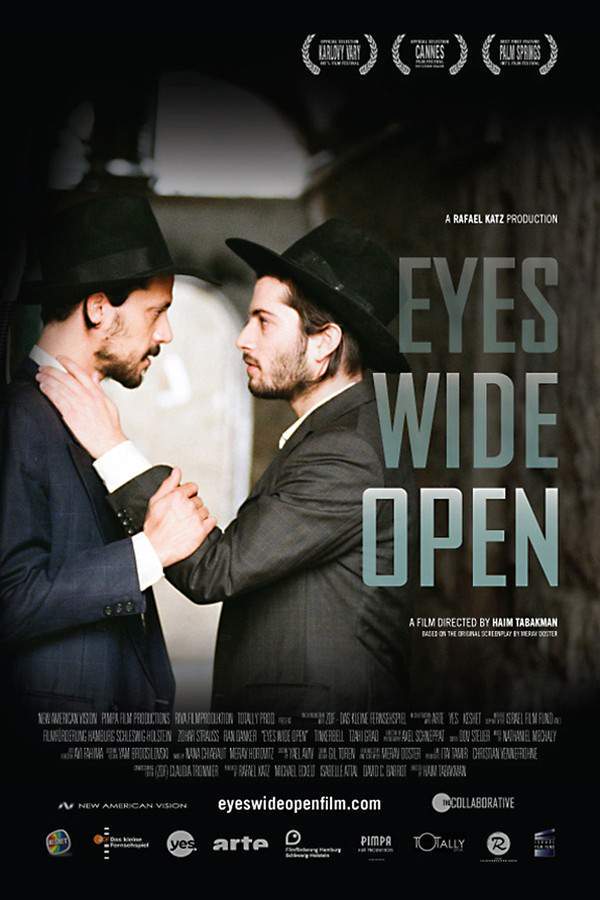
In the provocative Israeli film Eyes Wide Open (Einaym Pkuhot), which made its debut at the Toronto International Film Festival, the complexities of homosexuality within the Orthodox community are explored through a gripping narrative. The story follows Aaron Fleishman, portrayed by Zohar Shtrauss, a father of four who inherits the family kosher butcher shop after his father’s death. His meticulously observed world is abruptly changed with the arrival of Ezri, a young Yeshiva student played by Ran Danker.
As Aaron and Ezri grow closer, Aaron finds himself alienated from his community, grappling with the weight of societal expectations. A pivotal moment arises when he faces confrontation from Rabbi Vaisben, portrayed by Tzahi Grad, where Aaron declares, “I was dead before meeting Ezri.” This statement underscores the depths of his despair and the fierce judgment he faces.
The film vividly portrays the rampant social control that turns violent and ugly, particularly illustrated in Ezri’s forced departure from the community. Set against the backdrop of a dark, rainy winter in Jerusalem, the relentless downpour becomes a potent metaphor for the purification rituals and the suffocating pressure to conform within the Orthodox society. With its strong performances and impactful themes, Eyes Wide Open leaves a poignant message in a country grappling with the evolving power of the Orthodox Jewish community.
Eyes Wide Open Timeline: Every Key Event in Order
12 key events in the order they happen, from “Aaron Inherits the Butcher Shop” to “Aaron's Journey Concludes”.
- 1
Aaron Inherits the Butcher Shop
The story begins with Aaron Fleishman inheriting the family kosher butcher shop after the death of his father. This moment marks the beginning of Aaron's struggle to manage both the business and his personal desires amidst community expectations.
Where:Jerusalem
- 2
Ezri Arrives
Ezri, a young and vibrant Yeshiva student, enters Aaron's life, bringing an unexpected change to his previously orderly existence. Their meeting introduces new layers of emotion and conflict, challenging Aaron's perceptions of love and identity.
Where:Jerusalem
- 3
Growing Closer to Ezri
As Aaron and Ezri develop a deeper bond, Aaron begins to question his role within his conservative community. Their relationship signifies a turning point for Aaron, allowing him to explore his repressed feelings in a society that condemns them.
Where:Jerusalem
- 4
Alienation from the Community
The closeness between Aaron and Ezri leads to Aaron's growing alienation from the Orthodox community. As he grapples with his identity, he becomes increasingly isolated from both his family and peers, facing the harsh judgment of those around him.
Where:Jerusalem
- 5
Confrontation with Rabbi Vaisben
In a tense confrontation with Rabbi Vaisben, Aaron openly declares, “I was dead before meeting Ezri.” This pivotal moment encapsulates his despair and the consequences of loving someone deemed unacceptable by his faith.
Where:Jerusalem
- 6
Violent Backlash from the Community
The film illustrates the violent aspects of societal control, especially after Ezri's forced departure from the community. This act of expulsion highlights the dangers of nonconformity within the rigid structures of Orthodox Jewish life.
Where:Jerusalem
- 7
The Descent into Despair
As Aaron faces defections from community support, his emotional state deteriorates. The relentless societal pressure exacerbates his internal conflicts, pushing him towards a profound personal crisis.
Where:Jerusalem
- 8
The Metaphorical Rain
The film's setting during a dark, rainy winter serves as a metaphor for the emotional turmoil faced by Aaron and Ezri. The rain symbolizes both the cleansing rituals of their faith and the heavy burden of societal expectations that drown personal truths.
Where:Jerusalem
- 9
Aaron's Reflection on Identity
Throughout the narrative, Aaron reflects on his identity as a father and member of the Orthodox community while reconciling his feelings for Ezri. The struggle within him highlights the complex negotiations between desire and duty.
Where:Jerusalem
- 10
Final Decision
As the film progresses, Aaron must confront the stark realities of his choices. The culmination of conflicts leads him to a critical juncture where he must decide whether to embrace his true self or conform to societal pressures.
Where:Jerusalem
- 11
Impactful Themes Resonate
The strong performances and profound themes resonate throughout the film, leaving audiences to consider the implications of love, faith, and societal norms. It challenges viewers to reflect on the struggles faced by those in conservative communities.
- 12
Aaron's Journey Concludes
The film concludes with a powerful message about the search for identity in the face of overwhelming societal judgment. Aaron's journey leaves viewers contemplating the evolving role of the Orthodox Jewish community in modern life.
Where:Jerusalem
Who Are the Main Characters in Eyes Wide Open?
3 characters, among them Aaron Fleishman (Zohar Shtrauss), Ezri (Ran Danker) and Rabbi Vaisben (Tzahi Grad): who each one is and the part they play in the story.
- AF
Aaron Fleishman (Zohar Shtrauss)
Aaron is a father of four who inherits his family's butcher shop, embodying the weight of traditional expectations. His character arc reflects a profound internal conflict as he navigates his desires versus his responsibilities, ultimately revealing his deep yearning for connection and authenticity.
- 🧔 Father
- 💔 Conflict
- E(
Ezri (Ran Danker)
Ezri is a charismatic young Yeshiva student whose arrival disrupts Aaron's ordered life. He represents youth and rebellion against societal norms, drawing Aaron into a world of passion and risk as their bond deepens amid adversity.
- 👦 Youth
- 🔥 Passion
- RV
Rabbi Vaisben (Tzahi Grad)
Rabbi Vaisben is an authoritative figure within the community, representing the oppressive societal pressures faced by individuals like Aaron. His confrontation with Aaron emphasizes the rigid moral codes and the violent repercussions of deviating from communal expectations.
- 👨⚖️ Authority
- ⚔️ Confrontation
Where and When Is Eyes Wide Open Set?
Eyes Wide Open is set in Jerusalem (Contemporary). Here is why the time and place matter to the story.
When
Contemporary
The film is set in contemporary times, a period marked by both progression and resistance within traditional communities. It captures the struggles faced by individuals as they navigate personal identities in the shadow of societal norms.
Where
Jerusalem
Jerusalem is a city known for its rich historical and religious significance, as well as its cultural diversity. It plays a crucial role in Jewish, Christian, and Muslim traditions. The city’s atmosphere is intensified by its dark, rainy winters, reflecting the emotional turmoil faced by its inhabitants.
- 🌧️ Rainy
- 🏙️ Urban
What Are the Themes of Eyes Wide Open?
3 ideas the story keeps returning to, among them Love, Social Justice and Isolation.
-
01
Love
The theme of love is central to the narrative, exploring the complexities of forbidden attraction within a strict community. Aaron's relationship with Ezri serves as a poignant representation of love that defies societal expectations, showcasing both its beauty and the pain it can cause.
-
02
Social Justice
The film delves into social justice by highlighting the harsh realities faced by those who challenge societal norms. It raises questions about acceptance, discrimination, and the pervasive control exerted by the Orthodox community over its members.
-
03
Isolation
Isolation is a recurring theme, as seen through Aaron's alienation from his community due to his growing feelings for Ezri. The dark, rainy backdrop symbolizes the internal struggle and loneliness faced by individuals who are unable to fit into their prescribed social roles.
What Kind of Film Is Eyes Wide Open?
Tense in tone, with slow pacing and a moderate story, going by the plot summary.
- Tone
- Tense
- Pacing
- Slow
- Story
- Moderate
- Intensity
- High
- Ending
- Sad
A tense and melancholic slow-burn that immerses the viewer in the suffocating atmosphere of a strict religious community, tracing a man's passionate internal conflict as it leads to painful external consequences.
- oppressive
- claustrophobic
- melancholic
- passionate
- tormented
- anxious
- forbidden love
- religious conflict
- closeted homosexuality
- societal conformity
Content notes: gay bashing, social ostracism, religious condemnation.
Quiz
How well do you remember Eyes Wide Open? Test yourself on the story.
Where to Watch Eyes Wide Open
Stream it on Echoboom and Fandango at Home Free, or rent or buy it from Apple TV Store. US availability and prices from JustWatch.
Stream 4
 Echoboom Amazon Channel
  Fandango at Home Free
  FUEL TV+ Amazon Channel
  Pluto TV
 Rent or buy 1

Streaming availability in the US, powered by