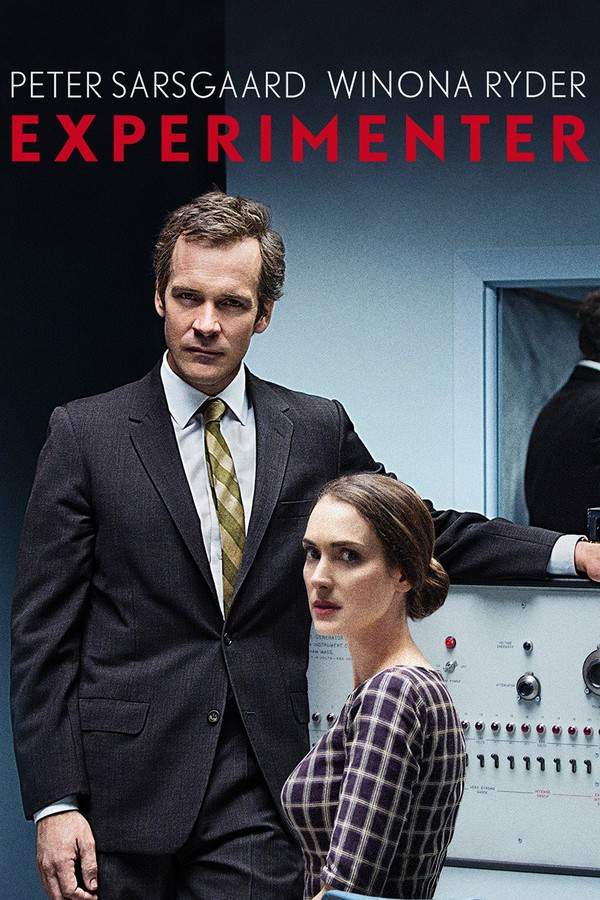
Experimenter 2015


Directed by
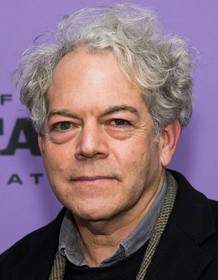
Michael Almereyda
Made by

Magnolia Pictures
Where to Watch Experimenter
See current US streaming, rental, and purchase options for Experimenter (2015) via JustWatch.

Amazon Prime Video
HD
Amazon Prime Video with Ads
HD
fuboTV
HD
Magnolia Selects Amazon Channel
HD
Philo
HD
Hoopla
SD
Kanopy
HD
DistroTV
HD
Fandango at Home Free
HD
The Roku Channel
HD
Tubi TV
SD
YouTube Free
HD
Amazon Video
SD
Apple TV Store
HD Fandango At Home
SD
FlixFling
SD
Google Play Movies
SD
YouTube
SD Streaming availability powered by 
Experimenter Plot Summary
Read the complete plot summary and ending explained for Experimenter (2015). From turning points to emotional moments, uncover what really happened and why it matters.
Based on the true story of celebrated social psychologist Stanley Milgram, this film traces the arc of his groundbreaking yet controversial work from the early 1960s at Yale University, where ordinary people are pressed to obey an authority figure as they administer electric shocks to a stranger. In the opening chapters, the audience watches the experiments unfold with clinical detail: nearly every participant yields to the pressure of the situation, their stern orders and the distressed pleas of the learner colliding in a stark test of human obedience. Amid the methodological tension, Milgram’s personal life unfolds as he meets Alexandra (Sasha), who becomes his wife and the mother of their two children, weaving a human counterpoint to the austere world of scientific inquiry.
The second half shifts the focus to Milgram’s evolving career and the ethical storm that follows his work. As public outcry over the ethics of the experiments grows louder, his professional trajectory climbs in New York City, where he continues to explore social dynamics and pressure through a series of more benign yet revealing studies. The film surveys several famous Milgram-inspired investigations—the small-world experiment, the lost-letter experiment, the street-corner (or gawking) experiment, and the familiar stranger experiment—alongside other classroom projects that his students carry out. Throughout, the narrative remains patient and observational, balancing curiosity with a sober reckoning about the costs and limits of experimental social science.
Archive footage threads through the story, appearing as Milgram studies old recordings and as backdrops for contemporary scenes, reinforcing the sense that his work transcends a single era. Milgram’s career continues for decades, culminating in his death from a heart attack at the age of 51. In the final moments, the street-corner experiment is re-enacted in the present day, featuring a cameo by the real Sasha Milgram, a quiet reminder of the enduring resonance of his questions. A mid-credits sequence expands the archival material, offering a reflective coda on memory, legacy, and the ongoing dialogue between ethics and science.
Experimenter Timeline
Follow the complete movie timeline of Experimenter (2015) with every major event in chronological order. Great for understanding complex plots and story progression.
Milgram's 1961 Yale Obedience Experiments Begin
Stanley Milgram launches a series of obedience studies at Yale University in 1961. Volunteers are told to act as 'teachers' and administer electric shocks to a 'learner' in another room; the learners cry out in distress as the shocks increase. Despite the pleas of the stranger, most test subjects comply under the authority figure's instruction.
The Shock Paradigm in Action
In the lab setups, participants follow the experimenter's directives and administer shocks to the learner. The filmed scenes emphasize the conflict between obedience to authority and the moral impulse to stop harming another person. The outcome demonstrates the powerful influence of situational pressure on ordinary people.
Milgram Meets Alexandra (Sasha)
Between sessions, Milgram meets Alexandra, who becomes his wife and the mother of their two children. Their relationship provides a personal counterpoint to the intense experiments.
Public Outcry and Ethical Controversy
The obedience experiments provoke public scrutiny and ethical debate about deception, informed consent, and the treatment of participants. Milgram becomes the subject of criticism as his methods push the boundaries of psychological research. The controversy shapes the rest of his career and the reception of his findings.
Milgram Moves to New York City as Professor
As his work continues, Milgram rises to a professorship in New York City. He expands his research into more benign social experiments, applying his questions about authority and social influence beyond punishment.
The Small-World Experiment
Milgram designs and conducts the small-world experiment, tracing how people are connected through social networks. The study illuminates how quickly strangers can be linked across distances, and popularizes the idea of 'six degrees of separation'.
The Lost-Letter Experiment
In the lost-letter experiment, Milgram investigates how social signals and civic behavior spread when letters are misdirected or left to be mailed. The results reveal patterns of cooperation and apathy in communities.
The Street-Corner (Gawking) Experiment
Milgram observes crowds and individual responses on city streets as people react to strangers who gawk or seem out of place. The footage captures how passersby interpret and engage social stimuli in everyday life.
The Familiar Stranger Experiment
Another line of inquiry examines how people accumulate 'familiar strangers' through repeated near-encounters, revealing patterns of urban social life. Milgram documents how routine contact creates social bonds and a sense of routine.
Milgram's Students Carry Out Experiments
Milgram mentors students who carry out additional experiments under his guidance, extending his approach to everyday social interactions. The work continues to explore obedience, proximity, and social dynamics in various contexts.
Milgram's Death
Milgram's life ends when he dies of a heart attack at the age of 51. The film follows his influential career through Yale and New York, highlighting the enduring impact of his research on social psychology.
Final Present-Day Street-Corner Reenactment
In the film's closing, the street-corner experiment is repeated in the present day, featuring a cameo by Sasha Milgram. The scene emphasizes the ongoing relevance of Milgram's questions about social behavior.
Mid-Credits Archival Footage
A mid-credits sequence displays archival footage of Milgram's work and public appearances, reinforcing the historical context of his research. The montage invites viewers to reflect on the lasting influence of his findings.
Experimenter Characters
Explore all characters from Experimenter (2015). Get detailed profiles with their roles, arcs, and key relationships explained.
Stanley Milgram
A renowned social psychologist whose 1961 obedience experiments at Yale challenged assumptions about authority and human behavior. The film traces his intellectual curiosity, rise in academia, and the public ethical scrutiny that followed. It also covers his later work in New York and his death at age 51, with archival footage threading his life story.
Alexandra 'Sasha' Milgram
Milgram's wife who becomes the mother of his two children. The film presents her as a supportive partner, offering a grounding counterpoint to the scientific world. Her presence, including a present-day cameo, adds a personal dimension to Milgram's story.
Experimenter Settings
Learn where and when Experimenter (2015) takes place. Explore the film’s settings, era, and how they shape the narrative.
Time period
1961–1984
The film spans Milgram's breakthrough year of 1961, when the obedience experiments began at Yale, through the 1960s and 1970s in New York, up to his death in 1984. It also uses present-day framing to reflect on the enduring impact and ethical debates surrounding his work.
Location
New Haven, Connecticut; New York City, New York
Set mainly on Yale University's campus in New Haven during the early 1960s, where Milgram runs his landmark obedience experiments. The narrative shifts to urban scenes in New York City as his academic career expands. The settings juxtapose sterile laboratories with bustling city life, reflecting the clash between controlled research and public scrutiny.
Experimenter Themes
Discover the main themes in Experimenter (2015). Analyze the deeper meanings, emotional layers, and social commentary behind the film.
⚖️
Obedience
Obedience to authority is the central tension: ordinary people comply with instructions even when those instructions harm others. The film probes moral conflict, social pressure, and how conscience can be overridden by circumstance. Ethical debates surrounding Milgram's methods highlight the cost of rigorous science when human welfare is at stake. The theme resonates beyond academia, shaping discussions on responsibility in institutions and everyday life.
🗂️
Memory & Archive
Archival footage and documentary elements anchor the narrative in real history. The blending of past and present invites reflection on what is remembered and what is reconstructed. The approach raises questions about objectivity, memory, and the ethics of storytelling.
🔬
Science & Society
Milgram's work sits at the crossroads of scientific inquiry and public discourse. The film shows how research can reshape social understanding and influence policy. It also reveals the fragility of scientific reputation when ethical concerns arise.
💑
Personal Life
The film juxtaposes Milgram's public experiments with his private life, particularly his relationship with Sasha. Sasha is portrayed as a supportive partner and mother, providing grounding amid controversy. The personal lens adds depth to the scientist's ambitious pursuits and the costs to family life.

Coming soon on iOS and Android
The Plot Explained Mobile App
From blockbusters to hidden gems — dive into movie stories anytime, anywhere. Save your favorites, discover plots faster, and never miss a twist again.
Sign up to be the first to know when we launch. Your email stays private — always.
Explore the mobile appExperimenter Spoiler-Free Summary
Discover the spoiler-free summary of Experimenter (2015). Get a concise overview without any spoilers.
In the early 1960s, the polished corridors of Yale University become a quiet laboratory for a daring inquiry into the hidden mechanics of human obedience. Stanley Milgram, a charismatic social psychologist, proposes a series of startling tests that place ordinary people in a tense power dynamic, asking them to deliver electrifying shocks to strangers under the calm command of an unseen authority. The film’s visual language blends stark, period‑accurate classrooms with the grainy intimacy of archival footage, creating a mood that feels both scholarly and unsettling, as if the very walls are listening for the next reluctant “yes.”
While the experiments dominate Milgram’s professional world, the story also follows the emergence of a tender counterpoint: his meeting with Alexandra—later Sasha—whose presence introduces a personal rhythm that steadies and challenges his relentless curiosity. Their connection unfolds against the backdrop of a bustling 1960s academic scene, suggesting that behind the sterile data and controlled settings lies a man trying to balance the rigor of his research with the messier, more unpredictable currents of love, family, and everyday life.
As the narrative moves forward, the tone shifts from the tense, observation‑heavy atmosphere of the lab to a broader canvas of intellectual exploration. Milgram’s career expands beyond Yale, taking him to new cities and fresh avenues of inquiry where he continues to probe the subtle pressures that shape social interaction. The film’s style—interweaving present‑day re‑enactments with authentic documentary clips—keeps viewers hovering between the certainty of scientific method and the lingering question of what lies beneath the surface of ordinary compliance. This theatric blend of history, personal drama, and ethical intrigue invites the audience to ponder how far the ordinary can be pushed when authority whispers in the ear.
Movies with Similar Twists and Themes
Uncover films that echo the narrative beats, emotional arcs, or dramatic twists of the one you're exploring. These recommendations are handpicked based on story depth, thematic resonance, and spoiler-worthy moments — perfect for fans who crave more of the same intrigue.

Featured on this page

What's After the Movie?
Not sure whether to stay after the credits? Find out!
Check out our other apps:

SAT Sphere
Build confidence for the Digital SAT.

Mori Atlas
Discover wild places worth protecting.

Luntero
Search smarter for a home in Amsterdam.

Plot Explained
Unravel movie endings and hidden clues.

Pokechamp
Dive into Pokémon data and battle logic.

Driving Theory
Get ready for your European theory test.

Movie Dust
Plan your next cinema trip with ease.

Musemap
Find art and culture as you travel.

Selkobase
Compare credentials before committing.

Local Manual
Turn an unfamiliar country into practical next steps.

Lernavi
Compare school systems before your next move.

GymRoam
Find a workout stop wherever your plans take you.
Explore Our Movie Platform
New Movie Releases (2026)
Famous Movie Actors
Top Film Production Studios
Movie Plot Summaries & Endings
Major Movie Awards & Winners
Best Concert Films & Music Documentaries
Movie Collections and Curated Lists
© 2026 What's After the Movie. All rights reserved.
Privacy Policy