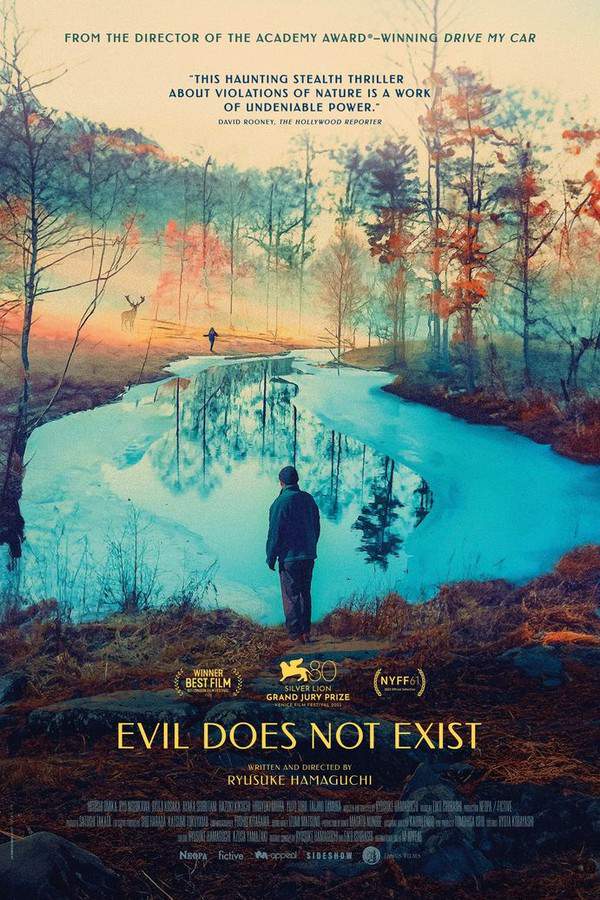
What Is Evil Does Not Exist About?
The premise of Evil Does Not Exist in 264 words, with nothing given away. The full story and the ending follow below.
In the quiet mountain village of Mizukibi, the rhythm of life follows the slow turn of seasons, the soft murmur of a well‑watered stream, and the occasional crack of distant gunfire from deer hunts. Here, Takumi, a widowed father, and his bright‑spirited eight‑year‑old daughter Hana tend to a simple existence that supplies Tokyo with water, wood, and wasabi. Their home, perched among snow‑capped firs, feels like a sanctuary where nature’s balance is both a comfort and a quiet responsibility.
The tranquility is tested when representatives from a glamping development company arrive with glossy plans to transform part of the forest into a luxurious retreat. Takahashi and Mayuzumi present their vision to a wary community, sparking a delicate clash between the promise of modern prosperity and the villagers’ deep‑seated reverence for the land. The villagers, led by Takumi’s measured concerns, voice anxieties about the fragile water system, septic capacity, and the subtle ways an outside presence could unsettle the ecosystem that sustains them.
Against this backdrop, the film unfolds with a tone that is both contemplative and gently tense, allowing the audience to feel the weight of tradition pressing against the allure of change. Relationships begin to shift as the corporate guests glimpse the village’s enduring values, and Takumi’s quiet resolve becomes a quiet compass for those around him. The pristine winter forest, the soft glow of lanterns, and the understated humor of everyday life paint a vivid picture of a community at a crossroads, inviting viewers to wonder how the balance between progress and preservation will be negotiated without revealing the story’s deeper twists.
What Happens in Evil Does Not Exist?
The complete story of Evil Does Not Exist, from the first scene to the last, in 531 words (about 2 minutes). Spoilers throughout. Names in the text link to 2 cast member pages.
Spoilers ahead
The tranquil expanse of Mizubiki’s winter forest creates a serene atmosphere as the story unfolds. At the heart of this narrative is Takumi, a widowed father navigating life with his spirited eight-year-old daughter, Hana. Their daily routine reflects the calmness of their rural Japanese village, occasionally disrupted by the distant sound of gunfire from deer hunting expeditions.
During a community meeting, tension fills the air as two representatives from a glamping development company, Takahashi and Mayuzumi, present their proposal to the skeptical townspeople. The polished veneer of their public relations pitch soon crumbles under the weight of residents’ genuine fears about the project’s potential impact on Mizubiki’s fragile water systems. Takumi, along with his community members, voices strong concerns regarding septic tank capacity, warning that it could lead to sewage contamination affecting their well-water supply.
Initially dismissive of the villagers’ worries, the representatives gradually begin to empathize as they truly listen to their plight. However, once they reestablish communication with their superior, they receive orders to sidestep the environmental concerns and instead aim to win over Takumi by lavishing him with gifts and offering him the role of caretaker for the glamping site. Back in Mizubiki, Takahashi and Mayuzumi share amusing stories of their own online dating misadventures, revealing their disillusionment with their corporate job.
As they adapt to village life, Takahashi decides to abandon his fast-paced urban existence, choosing instead to embrace local culture and seek guidance from Takumi. One day during a scenic drive, Takumi warns him with a tale about wild deer, explaining how even the most peaceful creatures can turn aggressive when threatened or cornered, a poignant reflection of the balance between humanity and nature. Yet the echo of a distant gunshot serves as a stark reminder of this delicate relationship.
As night envelops the village, a wave of panic sets in when news breaks that Hana has gone missing. The urgency of searching for her drives Takumi and the community into a frantic quest, leaving no stone unturned. Determined to find his daughter, Takumi partners with Takahashi on a perilous journey into the depths of the forest. Their resolve grows with each passing moment, and as they venture further into the dark wilderness, they eventually stumble upon an open field illuminated by moonlight, facing an unsettling truth.
In this desolate area, they discover Hana, who appears in a startling moment, standing near a deer and its wounded calf—an image that starkly underscores the harsh realities of life outside their village. As Takahashi instinctively moves to intervene, Takumi’s fierce determination manifests in a sudden tackle that leaves Takahashi stunned on the ground. The shocking moment ultimately reveals Hana’s lifeless body, her bloodied nose a chilling reminder of the unforeseen dangers upon them.
With grief-stricken arms, Takumi gathers his daughter and rushes into the forest, their frantic escape dissolving into the encroaching darkness. Meanwhile, Takahashi regains consciousness, struggling to rise, but the treacherous earth pulls him back down, leaving him to grapple with the relentless shadows of the night. The forest now echoes only with the distant sounds of footsteps and labored breathing, a solemn reminder of the desperate search rendered futile by the merciless hand of fate.
Evil Does Not Exist Timeline: Every Key Event in Order
14 key events in the order they happen, from “Serene Life in Mizubiki” to “Fate's Relentless Grasp”. 14 events name a place, across 3 locations.
- 1
Serene Life in Mizubiki
Takumi and his daughter Hana enjoy a peaceful life in the winter forest of Mizubiki. Their days unfold in tranquility, surrounded by the beauty of nature, occasionally interrupted by the distant sounds of deer hunting.
Where:Mizubiki
- 2
Community Meeting for Glamping Proposal
During a tense community meeting, Takumi and other villagers confront representatives from a glamping company presenting their development proposal. The townspeople express deep concerns about the potential environmental impact of the project, particularly on their water supply.
Where:Mizubiki
- 3
Rising Tensions
As the meeting progresses, the villagers' worries grow as they cite issues with septic tank capacity that could contaminate their well water. Takumi's steadfastness represents the collective voice of the community, urging for a reconsideration of the project's viability.
Where:Mizubiki
- 4
Empathy Begins to Form
Initially, the glamping representatives, Takahashi and Mayuzumi, dismiss the villagers' concerns. However, as they listen more intently to the locals, they begin to empathize with their fears about the environmental consequences of the development.
Where:Mizubiki
- 5
Corporate Manipulations
Under pressure from their superior, Takahashi and Mayuzumi decide to sidestep the concerns and instead try to win over Takumi with gifts. They offer him a position as caretaker for the glamping site, hoping to sway his opinion.
Where:Mizubiki
- 6
Adapting to Village Life
As time passes, Takahashi starts to embrace village culture, moving away from his corporate life. He seeks Takumi's guidance, signaling a shift in his attitude as he begins to understand the importance of community and nature.
Where:Mizubiki
- 7
A Tale of Wildness
On a scenic drive, Takumi shares a story about wild deer with Takahashi, explaining how even gentle creatures can become dangerous when threatened. Their discussion reflects the fragile balance between humanity and nature, highlighted by the sounds of a distant gunshot.
Where:Mizubiki
- 8
Panic Strikes the Village
Night falls over Mizubiki, and a wave of panic erupts when it’s discovered that Hana is missing. Takumi partners with Takahashi as they rally the community to search for her, fueled by urgency and fear.
Where:Mizubiki
- 9
The Frantic Search
Takumi and Takahashi embark on a perilous journey into the dark forest, driven by desperate hope. As they traverse deeper into the wilderness, their resolve and urgency intensify with each passing moment.
Where:Mizubiki Forest
- 10
A Disturbing Discovery
Within a moonlit clearing, they stumble upon Hana, unexpectedly standing near a wounded deer and its calf. The sight serves as a harsh reminder of the brutal realities lurking beyond their rural lives.
Where:Moonlit Field
Show the other 4 events of Evil Does Not Exist Hide the last 4 events
- 11
A Moment of Instinct
As Takahashi instinctively moves to help the deer, Takumi reacts fiercely, tackling Takahashi to the ground. In this shocking moment, the grave truth is revealed: Hana is indeed lifeless, starkly emphasizing the dangers they have faced.
Where:Moonlit Field
- 12
Heartbroken Escape
Grief-stricken, Takumi gathers his daughter’s body, making a frantic escape into the dark forest. The shadows engulf him as he realizes the tragic outcome of their search, marking a heart-wrenching moment in his life.
Where:Mizubiki Forest
- 13
Takahashi's Struggle
As Takumi rushes into the depths of the forest, Takahashi struggles to rise from the ground. The treacherous terrain seems to conspire against him, leaving him grappling with the heavy implications of the tragic events that have unfolded.
Where:Moonlit Field
- 14
Fate's Relentless Grasp
With the village now shrouded in sorrow, the relentless shadows surround Takahashi, echoing only the sounds of fading footsteps and labored breaths. The desperate search ends in heartbreak, illustrating the merciless hand of fate.
Where:Mizubiki Forest
Who Are the Main Characters in Evil Does Not Exist?
4 characters, among them Takumi, Hana and Takahashi: who each one is and the part they play in the story. Every profile links to the actor’s page.
- T
Takumi
Played by Hitoshi Omika
A widowed father deeply connected to his daughter, Hana. He epitomizes resilience and love, embodying the struggles of a single parent navigating life while protecting his family's well-being. His determination to confront both personal and external challenges showcases his strength in adversity.
- 👨👧 Fatherhood
- 💪 Resilience
- 🌌 Grief
- H
Hana
Played by Rei Nishikawa
A spirited eight-year-old girl whose innocent curiosity and bond with her father drive the emotional core of the story. Her disappearance sparks a gripping narrative that reveals the harsh realities of life, leaving a profound impact on the community and her father.
- 👧 Youth
- 🌟 Innocence
- 🦌 Nature
- T
Takahashi
Played by Ryûji Kosaka
A corporate representative who finds himself torn between his job and the genuine concerns of the villagers. His character development reflects a journey from indifference to empathy, as he navigates the complexities of his role and forms an unexpected bond with Takumi.
- 🏢 Corporate
- 🤝 Empathy
- 🌍 Change
- M
Mayuzumi
Played by Ayaka Shibutani
A representative from the glamping development company, initially focused on marketing strategies but gradually learns to appreciate the villagers' fears. Her character illustrates the tension between corporate interests and community values, emphasizing the need for understanding in development projects.
- 🏖️ Development
- 📊 Marketing
- 🌱 Growth
Where and When Is Evil Does Not Exist Set?
Evil Does Not Exist is set in Mizubiki and rural Japan. Here is why the place matters to the story.
When
The narrative unfolds in contemporary times, as it reflects modern issues of environmental concern in rural settings. The clash between traditional lifestyles and corporate development highlights the ongoing struggle for sustainability in the face of progress.
Where
Mizubiki, rural Japan
Mizubiki is a tranquil rural village nestled within a vast winter forest, known for its serene atmosphere and close-knit community. The landscape is dominated by natural beauty, where the calmness of everyday life contrasts sharply with the distant echoes of hunting. This setting underscores the villagers' connection to nature and their concerns over preserving their fragile environment.
- 🏞️ Nature
- 🏡 Rural
- 🌲 Forest
What Are the Themes of Evil Does Not Exist?
2 ideas the story keeps returning to, among them Nature vs. Humanity and Loss and Grief.
-
01
Nature vs. Humanity
The film explores the delicate relationship between humanity and nature, showcasing how external pressures can disrupt rural life. Through Takumi's journey and the community's fight, it highlights the importance of preserving natural environments in the face of modernization. The stark imagery of the forest and the impact of the deer hunting serve as reminders of nature's unpredictable balance.
-
02
Loss and Grief
Central to the story is the theme of loss, particularly embodied in Takumi's relationship with his daughter Hana. The emotional journey through grief is palpable, emphasizing the painful realities that can emerge from unforeseen circumstances. Takumi's desperate and frantic search poignantly conveys the depths of parental love and the trauma of losing a child.
How Does Evil Does Not Exist End?
The last act of Evil Does Not Exist and what it means, in 286 words. The ending lands as bleak. Big spoilers: read the plot summary first if you have not seen it.
The final act, in full
In the final moments of Evil Does Not Exist, Takumi is overwhelmed with grief and despair after discovering Hana’s lifeless body in the woods. The scene’s disjointed imagery, with Hana and the deer appearing as if from a different time, suggests a dreamlike reflection on the tragic events and Takumi’s memories. His grief is so intense that he chooses to walk into the darkness of the forest, perhaps symbolizing his desire to escape the pain or join Hana in death. Meanwhile, Takahashi, who has been a symbol of outside influence and capitalist intrusion into the village, is shown to be physically and emotionally overwhelmed—he collapses and appears defeated, recognizing that his presence and the destruction caused by outside forces have contributed to Hana’s death.
The ending underscores the movie’s core message: that the village and its inhabitants embody a natural harmony untouched by evil, with their strength lying in their resilience and unity. The villagers live without pretense or malice, and their rejection of the destructive greed represented by Takahashi and his company highlights the importance of respecting nature and community. The scene’s tragic conclusion suggests that the real evil is not an active force, but the destructive tendencies of capitalism and ignorance that threaten to destroy the fragile balance of life. Ultimately, Takumi’s act of carrying Hana’s body into the woods symbolizes his loss of hope and his attempt to retreat into the natural world, possibly as a final act of resistance or surrender to the uncontrollable forces that have led to his daughter’s death. The film leaves a haunting impression that true evil does not lie in intentional malice, but in the disruption of harmony and respect for life, which the villagers consciously preserve.
What Kind of Film Is Evil Does Not Exist?
Bleak in tone, with slow pacing and a straightforward story, going by the plot summary.
- Tone
- Bleak
- Pacing
- Slow
- Story
- Straightforward
- Intensity
- Medium
- Ending
- Bleak
A slow-paced, atmospheric drama that begins with serene rural life but builds into a tense and ultimately tragic confrontation between ecological preservation and corporate interests, ending on a note of profound grief.
- serene
- tense
- melancholic
- somber
- nature-driven
- unsettling
- father daughter relationship
- environmental protection
- corporate greed
- rural life
Content notes: child death, blood, gunshot.
Quiz
How well do you remember Evil Does Not Exist? Test yourself on the story.