
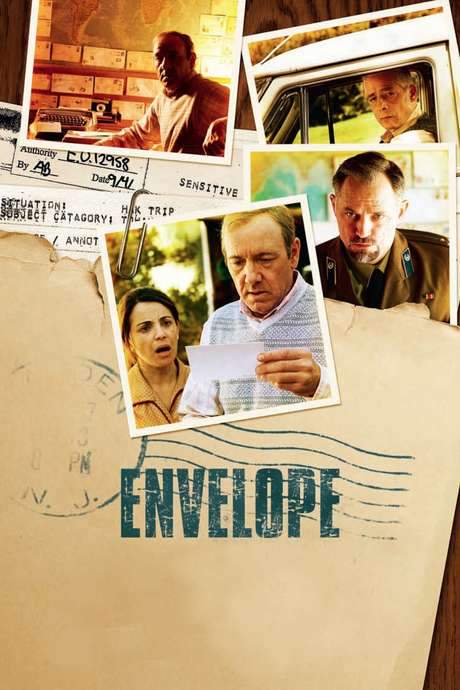
What Is Envelope About?
The premise of Envelope in 303 words, with nothing given away. The full story follows below.
In the muted corridors of a Soviet-era newsroom, Yevgeniy Petrov pursues an eccentric pastime that feels more like a quiet rebellion than a hobby. Since childhood, he has taken blank envelopes, invented exotic addresses, and mailed them to distant lands, delighting in the arrival of colorful stamps and foreign postmarks that return to his desk like tiny trophies. The practice is solitary, almost ritualistic, offering him a secret way to connect with a world he can never truly visit.
Over the decades, his collection grows into a global patchwork, each returned envelope a whisper of places he has never set foot in. Yet one nation remains stubbornly absent: New Zealand. The missing piece becomes a quiet obsession, a puzzle that sits at the edge of his meticulously curated archive. The pursuit is less about geography and more about the personal satisfaction of completing a lifelong catalog, a testament to his meticulous nature and yearning for closure.
When a letter finally makes its way back from that far‑off island, it arrives not as the expected postcard of stamps but as an unmistakably genuine reply. The tone of the message hints at something beyond a simple acknowledgment, suggesting a deeper, perhaps unintended connection. The unexpected authenticity of the correspondence unsettles the orderly rhythm of Petrov’s life, casting a subtle shadow over his otherwise benign routine.
As the ink dries on this surprising letter, the atmosphere shifts. The ordinary world of a Soviet writer begins to feel tinged with an unease that hints at forces beyond his control—a quiet tension that suggests the simple act of sending a fabricated note may have opened a door he never imagined. The film balances whimsical curiosity with an undercurrent of dread, inviting viewers to wonder how far a harmless hobby can truly stretch before it collides with the uncanny.
What Happens in Envelope?
The complete story of Envelope, from the first scene to the last, in 441 words (about 2 minutes). Spoilers throughout. Names in the text link to 1 cast member page.
Spoilers ahead
Yevgeny Petrov, a Soviet writer and journalist, leads a quiet life shaped by a peculiar and persistent hobby. Since he was six years old, he has been crafting fake letters to other countries, using a rotating slate of invented names for his destinations. The envelopes always return, and what makes them truly striking are the embellishments: colorful stamps and intricate postmarks from places he’s never visited. Over the years, these seemingly harmless correspondences become a vast, world-spanning collection, a private archive that grows step by step as he amasses letters from dozens of countries. Only one nation remains elusive, a final piece that would complete his global dossier: New Zealand.
Then, an astonishing twist disrupts the routine of his pastime. The New Zealand envelope, which had never come back, returns nonetheless—but this time with a real reply from the supposed friend who was never meant to exist. The letter arrives with a photograph of the two people together and asserts that they actually spent three days in each other’s company. Those three days, however, are narrated by Yevgeny as moments he believed were spent in a coma, in a hospital, a disorienting memory that suddenly gains a new, unsettling solidity.
The discovery of a genuine reply jolts the system and triggers a heavy-handed response from the state. The Soviet authorities interpret Yevgeny’s innocent hobby as a potential channel for secret communication, and he is swiftly arrested by the KGB. He is taken to Moscow for interrogation, a process that feels more like a countdown than an inquiry, as the lines between truth, memory, and manipulation blur.
Before the plane rises for transport, an ominous note arrives back home. Petrov’s wife receives a second letter from New Zealand, casting the earlier three days in an even stranger light. The message claims that during those days Yevgeny spoke of swimming as if it were safe, and it hints at a fatal fate tied to air travel. The foreboding seems to foreshadow reality: the very plane that carries Yevgeny into custody meets a tragic end, and the predicted danger manifests in the most public and irreversible way.
This story unfolds with a calm, taut tone, inviting viewers to weigh the fragility of memory against the opaque mechanisms of power. It centers on a man whose harmless curiosity spirals into a consequential clash with the state, all while the mysterious New Zealand correspondence gently upends every assumption about truth, chance, and destiny. The narrative threads—an obsessive collection, a surreal personal connection across borders, and a catastrophe that mirrors a whispered warning—coalesce into a meditation on how a single improbable thread can unravel an entire life.
Envelope Timeline: Every Key Event in Order
11 key events in the order they happen, from “Childhood hobby begins” to “Legacy of the hoax”. 9 events name a place, across 7 locations.
- 1
Childhood hobby begins
From age six, Yevgeny Petrov starts forging letters to foreign countries using invented identities. He sends and receives correspondences as if a real exchange existed, feeding his imagination. The hobby grows into a lifelong obsession.
When:From age 6 Where:Soviet Union — childhood home
- 2
Letters return with exotic stamps
The envelopes come back beautifully stamped and postmarked from distant lands, even though the letters are not genuine. The colorful stamps turn his hobby into tangible proof of a wider world. He files these treasures away as proof of imagined connections.
When:Throughout life Where:Home
- 3
New Zealand piece remains missing
Among the global letters, New Zealand is the last piece missing from his growing collection. The absence becomes a quiet obsession, a symbol of all the places he has never truly touched. He clings to the hope that one day the missing piece will complete the map.
When:Over many years Where:Home
- 4
NZ reply arrives with a photo
One day, an unexpected reply from the 'New Zealand friend' arrives, contrary to expectations. The letter includes a photo of them together, proving the friendship existed in some form. It claims they actually spent three days together.
When:Sudden moment Where:Home
- 5
Three days tied to a coma
The correspondence describes three days they spent together, which Yevgeny had believed were part of a hospital coma. The memory blurs the line between reality and fiction, challenging his sense of self. The claim unsettles him as he confronts the unreliability of memory.
When:During the three days Where:Unspecified
- 6
KGB arrests him
Soon after the NZ reply, the KGB arrests Petrov, suspecting his harmless letters of covert diplomatic messages. The arrest marks a dramatic turn from eccentric hobbyist to potential security threat. He is taken into custody under a cloud of suspicion.
When:Immediately after NZ reply Where:Lubyanka, Moscow
- 7
Interrogation in Moscow
Petrov is sent to Moscow for interrogation, the process framed by suspicion and bureaucratic pressure. Officials question the significance of his letters rather than any concrete crime. The journey underscores the paranoia of the era.
When:Shortly after arrest Where:Moscow
- 8
Second NZ letter before takeoff
Before the plane lifts off, Petrov's wife receives a second letter from New Zealand. It reiterates the three days and mentions that he claimed it was safe to swim. It hints at an ominous fate tied to an airplane.
When:Just before takeoff Where:Petrov's home
- 9
Prophecy materializes: plane crash
This prophecy seems to come true as the airplane crashes. The disaster mirrors the letter's ominous prediction and tests the line between fiction and reality. The event brutalizes those who followed the mystery.
When:During takeoff/flight Where:In the air
- 10
Aftermath and the chilling linkage
The story closes with the suggestion that the invented friendship and the foretold death are interwoven, prompting reflection on fate, manipulation, and the power of letters. Viewers are left to ponder whether the events were real or engineered by an obsessive imagination. The final twist implies that writing can alter life itself.
When:Aftermath
- 11
Legacy of the hoax
The legacy of Petrov's letters lingers for those around him, casting doubt on the boundary between imagination and reality. The tale remains a meditation on how fiction can influence perception and consequences. It invites viewers to question what is genuine in the stories we tell.
When:End of story
Who Are the Main Characters in Envelope?
6 characters, among them Yevgeny Petrov, Tanya and Pavel: who each one is and the part they play in the story. 5 of them link to the actor’s page.
- YP
Yevgeny Petrov
A Soviet writer and journalist whose lifelong hobby is composing fake letters to foreign countries. He crafts imagined friendships and identities through envelopes adorned with foreign stamps. His actions draw the attention of the KGB, leading to arrest and interrogation as reality and fiction increasingly blur.
- ✍️ Writer
- 🧠 Imaginative
- 🕵️ Suspicious
-

Tanya
Played by Alanna Ubach
Petrov's wife, who becomes entangled in the unfolding mystery as the correspondence moves from the realm of fantasy to dangerous real consequences. She receives the second letter from New Zealand just before his departure, highlighting the personal stakes behind the political tension.
- 💑 Wife
- 🧭 Loyal
- 🧠 Introspective
- P
Pavel
Played by Anthony Skordi
A character named Pavel who appears in the investigation arc, portrayed by Anthony Skordi. His actions intersect with the tension between personal freedom and state control, hinting at further political machinery at work beyond the main protagonist.
- 🎭 Character
- 🧭 Official
- 🕵️ Mysterious
- L
Lieutenant
Played by David Meunier
A stern officer who leads the interrogation, embodying the procedural logic and pressure of the Soviet security apparatus. His involvement drives the central conflict as the state examines Petrov’s activities.
- 👮 Officer
- 🧭 Bureaucracy
- 🔬 Interrogation
- LA
Lieutenant's Assistant 1
Played by Cody Caira
An aide to the Lieutenant who assists in the interrogation process, representing the practical side of state machinery and the peripheral role of those who carry out orders.
- 🧰 Assistant
- 🕵️ Investigative
- 🗺️ Moscow
- LA
Lieutenant's Assistant 2
Played by Mike Dirksen
Another assistant to the Lieutenant, contributing to the procedural atmosphere of the interrogation and the bureaucratic texture of the scene.
- 🧰 Assistant
- 🗺️ Military
- 🕵️ Shadow
Where and When Is Envelope Set?
Envelope is set in Moscow, Soviet Union and New Zealand (Cold War era). Here is why the time and place matter to the story.
When
Cold War era
The story unfolds during the Cold War, a period marked by geopolitical tension between the Soviet Union and the Western bloc. State surveillance, espionage, and political paranoia shape daily life and personal ambitions. The plot culminates in a fatal plane crash, linking individual fate to the era's pervasive mistrust and control.
Where
Moscow, Soviet Union, New Zealand
Set primarily in Moscow, the film unfolds within the Soviet Union's capital, a hub of state surveillance and bureaucratic power. It also references New Zealand as the origin of the letters that spark the mystery, highlighting a surprising international link. The atmosphere blends stark concrete architecture with a climate of fear and control characteristic of the era.
- ❄️ Moscow
- 🗺️ Soviet Union
- 🌍 New Zealand
What Are the Themes of Envelope?
3 ideas the story keeps returning to, among them Fiction vs Reality, Surveillance & Power and Communication & Memory.
-
01
Fiction vs Reality
Yevgeny's lifelong hobby of writing fake letters blurs the line between imagination and truth. The forged correspondences shape the reality he experiences and the memories he holds. When a New Zealand reply arrives, the boundary between fiction and truth collapses, revealing the cost of living in a world where letters pretend to be real friends. The plot uses this tension to explore how stories we tell ourselves can dictate our fate.
-
02
Surveillance & Power
The KGB's suspicion of harmless letters reveals how a state apparatus can monitor private life. Petrov's arrest and interrogation demonstrate how loyalty to the state becomes a weapon against individuals. The film portrays a culture of paranoia where even benign creativity is treated as potentially subversive. The tension underscores the political climate of control in the era.
-
03
Communication & Memory
The mail thread connects distant places and people, creating a network of imagined relationships. The New Zealand letter blurs distance and time, turning a fake friendship into a real emotional link. When reality collides with the pretend world, memory becomes a fragile, contested space. The envelope motif becomes a haunting reminder that communication can shape identity.
What Kind of Film Is Envelope?
Dark in tone, with steady pacing and a complex story, going by the plot summary.
- Tone
- Dark
- Pacing
- Steady
- Story
- Complex
- Intensity
- High
- Ending
- Bleak
A deeply unsettling and paranoid thriller that explores the heavy psychological toll of government suspicion, culminating in a fatalistic and tragic ending.
- paranoid
- unsettling
- melancholic
- suspenseful
- fatalistic
- oppressive
- cold war paranoia
- government surveillance
- karma and fate
- truth and deception
Content notes: psychological torment, political oppression, fatalistic death.
Quiz
How well do you remember Envelope? Test yourself on the story.
