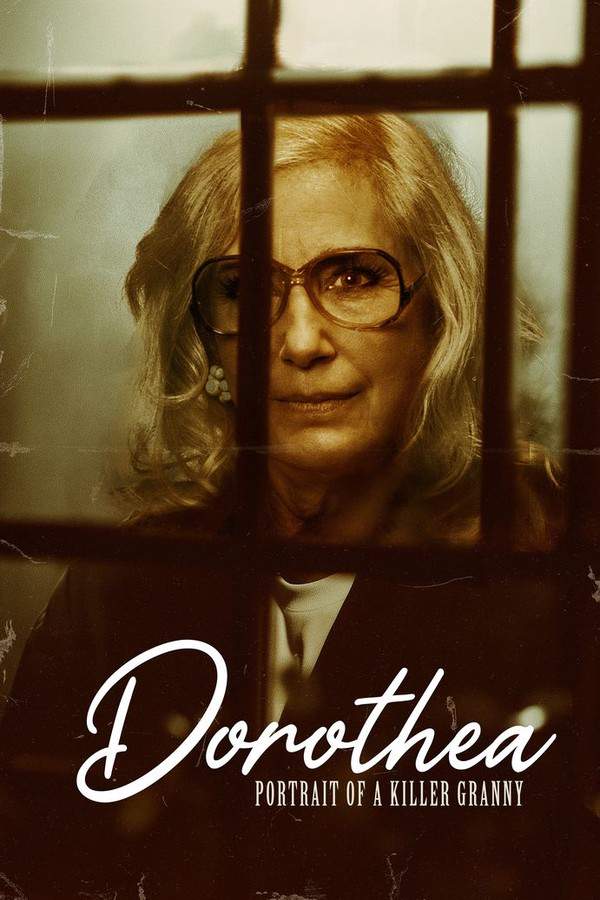
Dorothea 2025

Directed by

Chad Ferrin
Made by

Crappy World Films
Where to Watch Dorothea
See current US streaming, rental, and purchase options for Dorothea (2025) via JustWatch.

Fawesome
HD
Fandango at Home Free
HD
Plex
HD
Plex Channel
HD
The Roku Channel
HD
Tubi TV
SD
Xumo Play
HD
Amazon Video
SD
Apple TV Store
HD Fandango At Home
SD
Google Play Movies
SD
YouTube
SD Streaming availability powered by 
Dorothea Plot Summary
Read the complete plot summary and ending explained for Dorothea (2025). From turning points to emotional moments, uncover what really happened and why it matters.
At a California State Prison, an elderly and dying Dorothea Puente recounts her past to a younger cellmate named Queenie. Through flashbacks to the 1980s, Puente runs a boarding house on F Street in Sacramento, where she appears as a warm, grandmotherly figure who welcomes vulnerable tenants. Yet behind this compassionate image lies a brutal pattern: she murders her residents, exploiting their vulnerabilities and burying their bodies in her backyard garden. To handle the demanding labor and the digging for graves, she hires a local handyman, Billy ‘Hurricane’ Hodges. When social worker Judy Moise grows wary of the disappearances, she informs detectives John Cabrera and Laurence Kaufman, who uncover the crimes and trace them back to the killer in the community. The investigation reveals that Dorothea Puente used her position to prey on defenseless people, a calculated scheme driven by cashing Social Security disability checks. Framed by a present-day prison setting, the film contrasts the calm, everyday life she projected with the harsh reality of her actions, inviting reflection on manipulation, vulnerability, and the desire for control.
Dorothea Timeline
Follow the complete movie timeline of Dorothea (2025) with every major event in chronological order. Great for understanding complex plots and story progression.
Frame narrative: Dorothea in prison begins recounting her past
The film opens with an elderly, dying Dorothea Puente in a California State Prison, recounting her past to a younger cellmate named Queenie. This voiceover frame sets up the storytelling approach that will reveal her history through flashbacks. The audience immediately understands that the truth about her character will clash with her outward kindness.
Dorothea presents a caregiver's facade on F Street
In the 1980s flashbacks, Dorothea is seen as a trusted member of the Sacramento community, running a boarding house on F Street. She appears gentle and grandmotherly, inviting vulnerable residents to live with her. This facade disguises the dark reality that will unfold.
Vulnerable tenants welcomed into her care
Dorothea houses elderly and mentally disabled tenants, presenting herself as a caretaker who provides stability. The routine at the boarding house gradually masks the danger these residents face. Outsiders see only the surface of kindness while the danger grows behind closed doors.
Murders begin; bodies buried in the backyard
Behind the friendly front, Dorothea murders some tenants by exploiting their vulnerabilities. She disposes of their bodies by burying the backyard garden. The chilling routine of ordinary caregiving becomes the cover for violent crime.
Billy 'Hurricane' Hodges joins as handyman
Dorothea hires a local handyman, Billy 'Hurricane' Hodges, to help with the physical labor of keeping the home and the crimes going. He assists with chores that include digging and dealing with the aftermath of the killings. His presence deepens the murky collaboration behind the murders.
Burial sites and pest problems complicate the operation
The murders require extensive digging and maintenance of burial sites, as Dorothea and Hodges contend with rat infestations and the ongoing task of concealing evidence. The backyard becomes a network of hidden graves. The physical work of hiding the crimes intensifies the collaborators' entanglement.
Financial motive: cashing the tenants' checks
A key motive emerges as Dorothea uses the victims’ Social Security disability checks to profit from their deaths. The financial angle explains why the killings continued for as long as they did. The crime is framed around a routine of caregiving that masks financial exploitation.
Social worker Judy Moise grows suspicious
Social worker Judy Moise begins to suspect foul play at the F Street home, noticing inconsistencies in the tenants' care and their disappearances. Her concerns plant the seed for a formal investigation. She ultimately informs detectives about her observations.
Detectives Cabrera and Kaufman investigate
Detectives John Cabrera and Laurence Kaufman take up the case after Judy Moise's reports. They start piecing together a pattern of deaths linked to Dorothea's boarding house. The investigation marks a turning point as the story moves from rumor to evidence.
Pattern of disappearances is uncovered
As the investigation progresses, investigators uncover a consistent pattern of disappearances connected to Dorothea. The routine of care is revealed to be a cover for serial crimes. The scope of the crimes becomes undeniable.
Graves found in the backyard
Authorities uncover the buried bodies in Dorothea's backyard, confirming the murders and exposing how deeply she deceived the community. The discovery shifts the case from suspicion to clear criminal wrongdoing. The victims are confirmed to be vulnerable residents.
The true Dorothea is exposed
The investigation reveals the true nature of Dorothea Puente as a deceptive and psychopathic killer who killed defenseless tenants for profit. The community and investigators confront the chilling reality behind her gentle image. The case serves as a stark reminder of how appearances can hide monstrous acts.
Present-day frame resolves as the story closes
The frame narrative returns to the present as Dorothea’s account continues in prison and Queenie listens. This ending reinforces the distance between the public image she projected and the brutal crimes she committed. The audience leaves with the sense that the truth has finally been laid bare.
Dorothea Characters
Explore all characters from Dorothea (2025). Get detailed profiles with their roles, arcs, and key relationships explained.
Dorothea Puente
Dorothea is a charming, elderly boarding-house operator who disguises her predatory nature behind a grandmotherly demeanor. She poisons trust and uses vulnerable tenants as cash cows, burying their bodies in her backyard. The present-day prison framing reveals her calculated control and lack of remorse.
Queenie
Queenie is the younger cellmate who listens to Dorothea’s recounting of her past. She serves as a quiet observer and emotional counterpart to the tale, highlighting the human cost of Dorothea’s crimes. Her presence helps anchor the audience to the narrative.
Judy Moise
A social worker who begins to suspect foul play at the F Street boarding house. Persistent and compassionate, she informs investigators and serves as the catalyst for uncovering the murders. Her determination drives the pursuit of truth.
John Cabrera
A detective who partners with colleagues to uncover the killings. Practical and wary, he navigates the complexity of Dorothea’s facade and pushes the investigation forward. His contributions help connect social reports to physical evidence.
Billy 'Hurricane' Hodges
Dorothea’s handyman, recruited to help with the manual labor of the crimes. He is rugged and complicit in building the burial sites, representing the darker side of seemingly ordinary help. His involvement underscores the working-class complicity in the capital crimes.
Detective Terry Brown
Another detective who contributes to the investigation, working alongside Cabrera to piece together evidence. He helps close gaps between social worker concerns and police action. His role emphasizes collaborative law enforcement.
Dorothea Settings
Learn where and when Dorothea (2025) takes place. Explore the film’s settings, era, and how they shape the narrative.
Time period
1980s
The bulk of the action unfolds in the 1980s Sacramento boarding house, where Dorothea manipulates tenants. Flashbacks reveal the crimes as the present-day prison recollection unfolds, linking personal history to the investigation. The era’s social context and subsequent investigation into fraud and murder are woven into the narrative.
Location
Sacramento, California, California State Prison
The story centers on a boarding house on F Street in Sacramento, where Dorothea Puente welcomed vulnerable residents. The setting contrasts a homey, grandmotherly demeanor with hidden crimes, highlighting urban California life in the 1980s. The narrative also opens in a California State Prison, framing the tale as a confession-like retelling of past horrors.
Dorothea Themes
Discover the main themes in Dorothea (2025). Analyze the deeper meanings, emotional layers, and social commentary behind the film.
🕵️
Deception
The film juxtaposes a warm, trustworthy facade with brutal criminal acts. Dorothea’s careful manipulation of tenants and social workers exposes how appearances can mask danger. The investigation gradually uncovers the truth behind smiles, kindness, and calculated killings.
💰
Exploitation
Criminal gain drives the killings as Dorothea cashes in on Social Security checks. Vulnerable residents are lured into her home under the pretense of care, then discarded when they are no longer useful. The story critiques how financial dependence can become a weapon.
🔒
Facade vs Reality
The narrative repeatedly contrasts domestic warmth with murderous acts hidden behind the doors of a boarding house. Dorothea’s dual identity prompts viewers to question trust and motive. The unraveling of this facade exposes a chilling disconnect between surface benevolence and private crime.

Coming soon on iOS and Android
The Plot Explained Mobile App
From blockbusters to hidden gems — dive into movie stories anytime, anywhere. Save your favorites, discover plots faster, and never miss a twist again.
Sign up to be the first to know when we launch. Your email stays private — always.
Explore the mobile appDorothea Spoiler-Free Summary
Discover the spoiler-free summary of Dorothea (2025). Get a concise overview without any spoilers.
Framed within the stark confines of a California State Prison, an aging and ailing Dorothea Puente looks back on her life for a younger cellmate named Queenie, her recollections drifting through the sunlit streets of 1980s Sacramento. From her boarding house on F Street, Dorothea cultivated the image of a warm, grandmotherly hostess, opening her doors to society’s most vulnerable and offering them a sense of home. The film lingers on the textures of this world — the quiet rhythms of daily life, the ordinary kindnesses exchanged over shared meals — building an atmosphere that feels deceptively gentle.
Beneath that surface, however, a far more unsettling portrait begins to take shape. Dorothea’s charm is presented as something to be examined rather than trusted, a carefully maintained persona that invites questions about the gap between appearance and reality. The boarding house itself becomes a study in contrasts: a place of refuge that hints at darker undercurrents, where trust is offered freely and perhaps too easily. As her story unfolds through memory, the film invites viewers to sit with the discomfort of not knowing what lies behind a kindly smile.
The world around Dorothea is populated by figures drawn into her orbit — Billy ‘Hurricane’ Hodges, a handyman enlisted for heavy labor; Judy Moise, a social worker whose instincts begin to stir; and detectives John Cabrera and Laurence Kaufman, who start to piece together troubling patterns. Their presence introduces a slow-building tension, suggesting that the community around the boarding house is closer to uncovering a truth than anyone realizes.
Told with the chilling restraint of a true-crime reflection, the film balances intimate character study with an atmosphere of creeping unease. It is less concerned with the spectacle of crime than with the quieter, more disturbing terrain of manipulation, dependency, and the ways kindness can be weaponized. The result is a meditation on vulnerability and control, leaving space for the audience to feel the weight of what is being hinted at — without yet being shown its full consequences.
Featured on this page

What's After the Movie?
Not sure whether to stay after the credits? Find out!
Check out our other apps:

SAT Sphere
Build confidence for the Digital SAT.

Mori Atlas
Discover wild places worth protecting.

Luntero
Search smarter for a home in Amsterdam.

Plot Explained
Unravel movie endings and hidden clues.

Pokechamp
Dive into Pokémon data and battle logic.

Driving Theory
Get ready for your European theory test.

Movie Dust
Plan your next cinema trip with ease.

Musemap
Find art and culture as you travel.

Selkobase
Compare credentials before committing.

Local Manual
Turn an unfamiliar country into practical next steps.

Lernavi
Compare school systems before your next move.

GymRoam
Find a workout stop wherever your plans take you.
Explore Our Movie Platform
New Movie Releases (2026)
Famous Movie Actors
Top Film Production Studios
Movie Plot Summaries & Endings
Major Movie Awards & Winners
Best Concert Films & Music Documentaries
Movie Collections and Curated Lists
© 2026 What's After the Movie. All rights reserved.
Privacy Policy