
Doctor and the Healer 1957

Directed by
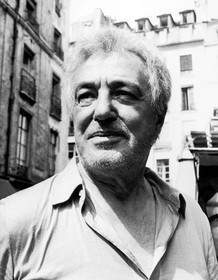
Vittorio De Sica
Made by

Royal Film
Doctor and the Healer Plot Summary
Read the complete plot summary and ending explained for Doctor and the Healer (1957). From turning points to emotional moments, uncover what really happened and why it matters.
In a quiet, remote mountain village in rural southern Italy, the young Dr. Marchetti arrives to practice medicine and brings with him a sense of modern care that contrasts with the town’s old beliefs. Almost immediately, he runs into trouble with the local quack, Don Antonio Locoratolo, a healer who peddles dubious cures and potions to a population both gullible and superstitious. Don Antonio’s aim is not simply to help people; it is to preserve his own livelihood by stoking doubt about real medicine and fostering a dependency on his “expertise.” He sees [Dr. Marchetti] as a threat, a young man who could expose the fraud and undermine the web of fear and faith that keeps his business afloat. To cement this control, Don Antonio engineers a sham crisis: an old man in the village feigns mortal illness and languishes under the young doctor’s treatment, only to be “miraculously cured” during a visit by Don Antonio himself, a staged event designed to prove the necessity of the fraud and cast suspicion on any outside physician.
Amidst these tensions, Pasqua — Dr. Marchetti’s hopeful, if unacknowledged, assistant — harbors a quiet love for him. She watches the power dynamics unfold with a mix of affection and frustration, even as Don Antonio’s intermediary, Scaraffone, swirls around the edges with minor, mischievous plots. Pasqua’s feelings remain unreturned in the physician’s busy orbit, and the nurse’s attempts at sentiment are tangled with professional peril. In a separate misadventure, a love potion given by Scaraffone lands awkwardly, producing stomach pains in Dr. Marchetti and feeding his suspicion that he has been poisoned, a clue that deepens the town’s sense of danger and distrust.
Meanwhile, the drama centers on Mafalda, the mayor’s sister, who has spent years pining for her fiancé, Corrado, who was last heard from fifteen years earlier and is presumed lost on the Eastern Front during the war. For years, Don Antonio has exploited Mafalda’s longing by offering fake fortunes that insist Corrado remains alive, a scam that Mafalda funds with her money and belief. When Mafalda finally places a newspaper ad seeking any news of Corrado, Don Antonio’s manipulation initially seems to falter, but he soon declares that Corrado is dead, prompting Mafalda to denounce him to the police as a fraud. The next day, a telegram arrives promising a reunion at the train station, and the expected moment of joy turns sour as Corrado appears guarded and changed. He speaks of being held near a distant place, disoriented and untrue to the life Mafalda expects, and asks for money before boarding the next train. The reunion does not heal the rift; it exposes how easily deception can masquerade as hope, and Mafalda’s trust is left fractured.
Dr. Marchetti’s pursuit of accountability runs into a bureaucratic wall. He goes to the police to press charges over the supposed poisoning and Mafalda’s denunciation, but the charges do not stick. The town’s legal system proves slow and inert, unable to easily unravel the fraud that has become woven into everyday life, leaving [Dr. Marchetti] to reckon with a landscape where expertise and deceit mingle in equal measure. In a parallel thread, Rosina — Don Antonio’s niece — loves a soldier from a poor family. When she is forbidden from continuing the relationship, she is locked away, an act that pushes her to despair. She attempts an overdose of barbiturates, forcing Don Antonio into a public display of concern and pushing the doctor into a crisis of duty: the very people he must protect are caught in the crossfire between manipulation and care. This crisis forces Don Antonio to confront the consequences of his actions and to rely, out of necessity, on the very physician he would undermine.
As the film builds toward its turning point, the town’s health becomes a subtle battlefield. Dr. Marchetti, motivated by a duty to heal, takes to administering typhoid vaccines to the villagers, a quiet assertion of science, progress, and public welfare in the face of superstition and fraud. The act stands in sharp relief against Don Antonio’s crumbling facade, and the former’s steady, practical care contrasts with the latter’s manipulative theater. The finale leaves Don Antonio boarding a train, his fraudulent world receding into the distance, while Dr. Marchetti’s work persists, a testament to the power of genuine medical care in a community unsure of whom to trust.
Throughout, the film maintains a restrained, observational tone that lets human motives drive a complex drama about belief, fear, and the modern promise of science. The villagers navigate a delicate balance between hope and skepticism, individuals cling to love and loyalty, and the physician’s integrity is tested repeatedly by a system and a set of local dynamics that resist straightforward truth. The result is a nuanced portrait of a society at a crossroads, where the arrival of modern medicine collides with entrenched habits, where the line between healing and deception is thin, and where the courage to vaccinate and protect a community stands as a quiet, enduring statement against manipulation.
Doctor and the Healer Timeline
Follow the complete movie timeline of Doctor and the Healer (1957) with every major event in chronological order. Great for understanding complex plots and story progression.
Dr. Marchetti arrives in the mountain village
A young doctor relocates to a small mountain village in rural southern Italy to begin his practice. He quickly runs into trouble with a local quack, Don Antonio Locoratolo, who views the new physician as a threat. The conflict sets the stage for a clash between legitimate medicine and fraudulent cures.
Don Antonio challenges Marchetti's legitimacy
Don Antonio challenges the new doctor's legitimacy and tries to push him out of town. He continues to prescribe questionable remedies and potions to keep the villagers dependent on his services. The public squabble between the two men grows publicly and privately.
Villagers urged to skip typhoid vaccination
Don Antonio convinces the villagers not to get vaccinated against typhoid fever. He leverages his authority and fear to maintain the belief that his methods are essential. Marchetti finds his medical efforts undermined by the quack's influence.
Old man feigns illness for a staged cure
To prove his indispensability, Don Antonio arranges for an old man to feign illness for several days. The supposed patient appears to improve only during a visit by Don Antonio, a staged miracle that reassures the townsfolk. Marchetti is left looking ineffective in the face of the ruse.
Pasqua's love and a potion backfires
Pasqua, Marchetti's young assistant, has fallen in love with him, though he does not notice. Don Antonio's assistant Scaraffone gives Pasqua a love potion, hoping to complicate the doctor’s life. The potion triggers Marchetti's stomach pains, making him suspect poisoning.
Mafalda longs for Corrado; Don Antonio profits from fortune-telling
Mafalda, the mayor's sister, longs for her fiancé Corrado who vanished fifteen years earlier while fighting on the Eastern Front. Don Antonio uses fraudulent fortune-telling to claim Corrado is alive, raking in payments from her devotion. The ruse sets up a dramatic confrontation later.
Mafalda denounces Don Antonio to the police
Frustrated by the deceit, Mafalda denounces Don Antonio to the police as a fraud. The authorities take the report seriously, but the charges do not stick and the quack remains free for the moment. The town's trust in medicine is further shaken.
Telegram promises Corrado's return
The next day Mafalda receives a telegram claiming Corrado is alive and will meet her at the train station. The rumor stirs renewed hope and complicates her feelings about the quack's deceit. The village waits for a possible reunion.
Corrado returns: a confusing reunion
Corrado appears at the train station, but his memories are muddled. He claims he was captured by bedouins and has been living 40 km away, unhappily married and asking for money. Mafalda is stunned as Corrado boards the next train, leaving more questions than answers.
Marchetti seeks legal redress, but fails to convict
Marchetti goes to the police to pursue justice over the supposed poisoning and Mafalda's denunciation. He learns that the charges against Don Antonio do not hold, allowing the quack to avoid punishment for the moment. The incident underscores the limits of law against clever deceit.
Rosina's heartache leads to crisis
Don Antonio's niece Rosina is in love with a soldier from a poor family, which he forbids. Despondent, she takes an overdose of barbiturates, forcing Don Antonio to publicly seek Dr. Marchetti's help to save his niece's life. The episode exposes the consequences of the quack's manipulation.
Marchetti's vaccination campaign begins
Dr. Marchetti administers typhoid vaccines to the local population, signaling a return to genuine medicine. The vaccination effort counters Don Antonio's fraud and restores trust in science. The village begins to see the value of real medical care.
Don Antonio departs by train
Don Antonio leaves the village by train as Marchetti's vaccine program takes hold. The quack's influence wanes while legitimate medicine secures a foothold. The film closes on a note of moral victory for science over superstition.
Doctor and the Healer Characters
Explore all characters from Doctor and the Healer (1957). Get detailed profiles with their roles, arcs, and key relationships explained.
Dr. Francesco Marchetti (Marcello Mastroianni)
A young, principled doctor who relocates to the rural village to practice medicine and confront Don Antonio’s fraudulent cures. He is earnest and rational, yet must navigate a community driven by superstition and personal loyalties. His commitment to science and patient care drives the plot as he faces threats to his reputation and safety.
Antonio Locoratolo (Don Antonio) (Vittorio De Sica)
A local quack who profits from dubious cures and fortune-telling. He sees Marchetti as a threat to his livelihood and uses manipulation to keep the villagers loyal. His schemes include staging illnesses and exploiting the town’s trust until circumstances push him toward flight.
Mafalda (Marisa Merlini)
The mayor's sister who is deeply in love with her fiancé Corrado. She is duped by Don Antonio's assurances of Corrado's fate and finances his trials with payments. Her revelation of the truth leads to a public denouncement of the fraud, illustrating the dangers of misplaced trust.
Corrado (Alberto Sordi)
Mafalda's fiancé, presumed dead after the Russian front, who returns confused and financially demanding. He confesses he has been living nearby in an unhappy marriage, showing selfish motives and ambiguity about his past. His reappearance strains Mafalda’s ideals and finances.
Pasqua (Gabriella Pallotta)
Dr. Marchetti's young assistant who falls for him. She becomes entangled in Don Antonio’s schemes when a love potion is given to her, but it only causes trouble for Marchetti. Her feelings illuminate the personal costs of the town’s deception and the doctor’s isolation.
Scaraffone (Carlo Taranto)
Don Antonio's scheming assistant who facilitates deceit, including the love potion plot. He represents the practical enabler behind the fraudulent enterprise, aiding the manipulation of others for personal gain.
Rosina (Ilaria Occhini)
Don Antonio's niece who is in love with a poor soldier. When forbidden, she becomes desperate and attempts to seek help, eventually taking an overdose that forces Don Antonio to call for medical aid. Her plight underscores the personal consequences of controlling power.
Umberto (Virgilio Riento)
A town official who embodies local authority and order. His interactions with Mafalda and Don Antonio reflect the friction between traditional governance and fraudulent influence in the village.
Sergeant (Riccardo Garrone)
The local police figure who confronts Don Antonio’s schemes but faces limited success in pressing charges. His role highlights the tension between rumor-driven justice and formal law in a tightly-knit community.
Doctor and the Healer Settings
Learn where and when Doctor and the Healer (1957) takes place. Explore the film’s settings, era, and how they shape the narrative.
Location
small mountain village in rural southern Italy
The story unfolds in a secluded mountain village in rural southern Italy. The tight-knit community is steeped in tradition and superstition, where healers and fortune-tellers wield influence. The surrounding terrain reinforces isolation, amplifying the impact of fraud and the doctor's science-based efforts.
Doctor and the Healer Themes
Discover the main themes in Doctor and the Healer (1957). Analyze the deeper meanings, emotional layers, and social commentary behind the film.
🔬
Science vs Quackery
The film frames a clash between science and superstition. Dr. Marchetti stands for evidence-based medicine, especially vaccination, while Don Antonio peddles dubious cures to maintain control over the village. The villagers' fear and trust are manipulated through rumor and illusion. This theme critiques how communities can be misled when science is perceived as a threat to tradition.
💘
Love and Manipulation
Pasqua's affection for the doctor and Mafalda's longing for Corrado drive subplots rooted in deception. Don Antonio exploits desires through fake fortunes and love schemes, turning personal hope into a tool for control. Romantic entanglements reveal the vulnerable human costs of cynical opportunism. The film shows how affection can be weaponized in a tight-knit community.
🕵️♂️
Fraud and Authority
Don Antonio's fraudulent healings and fortune-telling illustrate how authority can be manufactured for profit. Mafalda's reliance on his prophecies, funded by her loyalty and payments, strengthens his grip on the town. The pursuit by authorities contrasts myth with law, highlighting the tension between superstition and formal justice.
💉
Public Health
The narrative culminates in Dr. Marchetti administering typhoid vaccines to the villagers, signaling a triumph of public health over fraud. The film frames vaccination as a communal good, contrasting medicine grounded in science with the harm caused by charlatans. It emphasizes responsibility to protect the community.

Coming soon on iOS and Android
The Plot Explained Mobile App
From blockbusters to hidden gems — dive into movie stories anytime, anywhere. Save your favorites, discover plots faster, and never miss a twist again.
Sign up to be the first to know when we launch. Your email stays private — always.
Explore the mobile appDoctor and the Healer Spoiler-Free Summary
Discover the spoiler-free summary of Doctor and the Healer (1957). Get a concise overview without any spoilers.
In a secluded mountain valley of southern Italy, life moves to the rhythm of ancient customs and the slow echo of the nearby hills. The village of Pianetta clings to a world where faith, folklore, and a tightly‑knit community define daily existence, and where any hint of the outside seems both a promise and a disruption. The landscape itself feels like a character, its stone houses and winding paths framing a story that balances nostalgia with the inevitable pressure of change.
Enter Dr. Marchetti, a young physician dispatched to bring contemporary medical care to this insulated place. He arrives with the optimism of fresh training, a suitcase of modern instruments, and a quiet determination to improve public health. Yet the very presence of an outsider armed with science immediately highlights a cultural divide, as the doctor must navigate not only the practical challenges of remote practice but also the deep‑seated belief systems that shape the villagers’ trust.
Opposite him stands Don Antonio, the self‑styled healer whose reputation is woven into the fabric of the community. He offers remedies rooted in tradition, and his counsel carries weight that rivals any formal credential. The interaction between the physician’s rational approach and the healer’s intuitive practices generates a compelling, understated tension that drives the film’s core, inviting viewers to contemplate how progress and heritage can coexist—or clash—in a place where every cure is also a story.
Around them move figures like Pasqua, the doctor’s diligent assistant whose quiet affection adds a personal layer to the professional stakes, and other residents whose hopes, fears, and loyalties color the atmosphere. The tone remains restrained and observational, letting the scenery and subtle character dynamics speak louder than overt drama. In this delicate portrait, the clash between modern medicine and entrenched superstition becomes a nuanced exploration of belief, compassion, and the quiet courage required to heal a community hesitant to change.
Movies with Similar Twists and Themes
Uncover films that echo the narrative beats, emotional arcs, or dramatic twists of the one you're exploring. These recommendations are handpicked based on story depth, thematic resonance, and spoiler-worthy moments — perfect for fans who crave more of the same intrigue.


Featured on this page

What's After the Movie?
Not sure whether to stay after the credits? Find out!
Check out our other apps:

SAT Sphere
Build confidence for the Digital SAT.

Mori Atlas
Discover wild places worth protecting.

Luntero
Search smarter for a home in Amsterdam.

Plot Explained
Unravel movie endings and hidden clues.

Pokechamp
Dive into Pokémon data and battle logic.

Driving Theory
Get ready for your European theory test.

Movie Dust
Plan your next cinema trip with ease.

Musemap
Find art and culture as you travel.

Selkobase
Compare credentials before committing.

Local Manual
Turn an unfamiliar country into practical next steps.

Lernavi
Compare school systems before your next move.

GymRoam
Find a workout stop wherever your plans take you.
Explore Our Movie Platform
New Movie Releases (2026)
Famous Movie Actors
Top Film Production Studios
Movie Plot Summaries & Endings
Major Movie Awards & Winners
Best Concert Films & Music Documentaries
Movie Collections and Curated Lists
© 2026 What's After the Movie. All rights reserved.
Privacy Policy