What Is Desecration About?
The premise of Desecration in 341 words, with nothing given away. The full story follows below.
In a town where the rhythm of daily life is punctuated by church bells and whispered prayers, Bobby carries the weight of an early loss that has turned his teenage years into a quiet, restless ache. The death of his mother left a jagged silence in his home, and his grief sharpens every ordinary moment into something that feels both fragile and volatile. As he moves through the corridors of his Catholic school and the solemn halls of his parish, the world around him feels simultaneously familiar and unnervingly oppressive, framing his inner turbulence with a backdrop of ritual and reverence.
At home, Bobby is watched over by a devout grandmother, Grandma Matilda, and a father whose unwavering faith shapes every rule and expectation. Their house feels like a sanctuary turned holding cell, where love is expressed through strict doctrine and every emotion is measured against an invisible moral ledger. The constant presence of religious symbols—crucifixes, statues, rosaries—creates a landscape that both comforts and confines, leaving the young protagonist to navigate a labyrinth of guilt, duty, and unspoken longing.
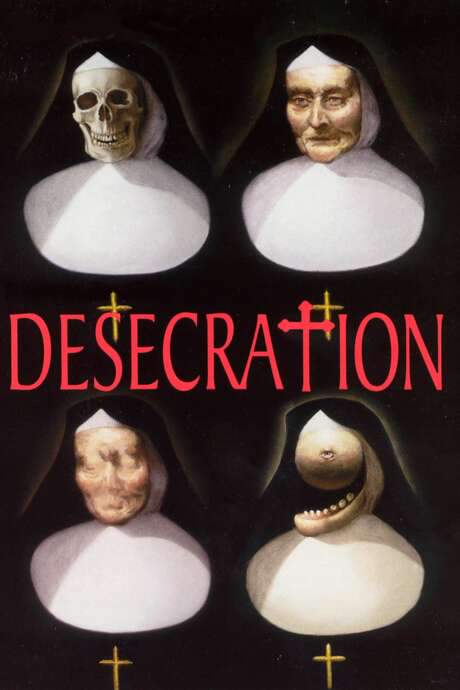
Within the school’s austere walls, authority takes the form of stern nuns and disciplined priests who stress the gravity of sin and the certainty of afterlife judgment. It is here that a moment of uncontrolled anger leads Bobby to inadvertently cause the death of Sister Madeline, a nun whose strictness embodies the very expectations that have long haunted him. That tragic accident shatters the fragile barrier between the material world and something far darker, hinting at forces that begin to echo the boy’s own torment.
The film settles into a suffocating, night‑marish tone, where shadows seem to breathe and familiar symbols take on a sinister hue. Bobby’s journey becomes a descent into an unsettling limbo, where grief, guilt, and the oppressive weight of his upbringing intertwine with whispers of the supernatural. The atmosphere hangs heavy with dread and curiosity, inviting the audience to wonder how far a young soul can be pulled when the line between faith and fear begins to blur.
What Happens in Desecration?
The complete story of Desecration, from the first scene to the last, in 680 words (about 3 minutes). Spoilers throughout. Names in the text link to 3 cast member pages.
Spoilers ahead
A 16-year-old Bobby Rullo is emotionally scarred by the tragic early death of his mother, a wound that leaves him withdrawn, angry, and haunted by grief. Raised in a strict Catholic household, he lives under the watch of his devout grandmother, Grandma Matilda, and a religious father whose rigid beliefs fold into every corner of daily life. The weight of guilt, the pressure to conform, and the sense that every feeling must be measured against an unseen moral code push Bobby toward a fragile edge where adolescence collides with a world of judgment, sin, and eternal consequences. The home environment feels suffocating, and the religious doctrine surrounding him amplifies his confusion as he tries to make sense of his mother’s absence and his own emerging sexuality.
Within the Catholic school he attends, the atmosphere grows even tenser. Surrounded by nuns and priests who emphasize punishment, moral clarity, and the afterlife, Bobby’s mental state becomes increasingly unstable. The daily reminders of sin and consequence—paired with the intimate knowledge that he’s navigating personal loss—push him toward erratic and defiant behavior. The intense scrutiny and the looming specter of divine judgment become constant pressures as he grapples with frightening dreams and waking visions that blur the line between reality and nightmare. The classroom becomes a theater of anxiety where authority figures, even when acting with care, stand as traces of a system that seems designed to test his limits.
The pivotal moment arrives when Bobby, overwhelmed by anger and a breaking point, accidentally causes the death of a stern nun, Sister Madeline. This tragedy is presented not merely as a consequence of misbehavior but as a catalyst that tears open the boundary between the physical world and something far more sinister. In the wake of that incident, a chill runs through the story as Bobby’s surroundings begin to respond to a shift he cannot control. The nun’s death marks a turning point that signals the intrusion of a supernatural dimension into Bobby’s already fractured psyche.
From that moment, Bobby is haunted by increasingly disturbing phenomena that seem aimed at him alone. Grotesque religious imagery comes to life, statues bleed, crucifixes invert, and the walls of his Catholic environment throb with an unsettling, malignant energy. The once-familiar spaces—churches, classrooms, and homes—morph into spaces where fear and the supernatural press in from every corner. The world begins to feel like a dream from which there is no waking, as he slips into a nightmarish limbo that exists somewhere between the living and a hellish realm.
As the boundaries between dream and reality blur, Bobby encounters visions of Hell: landscapes of fire, torment, and the perpetual suffering of the damned. The weight of his mother’s absence, the guilt he carries for the nun’s death, and the rigid, repressive backdrop of his upbringing converge into a single, overwhelming struggle. The oppressive atmosphere of his religious upbringing intensifies his internal battles, turning guilt into a driving force that seems to push him toward an abyss rather than toward redemption. The film depicts his psyche tearing at the seams as he confronts not only external demonic entities and terrifying sights but also the deep, unresolved grief that has taken up residence inside him.
In the climactic arc, Bobby is pulled deeper into the infernal realm as the fighting within him intensifies. He must face a combination of supernatural forces and the internal demons spawned by his traumatic experiences and oppressive environment. The story traces his gradual descent and the moment-by-moment test of his will as he wrestles with guilt, fear, and the enduring ache of loss. It is a journey that asks what it means to confront one’s own past, to stand up to the guilt that clings to the soul, and to seek some form of resolution in a landscape where faith, fear, and the human heart collide. The ending lingers on the tension between punishment and forgiveness, the pull of darkness and the possibility of light, leaving viewers to reflect on how a young life can be shaped—or shattered—by memory, faith, and the shadows that dwell within.
Desecration Timeline: Every Key Event in Order
11 key events in the order they happen, from “Mother's death and the seed of grief” to “Ending: fate left unresolved”. 11 events name a place, across 9 locations.
- 1
Mother's death and the seed of grief
Bobby, a 16-year-old boy, is emotionally scarred by the early death of his mother. He grows up in a strict Catholic household with his religious father and devout grandmother Matilda, a climate of judgment that suffocates him. The loss plants deep guilt, confusion, and mounting anger that color his adolescence.
When:Childhood Where:Family home
- 2
Catholic school and the weight of sin
Enrolled in a Catholic school, Bobby is constantly reminded of sin, punishment, and divine judgment. The nuns and priests are both authority figures and sources of his deepest anxieties about morality and death. The education system reinforces the oppressive climate he already feels at home.
When:School years Where:Catholic school
- 3
Adolescence, sexuality, and rebellion
As he navigates adolescence, Bobby struggles with emerging sexuality and rebellious impulses under a repressive religious regime. Guilt and confusion intensify as he questions teachings that define his desires as sins. The conflict drives him toward secrecy and defiance.
When:Adolescence Where:Home and school
- 4
Rigid family authority and Matilda's faith
Grandmother Matilda's unwavering piety, coupled with his father's religious expectations, creates a suffocating atmosphere. Bobby feels watched, judged, and constrained by laws of morality that leave little room for personal grief or questioning. The weight of belief becomes a daily pressure.
When:Throughout childhood and adolescence Where:Home
- 5
The accident: Sister Madeline dies
During a moment of explosive anger at the Catholic school, Bobby unintentionally causes Sister Madeline's death, an act that may reflect a psychotic break. The incident shatters any sense of safety and marks a decisive turning point in his life. Guilt floods him as he realizes how fragile control over his own emotions can be.
When:Moment of confrontation Where:Catholic school
- 6
The veil tears: a supernatural catalyst
Sister Madeline's death acts as a supernatural catalyst tearing open the veil between the physical and spiritual worlds. Bobby is consumed by overwhelming guilt and terror at the implications of punishment, sin, and the afterlife. The tragedy marks the start of a brutal shift from internal turmoil to external supernatural threat.
When:Immediately after the incident Where:Catholic school
- 7
First signs of haunting
In the days that follow, Bobby experiences disturbing supernatural phenomena that seem to target him specifically. He encounters demonic apparitions and wakes from nightmare visions that blur the line between reality and nightmare. The haunting escalates beyond fear into a struggle to survive the unseen forces.
When:Post-incident period Where:Home, school, dreams
- 8
Religious imagery takes life
Grotesque religious imagery materializes around him: statues reportedly weep blood, crucifixes turn upside down, and the walls seem to pulse with evil energy. These manifestations intensify his paranoia and sense that the sacred world has turned hostile. His environment—school and home—becomes a theater of dread.
When:Following the incident Where:Catholic environment (school and home)
- 9
Descent into limbo and hell
The boundaries between the living world and a hellish realm dissolve as Bobby slips into a limbo-like state. He experiences vivid visions of Hell—fire, torment, and the damned—felt as if they could spill into the ordinary world. Dreams and waking thoughts fuse into a single terrifying landscape.
When:Post-incident period Where:Between dreams and waking life
- 10
Climax: facing demons and guilt
In the climactic sequence, Bobby is drawn deeper into the infernal realm while confronting both external demonic forces and the internal demons of guilt, grief, and traumatic upbringing. His will is tested as the line between salvation and damnation grows dangerously thin. The confrontation leaves his future uncertain and transformed.
When:Climax Where:Infernal realm / Hell
- 11
Ending: fate left unresolved
The narrative leaves Bobby at the edge of the infernal realm, suggesting his fate and transformation are ongoing rather than resolved. He remains caught between memories of his mother, the weight of religious law, and the encroaching supernatural forces. The ending emphasizes the lasting impact of the trauma and oppression on his psyche.
When:Ending Where:Between realms
Who Are the Main Characters in Desecration?
6 characters, among them Bobby Rullo (Danny Lopes), Sister Madeline (Christie Sanford) and Grandma Matilda (Irma St. Paule): who each one is and the part they play in the story. Every profile links to the actor’s page.
- BR
Bobby Rullo (Danny Lopes)
Played by Danny Lopes
A 16-year-old boy plagued by the death of his mother and a suffocating, judgmental religious environment. He is withdrawn, angry, and increasingly reckless as he grapples with guilt, grief, and emerging sexuality. His volatile state culminates in a drastic act at school that triggers a cascade of supernatural horrors.
- 🧠 Trauma
- 😡 Anger
- 💭 Confusion
- SM
Sister Madeline (Christie Sanford)
Played by Christie Sanford
A stern nun whose rigid discipline embodies the school’s moral authority. Her death marks a turning point in the story, tearing open the boundary between the physical and spiritual realms. She represents the oppressive weight of religious judgment that pervades Bobby’s environment.
- ⛪ Authority
- 😨 Intimidation
- GM
Grandma Matilda (Irma St. Paule)
Played by Irma St. Paule
A devout Catholic grandmother who reinforces traditional beliefs and the sanctity of rules. She embodies the family’s piety and the pressure to conform, adding to Bobby’s sense of guilt and confinement. Her presence both rationalizes and intensifies the house’s moral code.
- 🕯️ Faith
- 🏠 Family expectations
- RM
Reverend Mother (Ruth Ray)
Played by Ruth Ray
An ecclesiastical authority figure who oversees the school and enforces doctrine. She personifies the institutional pressure of faith-based discipline, contributing to Bobby’s fear of judgment and the sense that punishment is a constant possibility.
- 🕊️ Authority
- 🙏 Faith
- FO
Father O'Leary (Gene Burke)
Played by Gene Burke
A priest who embodies the church’s moral surveillance at the school. His presence reinforces the idea that sin is ever-present and redemption is conditional, escalating Bobby’s anxiety and sense of persecution.
- ⛪ Clergy
- 🛡️ Judgment
- MR
Mr. Rullo (Salvatore Paul Piro)
Played by Salvatore Paul Piro
Bobby’s religious father who participates in the household’s strict regime. His expectations and punitive stance contribute to Bobby’s feelings of confinement, guilt, and conflict with his own identity.
- 🏠 Father figure
- 🗡️ Control
Where and When Is Desecration Set?
Desecration is set in Catholic family home and Catholic school. Here is why the place matters to the story.
Where
Catholic family home, Catholic school
The story unfolds mainly within a rigid Catholic household where Bobby's father and grandmother enforce strict doctrine. The home environment is suffocating, built on guilt, obedience, and ritual. Bobby is also enrolled in a Catholic school where nuns and priests oversee behavior and morality, intensifying his sense of sin and conflict.
- 🏠 Family life
- ⛪ Religion
What Are the Themes of Desecration?
3 ideas the story keeps returning to, among them Religious Oppression, Grief & Guilt and Reality vs Nightmares.
-
01
Religious Oppression
Religious doctrine governs every aspect of Bobby's life, blurring lines between care and punishment. The film frames faith as a coercive force that weaponizes guilt to control adolescent desire and rebellion. The oppressive atmosphere drives Bobby toward inner turmoil and drastic actions.
-
02
Grief & Guilt
Bobby's mother's death leaves a wound that religion amplifies rather than heals. His grief intertwines with shame about his developing sexuality, fueling anger, withdrawal, and self-punishment. The story follows how unresolved mourning shapes his behavior and worldview.
-
03
Reality vs Nightmares
The boundary between the real world and terrifying visions dissolves as Bobby's mental state fractures. Supernatural encounters—demonic visions, eerie reactions of religious symbols, and hellish imagery—mirror his internal fear and guilt. The film uses dreamlike sequences to heighten dread and blur the line between conscience and consciousness.
What Kind of Film Is Desecration?
Dark in tone, with steady pacing and a moderate story, going by the plot summary.
- Tone
- Dark
- Pacing
- Steady
- Story
- Moderate
- Intensity
- High
- Ending
- Ambiguous
An intensely dark and oppressive supernatural horror film that follows a traumatized teenager's steady descent into a nightmarish hellscape, fueled by grief, rigid religious guilt, and haunting psychological torment.
- oppressive
- claustrophobic
- nightmarish
- guilt-ridden
- anxious
- macabre
- catholic guilt
- grief and loss
- descent into hell
- supernatural horror
Content notes: death of a parent, accidental death, religious trauma, demonic imagery, psychological torment.
Quiz
How well do you remember Desecration? Test yourself on the story.