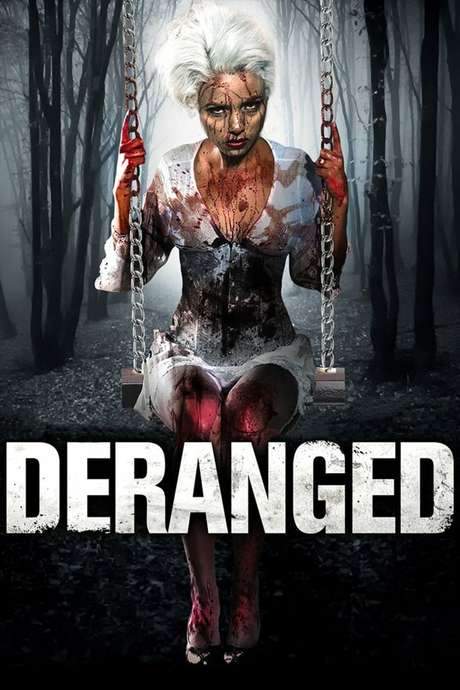
Deranged 2012

Directed by

Neil Jones
Made by

Burn Hand Film Productions
Where to Watch Deranged
See current US streaming, rental, and purchase options for Deranged (2012) via JustWatch.

The Roku Channel
HD
Tubi TV
SD
Google Play Movies
SD
YouTube
SD Streaming availability powered by 
Deranged Plot Summary
Read the complete plot summary and ending explained for Deranged (2012). From turning points to emotional moments, uncover what really happened and why it matters.
In a tense national crisis, the life of Jae-hyuk, a former professor with a PhD in biochemistry who now works as a pharmaceutical sales representative after a devastating financial loss, spirals into a race against time. His brother Jae-pil, a detective who carries guilt over how he squandered Jae-hyuk’s savings, teams up with him as a deadly outbreak unfolds. Across Seoul and beyond, a string of mysterious deaths tied to a brutal hunger and thirst drives the story forward as the Han River becomes a haunting backdrop for a far-reaching biological nightmare: a fungus-like parasite named Yeongasi that can manipulate the human brain.
The trouble begins with the discovery of bodies washing up along rivers nationwide. Victims appear malnourished and incongruously gaunt, yet their bodies surface with no obvious external injuries—until the parasitic worms are seen, sometimes swimming near the corpses, revealing a horrifying mutation that allows these horsehair-like organisms to infect humans. As the Ministry of Health identifies the culprits, the public gaze shifts to a potential solution in the form of a drug called Windazole, rumored to cure those infected. However, the use of any anthelmintic prescription proves perilous, intensifying pain and ultimately leading to death for many who seek relief.
In the scramble to save lives, the government appeals to ChoA Pharmaceuticals, the company at the center of Windazole’s creation. Yet the tale of the medicine is tangled in corporate mismanagement since the company’s acquisition by an investment group. Officials demand transparency about the drug’s composition, but the CEO resists, citing stockholders who refuse to disclose the recipe. As the outbreak worsens—more people rush to hospitals, pharmacies overflow with desperate customers, and rivers become seemingly endless corridors of panic—the investigation digs deeper into the seed of the crisis.
A pivotal shift arrives when Jae-pil uncovers evidence pointing to the workers at ChoA who engineered the crisis as a calculated stock manipulation scheme. He tracks down a former member of the research team and forces a confession: years earlier, ChoA’s researchers studied Yeongasi to unlock the protein that could control the brain, hoping to unlock cures for diseases like Alzheimer’s. They developed a mutant version using mammals as hosts, but the company’s sale scattered the team. Disaffected researchers reunite to unleash the parasite, artificially inflating demand by staging a public display of treatment, while stock is bought up and profits soar. The plan—to store thousands of doses and pressure governments into accepting windfall deals—works until a confrontation in a hidden storage facility.
When Jae-hyuk and Jae-pil finally secure access to the remaining drugs, a fatal turn occurs: the door to the storage is sealed and the building is set ablaze. The two survive, but their informant is murdered by a mysterious figure who later reveals himself to be the head of the research team in disguise, exposing the core betrayal. With the drug burned and the conspirators scattered overseas, the Prime Minister confronts an almost unstoppable temptation: a government purchase of ChoA that would reveal the drug’s recipe and allow mass production. The offer, priced at an exorbitant sum, is rejected by most officials, yet perilous pressures linger.
In the midst of the chaos, Jae-hyuk’s scientific instincts kick in. He identifies that, even without Windazole itself, a drug containing the same active ingredient could treat the infected. This realization prompts a broader collective effort: pharmaceutical companies rush to synthesize an effective remedy, leveraging chemistry to combat a crisis that had seemed almost unsalvageable. The country begins a slow transition from panic to a coordinated medical response as new treatments emerge and save countless lives.
The film closes on a personal note. Jae-hyuk and his family find a moment of respite at an amusement park, where he muses about vacationing overseas—an attempt to escape a world where Yeongasi might surface anywhere. His wife teases whether distant countries harbor the same threat, and he offers a tense, cautious smile. The moment is shattered by a sudden focus on a dead body floating in New York Harbor, a chilling reminder that the consequences of the outbreak may extend beyond national borders and that the fight against Yeongasi could be far from over.
The production features a supporting cast that lends additional texture to the story, including Anthony Craig Fairbrass and Silvia Victoria Broom in secondary roles, enriching the human dimension of a thriller built around fear, ethics, and resilience. The narrative remains grounded in its neutral, investigative tone, presenting a multilayered portrait of a society pushed to the brink by a deliberate manipulation of science and medicine, and it ultimately centers on the ingenuity of individuals who refuse to surrender to a hidden, calculated catastrophe.
Deranged Timeline
Follow the complete movie timeline of Deranged (2012) with every major event in chronological order. Great for understanding complex plots and story progression.
Jae-hyuk's downturn and new path
Jae-hyuk, once a biochemistry professor with a doctorate, is now a pharmaceutical sales rep after losing his savings and job in a bad stock investment advised by his younger brother, Jae-pil. He struggles to support his family while rebuilding his life.
First corpses in the Han River
Mysterious dead bodies begin to surface in the Han River, shocking the public and drawing the police into a growing puzzle. The initial signs hint at a link to a dangerous infection rather than a simple accident.
Mutant Yeongasi identified
Authorities identify the killer as a parasitic worm, Yeongasi, that can hijack the brain. When mature, the worms trigger extreme hunger and thirst, driving victims to jump into water to release them.
Public health alarm and mass hospital rush
As news spreads, the Ministry of Health issues a public warning and hospitals become crowded with people showing hunger and thirst symptoms. Pharmacies flood with customers seeking over-the-counter anti-parasitic drugs, though many are misled by hype and panic.
Anthelmintics fail, Windazole emerges
Anthelmintics bring agony instead of relief, and a single patient claims Windazole cured him, sparking a national frenzy. The drug becomes scarce as pharmacies struggle to keep up with demand.
Government pressure on ChoA Pharmaceuticals
ChoA Pharmaceuticals, under new owners, cannot meet demand due to mismanaged production equipment. The government holds public hearings demanding Windazole's chemical composition, but the CEO asserts stockholders won't disclose it without legal compulsion.
Jae-pil uncovers company conspiracy
Jae-pil uncovers evidence that ChoA workers orchestrated the outbreak to inflate stock prices and stockpile a treatment. A former researcher confesses the backstory: the team discovered Yeongasi's brain-control protein and experimented with mammal hosts before the company was sold.
Storage facility confrontation
The two brothers locate the storage facility where the remaining drugs were kept. A mysterious arson locks them in, but they escape while a trusted informant—the researcher who helped them—is murdered. The explosive revelation confirms the plan was premeditated and tied to the CEO.
Head of the team exposed
Investigators reveal the murdered researcher was the head of the original team and a close associate of the CEO. With the survivors scattering abroad, the conspirators' long game begins to crumble.
CEO's bid to buy the government
Facing disaster, the CEO proposes a government buyout to access Windazole's recipe, offering an unrealistically high price of 5 billion won. Most officials balk, but the Prime Minister is ready to sign before the truth of the scam comes to light.
Scam exposed and arrest
In a turn of fate, Jae-hyuk realizes that by synthesizing a drug using the same active ingredient as Windazole, he can save his family even without Windazole itself. Others join the effort to develop a cure under mounting public pressure.
Industry pivots to save the people
Pharmaceutical companies race to produce an effective treatment for Yeongasi and avert a nationwide catastrophe. The crisis spurs collaboration and rapid drug development that meets the urgent demand.
Family moment at the amusement park
The family sits together at an amusement park as a moment of relief before uncertainty returns. They discuss a possible overseas vacation, with the father joking about finding drugstores abroad.
New York Harbor warning
The film ends with a grim image—a body floating in New York Harbor—hinting that Yeongasi could spread beyond Korea. The closing shot leaves the threat unresolved and the world watching.
Deranged Characters
Explore all characters from Deranged (2012). Get detailed profiles with their roles, arcs, and key relationships explained.
Jae-hyuk
A former professor with a PhD in biochemistry who becomes a pharmaceutical sales representative after a financial ruin caused by a bad stock investment orchestrated by his brother. He remains rational and fiercely protective of his family, using his scientific expertise to understand Yeongasi and to help devise a potential treatment when official drugs fail. His journey pits intellectual rigor against corporate scheming within a broader public health crisis.
Jae-pil
Jae-hyuk's brother, a detective haunted by guilt over wasting his sibling's money. He is driven by duty to protect his family and relentlessly pursues the truth, teaming with Jae-hyuk to unravel the conspiracy behind the outbreak. His investigation and resolve push the story toward its climactic revelations.
ChoA Pharmaceuticals CEO
A ruthless corporate leader who orchestrates stock manipulation and the concealment of data to push a lucrative buyout. His greed and manipulation threaten public safety as the quest to control Windazole's composition unfolds. He is ultimately exposed and arrested, symbolizing corporate accountability in the crisis.
Head of Research Team (ChoA)
Head of the team that developed the mutant Yeongasi and pursued profit over safety. The head's actions drive the plot toward a premeditated fraud, culminating in murder within the research circle. The revelations expose the systemic failures that allowed the scheme to unfold.
Deranged Settings
Learn where and when Deranged (2012) takes place. Explore the film’s settings, era, and how they shape the narrative.
Time period
Present day
The story unfolds in contemporary times, with a modern pharmaceutical industry, stock markets, and media that shape public perception. Characters navigate rapid information flow, regulatory pressures, and urgent health warnings. The time frame underscores real-world scientific capabilities and governance tensions between safety and profit. The events mirror current concerns about how societies respond to emerging biological threats.
Location
Seoul, Han River, New York Harbor
Seoul, South Korea serves as the central setting where the outbreak unfolds within a bustling modern metropolis. The Han River and other major waterways become focal points as the parasite spreads, drawing the public, hospitals, and authorities into a race against time. The crisis expands across cities and rivers nationwide, reflecting systemic vulnerability in public health and governance. The ending scene shifts to New York Harbor, signaling a global dimension to the crisis.
Deranged Themes
Discover the main themes in Deranged (2012). Analyze the deeper meanings, emotional layers, and social commentary behind the film.
🧬
Biotech Ethics
Biotech research raises questions about responsibility when science outpaces regulation. Decisions about disclosure, profit, and patient safety sit at the heart of the plot. Secrecy around drug development can endanger the public, especially when corporate interests override transparency. The narrative argues that ethical stewardship is essential to ensure science serves humanity, not shareholders.
💰
Corporate Greed
Stock manipulation and profit-driven motives drive the crisis as the company pursues a buyout and hides crucial data. The CEO's plan to monetize the drug's active ingredient leads to public harm and erodes trust in institutions. Government and media pressure prove insufficient against a powerful corporate machine until investigators expose the scheme. The film critiques how greed can weaponize scientific progress for financial gain.
🌍
Public Health
Public health systems are overwhelmed as patients flood clinics with hunger and thirst symptoms caused by Yeongasi. The shortage of effective treatments tests hospitals, regulators, and public patience. The crisis reveals governance flaws and highlights the need for rapid, ethical decision-making. The story ends on a note of collective action, with new treatments emerging to save lives.

Coming soon on iOS and Android
The Plot Explained Mobile App
From blockbusters to hidden gems — dive into movie stories anytime, anywhere. Save your favorites, discover plots faster, and never miss a twist again.
Sign up to be the first to know when we launch. Your email stays private — always.
Explore the mobile appDeranged Spoiler-Free Summary
Discover the spoiler-free summary of Deranged (2012). Get a concise overview without any spoilers.
In the sun‑drenched hills of rural Spain, a secluded country house becomes the backdrop for a weekend that promises laughter, love, and unforgettable memories. The bride‑to‑be gathers three close friends for what should be a carefree bachelorette celebration, hoping the rustic charm and distant scenery will offer the perfect escape from the bustle of everyday life. The house, perched amid olive groves and winding stone paths, exudes a timeless, almost cinematic quiet that invites both relaxation and a sense of being cut off from the world beyond.
Yet the serenity of the retreat carries an undercurrent of unease. As night falls and the wind whispers through cracked windows, the friends find themselves navigating a delicate balance between revelry and the subtle, mounting tension that the remote setting imposes. The film’s tone is taut and atmospheric, blending moments of intimate camaraderie with a growing feeling that the idyllic hideaway might conceal something far more unsettling than a simple weekend getaway.
The story unfolds through the lens of these four women, each bringing her own personality, histories, and unspoken fears to the mix. Their dynamics—playful banter, lingering doubts, and the quiet support they offer one another—form the emotional core of the narrative. As the house’s isolated ambience presses in, the audience is invited to share in the characters’ anticipation, wondering how the promised celebration will evolve when the ordinary slips into the unknown.
Featured on this page

What's After the Movie?
Not sure whether to stay after the credits? Find out!
Check out our other apps:

SAT Sphere
Build confidence for the Digital SAT.

Mori Atlas
Discover wild places worth protecting.

Luntero
Search smarter for a home in Amsterdam.

Plot Explained
Unravel movie endings and hidden clues.

Pokechamp
Dive into Pokémon data and battle logic.

Driving Theory
Get ready for your European theory test.

Movie Dust
Plan your next cinema trip with ease.

Musemap
Find art and culture as you travel.

Selkobase
Compare credentials before committing.

Local Manual
Turn an unfamiliar country into practical next steps.

Lernavi
Compare school systems before your next move.

GymRoam
Find a workout stop wherever your plans take you.
Explore Our Movie Platform
New Movie Releases (2026)
Famous Movie Actors
Top Film Production Studios
Movie Plot Summaries & Endings
Major Movie Awards & Winners
Best Concert Films & Music Documentaries
Movie Collections and Curated Lists
© 2026 What's After the Movie. All rights reserved.
Privacy Policy