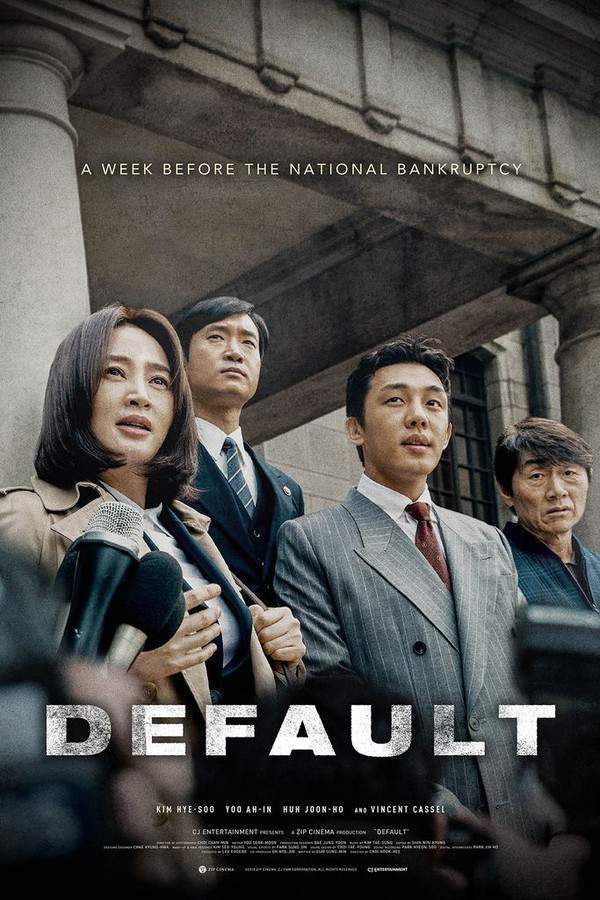
Default 2018

Directed by

Kook-Hee Choi
Made by

CJ Entertainment
Where to Watch Default
See current US streaming, rental, and purchase options for Default (2018) via JustWatch.

Rakuten Viki
HD
Amazon Video
SD
Google Play Movies
SD
YouTube
SD Streaming availability powered by 
Default Plot Summary
Read the complete plot summary and ending explained for Default (2018). From turning points to emotional moments, uncover what really happened and why it matters.
Default dramatizes the behind-the-scenes story of the IMF negotiations during the 1997 financial crisis through three parallel stories, offering a layered look at how a national emergency unfolds from different angles.
In one thread, gap between enterprise and economy is laid bare through Gap-su, a factory owner who wins a contract to supply metal bowls to a major department store. The store pays him with a promissory note, a choice that seems ordinary at first but bricks the wall of risk as the department store later collapses. When the retailer goes bankrupt, Gap-su finds himself short of funds to pay his own suppliers, a sudden squeeze that echoes through the supply chain and reverberates in the lives of everyone who depends on credit and timely payments. The tension isn’t just financial; it becomes a test of trust and resilience as Gap-su navigates a market where one failed deal can ripple into missed payments, halted production, and a fragile future for his business.
In a second thread, Jung-hak, a young financial analyst, watches the crisis unfold from the opposite side of the glass—the world of markets and bets. Yoo Ah-in plays Jung-hak, who radios stories of distress among families and communities being squeezed by rising costs and falling assets. The broadcasts describe households forced to sell their homes below market value to cover mounting bills from a wave of small-business bankruptcies. Seizing the moment, Jung-hak launches his own investment fund with the aim of betting against the Korean economy, turning fear and uncertainty into calculated risk. The narrative tracks how his strategy mirrors a larger shift in appetite for risk, lending a cold, economic logic to a situation that is anything but cold in real life, and it asks hard questions about who profits when a country teeters on the brink.
A third thread centers on Si-hyun, the head of monetary policy, as the crisis accelerates toward a cliff edge. Si-hyun, Hye-su Kim, becomes a key voice in the government’s response as a brutal report lands on the desk of Korea’s central authorities. The document warns that foreign reserves are vanishing and that the won’s exchange rate—artificially fixed to the U.S. dollar—could be exposed to collapse within a week. This revelation triggers emergency meetings among top officials who must steer the economy away from a total meltdown. The arc paints a portrait of the political and bureaucratic maneuvers behind the scenes: debates, disagreements, and the pressure to act quickly when every decision has the potential to alter the course of thousands of lives.
Together, these three stories offer a panoramic view of the 1997 crisis. Si-hyun’s perspective highlights the government’s response and the pressure to preserve financial stability; Jung-hak’s lens shows the market’s cold calculus and how macroeconomic moves translate into personal gambles; Gap-su’s experience represents the millions of ordinary business owners who found themselves suddenly exposed to risk through a single instrument that seemed secure at the outset. The film doesn’t shy away from the human cost: families struggling to keep roofs over their heads, people seeking solace in soju amid financial strain, and the despair that tragedy can drive. The emotional texture sits alongside the technical details, creating a portrait of a country under stress where policy debates, personal decisions, and marketplace dynamics intersect in ways that redefine what it means to survive an economic crisis.
In the end, Default presents a sober, multi-faceted meditation on a defining moment in modern economic history. It emphasizes that behind every headline about IMF negotiations and currency stabilization, there are real people making decisions under pressure, watching their futures tremble on the edge of a difficult doubt, and moving forward with a mix of hope, fear, and stubborn resilience.
Default Timeline
Follow the complete movie timeline of Default (2018) with every major event in chronological order. Great for understanding complex plots and story progression.
Gap-su accepts promissory note
Factory owner Gap-su signs off on a promissory note from a department store, hoping it will secure payment. By accepting the note instead of cash, he preserves cash flow in the short term but exposes himself to the risk that the store may not pay. This setup foreshadows the liquidity crunch that follows when the retailer goes bankrupt.
Department store bankruptcy leaves Gap-su unpaid
The department store declares bankruptcy, rendering the promissory note worthless. Gap-su learns he won't receive the funds he counted on. The unpaid debt strains his ability to pay suppliers, threatening his own business.
Jung-hak hears distress stories and acts
A young analyst Jung-hak hears radio reports about families in distress. He decides to take advantage of the downturn by starting an investment fund to bet against the economy. This marks the entry of the crisis into the financial markets and a personal trajectory of profiteering.
Jung-hak launches the investment fund
He mobilizes capital and a plan to profit from the anticipated collapse. The fund bets against the Korean economy, highlighting the moral ambiguities of profiteering during a crisis. This thread links personal ambition with macroeconomic risk.
Si-hyun's forecast warns of dwindling foreign reserves
Si-hyun, the central bank official, prepares a report foretelling that Korea will run out of foreign reserves. The report indicates an imminent threat to the won's fixed exchange rate to the US dollar. Policymakers confront the gravity of the impending balance of payments crisis.
Emergency government meeting
An emergency meeting is convened with government leaders, central bankers, and policy minds. They discuss the looming collapse and the steps needed to avert disaster. The scene highlights high-stakes decision-making under pressure.
Defensive policy actions to protect the won
Officials implement rapid monetary policy actions aimed at defending the peg and calming markets. These measures set the stage for broader stabilization efforts and international engagement. The actions reveal the tension between keeping the currency afloat and addressing underlying debt and confidence.
Families forced to sell homes
As the crisis deepens, families are forced to sell homes below market value to cover bills. This illustrates the human impact behind the macroeconomic turmoil. The strain on everyday life pushes people toward desperate financial decisions.
Societal despair and coping
The narrative shows people drowning their sorrows in soju as unemployment and debt weigh on them. This personal coping mechanism reveals the social pain that accompanies the economic collapse. The film uses these moments to emphasize the emotional toll of the crisis.
Spread of financial distress
The downturn spreads through neighborhoods as more households lose income. Families struggle to keep roofs over their heads and maintain basic living standards. This widens the scope from a few cases to a nationwide mood of anxiety.
Despair leads to tragic consequences
The film portrays the ultimate despair as some individuals take drastic actions amid the crisis. Suicides underline the severity of economic trauma faced by ordinary people. These scenes anchor the crisis in human tragedy.
IMF negotiations begin
Against the backdrop of domestic turmoil, IMF negotiations begin as Korea seeks international support. Policy reforms and financial assistance are discussed as essential to stabilizing the economy. The timeline connects domestic decisions with global financial rescue efforts.
Default Characters
Explore all characters from Default (2018). Get detailed profiles with their roles, arcs, and key relationships explained.
Gap-su
Gap-su is a factory owner who wins a contract with a big department store but accepts payment in a promissory note. When the store goes bankrupt, he is left without funds to pay his suppliers, highlighting how small businesses bear the first brunt of systemic financial distress. His arc reflects vulnerability, stubborn optimism, and the fragility of cash flow in crises.
Jung-hak (Ah In Yoo)
Jung-hak is a young, ambitious financial analyst who hears radio stories about distressed families during the crisis. He launches his own investment fund to bet against the Korean economy, illustrating how fear and opportunity collide in turbulent markets. His pursuit of profit exposes a moral tension at the heart of speculative finance.
Si-hyun (Kim Hye-soo)
Si-hyun is the governor's head of monetary policy who warns that Korea will run out of foreign reserves. Her report foreshadows the potential collapse of the won's fixed exchange rate and triggers high-stakes government action. She embodies the analytical and political pressures that shape crisis management.
Michel Camdessus
Michel Camdessus, portrayed by Vincent Cassel, represents the IMF's global perspective on Korea's crisis, surrounding negotiations and bailout conditions. His presence anchors the international dimension of the crisis and the external pressures on Korean policy decisions.
Default Settings
Learn where and when Default (2018) takes place. Explore the film’s settings, era, and how they shape the narrative.
Time period
1997
The film unfolds at the height of Korea's 1997 financial crisis, when foreign reserves dwindled and the won faced devaluation pressure. IMF negotiations and swift policy responses shaped a tense, unprecedented period for the country. Personal stories of loss, home sales, and despair anchor the era in human terms.
Location
South Korea
Set in South Korea during the 1997 financial crisis, the story moves through commercial hubs, government offices, and banking corridors. It references a department store contract, a central bank emergency meeting, and the everyday fear of debt and unemployment. The setting captures the national mood of rapid economic upheaval and social strain.
Default Themes
Discover the main themes in Default (2018). Analyze the deeper meanings, emotional layers, and social commentary behind the film.
💹
Economic Downturn
Three parallel stories reveal the fragility of a modern economy under crisis. Gap-su's factory and the ripple effects of a bankrupt department store illustrate how liquidity problems cascade through supply chains. Jung-hak's profit-seeking fund shows how speculation can flourish amid fear. Si-hyun's policy pressures and looming reserve shortfalls highlight the high-stakes decisions that determine national fate.
🏛️
Policy Response
The central bank and government scramble to prevent default and preserve the currency. An emergency meeting of top officials is depicted, illustrating how technical policy choices translate into real-world consequences. The film emphasizes the tension between stabilizing markets and protecting ordinary people from the fallout of crisis.
🕯️
Human Cost
Beyond numbers, the crisis consumes homes, livelihoods, and dignity. Families lose assets as the economy contracts, and some grapple with despair to the point of tragedy. The narrative ties macro decisions to intimate stories of hardship, addiction, and the search for hope amid ruin.

Coming soon on iOS and Android
The Plot Explained Mobile App
From blockbusters to hidden gems — dive into movie stories anytime, anywhere. Save your favorites, discover plots faster, and never miss a twist again.
Sign up to be the first to know when we launch. Your email stays private — always.
Explore the mobile appDefault Spoiler-Free Summary
Discover the spoiler-free summary of Default (2018). Get a concise overview without any spoilers.
In the late‑1990s Seoul, the rhythm of daily life is overlaid with a palpable sense of unease. Markets wobble, headlines whisper of looming defaults, and the nation teeters on the brink of a financial reckoning that will draw the attention of the International Monetary Fund. The city’s neon lights and bustling factories mask a fragile economy where every credit line and exchange rate feels like a tightrope walk, and the atmosphere pulses with a mixture of anxiety and restless ambition.
Si‑hyun, the newly appointed head of monetary policy, finds herself at the epicenter of the government’s response. A recent, stark report lands on her desk, warning that foreign reserves are dwindling and the won’s peg to the dollar could crack at any moment. Charged with navigating bureaucratic squabbles and making split‑second decisions, she embodies the weight of a country’s hope and the cold calculus that underpins high‑stakes policy making.
Jung‑hak, a young analyst with a keen eye for market signals, watches the crisis unfold from a different angle. As families grapple with rising costs and businesses teeter, he begins to assemble a quiet network of investors, ready to place calculated bets against the swelling tide. His analytical mind turns the nation’s turmoil into a strategic puzzle, highlighting the stark contrast between personal gain and collective hardship.
Gap‑su, a modest factory owner, represents the countless entrepreneurs whose livelihoods hinge on single contracts. When a prestigious department store offers him a lucrative order—paid with a seemingly ordinary promissory note—he steps into a web of credit that could either lift his business or unravel it completely. His story grounds the macro‑economic drama in the lived experience of ordinary people, illustrating how one broken promise can reverberate through families, suppliers, and the very fabric of a community.
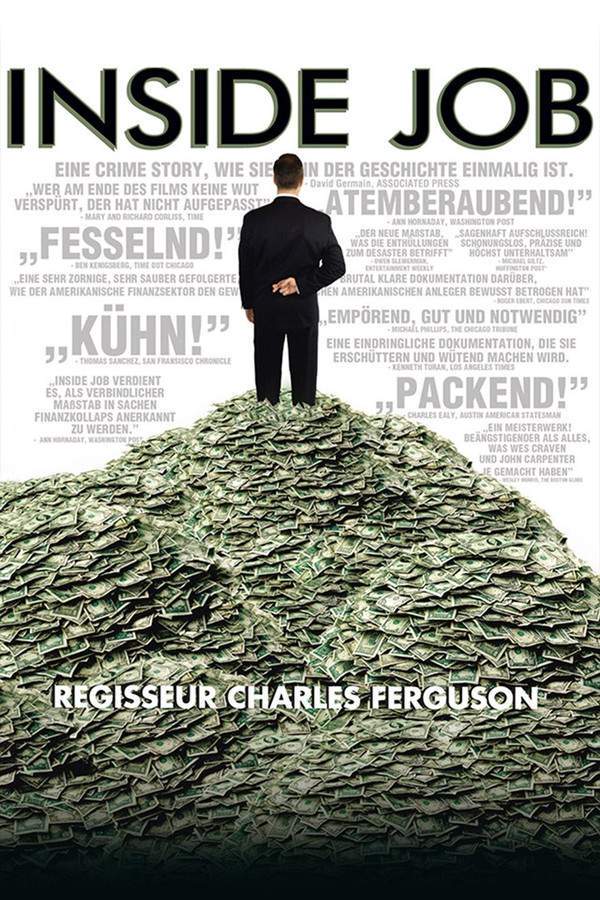
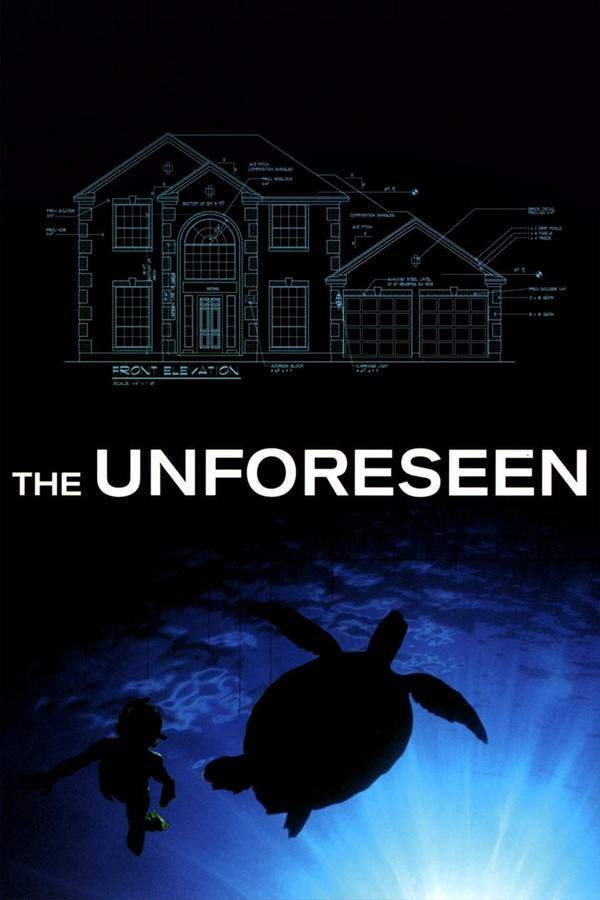
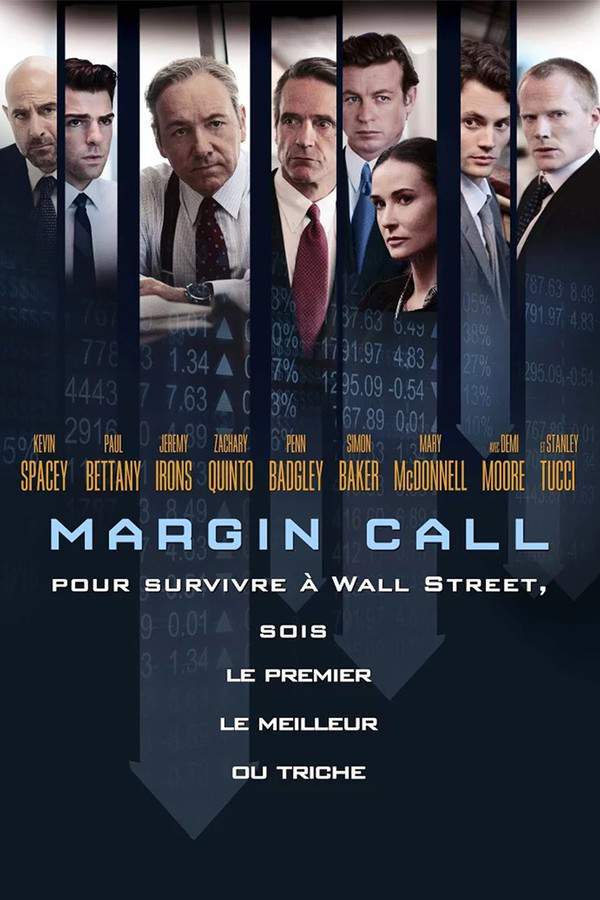
Movies with Similar Twists and Themes
Uncover films that echo the narrative beats, emotional arcs, or dramatic twists of the one you're exploring. These recommendations are handpicked based on story depth, thematic resonance, and spoiler-worthy moments — perfect for fans who crave more of the same intrigue.



Featured on this page

What's After the Movie?
Not sure whether to stay after the credits? Find out!
Check out our other apps:

SAT Sphere
Build confidence for the Digital SAT.

Mori Atlas
Discover wild places worth protecting.

Luntero
Search smarter for a home in Amsterdam.

Plot Explained
Unravel movie endings and hidden clues.

Pokechamp
Dive into Pokémon data and battle logic.

Driving Theory
Get ready for your European theory test.

Movie Dust
Plan your next cinema trip with ease.

Musemap
Find art and culture as you travel.

Selkobase
Compare credentials before committing.

Local Manual
Turn an unfamiliar country into practical next steps.

Lernavi
Compare school systems before your next move.

GymRoam
Find a workout stop wherever your plans take you.
Explore Our Movie Platform
New Movie Releases (2026)
Famous Movie Actors
Top Film Production Studios
Movie Plot Summaries & Endings
Major Movie Awards & Winners
Best Concert Films & Music Documentaries
Movie Collections and Curated Lists
© 2026 What's After the Movie. All rights reserved.
Privacy Policy