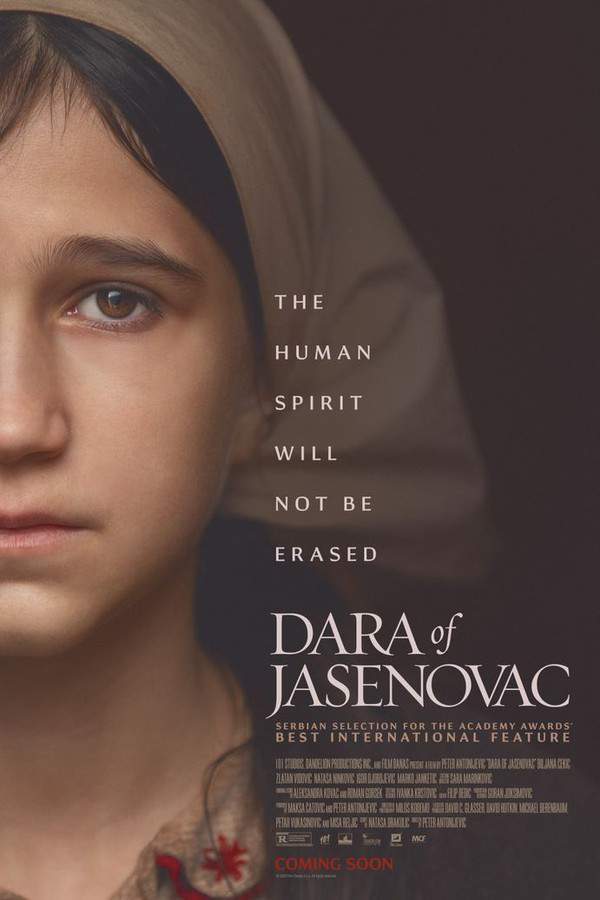
Dara in Jasenovac 2021

Directed by

Predrag Antonijevic
Made by

101 Studios
Dara in Jasenovac Plot Summary
Read the complete plot summary and ending explained for Dara in Jasenovac (2021). From turning points to emotional moments, uncover what really happened and why it matters.
In the wake of the Axis-led Kozara Offensive, the local Serb population is swept into the brutal reality of concentration camps in the Independent State of Croatia. The film follows a ten-year-old girl named Dara Ilić as her world is torn apart by this violence and displacement. She travels with her family as they are marched toward the cattle cars, walking alongside her older brother Jovo and asking questions about why others who look like them are being rounded up as well. A stark, human moment punctuates the horror: a woman in the marching column, carrying her crying baby, makes eye contact with a young Croatian peasant woman working the fields and chooses to leave the baby with her before returning to the line, a small act of mercy in the midst of atrocity.
At a train station fluttering with the Nazi flag, the scene grows grimmer. Father Miroslav Filipović separates the sick and elderly from the rest, and those remaining are forced into the cattle cars. Dara witnesses the unspeakable—those left behind are shot in cold blood as the guards enforce their cruel order. The train then transports Dara, her mother, and two brothers to the Jasenovac concentration camp, while Dara’s father Mile remains in an unseen location, tasked with the grim job of removing and disposing of the dead bodies.
Inside the camp, a nightmarish, almost surreal form of entertainment unfolds. The guards stage a game of musical chairs for visiting German officers, a cruel ritual where prisoners who lose are punished violently—some are slit at the throat with a srbosjek, others bludgeoned with a hammer. The brutality of the environment forces Dara to witness the fragility of life and the constant threat to her family’s safety as they are progressively separated.
As the family is torn apart, Dara’s mother fights to protect her older son, but both are shot by Igor Djordjevic. Dara is left to shoulder the burden of survival for her younger brother, and the two are sent to a special camp designated for women and children. The weight of this responsibility becomes Dara’s guiding purpose: to keep her brother alive amid chaos, deprivation, and the ever-present risk of losing one another forever.
In the midst of this peril, a glimmer of hope appears in the form of a Jewish prisoner named Blankica. With Blankica’s help, Dara begins to plot a path to escape, turning a desperate situation into a campaign of resilience. The film follows Dara’s steadfast resolve as she navigates the horrors of the camps, the fear of capture, and the daunting challenge of ensuring her younger brother’s survival.
Throughout, the story stays grounded in the stark realities of war-time captivity—the separations, the fleeting moments of humanity, and the small acts of courage that illuminate the darkest hours. Dara’s devotion to protecting her brother becomes the compass by which she measures every choice, every risk, and every chance at a future beyond the barbed wire. This is a portrait of endurance and hope set against a landscape of violence, where a young girl’s determination to save her family defines the narrow path toward survival.
Dara in Jasenovac Timeline
Follow the complete movie timeline of Dara in Jasenovac (2021) with every major event in chronological order. Great for understanding complex plots and story progression.
Mass roundup after Kozara Offensive
After the Axis-led Kozara Offensive, the majority of the local Serb population is forced into concentration camps run by the Ustaše and Nazi Germany in the Independent State of Croatia. The film establishes this brutal context as Dara's family and others face imminent deportation. The events set the stage for Dara's journeys of survival and resilience.
March toward cattle cars
Dara Ilić travels with her older brother Jovo as they are marched toward cattle cars. The column is crowded with fear and tension as families try to understand what is happening. Dara asks Jovo why others who look the same are being rounded up, capturing her confusion and determination.
A baby left with a Croat peasant woman
A woman in the marching column carries a crying baby and makes eye contact with a Croat woman working in the fields. She entrusts the baby to her before returning to the line, choosing a child's life over self-preservation. The moment underscores the random acts of mercy amid brutal deportations.
Train station and brutal separation
At the train station draped with the Nazi flag, Father Miroslav Filipović separates the sick and elderly from the rest. The remaining prisoners are forced into cattle cars. Dara witnesses those left behind being shot by the priest, marking a brutal turning point in the journey.
Transit to Jasenovac and the disposal detail
The train carries Dara, her mother, and two brothers toward the Jasenovac concentration camp. In a separate act, Dara's father Mile is tasked with removing and disposing of dead bodies in an undisclosed location nearby. The double burden underscores the horrific chaos surrounding the deportations.
Nightly brutality as entertainment
That night at the camp, guards devise a cruel game of musical chairs for visiting German officers. Prizes are death: the loser has their throat slit with a srbosjek or is bludgeoned with a hammer. Dara witnesses the brutal entertainment as the prisoners are preyed upon.
Family separation and murder of mother and Jovo
As families are separated, Dara's mother struggles to hand over her older son; both are shot by Ante Vrban. Dara survives, left to take care of her younger brother. The moment marks the moment Dara becomes the sole guardian and protector of her remaining family.
Dara and brother sent to a women-and-children camp
Dara and her younger brother are sent to a special camp for women and children. The environment is brutal and unforgiving, yet Dara makes it her mission to shield her brother from the worst abuses. She begins to assume a leadership role in their small unit of survivors.
Dara's resolve to protect her brother
Dara resolves to keep her brother alive, taking on the heavy duties of a caretaker within the brutal environment. She navigates the camp’s dangers, seeking ways to shelter and feed him. The film centers on her unbreakable will and practical resourcefulness.
Blankica lends a hand and a plan forms
With the help of a Jewish prisoner named Blankica, Dara begins plotting a path to escape. Blankica provides crucial knowledge of the camp’s layout and potential routes. Their alliance introduces a fragile thread of hope amid the oppression.
Escape plan begins to take shape
Dara and Blankica’s collaboration shifts from conversation to a concrete escape plan. They discuss routes, risks, and potential allies, preparing for a dangerous move against the camp’s guards. The plan marks a pivotal pivot toward possible freedom.
Dara in Jasenovac Characters
Explore all characters from Dara in Jasenovac (2021). Get detailed profiles with their roles, arcs, and key relationships explained.
Dara Ilić
A ten-year-old girl who becomes the emotional center of her family’s survival after deportations begin. She is resourceful and driven to protect her younger brother, navigating brutal conditions with determination and hope.
Jovo Ilić
Dara’s older brother who accompanies her during the march and provides protective, loyal companionship. He shares the fear of deportation, and the two siblings rely on each other to endure the journey.
Mile Ilić
Dara’s father, tasked with removing and disposing of dead bodies, illustrating the brutal demands of the camp system and its impact on family loyalties.
Ante Vrban
A guard who shoots Dara’s mother and her older brother, embodying the cold brutality of the guards outside and inside the camp.
Miroslav Filipović
A priest who oversees the initial separation of the sick and elderly, illustrating the complicity and cruelty present in the camp system.
Blankica
A Jewish prisoner who helps Dara plan an escape, representing a glimmer of solidarity and resistance within the camp.
Dara in Jasenovac Settings
Learn where and when Dara in Jasenovac (2021) takes place. Explore the film’s settings, era, and how they shape the narrative.
Time period
1942-1943
The events unfold during World War II in the Balkans, under the Axis puppet state of the Independent State of Croatia. The timeline sits in the wake of the Kozara Offensive in 1942, highlighting mass deportations and killings. The period is defined by systematic violence against Serbs, Jews, and others, as depicted through Dara's struggle to survive.
Location
Jasenovac concentration camp, train station near Jasenovac
The Jasenovac complex in the Independent State of Croatia is depicted as a site of mass imprisonment and executions. The train station nearby is shown adorned with a Nazi flag, underscoring the reach of the regime. Prisoners are transported in cattle cars, and guards orchestrate brutal games and killings to intimidate and dehumanize detainees.
Dara in Jasenovac Themes
Discover the main themes in Dara in Jasenovac (2021). Analyze the deeper meanings, emotional layers, and social commentary behind the film.
🛡️
Survival
Dara makes it her mission to protect her younger brother and keep them both alive amid constant threat. The siblings navigate brutal conditions, relying on quick thinking and small acts of courage. The theme centers on how fragile life remains and what people will do to endure.
💔
Loss
The family is torn apart by deportations and executions, with Dara's mother and older brother being killed. The brutality around them leaves lasting emotional scars. The story portrays how survivors carry grief while continuing to fight for survival.
🤝
Resistance
Dara, with help from Blankica, plots a path to escape, signaling small acts of defiance against the camp's regime. The escape plan shows how cooperation and courage can challenge overwhelming power. The theme emphasizes that even in extreme oppression, human resilience persists.
🕯️
Trauma
Witnessing killings and brutal punishments leaves deep psychological marks on Dara and those around her. The memory of the violence haunts their days and shapes future choices. The film uses these moments to explore how trauma endures beyond immediate danger.

Coming soon on iOS and Android
The Plot Explained Mobile App
From blockbusters to hidden gems — dive into movie stories anytime, anywhere. Save your favorites, discover plots faster, and never miss a twist again.
Sign up to be the first to know when we launch. Your email stays private — always.
Explore the mobile appDara in Jasenovac Spoiler-Free Summary
Discover the spoiler-free summary of Dara in Jasenovac (2021). Get a concise overview without any spoilers.
In the shadow of World War II’s darkest chapter, a small, war‑torn village in Nazi‑occupied Croatia becomes the backdrop for a story that balances unflinching realism with a fragile thread of hope. The landscape is marked by the heavy presence of occupying forces, the looming threat of forced deportations, and the cold bureaucracy of a regime that has turned ordinary life into a march toward the unknown. Within this stark setting, the air is thick with fear, yet the human spirit clings stubbornly to moments of tenderness and quiet resistance.
At the heart of the film is ten‑year‑old Dara, whose innocence is suddenly strained by the brutal realities that surround her. Alongside her older brother Jovo and a newborn sibling she must protect, she navigates a world where families are torn apart and the future feels uncertain. Dara’s keen observance and fierce love for her brother become the emotional core of the narrative, shaping her into a symbol of resilience amid chaos. The relationships she forges—both with her own family and with other prisoners—are rendered with a delicate balance of tenderness and tension, hinting at a network of unspoken solidarity that sustains her through the darkest days.
The tone of the film is deliberately somber, employing a muted color palette and restrained sound design that evoke the oppressive atmosphere of the concentration camp without relying on graphic spectacle. Yet, interspersed throughout are fleeting instances of humanity—quiet conversations, shared glances, and the stubborn persistence of childhood wonder—that lend the story a subtle, uplifting undercurrent. The cinematography captures the claustrophobic confines of the camp while also allowing brief breaths of natural light, suggesting that even in the most harrowing circumstances, hope can flicker.
Through Dara’s eyes, the audience is invited to witness a world where survival is as much an act of emotional endurance as it is a physical struggle. Her determination to safeguard her younger brother and to retain a sense of self in an environment designed to erase identity sets the stage for an emotionally resonant journey, one that explores the limits of courage, the power of familial love, and the enduring quest for dignity amid unimaginable adversity.
Movies with Similar Twists and Themes
Uncover films that echo the narrative beats, emotional arcs, or dramatic twists of the one you're exploring. These recommendations are handpicked based on story depth, thematic resonance, and spoiler-worthy moments — perfect for fans who crave more of the same intrigue.


Featured on this page

What's After the Movie?
Not sure whether to stay after the credits? Find out!
Check out our other apps:

SAT Sphere
Build confidence for the Digital SAT.

Mori Atlas
Discover wild places worth protecting.

Luntero
Search smarter for a home in Amsterdam.

Plot Explained
Unravel movie endings and hidden clues.

Pokechamp
Dive into Pokémon data and battle logic.

Driving Theory
Get ready for your European theory test.

Movie Dust
Plan your next cinema trip with ease.

Musemap
Find art and culture as you travel.

Selkobase
Compare credentials before committing.

Local Manual
Turn an unfamiliar country into practical next steps.

Lernavi
Compare school systems before your next move.

GymRoam
Find a workout stop wherever your plans take you.
Explore Our Movie Platform
New Movie Releases (2026)
Famous Movie Actors
Top Film Production Studios
Movie Plot Summaries & Endings
Major Movie Awards & Winners
Best Concert Films & Music Documentaries
Movie Collections and Curated Lists
© 2026 What's After the Movie. All rights reserved.
Privacy Policy