What Is Daphne About?
The premise of Daphne in 314 words, with nothing given away. The full story follows below.
In the immediate aftermath of World War II, the literary world hums with a mixture of triumph and uncertainty. New York’s bustling ports and smoky reading rooms contrast with the lingering shadows of a high‑profile legal battle that has drawn the attention of both the press and the public. The film drapes this historic moment in a tone that feels simultaneously glamorous and intimate, inviting the audience to step into a world where art, reputation, and personal longing intersect beneath the veneer of post‑war optimism.
Daphne Du Maurier, already celebrated for her haunting narratives, finds herself traveling across the Atlantic to face accusations that threaten to eclipse her creative legacy. The journey becomes a crucible for her, revealing a mind that grapples with both the demands of her craft and the complexities of her private life, including her marriage to Frederick “Boy” Browning. Their partnership, rooted in shared history, provides a quiet counterpoint to the storm of public scrutiny surrounding her work.
Along the way, Daphne encounters Ellen Doubleday, the elegant wife of a powerful publishing magnate whose poise and sophistication immediately captivate her. Their connection unfolds as a delicate friendship that hints at deeper, unspoken currents. Simultaneously, the charismatic and unapologetically bisexual actress Gertrude Lawrence enters the picture, bringing with her the dazzling energy of the theater world and an invitation to collaborate on a daring new play. The magnetic pull between these two women and Daphne sets the stage for a richly layered exploration of desire, admiration, and artistic ambition.
The film balances the allure of high society with the inner turbulence of its characters, painting a portrait of a woman navigating love, longing, and creative drive amid the glamour and constraints of the 1940s. It is an atmospheric story that lingers on the nuances of attraction and the fragile equilibrium between personal fulfillment and the expectations imposed by fame and tradition.
What Happens in Daphne?
The complete story of Daphne, from the first scene to the last, in 251 words (about 1 minute). Spoilers throughout. Names in the text link to 4 cast member pages.
Spoilers ahead
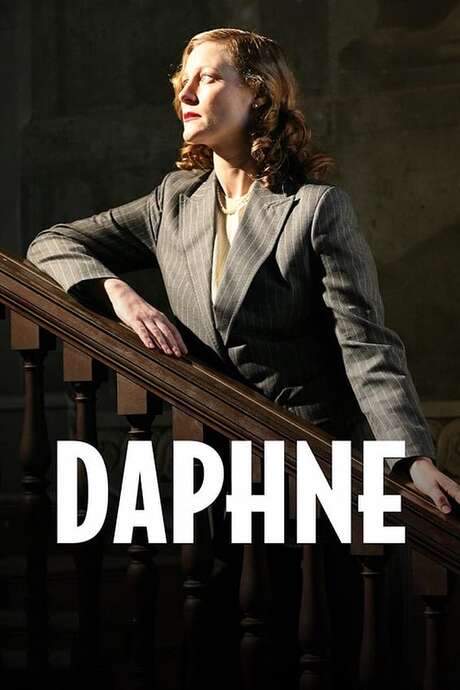
In 1945, the story opens with Daphne Du Maurier Geraldine Somerville facing a lawsuit from an author who claims she plagiarised parts of her novel Rebecca. To attend the trial, she boards a ship and travels toward New York, where she meets Ellen Doubleday Elizabeth McGovern, a glamorous and elegant woman who instantly captivates Daphne. A close friendship blossoms between the two, and when Ellen realizes that Daphne harbors romantic feelings for her, she makes it clear that she cannot return them, as she is heterosexual.
Frustrated by the rejection, Daphne writes a play called September Tide about a forbidden love between a young man and his mother-in-law. She envisions the mother-in-law as a dramatic center of the story, and when Gertrude Lawrence Janet McTeer, a confident bisexual actress who is friends with Noël Coward Malcolm Sinclair, is cast in that role, the project takes on new complexity. Daphne initially sees Gertrude as brash and slutty, but as she is increasingly drawn to her charisma, the two women begin an affair, reshaping the emotional landscape of the play and of Daphne’s own experiences.
The rest of the film follows Daphne’s competing feelings for the two women. She pines for the unavailable Ellen while simultaneously growing more entangled with Gertrude, a tension that drives her to oscillate between longing and cruelty. As the personal and artistic worlds collide, the narrative tracks how love, desire, and ambition complicate trust and loyalty, forcing Daphne to navigate a delicate balance between admiration, longing, and self-protection.
Daphne Timeline: Every Key Event in Order
12 key events in the order they happen, from “Lawsuit and the voyage to New York” to “Ending tension and unresolved longing”. 11 events name a place, across 9 locations.
- 1
Lawsuit and the voyage to New York
The story opens in 1945 with Daphne facing a lawsuit from an author who accuses her of plagiarizing parts of Rebecca. The case pushes her to travel to New York for a court appearance. She boards a ship to begin the journey under the weight of public scrutiny.
When:1945 Where:On a ship en route to New York
- 2
Meeting Ellen Doubleday
On the voyage, Daphne meets Ellen Doubleday, a glamorous and elegant presence who instantly captivates her. A strong, immediate attraction grows as Ellen's persona unsettles Daphne. Their growing bond hints at a closeness that will complicate Daphne's emotions.
When:1945 Where:On the ship
- 3
Friendship deepens and attraction grows
Daphne and Ellen develop a close friendship that quickly treads into emotional territory. Daphne finds herself smitten, with boundaries between admiration and desire becoming blurred. Ellen senses Daphne's feelings but remains cautious about how to respond.
When:1945 Where:On the ship
- 4
Ellen's honesty about her feelings
Ellen tells Daphne that she cannot return her affections because she is heterosexual, though she believes in love without censure. The revelation leaves Daphne facing unreciprocated longing and the sting of rejection. The emotional toll deepens as Daphne processes this truth.
When:1945 Where:On the ship
- 5
Daphne channels longing into September Tide
Frustrated by the rejection, Daphne writes a play called September Tide about a forbidden love between a young man and his mother-in-law. She envisions Ellen as the inspiration for the mother-in-law, weaving personal emotion into the drama. The project marks a turning point where art becomes a vessel for her feelings.
When:1945 Where:In her cabin on the ship
- 6
Gertrude Lawrence cast as the mother-in-law
Gertrude Lawrence, described as a confident bisexual actress who is friends with Noël Coward, is cast in the role of the mother-in-law. Her casting introduces a new, electric dynamic to the project, challenging Daphne's earlier inspirations. The choice heightens the tension between Daphne's personal feelings and her creative vision.
When:Mid-1940s Where:In the play's development/backstage
- 7
Daphne's initial judgment of Gertrude
Daphne initially perceives Gertrude as brash and slutty, a reaction born from insecurity and artistic projection. This impression begins to soften as she witnesses Gertrude's charisma in person. The evolving impression foreshadows a deeper emotional pull.
When:Mid-1940s Where:During development sessions
- 8
Growing attraction to Gertrude
As Daphne spends more time with Gertrude, she becomes increasingly drawn to her charisma and presence. The boundary between mentor-artist and lover begins to blur under the weight of desire. The professional project starts to mirror Daphne's shifting emotions.
When:Mid-1940s Where:Backstage/creative spaces
- 9
The affair begins
Daphne and Gertrude begin an affair, adding a volatile mix of longing, ambition, and guilt to the equation. The liaison intensifies Daphne's inner conflict and reshapes the dynamics of the play's development. The audience learns of how personal desire enters Daphne's professional world.
When:Mid-1940s Where:Backstage and creative spaces
- 10
Daphne's inner conflict deepens
The rest of the film centers on Daphne's competing feelings: she pines for Ellen's unattainable affection while remaining cruelly dismissive toward Gertrude. Her emotional turmoil bleeds into her interactions and decisions about the play. The two relationships pull her in opposite directions.
When:Mid- to late-1940s Where:Various settings in development and production
- 11
Impact on the work and her world
Daphne's emotional upheaval becomes fuel for her art as September Tide takes shape under the pressure of love and conflict. The play acts as a mirror for her own longing and the complexities of female relationships. The personal and creative lives become inseparable.
When:Mid- to late-1940s Where:Play's development space
- 12
Ending tension and unresolved longing
The film closes on Daphne navigating unresolved tension between two women, illustrating how passion and artistry can co-exist in uneasy harmony. She remains caught between longing for Ellen and attraction to Gertrude, leaving audiences with a sense of bittersweet ambiguity. The emotional landscape underscores the costs of pursuing truth in love and art.
When:End of film
Who Are the Main Characters in Daphne?
3 characters, among them Daphne, Ellen Doubleday and Gertrude Lawrence: who each one is and the part they play in the story. 2 of them link to the actor’s page.
- D
Daphne
A passionate writer whose intense emotions drive her creative work and shape her misgivings about love and loyalty. She uses her art to process desire, crafting September Tide as a reflection of her forbidden attractions. Daphne's pursuit of Ellen and her evolving interest in Gertrude reveal a complex, impulsive, and deeply introspective personality.
- 💖 Romantic
- 🖋️ Writer
- 🧠 Complex
-

Ellen Doubleday
Played by Elizabeth McGovern
A glamorous, elegant figure in literary circles who exudes confidence and poise. She establishes clear boundaries, indicating she cannot return Daphne's romantic feelings due to her heterosexual orientation. Ellen's presence anchors the social milieu and tests Daphne's emotional resilience within the constraints of public perception.
- 💎 Glamorous
- 🧭 Boundaries
- 🧍♀️ Socialite
-

Gertrude Lawrence
Played by Janet McTeer
A confident, charismatic actress described as bisexual, whose relationship with Daphne becomes entangled in the play's mother-in-law role. Her magnetic presence and friendship with Noël Coward add complexity to Daphne's affections, provoking fascination and confusion. Gertrude embodies a bold, dynamic counterpoint to Ellen's measured poise.
- 💃 Actress
- 🧭 Bisexuality
- 🎭 Charismatic
Where and When Is Daphne Set?
Daphne is set in Transatlantic ship and New York (1945). Here is why the time and place matter to the story.
When
1945
Set in the immediate postwar year 1945, the story unfolds in a era of shifting social mores and public interest in literary and theatrical circles. The time period shapes how desire, reputation, and talent intersect with gender norms and personal boundaries. The events on the ship and in New York occur against a backdrop of glamour, scandal, and the ongoing cultural redefinition after World War II.
Where
Transatlantic ship, New York
The primary setting is a transatlantic ocean liner crossing the Atlantic in 1945, en route to New York for Daphne's trial appearance. The ship's social spaces—lounge, deck, and dining rooms—serve as a microcosm of wartime and postwar society, where intimate confidences clash with public scrutiny. The destination, New York, frames the looming courtroom confrontation and the pressures of reputation that drive the characters' choices.
- ❄️ Ocean
- 🚢 Ship
- 🗽 New York
- 🕰️ 1940s
What Are the Themes of Daphne?
3 ideas the story keeps returning to, among them Forbidden Love, Art as Escape and Reputation and Scandal.
-
01
Forbidden Love
The narrative centers on Daphne's unattainable feelings for Ellen, and her growing attraction to Gertrude, highlighting the tension between personal longing and social constraints. The love triangle examines how desire can conflict with loyalty, propriety, and the risk of public judgment. Daphne's inner conflict drives her artistic choices and the emotional dynamics among the characters.
-
02
Art as Escape
Daphne channels her tumultuous emotions into September Tide, a play about forbidden love that becomes a lens for her own experiences. The act of writing and staging a work allows her to explore complex relationships while attempting to control or reinterpret reality. The play within the film mirrors the characters' desires, blurring lines between life and art.
-
03
Reputation and Scandal
Daphne faces a real-world threat to her reputation when a lawsuit accuses her of plagiarising parts of her novel Rebecca, intensifying the public scrutiny around her. Ellen's boundaries and refusal to return Daphne's feelings add to the pressure of conforming to social norms. The combination of literary controversy and romantic tension underscores how fame, gender, and sexuality influence personal and professional lives.
What Kind of Film Is Daphne?
Melancholic in tone, with steady pacing and a moderate story, going by the plot summary.
- Tone
- Melancholic
- Pacing
- Steady
- Story
- Moderate
- Intensity
- Medium
- Ending
- Bittersweet
A melancholic and steady-paced drama that immerses the viewer in Daphne's world of romantic frustration and unfulfilled longing, set against a backdrop of 1940s high society with an undercurrent of personal and creative turmoil.
- longing
- frustration
- melancholic
- reflective
- romantic tension
- personal conflict
- unrequited love
- closeted lesbian
- historical fiction
- creative inspiration
Content notes: infidelity, emotional manipulation.
Quiz
How well do you remember Daphne? Test yourself on the story.