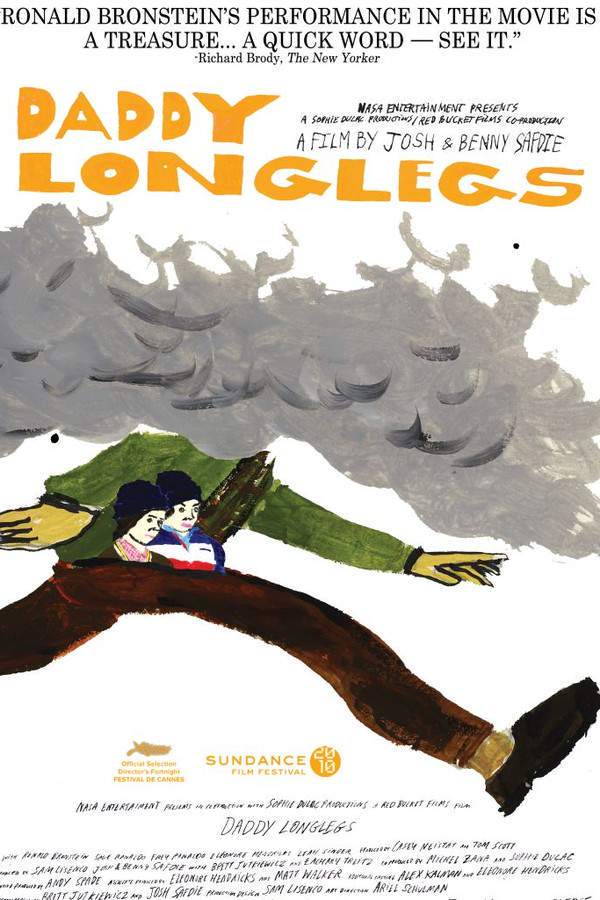
Daddy Longlegs 2010

Directed by

Joshua Safdie
Made by

IFC Films
Where to Watch Daddy Longlegs
See current US streaming, rental, and purchase options for Daddy Longlegs (2010) via JustWatch.


Streaming availability powered by 
Daddy Longlegs Plot Summary
Read the complete plot summary and ending explained for Daddy Longlegs (2010). From turning points to emotional moments, uncover what really happened and why it matters.
Lenny is a divorced father who works as a projectionist at a Manhattan movie theater, and he has custody of his two sons, Sage and Frey, for a strict two-week window each year. The arrangement is loose and fluid, and Lenny leans into a more playful, carefree attitude with the boys, even as his own sense of responsibility slips away. He argues openly with adults around them—sometimes the school principal, sometimes a homeless veteran—yet he drags Sage and Frey into these conversations, turning everyday moments into odd, improvised games that blur the line between fun and chaos. Joining him in this cycle is his on-and-off girlfriend Leni, who shares in the irresponsibility and lends a shaky rhythm to their family life.
Early in the two weeks, Lenny’s household is touched by a small tragedy that foreshadows the fragility of their plans: Leni brings home a salamander as a gift for the boys, only to forget about it, and the creature perishes. The loss slides into the background of their erratic routine, a quietly heavy note in a week that is otherwise full of impulsive decisions and impulsive car rides through the city.
On the first weekend, Lenny goes out drinking and finds romance with a girl named Roberta. When he learns she will travel upstate with her boyfriend the next morning, he impulsively decides to tag along, insisting that Sage and Frey come with them. The trip turns into a reckless detour that threads through a series of impulsive choices, each one widening the gulf between Lenny’s intentions and the consequences at home. Back in the city, the household is disrupted further when Salvie, a European friend who speaks in a way that’s hard to parse, becomes part of their orbit and introduces a dangerous game in which he stands on the boys’ stomachs, a stunt that unsettles everyone watching.
A chaotic scheduling glitch at Lenny’s job complicates everything. He was supposed to pick the boys up from school, but an misread timetable puts him on a different shift. To fix things, he manipulates a film reel and then sprints to the school, ultimately keeping Sage and Frey at the theater with him. There, the kids channel their frustration and energy into a comic they print together—an irreverent piece about Lenny peeing in his boss’s water cup, printed in a whopping 999 copies.
Seeking a little adulthood-free companionship, Lenny hires his neighbor Jake to watch the kids for a night so he can go on a date with Leni. The date goes awry when Leni decides to walk along subway rails, and Lenny refuses to join her, choosing instead to stay tied to the children’s needs and the oddities of their day. In the meantime, Sage and Frey take aim at Jake with mischief of their own—an impulsive act involving a toy firetruck that has been tampered with to squirt pee. Jake, overwhelmed, tells Lenny that he won’t watch the kids again, a threat that hangs in the air as Leni returns just as Lenny’s boss calls about an overnight shift, threatening to fire him after the printer incident.
Desperation drives Lenny to an extreme measure: he gives the boys small doses of sleeping pills to ensure they stay unconscious for two days. This decision propels the rest of the narrative into a tense, uneasy space. While Sage and Frey sleep, Lenny isolates himself from the apartment, seeking refuge at Leni’s place. A nosy neighbor eventually discovers a spare key left behind, and Leni cuts contact with him, severing one tenuous tether to the life they’ve built. Lenny’s social circle reacts with a mix of fear and anger, and when he later joins friends, his recklessness spills over into a public act—he spray-paints a wall in a way that lands him and his friends in jail.
When Sage and Frey finally wake, the pair are brought to a park and then to a museum where they encounter a large-scale model of a mosquito. Lenny jokes that he once killed a giant mosquito in his apartment, a remark that lingers in the air and fuels the children’s fears about the insect’s imagined presence. The idea of the giant mosquito festers in their minds, leaving them unable to sleep and unsettled by the memory of the museum visit.
After the boys return to their mother’s custody, Lenny finds himself alone and increasingly discontent. He erupts with public temper tantrums among his friends, and the absence of Leni’s steady presence sharpens the sense of instability. A surreal nightmare about the giant mosquito unsettles him further, and he makes a radical, last-ditch decision: he abducts Sage and Frey from school, convincing their nanny that there was a scheduling mix-up. The kitchen becomes a stage for manipulation and confusion as he tries to orchestrate a move that remains shrouded in uncertainty.
Back at home, Lenny prepares a simple shopping trip for the boys, sending them to the grocery store with a list while he handles the cooking. When they return, the apartment is nearly empty—the furniture has vanished, and Lenny reveals that they are moving. The reasons for the move are left unclear, while the movers’ frustration crescendos into a harsh insistence that they be left behind on the street. In a final, disorienting gesture, Lenny and the boys gather their belongings and wheel them onto a Roosevelt Island tram, carrying their life’s possessions into a future that remains uncertain and fraught with unanswered questions.
Throughout this turbulent two-week period, Lenny’s intentions are clear in his desire to connect with his sons and maintain a sense of spontaneity, but the execution is uneven at best. The result is a portrait of a father whose love for his children sits alongside stubborn impulsivity, imperfect judgment, and a stubborn insistence on living in the moment—even as the consequences ripple outward, reshaping the family’s dynamics and leaving Sage and Frey to navigate the aftermath.
Daddy Longlegs Timeline
Follow the complete movie timeline of Daddy Longlegs (2010) with every major event in chronological order. Great for understanding complex plots and story progression.
Custody begins
Lenny, a divorced father and a Manhattan projectionist, begins two weeks of custody over Sage and Frey. He embraces a playful, impulsive approach while openly arguing with adults in front of the boys, including their school principal and a homeless veteran, often involving the kids in improvised games.
Salamander gift forgotten
Early in the two weeks, Leni brings the boys a salamander as a gift. The creature is promptly forgotten and starves to death, setting a tone of neglect in the household.
First weekend road trip with Roberta
On the first weekend, Lenny goes out drinking and sleeps with Roberta. When she reveals she is traveling upstate with her boyfriend the next morning, Lenny impulsively decides to accompany them, taking Sage and Frey along on the trip.
Salvie's visit and dangerous game
Back home, Lenny is visited by Salvie, a hard to understand European friend who plays a dangerous game that involves standing on the boys stomachs. The unsettling encounter underscores the reckless environment Lenny creates around the kids.
Work mishap and the comic
Lenny experiences a scheduling mix-up at his projectionist job. He swaps a reel and runs on foot to the school to fetch the kids, then brings them to the theater where they print 999 copies of a crude comic about Lenny peeing in his boss's water cup.
Date night gone wrong
To date Leni, Lenny hires his neighbor Jake to watch the boys for an evening. The date ends badly when Leni walks along subway rails and Lenny refuses to join her.
Pee in the toy incident
Sage and Frey insert urine into a toy firetruck and spray Jake, who then vows he will no longer watch the kids.
Boss call and sleeping pills
Leni returns to make up with him just as he receives a call from his boss, who needs him to work overnight and threatens to fire him for the printer incident. To keep the kids from waking, Lenny administers sleeping pills, and the children slip into unconsciousness for two days.
Unconscious days and spare key
Sage and Frey remain unconscious for the next two days as doctors diagnose their condition. Lenny avoids the apartment during this stressful time and leaves a spare key behind at Leni's place, where a nosy neighbor easily finds it.
Arrest of friends
Leni cuts contact with Lenny. The next night, Lenny goes out with friends but ends up getting arrested after indiscreetly spray-painting a wall.
Mosquito nightmare and awakening
Sage and Frey wake, and Lenny takes them to a park and then a museum to see a large-scale model of a mosquito; he jokes about having killed a giant mosquito in his apartment. The kids fear the recurring insect and can't sleep.
Mother's custody and loneliness
The next day, the boys return to their mother's custody. Left alone, Lenny becomes increasingly discontent, throwing public tantrums and repeatedly calling Leni, who does not answer.
Abduction from school
After a surreal mosquito nightmare, Lenny abducts his sons from school, convincing their nanny that there was a scheduling mix-up. The move foreshadows further instability as the family is pulled into a new, uncertain living arrangement.
Moving out and the final relocation
While cooking for the boys, Lenny sends them to the grocery store with a shopping list; upon their return they find all the furniture missing and learn they are moving, though the circumstances are unclear. They carry their belongings around on the sidewalk as movers shuffle them.
Roosevelt Island tram finale
Moved to the edge by the movers, Lenny is kicked out onto the street. He and the boys carry their belongings around the sidewalk and finally load them onto a Roosevelt Island tram.
Daddy Longlegs Characters
Explore all characters from Daddy Longlegs (2010). Get detailed profiles with their roles, arcs, and key relationships explained.
Lenny
A divorced father and film projectionist who treats his two sons as playmates in his own life, often putting personal impulses before their welfare. His charm masks a pattern of irresponsibility that destabilizes the family. He oscillates between moments of affection and reckless decisions that pull the boys into risky situations.
Sage
One of Lenny's two sons, Sage is observant and quietly affected by his father's chaotic behavior. He navigates the turmoil with a mix of curiosity and resignation, trying to make sense of the adults around him. Sage embodies the impact of neglectful parenting on a child’s sense of security.
Frey
Lenny's other son, Frey mirrors the confusion of his environment and seeks reassurance amid the disorder. He shares in the boys' exposure to their father's antics, displaying a blend of vulnerability and resilience. Frey represents childhood innocence pressed into adult-like chaos.
Leni
Lenny's on-and-off girlfriend who helps with the kids but is equally swept up in the chaos. She provides a counterpoint to Lenny's antics, yet ultimately leaves when the situation becomes untenable. Her presence reflects unreliable adult involvement in the children's lives.
Roberta
A girl Lenny hooks up with during a weekend out, who is traveling with her boyfriend. Her presence catalyzes a impulsive decision that pulls the family into a new direction. Roberta represents a temporary, unstable adult relationship that affects the children indirectly.
Salvie
Lenny's hard-to-understand European friend who introduces a dangerous game at the boys' expense. Salvie brings an outsider's chaotic energy into the apartment, escalating tension and fear. He embodies the unpredictable adult influences that destabilize the kids' world.
Jake
Lenny's neighbor who agrees to watch the kids but becomes overwhelmed by the situation. He ultimately refuses to continue after Lenny's reckless actions. Jake highlights the strain placed on those who step in to help when boundaries are crossed.
Daddy Longlegs Settings
Learn where and when Daddy Longlegs (2010) takes place. Explore the film’s settings, era, and how they shape the narrative.
Location
New York City, Manhattan, Roosevelt Island
The story unfolds primarily in New York City, centered around a Manhattan movie theater and the surrounding urban landscape. The Roosevelt Island tram appears as a recurring location, adding a surreal, transportive element to the characters' routines. The city backdrop underscores the film's focus on fragile, imperfect family dynamics in a dense, competitive urban setting.
Daddy Longlegs Themes
Discover the main themes in Daddy Longlegs (2010). Analyze the deeper meanings, emotional layers, and social commentary behind the film.
👨👦
Parenthood
The film scrutinizes the limits and responsibilities of parenting through a father who treats his sons as partners in his misadventures rather than dependents needing care. Lenny’s permissive, erratic approach creates insecurity and blurs the line between play and danger. The portrayal questions what it means to care for children when adult impulses overpower structure and safety.
🌀
Chaos
Household chaos arises from impulsive nights out, unpredictable visitors, and improvised ‘games’ that blur boundaries. The humor sits beside a growing sense of unease as the children become collateral in their father’s schemes. The film uses levity to reveal the emotional cost of neglect and a lack of stable guidance.
⚖️
Responsibility vs Freedom
The two-week custody period pits Lenny’s hunger for spontaneity against Sage and Frey’s need for safety and routine. His reckless dating, worker-schedule stumbles, and eventual abduction attempt highlight the dangers of unbridled personal freedom. The ending reinforces the necessity of boundaries and accountability in family life.

Coming soon on iOS and Android
The Plot Explained Mobile App
From blockbusters to hidden gems — dive into movie stories anytime, anywhere. Save your favorites, discover plots faster, and never miss a twist again.
Sign up to be the first to know when we launch. Your email stays private — always.
Explore the mobile appDaddy Longlegs Spoiler-Free Summary
Discover the spoiler-free summary of Daddy Longlegs (2010). Get a concise overview without any spoilers.
In the restless pulse of Manhattan, a modest studio apartment becomes the unlikely stage for a fleeting but intense family reunion. Lenny, a mid‑thirties projectionist still learning the contours of divorced life, is granted a brief, twice‑year window to care for his two sons. The city’s endless flow of strangers, sounds, and neon promises both freedom and chaos, offering a backdrop where everyday moments can stretch into something larger than themselves.
The boys—Sage and Frey—are young enough to view the world with wonder yet old enough to sense the undercurrents of their father’s restless spirit. Their bond with Lenny teeters between the tender guidance of a parent and the spontaneous camaraderie of a playmate, hinting at the delicate balance he strives to keep. As the days unfold, the trio navigates the quirks of city life: impromptu rides, accidental run‑ins with acquaintances, and the ever‑present hum of a theater that mirrors the flickering uncertainties of their own story.
Adding another layer of unpredictability is Leni, Lenny’s on‑and‑off girlfriend, whose presence injects both warmth and instability into the household. Their relationship, like the surrounding streets, is marked by fleeting connections and sudden detours, reflecting the broader theme of searching for steadiness amid flux. The film’s tone wavers between whimsical improvisation and sobering introspection, inviting viewers to feel the pulse of a father’s yearning to be both guardian and friend.
Through an atmospheric blend of urban texture and intimate moments, the narrative sketches a portrait of modern parenthood—one where love, responsibility, and the desire to seize the moment intersect. It asks quietly how far a man will go to bridge the gap between caring for his children and preserving the spontaneous spark that defines him, all set against the ceaseless rhythm of the city that never truly sleeps.
Featured on this page

What's After the Movie?
Not sure whether to stay after the credits? Find out!
Check out our other apps:

SAT Sphere
Build confidence for the Digital SAT.

Mori Atlas
Discover wild places worth protecting.

Luntero
Search smarter for a home in Amsterdam.

Plot Explained
Unravel movie endings and hidden clues.

Pokechamp
Dive into Pokémon data and battle logic.

Driving Theory
Get ready for your European theory test.

Movie Dust
Plan your next cinema trip with ease.

Musemap
Find art and culture as you travel.

Selkobase
Compare credentials before committing.

Local Manual
Turn an unfamiliar country into practical next steps.

Lernavi
Compare school systems before your next move.

GymRoam
Find a workout stop wherever your plans take you.
Explore Our Movie Platform
New Movie Releases (2026)
Famous Movie Actors
Top Film Production Studios
Movie Plot Summaries & Endings
Major Movie Awards & Winners
Best Concert Films & Music Documentaries
Movie Collections and Curated Lists
© 2026 What's After the Movie. All rights reserved.
Privacy Policy