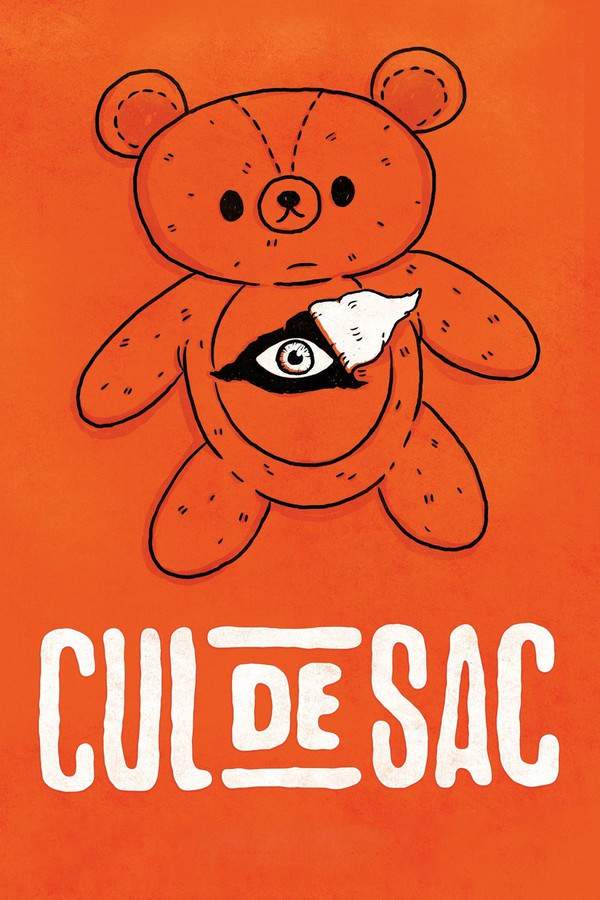
Cul-de-sac 1966


Directed by

Roman Polanski
Made by

Carlotta Films
Where to Watch Cul-de-sac
See current US streaming, rental, and purchase options for Cul-de-sac (1966) via JustWatch.

Amazon Prime Video
HD
Amazon Prime Video with Ads
HD
FlixFling
SD
fuboTV
HD
IndieFlix
HD
IndieFlix Shorts Amazon Channel
SD
MGM Plus
HD
MGM Plus Roku Premium Channel
HD
MGM+ Amazon Channel
HD
Philo
HD
ScreenPix Amazon Channel
HD
ScreenPix Apple TV channel
HD
Fawesome
HD
Mometu
HD
Plex
HD
Plex Channel
HD
Tubi TV
SD
YouTube Free
HD Streaming availability powered by 
Cul-de-sac Plot Summary
Read the complete plot summary and ending explained for Cul-de-sac (1966). From turning points to emotional moments, uncover what really happened and why it matters.
Dickey is a gruff American gangster who shoves his broken-down car along a causeway while a rising sea closes in around him and his oddball companion, Albie, who lies inside wounded from a botched robbery. Cut off by the encroaching waters, they make for the only path to the remote tidal island of Lindisfarne in Northumberland, where a dark castle sits atop a hill and an intensely nervous, effeminate Englishman named George lives with his French second wife, Teresa, a young and impulsive woman.
Inside the fortress, Donald Pleasence conveys George’s deep seethe of nerves and theatrical vanity, while Françoise Dorléac embodies Teresa—a lure of youth and heat who flirts with danger as easily as she moves through rooms full of ostentation. The moment Dickey breaks into the castle, he seizes control of the place, calls his underworld boss, Katelbach, to arrange a pickup, and cuts the phone lines, turning the home into a hostage arena as he waits for the next day’s arrival.
As Albie bleeds out, Dickey forces Teresa and George to dig a grave for him and then presides over a grim wake, the two adults sharing cheap liquor on the beach while Teresa swims nude, a provocative splash against the castle’s grim atmosphere. The following morning, a car pulls up to the castle—this time not Katelbach, but a group of George’s loud, intrusive friends who have arrived unannounced. Dickey pretends to be a servant, while Teresa casts longing glances at one guest, Cecil, and the dinner unfolds with uneasy social comedy punctuated by fear.
A startling disruption comes when the young son of another guest finds Cecil’s shotgun and starts waving it at the terrified crowd, firing and blasting a stained-glass window. The weapon is wrestled away and stored in a hallway, heightening the sense that anything can explode into violence at any moment. Tensions simmer as Dickey reconnects the phone and discovers that Katelbach will not be sending help. With the plan crushed, he attempts to claim George’s car and drive to the mainland, but George refuses to yield.
What follows is a violent struggle: Teresa discreetly hands Dickey’s pistol to George, who then shoots the gangster multiple times. Dickey, too weak to press his own Tommy gun, collapses and fires the weapon at George’s car, setting it ablaze in a fiery explosion. Fearing arrest and retribution from Katelbach’s network, Teresa begs to flee, while George stands in a state of shock, not fully able to move.
As the castle empties and dawn breaks, Teresa and Cecil drive off into the night, leaving George alone with the chaos he has created. He rages through his art studio, then races to the beach, collapsing on a rock in a fetal pose. The morning tide swallows the shore as he sobs, calling out the name of his first wife, his voice thinning against the insistence of the rising sea and the relentless morning light. The island’s isolation closes in, leaving a stark portrait of a man undone by fear, memory, and the sudden, violent intrusion of outside forces.
Cul-de-sac Timeline
Follow the complete movie timeline of Cul-de-sac (1966) with every major event in chronological order. Great for understanding complex plots and story progression.
Dickey and Albie are trapped on the causeway as the tide rises
Dickey pushes his broken-down car along a causeway while Albie lies inside, bleeding from a gunshot wound. The rising seawater blocks their escape toward the mainland, leaving them stranded on the road to Lindisfarne. This claustrophobic, doomed predicament sets the tone for the night’s siege.
Dickey breaches the castle and takes Teresa and George hostage
Dickey breaks into the dark castle on a hilltop and uses a phone call to Katelbach to send someone to collect him and Albie. He disconnects the telephone lines to prevent outside interference. He then holds Teresa and George hostage while awaiting Katelbach's arrival the next day.
Albie dies; the trio holds a wake on the beach
Albie succumbs to his injuries during the siege. Dickey and George dig a grave for him and hold a makeshift wake. Teresa swims nude in the ocean as the grim events press in from all sides.
The next morning, guests arrive; chaos at dinner
A car with George's obnoxious friends arrives at the castle, mistaken for Katelbach’s party. Dickey poses as a servant while Teresa flirts with Cecil at the dining table. A child fires Cecil's shotgun during dinner, blowing out a stained-glass window and triggering a hurried departure by the guests.
Dickey reconnects the phone; Teresa steals his pistol
Dickey removes his jacket, reconnects the telephone, and tries to contact Katelbach again. Teresa furtively pockets Dickey's pistol, heightening the tension between the captors and their guests. The uneasy dinner ends with the sense that something explosive may happen.
Katelbach won't come; plan to escape in George's car
Dickey learns that Katelbach will not come, and he plans to take George's car to the mainland. George refuses to relinquish the car, sparking a violent struggle between them. Teresa hands Dickey's pistol to George, escalating the confrontation.
Dickey is shot; the Tommy gun is retrieved; car explodes
George shoots Dickey several times; Dickey collapses but manages to retrieve his Tommy gun from the chicken house. Too weak to fire effectively, he discharges the weapon at George's car, which explodes in flames.
Dickey dies and fear of discovery sets in
Terrified of being implicated in the killing and of reprisals, Teresa frantically insists that she and George abandon the castle. The two grapple with how to vanish as the siege lurches toward its end.
A misread arrival: they fear Katelbach but encounter nothing of the sort
They see a car approaching and assume it is Katelbach’s, though they know his boss has abandoned them. Teresa hides in a cupboard, overcome with fear as the car draws near.
Cecil returns with the shotgun; offer to take them to police
The approaching car turns out to be Cecil returning to retrieve his shotgun. He offers to take them to the police, but George refuses to leave the castle with him. Teresa remains hidden as the situation teeters on a knife-edge.
Cecil and Teresa drive off; George rages amid ruin
Cecil and Teresa drive off into the night, leaving behind the unstable George. George then goes on a rampage, destroying his art studio before running down to the beach in a final act of despair.
George faces the sea at dawn, overwhelmed by loss
At daybreak, George sits on a rock in a fetal position, weeping hysterically and shouting the name of his first wife. The rising tide surrounds him, sealing a bleak, solitary finale to the night’s events.
Cul-de-sac Characters
Explore all characters from Cul-de-sac (1966). Get detailed profiles with their roles, arcs, and key relationships explained.
Dickey
A gruff American gangster whose bravado masks insecurity and reliance on force. He drives the hostage situation, imposes his will, and uses fear to negotiate with both Teresa and George. His plans crumble as events spiral, culminating in a violent and chaotic confrontation.
Albie
Dickey's eccentric companion, wounded from a botched robbery and dragged along by loyalty rather than sense. His fragile presence underscores the fragility of criminal opportunism and the suddenness with which violence intrudes on their plans.
Teresa
George's young French second wife, both alluring and calculating. She navigates the social maze of the guests, seizes Dickey's pistol, and ultimately flees with George as danger closes in, illustrating a pragmatic blend of flirtation and self-preservation.
George
A deeply neurotic and effeminate Englishman living in a dark castle, whose pretensions crumble under pressure. He vacillates between civility and violence, ultimately breaking down as the night unfolds and the tide rises.
Cecil
The guest whose shotgun becomes a focal point of danger; his carelessness and reluctance heighten the tension when the weapon appears and later is retrieved. His presence reveals how fear and improvised decisions escalate the crisis.
Katelbach
The underworld boss whose looming threat shapes the stakes of the hostage drama. Although not physically present, his authority and potential reprisals cast a long shadow over every action.
Cul-de-sac Settings
Learn where and when Cul-de-sac (1966) takes place. Explore the film’s settings, era, and how they shape the narrative.
Time period
Mid-1960s
The events unfold in contemporary Britain of the mid-1960s, using a real-world social frame to underscore satire and tension. The isolated setting amplifies casual cruelties and the fragility of civilized manners under pressure. The period’s understated cynicism reinforces the film’s bleak, ironic tone.
Location
Lindisfarne, Northumberland
A remote tidal island off the coast of Northumberland, crowned by a hilltop castle. A rising tide cuts off the causeway, trapping a small group inside and turning a holiday-house-like setting into a claustrophobic stage for danger. The windy, bleak landscape enhances the film's dark humor and uneasy mood.
Cul-de-sac Themes
Discover the main themes in Cul-de-sac (1966). Analyze the deeper meanings, emotional layers, and social commentary behind the film.
🗝️
Power
Power dynamics drive every move as captor and captives joust for control. Dickey asserts dominance through threats and manipulation, while Teresa and George respond in ways that reveal their own strategies and vulnerabilities. The hostage situation gradually strips away social veneers, exposing raw motives and petty vindictiveness. The escalation ends in a violent, destabilizing breakdown of order.
🧭
Isolation
The island’s remoteness and the castle’s walls create a pressure-cooker environment where outside help never arrives. Rising water and limited escape routes intensify paranoia and clashes. Social interactions become performative, revealing true natures when safety and civility are stripped away. The setting itself acts as a character, trapping everyone inside.
🎭
Satire
Dark humor skewers social pretensions—gossip, manners, and the veneer of civilization under duress. Interactions at the dinner table mix farce with danger, exposing how fragile and performative adult conduct can be. The film uses melodrama to critique class and gender roles while maintaining a grim asynchronous rhythm. The culmination blends tragedy with a macabre comic strike against decency.

Coming soon on iOS and Android
The Plot Explained Mobile App
From blockbusters to hidden gems — dive into movie stories anytime, anywhere. Save your favorites, discover plots faster, and never miss a twist again.
Sign up to be the first to know when we launch. Your email stays private — always.
Explore the mobile appCul-de-sac Spoiler-Free Summary
Discover the spoiler-free summary of Cul-de-sac (1966). Get a concise overview without any spoilers.
In a secluded house that feels both safe and suffocating, a young family begins to sense that the ordinary can become a conduit for the uncanny. When a beloved teddy bear – the silent companion of their little son – is discovered to contain a hidden microphone, the everyday comforts of home turn into a source of dread. The revelation triggers a slow‑burning paranoia that seeps into every corner of the household, prompting the parents to question who might be listening and why.
The film walks a tightrope between dark humor and genuine unease, letting the absurdity of a toy turned surveillance device clash with the very real fear of intrusion. The tone is unflinchingly witty, allowing moments of gallows‑laugh to sit beside stark, tension‑laden scenes. The setting – an ordinary domestic space that gradually feels like a stage for unseen observers – amplifies the claustrophobic atmosphere, making the familiar feel foreign.
At the heart of the story are the parents, whose ordinary lives are upended by the suspicion that their private world is being monitored. Their attempts to protect their child become increasingly frantic, as each discovery fuels a spiral of doubt that blurs the line between reality and imagined threat. The young son, unknowingly at the center of this crisis, represents both innocence and the unwitting catalyst for the family’s growing terror.
As the narrative unfolds, the audience is drawn into a world where the simple act of caring for a child can become an unsettling investigation into hidden eyes. The film invites viewers to contemplate how easily the veil of normalcy can be ripped away, leaving behind a landscape where every whisper might be recorded and every gesture could be watched, all while maintaining a sly, darkly comic edge.
Movies with Similar Twists and Themes
Uncover films that echo the narrative beats, emotional arcs, or dramatic twists of the one you're exploring. These recommendations are handpicked based on story depth, thematic resonance, and spoiler-worthy moments — perfect for fans who crave more of the same intrigue.







Featured on this page

What's After the Movie?
Not sure whether to stay after the credits? Find out!
Check out our other apps:

SAT Sphere
Build confidence for the Digital SAT.

Mori Atlas
Discover wild places worth protecting.

Luntero
Search smarter for a home in Amsterdam.

Plot Explained
Unravel movie endings and hidden clues.

Pokechamp
Dive into Pokémon data and battle logic.

Driving Theory
Get ready for your European theory test.

Movie Dust
Plan your next cinema trip with ease.

Musemap
Find art and culture as you travel.

Selkobase
Compare credentials before committing.

Local Manual
Turn an unfamiliar country into practical next steps.

Lernavi
Compare school systems before your next move.

GymRoam
Find a workout stop wherever your plans take you.
Explore Our Movie Platform
New Movie Releases (2026)
Famous Movie Actors
Top Film Production Studios
Movie Plot Summaries & Endings
Major Movie Awards & Winners
Best Concert Films & Music Documentaries
Movie Collections and Curated Lists
© 2026 What's After the Movie. All rights reserved.
Privacy Policy