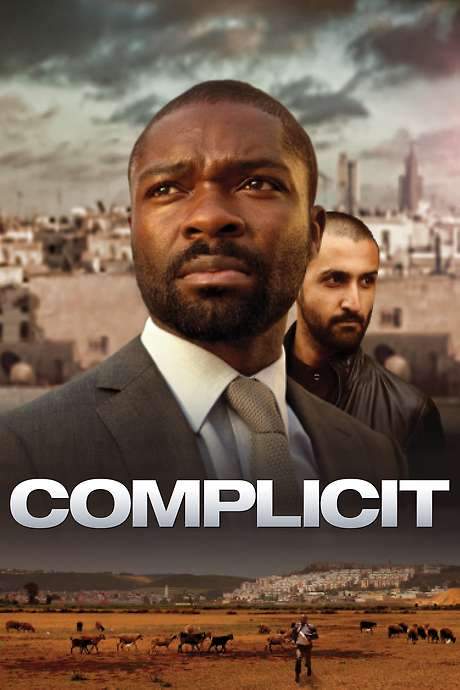
Complicit 2013

Directed by

Niall MacCormick
Made by

Many Rivers Film
Where to Watch Complicit
See current US streaming, rental, and purchase options for Complicit (2013) via JustWatch.

Hoopla
SD
DistroTV
HD
Fandango at Home Free
HD
Plex
HD
Plex Channel
HD
Pluto TV
SD
The Roku Channel
HD
Tubi TV
SD
Xumo Play
HD
YouTube Free
HD
Amazon Video
SD Fandango At Home
SD
Google Play Movies
SD
YouTube
SD Streaming availability powered by 
Complicit Plot Summary
Read the complete plot summary and ending explained for Complicit (2013). From turning points to emotional moments, uncover what really happened and why it matters.
Edward Ekubo [David Oyelowo] is a case officer for MI5 who relentlessly watches Waleed Ahmed, a British citizen of Yemeni descent, under the suspicion that he has been radicalised and could be plotting a terrorist attack on the UK. The concerns are not shared by his supervisor and the head of his section, who doubt the solidity of the evidence, leaving Ekubo frustrated as his instincts seem dismissed. He also feels his career prospects are being hampered by systemic bias—being black and having studied at Warwick rather than the more prestigious Oxford or Cambridge—adding a personal layer to the professional tension he faces.
A hidden camera catches Ahmed mentioning a trip to attend the wedding of a cousin in Yemen, but Ekubo’s informants challenge this, pointing to a long-running feud between the cousins that would make such an invitation unlikely. Still, Ekubo persuades his superiors and MI6 that Ahmed is a credible threat, and plans are set in motion for follow-up actions in Yemen. Soon after, Ahmed is arrested by Egyptian police along with several others at a farm where castor oil plants—plants whose seeds can be used to manufacture ricin—are being cultivated.
Ekubo travels to Cairo to continue the case and crosses paths with local MI6 officer Tony Coveney [Stephen Campbell Moore]. The detained men confess to assisting with ricin production, but their statements are withdrawn under pressure, and it becomes clear they have been tortured. The British officers must report Ahmed’s accusations of abuse to the British government, escalating the case. As delays mount, Ekubo asks a colleague to uncover the name of the interrogator from Egypt’s State Security Investigations Service—Colonel Hazem Ashraf [Makram J. Khoury]—who offers to use “persuasive techniques” to retrieve a UK address where Ahmed might have sent ricin. Ekubo also inspects the farm and finds three aerosol cans that the police overlooked, which Coveney arranges to send to London for analysis.
Back in London, further red tape and bureaucratic slowdowns hamper progress. Ekubo questions Ahmed directly; Ahmed proclaims his innocence and says the intercepted emails in which he and a contact mention “linen” are literal references to bedsheets, not coded instructions for ricin. He hints that the ricin is already in the UK and goads Ekubo about his race, provoking a heated moment in which Ekubo physically restrains him. Desperate for a breakthrough, Ekubo calls Colonel Hazem Ashraf for assistance and meets him the next day in a coffeehouse, where the colonel provides an address in Derby. When Ekubo and Coveney return to the police station, Ekubo realizes Hazem’s claims of having used psychological techniques on Ahmed are false—Ahmed’s treatment reveals clear signs of torture. The Derby address proves false as well, though one of the aerosol cans tests positive for ricin.
Returning to London, Ekubo is summoned to the office of the head of Section G. She reveals that the coffeehouse meeting with Hazem was captured by an activist blogger in Egypt who is investigating the colonel, and that the story is about to break publicly. He is suspended with immediate effect, effectively ending his career in the service for the time being. The Ahmed case ultimately leads Ahmed and his lawyer to file a lawsuit against the British government, leaving Ekubo to wonder whether the ricin threat still looms somewhere within the UK.
Complicit Timeline
Follow the complete movie timeline of Complicit (2013) with every major event in chronological order. Great for understanding complex plots and story progression.
Ekubo's surveillance begins
Edward Ekubo, a case officer for MI5, begins surveilling Waleed Ahmed as a suspected terrorist in the UK. His supervisors are skeptical because evidence is thin, and Ekubo feels his race and background hinder his career prospects. He worries that his instincts are being ignored while he pushes to prove Ahmed's threat.
Hidden camera catches Ahmed planning
A hidden camera shows Ahmed telling a colleague he's attending his cousin's wedding in Yemen. Ekubo's informants, however, point out a feud between the cousins, casting doubt on the Yemen trip as a legitimate alibi. The discrepancy fuels Ekubo's belief that Ahmed is not telling the truth.
Ekubo gains backing for Yemeni follow
Ekubo manages to persuade his superiors that Ahmed represents a genuine threat, despite prior doubts. MI6 agrees to widen the probe and arrange follow-up surveillance in Yemen. The decision marks a turning point as Ekubo gains momentum in his case.
Ahmed disappears from Yemen surveillance; Cairo hint
Ahmed eludes the Yemeni surveillance team, prompting Ekubo to hypothesize that he may be heading to Cairo to connect with a ricin contact. The possibility raises the stakes as the search expands beyond the UK. Ekubo's instincts push the case toward a new geographic focus.
Ahmed arrested in Egypt
Shortly after the shift toward Cairo, Egyptian police arrest Ahmed along with several others at a farm growing castor plants, the source of ricin seeds. The arrest suggests an active operational network behind the alleged plot. The British team learns of the arrests through liaison channels.
Ekubo travels to Cairo; meeting Coveney
Ekubo flies to Cairo and meets MI6 officer Tony Coveney to discuss the arrests and their implications. The detained suspects claim torture and abusive interrogation, casting doubt on the evidence. The visit marks a crucial step in coordinating an international response.
Interrogation details and reporting duty
British officers question Ahmed. He claims abuse and mistreatment. Under UK guidelines, the team must report his allegations to the government, delaying decisive action. The atmosphere grows tense as evidence becomes tangled with allegations.
Seeking the interrogating colonel
Ekubo asks a colleague to identify the Egyptian interrogating officer, Colonel Hazem Ashraf. The colonel is rumored to be able to influence outcomes, though his methods are controversial. The pursuit of Hazem becomes a key subplot in the case.
Hazem offers 'persuasive techniques' for intel
Hazem Ashraf proposes to use his persuasive techniques to obtain the UK address where Ahmed may have sent ricin. He provides Ekubo with an address in Derby, claiming it could unlock the trail. The plan appears to cross legal lines, prompting cautious skepticism.
Farm evidence and London testing
Ekubo visits the farm and discovers three aerosol cans the police missed. Coveney arranges for the cans to be sent to London for chemical analysis. The discovery adds a tangible, if incomplete, thread to the ricin investigation.
Questioning in London; Ahmed's innocence claims
Back in London, Ekubo challenges Ahmed directly. Ahmed maintains his innocence and hints that the intercepted emails refer to bedsheets, not ricin. The confrontation underscores the fragility of the case and the potential spread of misinformation.
Derby address turns out false; ricin possibility persists
Ekubo contacts Hazem and meets him at a coffeehouse, receiving a Derby address. The address proves false, but one aerosol can tests positive for ricin, leaving the investigation with a troubling lead. The discrepancy raises questions about the credibility of the information he was given.
Exposure threatens Ekubo's career
A blogger in Egypt photographs Ekubo's coffeehouse meeting with Hazem, and the story is about to go public. The exposure threatens Ekubo's reputation and career prospects. He is soon summoned to the head of Section G for consequences.
Suspension and career crossroads
Ekubo is suspended with immediate effect as the inquiry unfolds. He must reconsider his career prospects while Ahmed and his lawyer prepare a lawsuit against the British government. The outcome remains unclear as the ricin threat lingers.
Ending: ricin threat looms; lawsuit filed
Ahmed and his lawyer announce a lawsuit against the British government, signaling a formal challenge to state surveillance. Ekubo watches from the sidelines as the film closes, wondering whether the ricin threat is truly present in the UK. The case ends with ambiguity about the danger and accountability.
Complicit Characters
Explore all characters from Complicit (2013). Get detailed profiles with their roles, arcs, and key relationships explained.
Edward Ekubo (David Oyelowo)
A British MI5 case officer whose instincts push him to press a case he believes is dangerous. He faces career obstacles and racial bias, feeling sidelined because of his background and education. His persistence drives the investigation, even as bureaucratic caution and political risk threaten his career.
Waleed Ahmed (Arsher Ali)
A British citizen of Yemeni descent suspected of radicalization. He denies involvement and becomes the focal point of Ekubo’s pursuit, though the case is complicated by torture claims, conflicting testimonies, and political pressure. His treatment and status illuminate tensions between security measures and civil rights.
Judith (Monica Dolan)
Head of Section G, skeptical of swift conclusions and wary of overreach. She represents formal oversight and bureaucratic caution, pushing back against aggressive investigations while navigating political expectations. Her stance highlights the friction between duty and risk in counter-terrorism.
Tony Coveney (Stephen Campbell Moore)
MI6 colleague who collaborates with Ekubo, balancing pragmatic action with procedural constraints. He navigates interagency dynamics and the pressure of delivering results within official guidelines. His role underscores the teamwork and tension inherent in counter-terror operations.
Colonel Hazem Ashraf (Makram J. Khoury)
Egyptian State Security officer who offers coercive techniques to obtain information. His actions reveal the ease with which psychological pressure can blur lines of legality, and his involvement becomes a flashpoint for questions about legitimate interrogation. The later reversal shows the fragility of the intelligence obtained under duress.
Complicit Settings
Learn where and when Complicit (2013) takes place. Explore the film’s settings, era, and how they shape the narrative.
Time period
Early 21st century
The events unfold in the contemporary era of modern counter-terrorism, with operations spanning the UK and the Middle East. The plot reflects ongoing tensions between security services, civil liberties, and media scrutiny in this period. The timeline follows a sequence of surveillance, questioning, and bureaucratic delays typical of post-9/11 security operations.
Location
London, Derby, Cairo, Egypt, Yemen
The narrative moves between the United Kingdom—primarily London and Derby—and the Middle East, with key scenes in Cairo and a farm in Egypt and in Yemen. The UK locations center on MI5/MI6 offices, surveillance hubs, and bureaucratic decision-making, while Cairo and the Yemen setting provide the backdrop for arrests, interrogations, and cross-border investigation. The interlinked locales illustrate how counter-terror operations stretch across borders and institutions.
Complicit Themes
Discover the main themes in Complicit (2013). Analyze the deeper meanings, emotional layers, and social commentary behind the film.
🕵️
Espionage
The film centers on intelligence work—surveillance, informants, and the interpretation of partial evidence—to decide who poses a threat. It explores how instinct and personal judgment clash with formal procedures and political caution. The story probes whether a single officer’s persistence can override systemic hesitation, and what that means for truth and safety.
⚖️
Ethics
Ethical boundaries in counter-terrorism are questioned as suspects claim coercion and torture is used to obtain information. The narrative juxtaposes the demand for public safety with the duty to treat detainees humanely and to hold authorities accountable. It also shows how media scrutiny and activist observers can influence official narratives.
🌐
Politics
The story highlights the geopolitical pressures that shape national security policies, including domestic political considerations and international collaboration. It portrays how bureaucratic politics, media leaks, and legal scrutiny complicate investigations. The tension between national interests and individual rights is a persistent undercurrent.

Coming soon on iOS and Android
The Plot Explained Mobile App
From blockbusters to hidden gems — dive into movie stories anytime, anywhere. Save your favorites, discover plots faster, and never miss a twist again.
Sign up to be the first to know when we launch. Your email stays private — always.
Explore the mobile appComplicit Spoiler-Free Summary
Discover the spoiler-free summary of Complicit (2013). Get a concise overview without any spoilers.
In a world where the quiet hum of everyday life masks an ever‑present undercurrent of geopolitical danger, the British intelligence community operates behind a veil of secrecy and relentless scrutiny. The film unfolds against a backdrop of heightened alert, where the specter of a looming attack forces agencies to balance swift action with the weight of civil liberty. The atmosphere is tense, infused with the sterile corridors of MI5 and the shadowy exchanges of its allies, all while the public remains blissfully unaware of the ticking clock.
Edward Ekubo is a case officer whose keen instincts keep him one step ahead of the threats that loom over the nation. Gifted with a sharp analytical mind, he is also haunted by the subtle, systemic obstacles that color his career—a blend of racial bias and the old‑boys’ network of elite academia. His dedication to protecting the home front is matched only by his frustration at being constantly second‑guessed, forcing him to navigate a labyrinth of internal politics that often feels as threatening as the external enemies he chases.
When a lead points toward Waleed Ahmed, a British citizen of Yemeni descent, the stakes become intensely personal. Ahmed is portrayed as a figure of suspicion whose possible involvement in a catastrophic plot places him at the centre of an investigation that blurs the line between legitimate security concerns and the peril of prejudice. Ekubo must wrestle with the moral weight of his choices, contending with superiors who doubt his evidence, and with the ever‑looming possibility that his own actions could either avert disaster or inadvertently fan the flames of tension.
The tone of the story is a tightly wound thriller, suffused with a brooding realism that asks what it means to serve a country when the very institutions meant to protect you may also constrain you. It is as much an exploration of personal integrity under pressure as it is a pulse‑quickening chase, inviting the audience to linger on the uncomfortable questions of loyalty, bias, and the true cost of national security.
Featured on this page

What's After the Movie?
Not sure whether to stay after the credits? Find out!
Check out our other apps:

SAT Sphere
Build confidence for the Digital SAT.

Mori Atlas
Discover wild places worth protecting.

Luntero
Search smarter for a home in Amsterdam.

Plot Explained
Unravel movie endings and hidden clues.

Pokechamp
Dive into Pokémon data and battle logic.

Driving Theory
Get ready for your European theory test.

Movie Dust
Plan your next cinema trip with ease.

Musemap
Find art and culture as you travel.

Selkobase
Compare credentials before committing.

Local Manual
Turn an unfamiliar country into practical next steps.

Lernavi
Compare school systems before your next move.

GymRoam
Find a workout stop wherever your plans take you.
Explore Our Movie Platform
New Movie Releases (2026)
Famous Movie Actors
Top Film Production Studios
Movie Plot Summaries & Endings
Major Movie Awards & Winners
Best Concert Films & Music Documentaries
Movie Collections and Curated Lists
© 2026 What's After the Movie. All rights reserved.
Privacy Policy