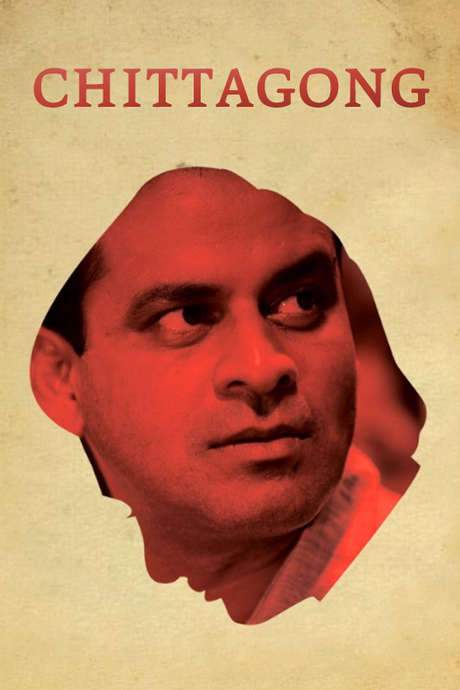
Chittagong 2012

Directed by

Bedabrata Pain
Made by

Jonai Productions
Where to Watch Chittagong
See current US streaming, rental, and purchase options for Chittagong (2012) via JustWatch.

Brew
HD
Darkroom
HD
Fawesome
HD
Hoopla
SD
Plex
HD
Plex Channel
HD
Amazon Video
HD
Apple TV Store
HD
Fandango At Home
HD
Google Play Movies
SD
YouTube
SD Streaming availability powered by 
Chittagong Plot Summary
Read the complete plot summary and ending explained for Chittagong (2012). From turning points to emotional moments, uncover what really happened and why it matters.
Set against the 1930s British colonial rule in East Bengal (now Bangladesh), the film Chittagong recounts a largely overlooked chapter of India’s freedom struggle. At its heart is a coming-of-age tale braided with political courage, told through the eyes of a young boy who grows into a reluctant revolutionary.
Centered on a diffident 14-year-old boy, Delzad Hiwale as Jhunku, the story follows his initial brush with a daring plan that would test his loyalties and reshape his view of justice, duty, and fate. Years later, Jhunku, now a 23-year-old, Vijay Varma as Older Jhunku Roy, finds himself on the run from the Bengal police. He hides in a bunker with his childhood friend Aparna, Sauraseni Maitra portraying her, as a whirlwind of memories and choices swirls around him.
The narrative then flashes back to 1930, tracing the spark that set the rebellion in motion. Surya Sen, known to his followers as Masterda, is seen leading protests in response to the death of the revolutionary Jatin Das. Jhunku, torn between his father’s wish for him to study in England and his own dawning admiration for the charismatic Masterda, finds himself pulled toward a cause that promises more than personal advancement. His faith in the British system is further complicated by Wilkinson, a tutor who believes in a more measured form of justice; Wilkinson is portrayed by [Barry John], and his stance contrasts with the hardline approach of the police. The tension between Wilkinson’s humane impulses and the authorities’ brutal methods becomes a personal crucible for Jhunku, who hopes that education and patience might free his country.
As the movement grows, Masterda and his circle—Nirmal Sen, Lokenath Bal, Ambika Chakraborty, and Ananta Singh—train a core group of students and teachers, aiming to cripple British control by striking at the city of Chittagong on April 18, 1930. The plan involves seizing the armouries of the police and disrupting communications, a daring attempt that showcases both ingenuity and risk. The revolutionaries’ work is coordinated and bold: Ganesh Ghosh leads the raid on the police armoury, while Lokenath Bal’s faction takes over the Auxiliary Force armoury. In the aftermath of these actions, the town is briefly seized under a provisional revolutionary government, and the crowd rejoices as Surya Sen salutes the effort with a military bearing that signals a new chapter in the struggle for independence.
However, British reinforcements soon arrive, and the landscape shifts from triumph to attrition. The revolutionaries scatter into smaller groups and move toward the Jalalabad hill ranges, where battles erupt anew. Harish, also known as Tegra, the younger brother of Lokenath and a friend of Jhunku, falls in the ensuing confrontations. The chase tightens as CID officers like Anurag Arora’s character, Ahsanullah Khan, descend on the movement, leading to brutal interrogations and a narrowing of the circle around Masterda and his accomplices. Jhunku is captured and subjected to harsh beatings during interrogation; he refuses to betray his comrades and is sentenced to life in Kaala-Paani.
The crackdown is costly for both sides: Nirmal Sen dies in the struggle, and Pritilata Waddedar—an ardent admirer of Masterda—radically escalates the fight by attacking the Pahartali European Club, killing DIG Johnson in a bold strike before dying of injuries sustained in the act. Pritilata’s courage marks one of the most vivid chapters of the rebellion, and Vega Tamotia’s portrayal anchors this crucial moment in the film’s emotional core.
In time, Masterda Surya Sen is captured and hanged, signaling a brutal end to a key phase of the Chittagong uprising. Jhunku, however, does not fade from the frame; he is released in 1939 and returns to the struggle, this time alongside Aparna as an active participant in further uprisings. A pivotal moment unfolds when a plan to attack granaries—where taxes and grain are controlled by colonial authorities and landlords—pushes Jhunku to devise a long-term, underground network that would empower peasants across twenty villages. Roads to the granaries are blocked, but the underground movement forges ahead, culminating in a broader social transformation known as the Tebhaga movement of 1945, a moment many interpret as signaling the end of the British Raj in India.
Throughout this sweeping arc, the film carefully threads personal doubt, steadfast loyalty, and collective resolve. Jhunku’s journey from a hesitant teenager to a hardened participant in a broad-based uprising is framed by intimate moments—his relationship with Aparna, his faith in figures like Wilkinson, and his evolving sense of justice. The story honors the courage and sacrifice of those who risked everything in pursuit of freedom, while also showing how the struggle for independence was as much a fight over ideas and futures as it was over national borders.
The last scenes pull back to the larger picture: the Tebhaga movement’s momentum and its emblematic power as a turning point in rural resistance, with a crowd awakening and pressing toward a future that British rule could not contain. The film closes with a resonant sense of continuity—difficult choices, enduring hope, and the memory of a generation that dared to challenge a vast empire, leaving viewers with a quietly defiant note about what it means to fight for a country’s dignity.
Chittagong Timeline
Follow the complete movie timeline of Chittagong (2012) with every major event in chronological order. Great for understanding complex plots and story progression.
Jhunku's 1930 dilemma and the protest onset
In 1930, protests erupt in Chittagong after the death of Jatin Das. A diffident 14-year-old Jhunku faces his father’s wish for him to study in England, while idolizing Masterda and the rebels. The figures of the magistrate Wilkinson and the movement shape his sense of justice and duty.
Torture and doubt: Wilkinson vs Major Johnson
After the initial protests, Major Johnson tortures Masterda, escalating the crackdown. Wilkinson opposes such methods, sowing doubt about British justice in Jhunku. The tension between education, loyalty, and rebellion deepens as events unfold.
Oil sabotage and a crucial confession
Rebels spike Johnson’s motorcycle with oil, triggering his crash and a fevered manhunt. Wilkinson eventually pressures Jhunku to reveal information, leading to Sukhen’s death at Johnson’s hands. The incident drives Jhunku to question his loyalties and seek revenge.
Joining Masterda: a break with the past
The betrayals and violence push Jhunku to abandon his old beliefs and join Masterda’s army. He shifts from a reluctant teen to an active participant in the uprising. This marks his entry into a larger revolutionary network.
Pritilata Waddedar's resolve and aspirations
Pritilata Waddedar, a schoolteacher, is drawn to Masterda’s ideas and longs to join the struggle. She harbors affection for Nirmal Sen and navigates love amid political fervor. Her presence broadens the movement beyond male comrades.
Planning the April 18 raid
Masterda and his allies train around fifty students for a coordinated strike on Chittagong on 18 April 1930. They aim to cut telegraph lines, disrupt trains, and seize police armouries as a prelude to revolt. The operation culminates in a staged proclamation of a provisional revolutionary government.
Armory raids and the provisional government declared
Ganesh Ghosh leads the police armoury raid while Lokenath Bal's faction seizes the Auxiliary Force armory, and others disrupt communications. Surya Sen leads a military salute and proclaims a provisional government, igniting brief elation across the town. Chittagong experiences a rare moment of revolutionary success before reinforcements arrive.
Reinforcements and the retreat to the hills
British reinforcements push the rebels to Jalalabad hill ranges, triggering a fierce confrontation with heavy casualties. Harish, known as Tegra, the brother of Lokenath, dies in the fighting. The rebels’ hold in the city collapses as the net tightens around them.
CID crackdown and Jhunku's arrest
After the dispersal, CID officer Ahsanullah Khan intensifies the crackdown, and Jhunku is arrested and beaten during interrogation. He refuses to betray his leaders and comrades, sealing his fate as a lifelong prisoner. The revolutionaries suffer further losses as the crackdown continues.
Pritilata's attack on the Pahartali Club
Pritilata Waddedar attacks the Pahartali European Club and assassitates DIG Johnson; she is gravely wounded and chooses cyanide to die rather than surrender. Her sacrifice exemplifies the contribution of women to the struggle. The attack reverberates through Chittagong and fuels resistance.
Master Da Surya Sen's capture and execution
Master Da Surya Sen is captured by the authorities and hanged, a major setback for the movement. Jhunku’s narration resumes with his later experiences, including his eventual release years later. The crackdown, however, sows seeds for continued resistance elsewhere.
Release in 1939 and a renewed struggle
In 1939, Jhunku is released and resumes the struggle alongside Aparna, rejoining uprisings against colonial rule. He participates in actions again, maintaining his resolve to free his country. The cycle of rebellion continues into the late 1930s.
Tebhaga and the endgame toward independence
In 1945, peasants and revolutionaries unite in the Tebhaga movement to challenge grain taxation and control. Underground dungeons are created to guard granaries, and large crowds rise in support. The British retreat under pressure as India edges toward independence, ending with the crowd and the song Ishaan.
Chittagong Characters
Explore all characters from Chittagong (2012). Get detailed profiles with their roles, arcs, and key relationships explained.
Older Jhunku Roy (Vijay Varma)
A diffident 23-year-old who once hesitated as a boy but becomes a hardened participant in the revolutionary movement. He reflects on past hopes while evading authorities, then grows into a determined fighter who endures torture and captivity for his beliefs. His arc traces a transformation from doubt to resolve within Masterda's circle.
Jhunku Roy (Younger) (Delzad Hiwale)
The 14-year-old at the story's start, whose yearning for education clashes with admiration for revolutionary ideals. His internal struggle drives him toward rebellion, foreshadowing the choices he makes as an adult. His journey establishes the film's emotional core.
Surya Sen 'Master Da' (Manoj Bajpayee)
Charismatic leader of the revolutionary group who trains students and spearheads the raid on Chittagong. He embodies ideological commitment and tactical acumen, guiding the movement with courage and a willingness to take risks for independence.
Lokenath Bal (Rajkummar Rao)
A veteran revolutionary and ally who participates in planning and action. He embodies camaraderie and strategic steadiness, supporting Jhunku and others through dangerous assignments. His presence anchors the younger fighters with experience and resolve.
Nirmal Sen (Nawazuddin Siddiqui)
Revolutionary ideologue deeply involved in planning and political tension within the movement. He has a personal connection with Pritilata and provides intellectual energy and moral complexity to the group. His fate underscores the costs of resistance.
Pritilata Waddedar (Vega Tamotia)
Schoolteacher inspired by Masterda who joins the revolutionary cause and seeks to strike at colonial authority. She becomes a symbol of female courage, participating in high-stakes actions and ultimately sacrificing herself during the struggle.
Aparna (Sauraseni Maitra)
Jhunku's childhood friend who is torn between supporting his ambitions and fearing the cost of rebellion. She evolves from skepticism to solidarity, playing a pivotal role in the group's emotional and strategic dynamics.
Ananta Singh (Jaideep Ahlawat)
A key organizer who trains the student-led factions and coordinates the raid plans. He embodies tactical discipline and a pragmatic approach to revolution, balancing risk with strategic gains.
Ambika Chakrobarty (Dibyendu Bhattacharya)
Member of the revolutionary circle who contributes to the planning and execution of their actions. He represents the broader network of volunteers and the collective effort behind the movement.
Wilkinson (Barry John)
British magistrate who is personally sympathetic to Jhunku yet constrained by official duty. He embodies the tension between enlightened attitudes and colonial authority, influencing the moral ambiguities in the story.
Major Johnson (Alexx O'Nell)
Police inspector who pursues the revolutionaries with brutal efficiency and plays a direct role in the torture and suppression of the movement. He represents the coercive force of the colonial state.
Rahim (Ashraf Ul Haq)
A supporting figure within the broader revolutionary world who helps move the plot forward and reflects the diverse makeup of the movement.
Chittagong Settings
Learn where and when Chittagong (2012) takes place. Explore the film’s settings, era, and how they shape the narrative.
Time period
1930s (British India, East Bengal) with references to late 1920s and the Tebhaga movement of 1945
The narrative centers on the 1930s anti-colonial uprising, including the 18 April 1930 raid on Chittagong. A flashback traces Jhunku's transition from a hesitant youth to a committed revolutionary. The Tebhaga movement of 1945 is referenced as a continuation of the broader struggle against British rule.
Location
Chittagong, East Bengal (now Bangladesh)
The action unfolds in Chittagong, a port city in East Bengal during British rule, known for its vibrant revolutionary activities. The film moves through the city, its armouries, and surrounding hill ranges, painting a landscape of protests and clandestine planning. This setting reflects a period of intense nationalist fervor and brutal policing aimed at quelling dissent.
Chittagong Themes
Discover the main themes in Chittagong (2012). Analyze the deeper meanings, emotional layers, and social commentary behind the film.
⚔️
Rebellion
The story follows a group of students and teachers who transform from ordinary civilians into a militant force against colonial authorities. It explores the galvanizing power of collective action and the high personal stakes of resistance. The characters must weigh risk, sacrifice, and the price of freedom as they aim to overturn imperial control.
🧭
Doubt and Duty
Jhunku wrestles with conflicting loyalties between education, loyalty to British-leaning authorities, and the hook of nationalist duty under Masterda. The tension between idealism and harsh reality drives character decisions and fuels internal conflict. This theme underscores how personal beliefs shape political choice.
🕯️
Legacy
The film threads memories of past sacrifices into present actions, suggesting that today's revolts are built on yesterday's martyrs. It links the Chittagong uprising to later movements and enduring resistance against oppression. The concluding arc highlights how memory and continued struggle fuel future courage.

Coming soon on iOS and Android
The Plot Explained Mobile App
From blockbusters to hidden gems — dive into movie stories anytime, anywhere. Save your favorites, discover plots faster, and never miss a twist again.
Sign up to be the first to know when we launch. Your email stays private — always.
Explore the mobile appChittagong Spoiler-Free Summary
Discover the spoiler-free summary of Chittagong (2012). Get a concise overview without any spoilers.
In the sweltering haze of 1930s British‑ruled East Bengal, the streets of Chittagong pulse with a mix of colonial order and simmering discontent. The film paints the city as a character in its own right—its narrow lanes, bustling bazaars, and quiet riverbanks all humming with the unspoken yearning for change. Light and shadow play across the frame, creating a mood that feels both intimate and historic, inviting the audience to step into a world where every whispered conversation could carry the weight of a revolution.
At the heart of this world is a shy fourteen‑year‑old named Jhunku. Caught between his father’s aspirations of a foreign education and the magnetic pull of a charismatic local leader, he stands at the crossroads of personal ambition and collective yearning. His curiosity is sparked by the ideals he encounters, and his inner conflict is rendered with a tender honesty that feels universal: the struggle to define one’s identity when the surrounding world is demanding something larger than oneself.
Jhunku finds a quiet ally in Aparna, a childhood friend whose steady presence offers both comfort and a subtle challenge to his emerging worldview. Around them, figures such as Surya Sen—revered by many as a mentor of the resistance—and Wilkinson, an educated tutor who advocates a measured approach to justice, provide contrasting lenses through which the young protagonist begins to see the possibilities and perils of dissent. Their interactions are laced with quiet tension, hinting at the delicate balance between idealism and pragmatism.
The tone of the story is a careful blend of coming‑of‑age introspection and the broader undercurrents of a nation on the brink of transformation. By focusing on Jhunku’s internal journey, the film offers a richly textured portrait of youthful hope, moral curiosity, and the quiet bravery that can blossom in even the most oppressive of eras, leaving viewers eager to see which path his restless spirit will ultimately choose.
Featured on this page

What's After the Movie?
Not sure whether to stay after the credits? Find out!
Check out our other apps:

SAT Sphere
Build confidence for the Digital SAT.

Mori Atlas
Discover wild places worth protecting.

Luntero
Search smarter for a home in Amsterdam.

Plot Explained
Unravel movie endings and hidden clues.

Pokechamp
Dive into Pokémon data and battle logic.

Driving Theory
Get ready for your European theory test.

Movie Dust
Plan your next cinema trip with ease.

Musemap
Find art and culture as you travel.

Selkobase
Compare credentials before committing.

Local Manual
Turn an unfamiliar country into practical next steps.

Lernavi
Compare school systems before your next move.

GymRoam
Find a workout stop wherever your plans take you.
Explore Our Movie Platform
New Movie Releases (2026)
Famous Movie Actors
Top Film Production Studios
Movie Plot Summaries & Endings
Major Movie Awards & Winners
Best Concert Films & Music Documentaries
Movie Collections and Curated Lists
© 2026 What's After the Movie. All rights reserved.
Privacy Policy