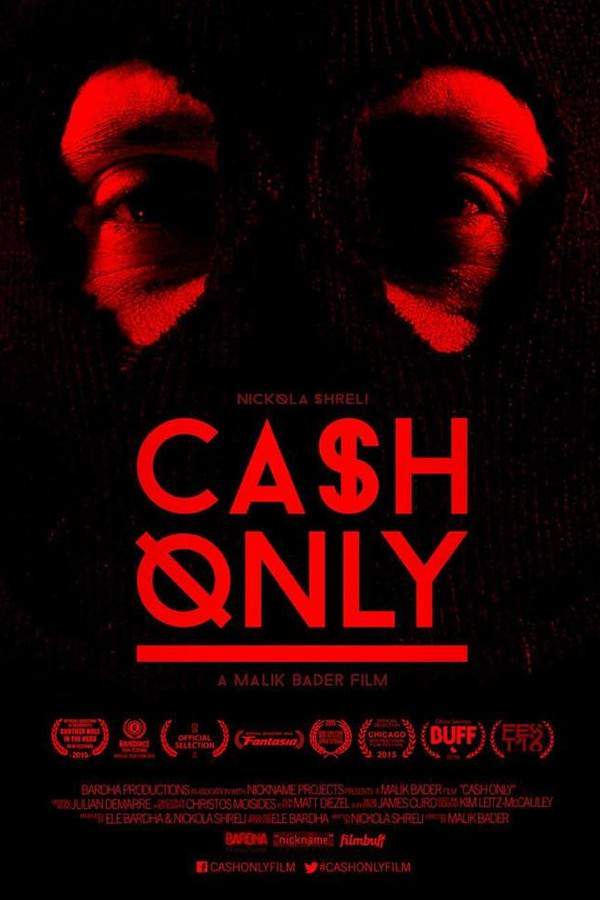
Cash Only 2016

Directed by

Malik Bader
Made by

FilmBuff
Where to Watch Cash Only
See current US streaming, rental, and purchase options for Cash Only (2016) via JustWatch.



Streaming availability powered by 
Cash Only Plot Summary
Read the complete plot summary and ending explained for Cash Only (2016). From turning points to emotional moments, uncover what really happened and why it matters.
Elvis Martini is a Detroit-based Albanian-American landlord who orchestrates an arson to pull off an insurance scam, a plan that spirals far beyond his control. When his wife unexpectedly returns home and dies in the blaze, he is left to raise their daughter alone, a heavy burden that gnaws at him as the years pass. Two years later, a judge grants him a brief extension to repay what he owes to the bank, even as a loan shark hovers in the background, pressing for payment. The mounting financial pressure nudges him toward exploiting his tenants to fill the gaps in his own finances, a decision that sets off a dangerous chain of consequences.
Among the tenants are Leka, a fellow Albanian, and his fiancée Blerta, with whom Martini is entangled in an affair. As debts pile up, Martini schemes to extract more money by tightening terms on Kush, a tenant who grows marijuana, demanding a cut of Kush’s profits and a higher rent. Kush agrees, but the relationship between them strains under the new terms, and the pressure only deepens when Martini turns his attention to Rolexa, a prostitute whose back rent becomes a weapon in his widening web of coercion. Rolexa’s vulnerability becomes another lever in Martini’s relentless push to cover his debts.
To keep tabs on everyone, Martini relies on security cameras hidden throughout the buildings, a method that lets him spy on the tenants and move pieces on a dangerous chessboard. He spots Rolexa stashing something in her apartment and, while she’s away, enlists his friend Agroni to change her lock. In Rolexa’s apartment, Martini uncovers enough cash to reconnect his daughter with a private Catholic school and to make payments to both the bank and the loan shark. After briefly taking care of Rolexa’s unsupervised son, Martini evicts Rolexa, dismissing her threats as he tries to stabilize his own precarious situation.
Yet stability remains illusory. Martini’s world collapses when thugs disrupt his sexual encounter with Blerta and abduct his daughter, leaving him terrified and furious. Dino, a ruthless mob boss, lays down a ruthless ultimatum: he has until the next night to return the money Rolexa stole for him plus additional penalties. In a desperate bid to salvage something, Martini pursues Rolexa, intending to reason with her, but discovers she is dead.
With time running out and the debts multiplying, Martini engineers a more elaborate rent scam—taking cash-only security deposits from many tenants for the same apartment. Desperation pushes him to sell his car to Agroni and pawn many of his possessions. Kush’s refusal to help pushes Martini further to the brink; he infiltrates Kush’s apartment, knocks him unconscious, and steals Kush’s drug money. He divides the loot into two bags and heads to meet Dino’s thugs, who stash him in a car trunk to ferry him to a warehouse confrontation.
Martini, nonetheless, refuses to abandon hope of saving his daughter and managing his obligations. He calls Agroni for help and winds up at Dino’s warehouse, where he offers one bag and promises to reveal the second once his daughter is safe. Dino tortures him to reveal the location, and Martini quickly discloses the second bag. The scene escalates into a confrontation as Dino threatens to violate and kill Martini in front of his child, but reinforcements arrive—Cantor, Leka, and several Albanians—shattering Dino’s gang and killing his thugs.
In the final and most harrowing moment, Martini uses a hidden pocket knife to kill Dino, a grim end to a night of broken bargains and escalating violence. He is reunited with his daughter, but the admission hangs over him: he knows he does not deserve her, even as he clings to the chance to keep her safe moving forward. The story closes on a somber note, with Martini facing the consequences of a life driven by debt, fear, and a desperate bid for control in a world where every choice seems to come at a steep price.
Cash Only Timeline
Follow the complete movie timeline of Cash Only (2016) with every major event in chronological order. Great for understanding complex plots and story progression.
Arson and the insurance scam
Elvis Martini commits arson as part of an insurance scam. The fire unexpectedly kills his wife who returns home early, leaving him to raise their daughter alone. This act places him in a desperate fight to cover mounting debts.
Elvis becomes sole guardian
With his wife dead, Elvis becomes the sole caregiver for his daughter. He wrestles with debt while attempting to provide for her, pulling rent income into the primary means of support. The tragedy heightens his willingness to bend rules to survive.
Two years later: court extends repayment
A judge grants Elvis a brief extension to repay debts to the bank. The extension buys him time to juggle payments, but the financial pressure remains intense. This pause complicates his plans as new demands emerge.
Debt pressure mounts
Elvis owes money to both the bank and a loan shark, creating a squeeze from multiple creditors. With the clock ticking, he begins focusing on collecting from his tenants to raise funds. The mounting pressure fuels riskier and more coercive behavior.
Tenants pressured; Blerta affair
Under pressure to raise funds, Elvis starts collecting from tenants, including Albanian tenant Leka and his fiancée Blerta, with whom Elvis is having an affair. The financial strain strains personal loyalties and cross-border relationships within his community. The dynamic foreshadows deadly consequences.
Kush and the new terms
Elvis pushes Kush to accept new terms that include a cut of Kush's profits from growing marijuana and increased rent. Kush warns that their friendship is at risk as the demands escalate. The relationship with tenants becomes transactional.
Security cameras and Rolexa
Using security cameras to monitor tenants, Elvis spots Rolexa stashing something in her apartment. He hires Agroni to change Rolexa’s lock while she’s away, tightening his control over the building. This marks a shift toward more aggressive tactics.
Rolexa's money funds schooling
In Rolexa’s apartment, Elvis finds enough money to put his daughter back in a private Catholic school and keep paying the bank and loan shark. The windfall temporarily alleviates some immediate pressures, but it forces him to confront the consequences of his actions. The money, however, ties him further to criminal schemes.
Eviction of Rolexa
After briefly caring for Rolexa’s unsupervised son, Elvis evicts her, dismissing her threats. The eviction clears the way for his rent scheme and intensifies his grip on the housing situation. His methods become increasingly ruthless.
Dino's warning and daughter's kidnapping
Elvis is interrupted during sex with Blerta when thugs knock him unconscious and kidnap his daughter. Dino, a mob boss, warns him that he has until the next night to return the money Rolexa stole plus penalties. The threat from the underworld tightens around him.
Rolexa's death discovered
Martini tracks down Rolexa, attempting to reason with her, but finds her dead. The discovery confirms the money she stole is a lost cause and pushes him toward drastic actions. The loss pushes him further into desperation.
Rent scam begins
With Rolexa dead, Elvis hurriedly sets up a rent scam by taking cash-only security deposits from many people for the same apartment. He tries to raise funds quickly, dodging scrutiny from authorities and anxious tenants. The scheme marks a deeper descent into criminal behavior.
Sells car and pawns possessions
To raise more capital, Elvis sells his car to Agroni and pawns most of his possessions. He is cutting every corner to keep creditors at bay while debt collectors loom. His desperation grows as opportunities diminish.
Kush money theft and warehouse confrontation
When Kush refuses to help, Elvis sneaks into Kush's apartment, knocks him unconscious, and steals Kush's drug money. He divides the money into two bags and heads toward Dino's warehouse to meet Dino's thugs. The tension escalates toward a violent confrontation.
Final confrontation and rescue
At Dino's warehouse, Dino tortures Elvis to extract information about the second bag, and Cantor, Leka, and several Albanians arrive, killing Dino’s thugs. Elvis kills Dino with a hidden pocket knife and is reunited with his daughter, admitting he does not deserve her.
Cash Only Characters
Explore all characters from Cash Only (2016). Get detailed profiles with their roles, arcs, and key relationships explained.
Elvis Martini
An Albanian-American landlord in Detroit who turns to arson to perpetrate an insurance scam. His wealth obsession and mounting debts push him toward ruthless schemes against his tenants. As the pressure grows, his attempts to salvage the finances become increasingly desperate and morally compromised. By the end, he confronts the possibility that he is unworthy of his daughter.
Leka
A fellow Albanian tenant, Leka is struggling to pay rent while facing debt. He is wary of the rent hikes and the entanglement with Elvis, and his relationship with Blerta complicates his situation. He tries to ensure stability for himself and his future wife, but the pressure from Elvis strains his sense of trust.
Blerta
Blerta is Leka’s fiancée who becomes entangled in Elvis’s manipulative schemes through the ongoing affair. She is wary of the dangerous dynamics surrounding money, loyalty, and survival in a cramped housing block. Her choices reflect the precarious balance between personal desire and the consequences of others' crimes.
Kush
Kush is a tenant who grows marijuana on the premises, making him a potential target for Elvis’s debt collection. He initially agrees to harsher terms in the hope of keeping his life afloat, but warns that their friendship will suffer. When rent is late and threats mount, Kush refuses to bend further, forcing Elvis to take more drastic measures.
Rolexa
Rolexa is a sex worker who keeps her own money stash, making her a potential source for Elvis's money. Using security cameras, Elvis spies on her, and her secrets set off a chain of events culminating in her death. She is both vulnerable and resilient, caught in a dangerous game of lender vs tenant.
Agroni
Agroni is Elvis's trusted friend who runs a garage and helps with the lock changes and other schemes. He participates in the plan to recover money and navigate the criminal dynamics. He acts as a stabilizing but opportunistic ally.
Dino
Dino is a mob boss who exerts pressure on Elvis to recover the money. He uses threats and violence to enforce payment, driving the tension to a breaking point. His confrontation with the other characters ends when he and his thugs are defeated by Cantor and the Albanian community.
Cantor
Cantor is a local cop who ends up playing a pivotal role in stopping Dino and saving Elvis's daughter. He coordinates with Leka and the Albanian community to confront the mob. His actions reveal a sense of justice and loyalty to the community.
Daughter
Elvis's daughter is the emotional center of his world, embodying innocence and the stakes of his actions. Her safety and well-being motivate him to risk everything, and her presence sharpen the moral cost of Elvis's choices. In the climax, their reunion underscores the fragile line between redemption and guilt.
Cash Only Settings
Learn where and when Cash Only (2016) takes place. Explore the film’s settings, era, and how they shape the narrative.
Time period
Contemporary
The events unfold in present-day Detroit, highlighting economic pressure and crime in modern neighborhoods. The narrative shows how predatory lending, debt cycles, and the threat of violence shape everyday survival for landlords and tenants alike.
Location
Detroit, Michigan
Detroit is depicted as a hard-edged urban landscape where foreclosed apartments line the blocks and predatory finance infiltrates everyday life. The city’s immigrant communities, including Albanian residents, navigate a fragile economy and a sharp divide between landlords and tenants. The setting amplifies the tension as schemes ripple through a single housing block.
Cash Only Themes
Discover the main themes in Cash Only (2016). Analyze the deeper meanings, emotional layers, and social commentary behind the film.
💸
Debt and Desperation
Elvis’s debt to the bank and the loan shark drives him to dangerous decisions. The arson-for-insurance scheme illustrates how financial pressure distorts morality and threatens families. The film follows a spiral where every cash crunch pushes him toward riskier moves, blurring lines between predator and protector. The desperate quest to secure money for his daughter exposes the fragility of family bonds under economic strain.
🔥
Greed and Consequence
Greed fuels the rent scams, the illegal money moves, and the willingness to exploit tenants. The violence surrounding Dino's visit, kidnapping, and final confrontation shows how greed detonates into crime. The narrative ties personal ambition to a larger system that punishes those who attempt to bend it to their will.
🕵️♂️
Surveillance and Control
Martini uses security cameras to spy on tenants, turning the building into a web of surveillance. This control enables him to orchestrate move after move, tightening his grip on others' money and lives. The constant watching creates paranoia and erodes trust among neighbors.
👨👧
Family and Morality
Despite his corruption, Elvis clings to his daughter, a beacon of innocence he argues he must protect. The film frames his actions against the costs to family, with a final moment acknowledging he may not deserve her. The tension between familial duty and criminal means drives the emotional core of the story.

Coming soon on iOS and Android
The Plot Explained Mobile App
From blockbusters to hidden gems — dive into movie stories anytime, anywhere. Save your favorites, discover plots faster, and never miss a twist again.
Sign up to be the first to know when we launch. Your email stays private — always.
Explore the mobile appCash Only Spoiler-Free Summary
Discover the spoiler-free summary of Cash Only (2016). Get a concise overview without any spoilers.
In the rust‑streaked neighborhoods of Detroit, a looming foreclosure threatens more than just brick and mortar—it puts an entire family on the brink. The city’s gritty rhythm pulses through cramped apartments and aging streets, a backdrop where survival often means balancing on a knife‑edge of bills, obligations, and the ever‑present whisper of debt. Here, ordinary life is colored by the relentless pressure of a financial system that offers no mercy, and every decision feels weighted by the cost of staying afloat.
Elvis Martini is a landlord trying to keep his world from collapsing. He juggles the responsibilities of raising his daughter alone while grappling with mounting obligations that could strip away everything he has worked for. When a sudden, unexpected opportunity surfaces—a hidden stash of cash that could settle his most pressing dues—it also opens a door to a far more dangerous set of expectations. The urgency of his situation is amplified by a tight deadline: he must gather $25,000 in cash, and he has only 24 hours to do it.
The film paints a portrait of a man caught in a web of uneasy alliances and strained relationships. Tenants, each carrying their own struggles, become part of an intricate, uneasy dance where every interaction hints at deeper, unspoken tensions. The atmosphere is thick with suspense, as unseen forces hover on the periphery, ready to exploit any misstep. The tone oscillates between the intimate moments of a father’s devotion and the cold, calculating world of street‑level economics, creating a sense of claustrophobic urgency.
As the clock ticks, the stakes rise with each passing minute. The requirement of “cash only” transforms a simple financial shortfall into a high‑risk gamble, forcing Elvis to confront what he’s willing to sacrifice for his daughter’s future. The film’s style is raw and unflinching, immersing the audience in a relentless chase against time where every choice could mean salvation—or loss.
Featured on this page

What's After the Movie?
Not sure whether to stay after the credits? Find out!
Check out our other apps:

SAT Sphere
Build confidence for the Digital SAT.

Mori Atlas
Discover wild places worth protecting.

Luntero
Search smarter for a home in Amsterdam.

Plot Explained
Unravel movie endings and hidden clues.

Pokechamp
Dive into Pokémon data and battle logic.

Driving Theory
Get ready for your European theory test.

Movie Dust
Plan your next cinema trip with ease.

Musemap
Find art and culture as you travel.

Selkobase
Compare credentials before committing.

Local Manual
Turn an unfamiliar country into practical next steps.

Lernavi
Compare school systems before your next move.

GymRoam
Find a workout stop wherever your plans take you.
Explore Our Movie Platform
New Movie Releases (2026)
Famous Movie Actors
Top Film Production Studios
Movie Plot Summaries & Endings
Major Movie Awards & Winners
Best Concert Films & Music Documentaries
Movie Collections and Curated Lists
© 2026 What's After the Movie. All rights reserved.
Privacy Policy