What Is Carandiru About?
The premise of Carandiru in 279 words, with nothing given away. The full story follows below.
Within the towering stone walls of São Paulo’s Carandiru Penitentiary, a place notorious for its sheer scale and unrelenting hardship, daily life unfolds like a restless chorus of voices yearning to be heard. The prison’s cramped cells—often squeezed with dozens of men—create an atmosphere thick with desperation, where the line between order and chaos is drawn not by guards but by the inmates themselves. Amid this charged environment, the air hums with stories of survival, whispered hopes, and the quiet dignity that persists despite the oppressive surroundings.
Dr. Varella arrives as the film’s steadying presence, a dedicated physician tasked with a crucial health mission that forces him to step inside this world of confinement. Through his compassionate yet observant lens, he becomes the conduit for countless fragmented narratives, each revealing a different facet of life behind bars. His role is less about solving a single mystery and more about bearing witness, listening intently to the personal histories that echo through the corridors—tales of love, loss, addiction, and yearning that humanize the men often reduced to statistics.
The tone of the story balances stark realism with a lingering sense of empathy, inviting the audience to feel the palpable tension of a place where every day is a negotiation between survival and humanity. The film’s visual style captures the raw, gritty texture of the prison’s architecture while lingering on the nuanced expressions of its inhabitants, underscoring a world where hope flickers in the most unlikely of spaces. As Dr. Varella navigates the delicate dynamics between staff and prisoners, the narrative gently pulls viewers into a contemplative exploration of what it means to live, love, and retain one’s self amid systemic disorder.
What Happens in Carandiru?
The complete story of Carandiru, from the first scene to the last, in 391 words (about 2 minutes). Spoilers throughout. Names in the text link to 2 cast member pages.
Spoilers ahead
Set inside São Paulo’s Carandiru Penitentiary, one of Latin America’s largest and most brutal prisons, this sprawling drama follows a chorus of inmates whose lives collide under harsh conditions. Dr. Drauzio Varella (portrayed by Wagner Moura) arrives to test inmates for HIV, but his presence serves as a window through which many voices speak, guiding the viewer through a web of stories rather than presenting a single protagonist.
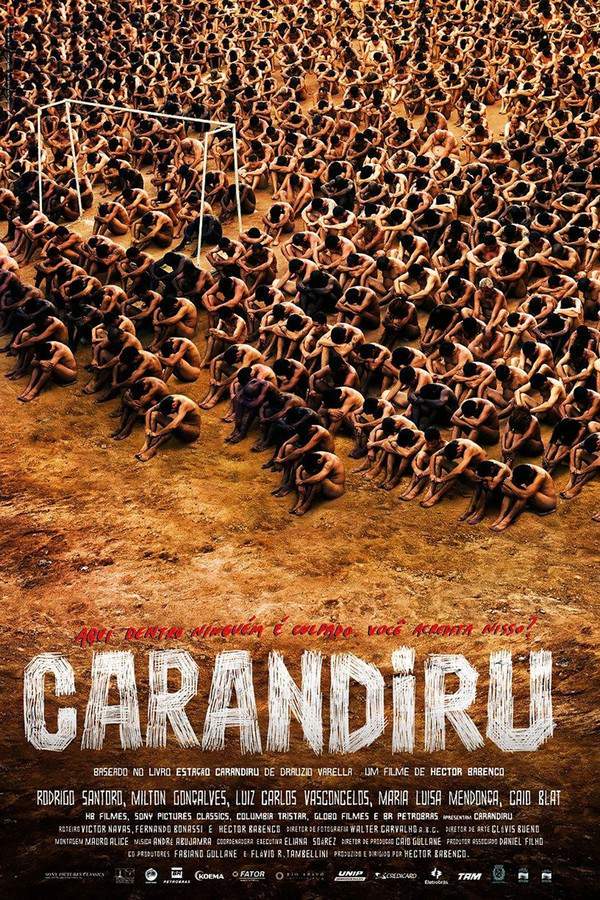
Rather than centering on one arc, the film uses Varella as a narrative filter, letting the inmates tell their own experiences in their own terms. The environment is stark: each 100-square-foot cell can hold up to sixteen prisoners, and the guards’ oversight is minimal. Order in the prison is largely maintained by the inmates themselves, a dynamic that fuels violence, drug use, and the spread of disease, all unfolding under the constant pressure of overcrowding and neglect.
Across the film, several stories emerge, giving intimate glimpses into lives rarely seen from the outside: Lady Di, a trans woman navigating the prison’s social world; the fragile threads of No Way’s marriage; Deusdete and Zico shaping a fragile family dynamic; Ezequiel and Zico grappling with crack addictions; and Majestade juggling romantic entanglements. These interwoven narratives humanize the inmates, inviting the audience to see them as people with loyalties, regrets, and dreams.
The cast’s humanity shines even as violence and hardship loom large, and the film does not shy away from the brutal realities of life behind bars. Murders, drug use, and disease punctuate daily life, underscoring how fragile order can be when control rests with those who inhabit the prison, rather than the guards who are meant to oversee them. In this portrait of confinement, the inmates’ stories illuminate the broader social forces that shaped—and still shape—Carandiru.
Tensions eventually erupt into a riot, leading to the Carandiru Massacre, a devastating culmination that foregrounds the cost of systemic neglect and the volatility of life inside the walls. Babenco’s approach—grounding the drama in real voices and realities—builds toward a cathartic finale, with the real footage of Carandiru Penitentiary’s demolition providing a stark, haunting sense of closure. This ending invites reflection on memory, accountability, and the lasting impact of the prison system on individuals and communities.
The cast also includes Caio Blat in a supporting role, adding another layer to the film’s diverse tapestry of characters. Caio Blat
Carandiru Timeline: Every Key Event in Order
12 key events in the order they happen, from “Dr. Varella arrives to Carandiru for HIV testing” to “Dr. Varella's closing perspective”. 12 events name a place, across 4 locations.
- 1
Dr. Varella arrives to Carandiru for HIV testing
Dr. Varella enters Carandiru Penitentiary and begins his HIV testing with inmates, serving as a narrative guide through the prisoners' lives. He listens to their stories while presenting medical aims, shaping the humanized view of those inside. The event sets the tonal frame for the film, separating the doctor as observer from the inmates' own voices.
Where:Carandiru Penitentiary, São Paulo
- 2
Inhumane cell conditions and lack of control
The film shows 100-square-foot cells housing up to 16 inmates, illustrating extreme overcrowding. Guards have little control, leaving order to the prisoners themselves. The setting emphasizes the volatility that drives the inmates' stories.
Where:Carandiru Penitentiary
- 3
Prisoners take control of order
With institutional control weak, prisoners manage daily life, discipline, and protection networks inside the yard. This dynamic fuels corruption, violence, and drug use as the only available means to survive. The scene foreshadows later escalation to the riot.
Where:Carandiru
- 4
Lady Di and No Way's relationship
The film tracks the relationship between Lady Di, a trans woman inmate, and No Way, highlighting personal loyalty, love, and the precariousness of life inside the prison. Their marriage symbolizes fragile humanity amid desperation and danger. Their story serves to humanize inmates beyond crime labels.
Where:Carandiru
- 5
Deusdete and Zico's family dynamic
Deusdete and Zico's family tensions unfold with visits and conversations that reveal the impact of incarceration on family bonds. The inmates' attempts to support and reconnect with relatives underscore the personal costs of prison life. Their storyline adds emotional texture to the overall tapestry.
Where:Carandiru
- 6
Ezequiel and Zico's crack addiction
Ezequiel and Zico struggle with crack addiction, showing how drugs permeate the prison system and exacerbate violence and instability. Their addiction drives dangerous choices and fuels the atmosphere of danger around them. The scenes emphasize the dehumanizing cycle of addiction and confinement.
Where:Carandiru
- 7
Majestade's affairs
Majestade's romantic entanglements expose personal hunger and vulnerability behind bars. The storyline demonstrates how relationships can provide both solace and risk within the prison's brutal environment. It adds another layer to the inmates' shared humanity.
Where:Carandiru
- 8
HIV testing reveals deeper truths
As Varella administers HIV tests, the inmates reveal fears, histories, and hopes, turning the medical procedure into a window into their lives. The testing becomes a catalyst for listening to the inmates' voices. This intersection of medicine and storytelling shapes the film's core message.
Where:Carandiru
- 9
Tensions escalate toward riot
The overcrowded, uncontrolled environment gradually reaches a tipping point as tensions rise among inmates and with the guards. Small conflicts escalate into widespread violence, setting the stage for a mass confrontation. The film builds toward the climactic outbreak.
Where:Carandiru
- 10
Carandiru Massacre
A brutal riot culminates in the Carandiru Massacre, with state forces dispersing inmates through force and resulting in many deaths. The event reveals the real consequences of neglect and mismanagement. The moment stands as the film's stark critique of the prison system.
Where:Carandiru Penitentiary, São Paulo
- 11
Aftermath and demolition
Following the massacre, the film shows real footage of Carandiru's demolition, offering catharsis by contrasting destruction with the inmates' stories. The closing montage emphasizes the human cost and the erasure of a brutal institution. The ending invites reflection on memory and justice.
Where:Carandiru, São Paulo
- 12
Dr. Varella's closing perspective
The doctor reflects on the inmates as individuals with voices that deserve to be heard, challenging viewers to see beyond crime. The narrative frame reaffirms his role as a filter who lets others speak while he remains an observer. The ending underscores the film's compassionate stance.
Where:Carandiru
Who Are the Main Characters in Carandiru?
7 characters, among them Dr. Varella, Lady Di and No Way: who each one is and the part they play in the story.
- DV
Dr. Varella
A physician who arrives to test inmates for HIV and serves as the narrative conduit through which the prisoners’ stories are told. He narrates the events but does not let his own life overshadow the inmates’ experiences. His presence anchors a compassionate, observational perspective that seeks to understand without sensationalizing.
- 👨⚕️ Doctor
- 🧭 Narrator
- 👁️ Witness
- LD
Lady Di
A trans woman inmate whose life and relationships are explored within the prison. Her story highlights gender identity, vulnerability, and resilience in a harsh environment. Her presence adds emotional depth and challenges stereotypes about inmates.
- 👤 Trans woman
- 💔 Romance
- NW
No Way
An inmate whose marriage is part of the prison narrative, illustrating personal bonds and the strains that incarceration places on relationships. His experiences reflect themes of loyalty, hope, and the human costs of confinement.
- 💑 Marriage
- 🎭 Drama
- D
Deusdete
A prisoner whose family dynamics with Zico are highlighted, showing how relationships outside the prison influence inside life. His story contributes to the broader portrait of familial ties under strain.
- 👨👩👧 Family
- 💪 Struggle
- Z
Zico
An inmate involved in the film’s exploration of drug use and personal relationships, notably his connection with Deusdete and Ezequiel. His experiences shed light on addiction and its impact on community and family.
- 🧪 Addiction
- 🧑🤝🧑 Community
- E
Ezequiel
A prisoner whose crack addiction is depicted, illustrating the intertwined vulnerabilities of addiction, crime, and survival within the penitentiary system.
- 🧪 Addiction
- ⚠️ Risk
- M
Majestade
A character involved in relationships or ‘affairs,’ reflecting the personal entanglements and romantic lives that persist despite the prison walls. The story of Majestade adds complexity to the inmates’ social world inside Carandiru.
- 💏 Affairs
- 🕊️ Relationships
Where and When Is Carandiru Set?
Carandiru is set in Carandiru Penitentiary, São Paulo and Brazil (1990s). Here is why the time and place matter to the story.
When
1990s
The story unfolds in the early 1990s in São Paulo, Brazil, during a period of intense social strain and reform within the country’s prison system. HIV testing by Dr. Varella anchors the events, reflecting public health concerns of the era. The film climaxes with a riot and the real demolition of Carandiru, situating the narrative within the events surrounding the Carandiru Massacre in 1992.
Where
Carandiru Penitentiary, São Paulo, Brazil
Carandiru Penitentiary, one of Latin America's largest and most violent prison systems, serves as the main setting. The facility is depicted as severely overcrowded, with 100 square foot cells housing up to 16 inmates. The environment is largely controlled by the prisoners themselves, with limited effective guard oversight, leading to violence, disease, and a brutal daily life inside the walls.
- 🚨 Prisons
- 🏛️ Brazil
- 🗜️ Overcrowding
What Are the Themes of Carandiru?
4 ideas the story keeps returning to, among them Human Stories, Narrative Filter and Overcrowding & Dehumanization.
-
01
Human Stories
The film foregrounds individual inmate stories to humanize characters often reduced to statistics. Through vignettes like Lady Di, Deusdete, Zico, Ezequiel, and Majestade, the audience sees personal struggles, loves, and fears that run beneath the prison’s harsh exterior. This approach challenges viewers to see inmates as people with families, hopes, and flaws. The narrative voice of Dr. Varella frames these stories, connecting disparate lives into a cohesive human tapestry.
-
02
Narrative Filter
Dr. Varella acts as a guiding observer, introducing the inmates' voices while not making his own life the focus. The film uses his HIV testing mission as a lens to reveal the inmates' experiences, turning a clinical procedure into a window on life inside the prison. This storytelling choice emphasizes what is spoken and unspoken within Carandiru. Viewers are encouraged to listen to the margins rather than the sensational headlines.
-
03
Overcrowding & Dehumanization
Overcrowding is presented as a central force shaping daily life, amplifying violence, disease, and fear. The claustrophobic cells and the constant strain of limited resources reveal how the system fragments human dignity. The film shows how deprivation and crowding erode personal autonomy and dignity. This theme underlines the systemic failures that drive inmate anger and despair.
-
04
Power, Control & Injustice
The guards’ limited control and the prisoners’ self-imposed order illustrate a fragile balance of power inside Carandiru. The narrative exposes the brutality and indifference that can emerge in overcrowded institutions. By documenting multiple stories, the film critiques a system where violence, disease, and corruption persist. The devastation of the Carandiru Massacre adds a cathartic, painful dimension to the critique.
What Kind of Film Is Carandiru?
Bleak in tone, with steady pacing and a moderate story, going by the plot summary.
- Tone
- Bleak
- Pacing
- Steady
- Story
- Moderate
- Intensity
- High
- Ending
- Sad
A bleak and unflinching journey into the harsh reality of prison life, immersing the viewer in the despair and chaotic humanity of inmates before culminating in the tragic Carandiru Massacre.
- brutal
- despairing
- claustrophobic
- tragic
- gritty
- sobering
- prison life
- systemic injustice
- survival
- dehumanization
Content notes: prison violence, murder, drug abuse, public humiliation, graphic depiction of disease.
Quiz
How well do you remember Carandiru? Test yourself on the story.