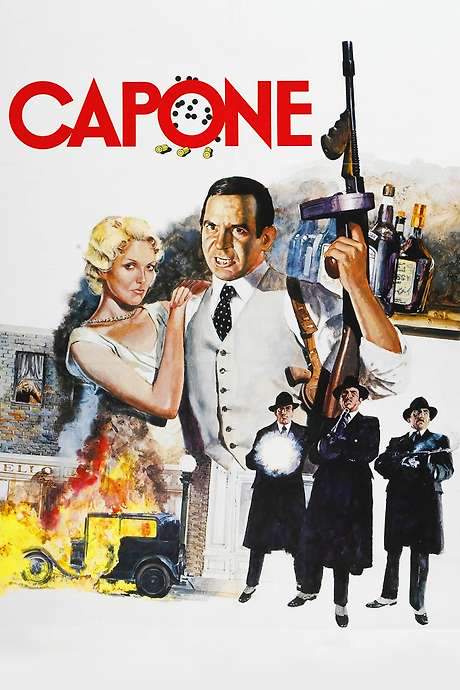
Capone 1975

Directed by
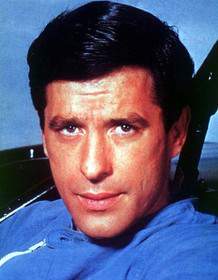
John Cassavetes
Made by

Santa Fe Productions
Where to Watch Capone
See current US streaming, rental, and purchase options for Capone (1975) via JustWatch.






Capone Plot Summary
Read the complete plot summary and ending explained for Capone (1975). From turning points to emotional moments, uncover what really happened and why it matters.
The film traces the rise and fall of Chicago mob boss Capone, portrayed by Ben Gazzara, whose iron grip over the Prohibition-era city shapes an underworld that thrives on fear, loyalty, and calculated violence. From a young streetwise opportunist to the most feared enforcer in town, Capone’s arc unfolds alongside a roiling cast of gangsters, politicians, and lawmen, all entangled in a deadly game of power.
In the opening sequence, a young Capone earns his scars and his reputation after a dramatic confrontation in a Brooklyn alley, a moment that foreshadows the ruthlessness he will bring to his criminal ascent. The encounter sets the stage for an alliance with the city’s looming powers and introduces the men who will become pivotal to his story, including Harry Guardino as Johnny Torrio, whose cool command and strategic mind guide Capone toward bigger schemes. Capone’s early years are marked by a quick pivot from a small-time hoodlum to a trusted enforcer who earns the respect of seasoned racketeers, one of whom is John Orchard as the calculating Dion O’Banion, a rival whose turf wars will ignite a ruthless battle for dominance.
The narrative accelerates as Prohibition reshapes the city’s criminal landscape. Torrio and his allies, including a dancer and barmaid named Iris Crawford, played by Susan Blakely, recognize the opportunity to bootleg and profit on a scale never seen before. The pair recruit Capone to Chicago to enforce their new order, and the decision to remove Jim Colosimo—known as Big Jim and portrayed by Frank Campanella—becomes a turning point. In a chilling act of violence, the young Capone quietly executes the boss in the back of a restaurant, an event that marks the brutal birth of the Chicago Outfit.
As the Outfit establishes its foothold, the film follows the deadly turf wars that define the era. A pivotal shootout in Joliet demonstrates Capone’s instinct for territory: the North Side under O’Banion, the South Side under Spike O’Donnell, and the Little Italy domain claimed by the Genna brothers, with Capone and his crew consolidating power in the Loop. This period features key figures such as Martin Kove as Pete Gusenberg and Robert Phillips as Bugs Moran, whose feuds escalate with brutal precision. The coalition and conflict among gangsters are mirrored by the ambitious, corrupt officials who attempt to manage the chaos, including George Chandler as District Attorney Robert E. Crowe and Royal Dano as Anton J. Cermak, the mayor who becomes a political foil to Capone’s influence.
The plot intensifies with a series of retaliatory strikes and strategic killings. Capone’s circle tightens as alliances shift after the murder of O’Banion and the subsequent hits on rival families. The iron will of Capone is shown in moments of calculated compromise, as when the Outfit’s reach is temporarily tempered by political pressure. Yet Capone remains impervious to the law, boasting of his untouchable position as long as corruption shields him. The film doesn’t shy away from Iris Crawford’s fate, a personal blow that deepens Capone’s resolve and his capacity for vengeance, a sentiment that drives his relationship with his most trusted enforcer, Frank Nitti, played by Sylvester Stallone. Nitti’s loyalty and ambition become instrumental as Capone navigates a city ready to turn on him when convenient.
The narrative crescendos as the city’s elected leadership seeks to rein in Capone’s violence. The new tone is set by John Finnegan as a NY Police Lt. in some scenes, and by the public pressure that culminates in a dramatic showdown with the city’s power brokers, including George Chandler again as Crowe, who threatens to indict Capone for the murder of government-leaning targets. In this tense climate, Capone’s men execute a sweeping, brutal assault on Moran’s organization—an act that lays bare the extent to which Capone will go to consolidate power, even as the city’s political class grows bolder in turning against him.
The legal portion of Capone’s saga unfolds with his high-profile tax evasion trial. The relentless pursuit by federal authorities culminates in a lengthy legal process that ultimately results in Capone’s conviction, not for murder or bootlegging, but for multiple counts of tax evasion. The judge’s sentence sends him to Alcatraz for eleven years, a punishment that signals the end of an era for the Chicago Outfit’s hegemony and a shift in the city’s criminal balance of power.
Health and time take their toll. By the late 1930s, Capone’s strength has waned, and doctors diagnose advanced syphilis, a disease that erodes his mind and memory. The film portrays the fragility of a once-formidable figure as his body betrays him, triggering riots and a further erosion of the control he once wielded with brutal efficiency. Capone’s decline continues in Florida, where his trusted ally Nitti—still by his side in these final chapters—wields a candid, almost merciless appraisal of Capone’s flaws: the man who ruled through fear is now a faded echo of his former self, haunted by memories of his past decisiveness and the empire it built.
In the end, Capone dies several years after his release from isolation, a life spent in bedlam and isolation, a stark contrast to the power he once commanded. The closing chapter focuses on the complex relationship between Capone and Nitti, with Nitti’s guarded assessment of Capone’s legacy underscoring the cost of leadership in the criminal underworld: ambition, loyalty, and a willingness to kill for power often leave a bitter wake. The film closes on a quiet, reflective note about how a man once at the center of a violent empire can fade into memory, leaving behind a city forever altered by his presence and the violence that defined an era.
The story is a careful, unflinching look at how one man’s appetite for control can reshape a city, drawing in real historical figures and the fictionalized human drama that surrounds them. It remains a portrait of charisma and brutality, of political protection and personal loss, and of the slow, inexorable march from the heights of power to a solitary, unmoored end.
Capone Timeline
Follow the complete movie timeline of Capone (1975) with every major event in chronological order. Great for understanding complex plots and story progression.
Ambush and scar in Brooklyn
Capone tips off fur thieves to ambush the arriving police. A brawl erupts and Capone is thrown through a glass window, leaving a lasting scar on his left cheek. He is released from custody thanks to the intercession of a senior police lieutenant.
Recruitment to Chicago under Colosimo
Johnny Torrio plans bootlegging and sends Capone to Chicago to become an enforcer for Jim Colosimo. Capone meets Colosimo and Iris Crawford, and the move marks his rise in the Chicago underworld. The following morning Capone kills Colosimo in a restaurant so the bootlegging plan can go forward.
Territorial map after Joliet ambush
A raid on a beer pickup in Joliet leads to a bloody exchange that redefines Chicago's territories. Capone suspects Hymie Weiss of the attack and Johnny separates the city into zones for O'Banion, Spike O'Donnell, the Genna brothers, and the Chicago Outfit. The violence sets the stage for long running feuds.
O'Donnell killed and O'Banion targeted
Spike O'Donnell is gunned down at the cusp of a turf war, triggering retaliations. Capone's crew helps carry out the violence against the Genna family and O'Banion is killed in a flower shop that night. Capone attends the funeral and tensions rise with Hymie Weiss.
Capone takes control as Johnny plans to leave
Johnny Torrio considers peace offerings as Capone's heat grows, but ambushes threaten their direction. Johnny is shot but survives and decides to leave America for Italy. Capone ends up taking control of the Outfit, shaping its future.
Ambush at Cicero and Crowe confrontation
Capone and his men ambush Weiss's allies in a Cicero inn, killing several and a crooked prosecutor. Capone learns Weiss is alive on the radio and faces District Attorney Crowe who threatens charges. Capone taunts him and Crowe drops the case after Capone hints at exposing corruption.
Drive-by and retaliation against Weiss
A drive-by shooting on Capone's hotel precipitates a furious retaliation. Capone orders a hit on Hymie Weiss, killing Weiss and his men from a rooftop.
Aiello killed after betrayal
Joe Aiello refuses to work with Capone and allies with Moran. Capone's faction counters by killing Aiello with a car bomb planted by Nitti, intensifying the war for control.
Moran feud escalates; Iris's death
Capone faces Moran's challenge as the feud intensifies. Iris Crawford is killed during a Moran attack on Capone's bistro, leaving Capone deeply heartbroken and vowing revenge against Moran's gang.
Political pressure and warehouse massacre
Newly elected officials pressure Capone to end the violence. Capone's men, posing as police, execute seven men at Moran's warehouse, including the Gusenberg brothers. Nitti uses the incident to enable the authorities to bring Capone to trial for harsher charges.
Tax evasion conviction and Alcatraz
After a lengthy process, Capone is found guilty not of murder or bootlegging, but of multiple counts of federal tax evasion. He is sentenced to eleven years at Alcatraz in San Francisco, marking the end of his dominance in Chicago.
Syphilis diagnosis and decline
A doctor confirms Capone has syphilis, warning that the disease will erode his mind first. His health deteriorates in prison, and he becomes a shadow of the feared man he once was.
Final decline on Palm Island
Capone's condition worsens on Palm Island as Nitti and caretakers observe his mental and physical decline. He yells at imagined figures, signaling the collapse of the empire he built.
Capone's death
Capone dies a year after the Palm Island visit, fading from complications of his illness. His death marks the end of an era for a man who once ruled Chicago's underworld.
Capone Characters
Explore all characters from Capone (1975). Get detailed profiles with their roles, arcs, and key relationships explained.
Al Capone (Ben Gazzara)
A ruthless, calculating mob boss who consolidates power through brutality and political influence. He builds the Chicago Outfit, using fear, corruption, and strategic violence to expand his bootlegging empire. Personal loyalty and revenge—especially after Iris Crawford's death—shape his decisions as he confronts rivals and the law.
Frank Nitti (Sylvester Stallone)
Capone’s trusted enforcer who becomes his successor, blending strategic thinking with ruthless action. He coordinates operations and maintains the Outfit’s order, navigating threats from rivals and authorities. His loyalty is tested as ambition and external pressure reshape the criminal landscape.
Johnny Torrio (Harry Guardino)
Capone’s mentor and Chicago boss who paves the way for Capone’s rise by organizing alliances and violence with cold pragmatism. He values expansion and control, even as his influence begins to wane under escalating gang warfare. His role is pivotal in shifting Capone from street level to city-wide power.
Iris Crawford (Susan Blakely)
A dancer and barmaid who becomes a central companion within Capone’s world. She offers a personal anchor amid the brutality and later becomes a casualty of the gang wars, embodying the human cost of the mob’s ambitions. Her relationship with Capone adds a poignant counterpoint to the violence surrounding him.
Big Jim Colosimo (Frank Campanella)
The Chicago Mafia boss who underestimates the profitability of bootlegging and is murdered to clear Capone’s path. His death triggers a major reorganization of the underworld and marks the ascent of Capone’s leadership. He represents the old guard that Capone supplants.
Hymie Weiss (John Davis Chandler)
A key rival enforcer who challenges Capone on the North Side and sustains the violent turf wars. His presence and eventual murder intensify the feud, illustrating the brutal competition for control of Chicago’s territories. He embodies the ferocity and volatility of the period’s gang conflicts.
Bugs Moran (Robert Phillips)
Leader of a rival gang who becomes a central adversary to Capone’s expansion. Moran’s faction engages in high-stakes violence and strategic attacks, highlighting the persistent contest for Chicago’s bootlegging wealth. He personifies the stubborn resistance Capone faces from other power centers.
Dion O'Banion (John Orchard)
An Irish mob boss who controls the North Side before Capone’s expansion. His murder triggers a broader series of retaliations and realignments among the city’s gangs. He demonstrates how shifting alliances drive the deadly cycles of Prohibition-era crime.
Capone Settings
Learn where and when Capone (1975) takes place. Explore the film’s settings, era, and how they shape the narrative.
Time period
1918-1946
The narrative spans from Capone’s emergence in 1918 through the Prohibition era of the 1920s and early 1930s, culminating in his federal tax evasion trial in 1931 and eventual decline and death in 1946. It captures the rise of organized crime amid political corruption, violent gang warfare, and relentless consolidation of power. The period showcases how law, media, and public opinion shift as the mob expands and then falters.
Location
Brooklyn, Chicago, Joliet, Cicero, Alcatraz, Palm Island
The story unfolds across multiple real-world locations tied to Prohibition-era crime: Brooklyn as the early street level of Capone's rise, then the vast Chicago underworld where bootlegging and turf wars define power. It centers on Chicago but moves through nearby towns like Joliet and Cicero, illustrating how the Outfit extended its reach. The tale ends on Alcatraz and a Florida estate, highlighting the arc from ruthless ascent to a solitary final chapter.
Capone Themes
Discover the main themes in Capone (1975). Analyze the deeper meanings, emotional layers, and social commentary behind the film.
🗡️
Power
Power in the film is earned through fear, strategy, and control of territory. Capone’s ascent demonstrates how a crime boss builds influence by leveraging violence, loyalty, and selective alliances. The narrative emphasizes the personal costs of power and the brittle nature of authority built on fear.
⚖️
Law vs. Crime
The world operates in a gray area where corruption, political protection, and legal maneuvering blur the line between justice and crime. The story pits authorities and prosecutors against the Outfit, culminating in a high-profile tax case that challenges Capone’s empire. It shows how legal pressure can topple even the most formidable criminals when the system mobilizes.
🔥
Violence & Rivalry
Turf wars and assassinations drive the plot, with betrayals fueling cycles of retaliation. Rival gangs and hit squads collide across Chicago, creating a brutal landscape where partners become enemies and vice versa. The violence ultimately tests the sustainability of Capone’s empire and brands the era with a searing brutality.

Coming soon on iOS and Android
The Plot Explained Mobile App
From blockbusters to hidden gems — dive into movie stories anytime, anywhere. Save your favorites, discover plots faster, and never miss a twist again.
Sign up to be the first to know when we launch. Your email stays private — always.
Explore the mobile appCapone Spoiler-Free Summary
Discover the spoiler-free summary of Capone (1975). Get a concise overview without any spoilers.
In the smoky streets of 1920s Chicago, a city buoyed by illegal liquor and restless ambition, the film opens on a restless New York youngster eager to make his mark. The world is one of speakeasies, whispered deals and a fragile balance between law and outlaw, rendered in a gritty, sepia‑toned palette that feels both historic and immediate. The atmosphere pulses with the restless energy of a metropolis reshaped by prohibition, where every handshake could conceal a contract and every night hides the promise of power.
When Al Capone catches the eye of the seasoned visitor Johnny Torrio, the dynamic shifts. Torrio, a cool‑headed strategist, sees in the young bruiser a ruthless edge that could be harnessed for far‑reaching enterprise. Their meeting sets the stage for a partnership that blends raw street instinct with calculated organization, hinting at the complex hierarchy that underpins the city’s underworld. As Capone is drawn into the fold, the film spotlights the magnetic pull of ambition, the allure of wealth, and the subtle dance of loyalty and mentorship that defines their relationship.
Amid the clatter of ticket‑windows and the soft glow of hidden bars, Iris Crawford enters as a contrast to the world of crime—a principled figure whose presence adds a personal dimension to the relentless pursuit of influence. Her interactions with the two men suggest a tension between desire for normalcy and the intoxicating lure of power. The tone remains taut, balancing a cool, almost documentary realism with moments of stylized drama, inviting the audience to feel the electric anticipation of a rising empire without revealing the fallout that will inevitably follow.
Featured on this page

What's After the Movie?
Not sure whether to stay after the credits? Find out!
Check out our other apps:

SAT Sphere
Build confidence for the Digital SAT.

Mori Atlas
Discover wild places worth protecting.

Luntero
Search smarter for a home in Amsterdam.

Plot Explained
Unravel movie endings and hidden clues.

Pokechamp
Dive into Pokémon data and battle logic.

Driving Theory
Get ready for your European theory test.

Movie Dust
Plan your next cinema trip with ease.

Musemap
Find art and culture as you travel.

Selkobase
Compare credentials before committing.

Local Manual
Turn an unfamiliar country into practical next steps.

Lernavi
Compare school systems before your next move.

GymRoam
Find a workout stop wherever your plans take you.
Explore Our Movie Platform
New Movie Releases (2026)
Famous Movie Actors
Top Film Production Studios
Movie Plot Summaries & Endings
Major Movie Awards & Winners
Best Concert Films & Music Documentaries
Movie Collections and Curated Lists
© 2026 What's After the Movie. All rights reserved.
Privacy Policy