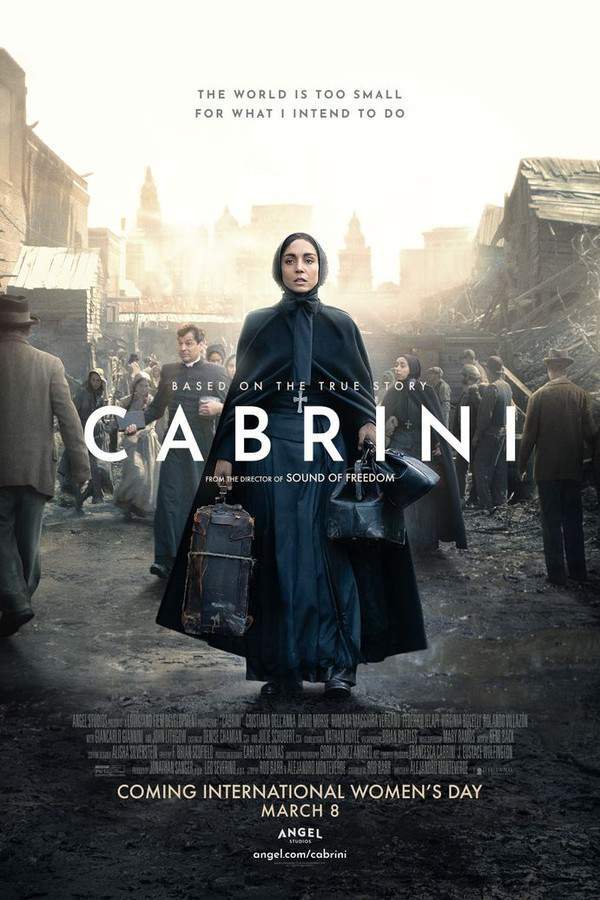
Cabrini 2024


Directed by

Alejandro Monteverde
Made by

Francesca Film Production NY
Where to Watch Cabrini
See current US streaming, rental, and purchase options for Cabrini (2024) via JustWatch.

Angel Studios
4K
Amazon Video
HD
Apple TV Store
HD
Fandango At Home
HD Streaming availability powered by 
Cabrini Plot Summary
Read the complete plot summary and ending explained for Cabrini (2024). From turning points to emotional moments, uncover what really happened and why it matters.
In 1889 New York City, a young Italian immigrant named Paolo pushes his dying mother in a cart, and when they seek help at a hospital, they speak only Italian and are cruelly dismissed by staff. An older boy, Enzo, offers the two a fragile shelter in the sewers, where life remains perilous but warmer than the streets they’ve known.
Mother Frances Xavier Cabrini, a tuberculosis-stricken nun, travels from the Vatican after a failed bid to found her own missionary order. As a girl, she folded paper boats by a river, imagining them sailing to missions across the world, and she carries vivid visions of those past riverside days. A cardinal rejects her plan, but she insists on meeting the Pope and shares a fierce, clear dream: to help the poor and to build an orphanage in China, insisting that the world is not large enough for what she wants to do. The Pope notes that no woman has led such an effort, yet he grants her permission, hinting she should go to New York where her reach might become global.
[Cabrini] and her Sisters migrate to New York to tend to poor Italian immigrants, offering care in a Five Points neighborhood that has been neglected by the local priest. On their first night, they find themselves with nowhere to stay but a brothel, where a sympathetic prostitute, [Vittoria], welcomes them and urges them to bar their door. The Sisters begin to establish charity work and hospital care, bringing light to children who are forgotten, even as they face constant pressure from the rough streets and its operators.
Archbishop Corrigan is initially unhelpful, but when Cabrini presents him with a papal letter, he reluctantly allows her to continue. Her order grows, and the work expands to shelter and medical aid. Cabrini often must go underground at night to search for missing children, risking her own health, until a physician, [Patch Darragh], begins assisting her mission and offering professional support. Paolo and [Enzo] briefly consider a future in crime, but Cabrini welcomes them to dinner with the Sisters, planting the seed of a different path. When [Geno] tries to reclaim Vittoria, Paolo uses a gun to cripple him, a moment that later leads Cabrini to persuade Paolo to destroy the weapon, which his father had used to die by suicide. In a separate violent encounter, Vittoria defends herself and fatally stabs Geno.
[Cabrini] purchases an Upper West Side property to establish a home for children, but the mayor’s hostility and a city inspector’s eviction order threaten the project. Yet [David Morse] as Archbishop Corrigan pushes aside this resistance, locating a former Jesuit property the Sisters can use, with the condition that they dig water wells on the land. [Enzo] and [Paolo] join the effort to raise funds, and a pump-station accident tragically takes Enzo’s life—an event that underscores Cabrini’s belief that a better-equipped hospital could save more lives. Dr. Murphy shares a sobering assessment, urging the creation of a first-rate hospital, and Cabrini commits to buying an old building with the help of wealthy donors from Irish, Italian, and Polish immigrant communities.
To rally support among Italian immigrants, Cabrini plans a fundraiser with Enrico DiSalvo, a celebrated singer who ultimately refuses to perform. Undeterred, she brings together a choir of Italian immigrants who sing under his window, and [Virginia Bocelli] lends her voice to a moving rendition of Va, pensiero, a chorus inspired by longing for homeland roots from Verdi’s Nabucco. The gesture touches the famed singer, who then agrees to contribute in his own way.
When Cabrini hosts an Italian-American festival fundraiser with the renowned singer, police, spouting racial slurs, shut it down and Cabrini is arrested. [Pope Leo XIII] overrules the local authorities and supports Cabrini, though he recognizes the tension between faith and ambition; Cabrini explains she desires an “empire of hope.” She also persuades the Italian Senate to fund the hospital, but violence and arson strike the new hospital site. Cabrini confronts the mayor, insinuating his possible involvement, and a New York Times reporter—who had previously helped shed light on the Five Points—helps win the mayor’s reluctant consent.
Despite a frail lung—she endures to the age of 67 and becomes widely celebrated. Her canonization as the first American saint crowns a life of service, naming her the patron saint of immigrants, with her order expanding across the world, including to China.
Cabrini Timeline
Follow the complete movie timeline of Cabrini (2024) with every major event in chronological order. Great for understanding complex plots and story progression.
Paolo's mother's death and shelter in the sewers
In 1889, Paolo pushes his dying mother through New York City in a cart and pleads for help at a hospital, but the staff speak only Italian and dismiss him. An older boy named Enzo offers Paolo a place of refuge, guiding him to a grim shelter in the sewers. This brutal beginning foreshadows the harsh immigrant world Paolo will navigate.
Vatican visit and permission to found an order
Mother Frances Xavier Cabrini travels with her calling to found a missionary order. After a rejected proposal by a cardinal, Pope Leo XIII grants her permission, though he suggests she start in New York because the world is large. The moment solidifies her resolve to work among immigrants, despite institutional doubt.
Cabrini migrates to New York with Sisters
Cabrini and her fellow Sisters travel to New York to care for poor Italian immigrants. On their first night, they have nowhere to stay and are let into a brothel by Vittoria, a sympathetic prostitute who warns them to bar their door. Geno, a pimp, immediately signals the dangers of the streets they are entering.
Corrigan reluctantly allows their work
Archbishop Corrigan initially resists their work, but Cabrini shows him a letter from the Pope, and he grudgingly allows their mission to continue. He remains wary, yet acknowledges the need to help the poor. This permission marks the official start of their charitable efforts in the city.
Sisters establish charity and hospital work
The Sisters establish charity and hospital services, caring for many children in immigrant districts. Cabrini sometimes ventures underground at night to search for missing children, risking her fragile health. Dr. Murphy later joins and strengthens the order's medical efforts.
Paolo and Enzo attempt to steal bread
Paolo and Enzo, contemplating a future in the mafia, attempt to steal bread to survive. Cabrini shows them mercy by inviting them to dinner with the Sisters instead of turning them away. This act begins to steer Paolo toward a different path within the community.
Geno attacks; Paolo shoots Geno
When Geno tries to reclaim Vittoria, Paolo fires a shot that cripples Geno. Cabrini's guidance influences Paolo's choices and pushes him away from a life of crime. The incident underscores the constant danger surrounding the immigrant community.
Vittoria defends herself; Vittoria stabs Geno
Geno and a henchman ambush Vittoria, threatening her life. She defends herself and stabs Geno to death in self-defense. The violence highlights the peril women faced in the street and the Sisters' determination to protect their people.
Purchase of property for the children's home
Cabrini purchases an Upper West Side property to establish a children’s home, a major milestone for her mission. The mayor treats the effort with hostility and a city inspector evicts the group, complicating their plans. Despite these setbacks, the project continues to move forward in spirit.
Corrigan finds a new property and wells; Enzo dies
Archbishop Corrigan locates a former Jesuit property for the Sisters, who must dig water wells there, a demanding task that Cabrini undertakes personally. A pump station accident kills Enzo and others, adding to the tragedy surrounding the community and strengthening Cabrini’s resolve.
A bigger hospital plan gains momentum
Dr. Murphy warns that a better-equipped hospital could have saved more lives, fueling Cabrini’s drive for a stronger facility. With support from wealthy donors from Irish, Italian, and Polish immigrant communities, she purchases an old building to establish a proper hospital. The project expands beyond a single shelter toward a full medical institution.
Fundraising with Enrico DiSalvo and a choir
At a fundraising event, Enrico DiSalvo initially refuses to sing. Cabrini assembles a choir of Italian immigrants who perform Va, pensiero under his window, moving him to participate. Touched by the performance, DiSalvo agrees to lend his voice for the cause.
Arrest at the Italian-American festival
A major Italian-American festival fundraiser is shut down by police, who harass attendees with racist slurs. Cabrini is arrested, and Corrigan orders her back to Italy, attempting to curb her growing influence in New York.
Pope intercedes; mission gains Italian support
Cabrini travels to Italy with Vittoria and another nun; the Pope overrules Corrigan and supports her mission, though he questions the tension between faith and ambition. He also secures support from the Italian Senate to finish the hospital, even as violence and arson threaten the project.
Canonization and global legacy
Despite a long journey and ongoing health challenges, Cabrini is canonized as the first American saint, becoming the patroness of immigrants. Her order spreads worldwide, leaving a lasting legacy that includes work in China and beyond.
Cabrini Characters
Explore all characters from Cabrini (2024). Get detailed profiles with their roles, arcs, and key relationships explained.
Pope Leo XIII - Giancarlo Giannini
The Pope who grants Cabrini permission to found her order, recognizing her mission’s scope but cautioning about the tensions between faith and worldly ambition. He ultimately supports her work, even when faced with institutional resistance.
Mayor Gould (John Lithgow)
A hostile city official who opposes Cabrini’s arrival and uses political power to push her out of property. His stance reflects local nativism and bureaucratic opposition to immigrant welfare efforts.
Calloway (Jeremy Bobb)
A journalist ally who helps Cabrini gain sympathetic press coverage, illustrating the role of media in advancing social reform and exposing harsh conditions.
Paolo (Federico Ielapi)
An Italian immigrant boy who initially leans toward theft and street-smart survival but is touched by Cabrini’s compassion. He becomes involved in protecting Vittoria and the Sisters, and wrestles with violence while seeking a better path.
Cabrini (Cristiana Dell'Anna)
Mother Frances Xavier Cabrini, a tuberculosis-stricken nun who builds an orphanage and hospital for immigrant children. Her relentless determination and faith drive a global network that culminates in canonization as the first American saint.
Dr. Murphy (Patch Darragh)
A physician who treats Cabrini and supports her mission, offering medical expertise and pragmatic advice as the hospital network expands.
Archbishop Corrigan (David Morse)
A religious authority who initially blocks Cabrini’s plans and attempts to send her back to Italy, highlighting institutional resistance to unconventional approaches to charity.
Vittoria (Romana Maggiora Vergano)
A sympathetic prostitute who becomes an ally to Cabrini, helping shelter and support the Sisters and the community while overcoming stigma.
Sister Concetta (Montserrat Espadalé)
A nun in Cabrini’s order who contributes to charitable work and the care of orphans, embodying the religious community’s dedication.
Aria (Virginia Bocelli)
A member of the immigrant community connected to Cabrini’s network. Her presence reflects the broader social fabric Cabrini mobilizes to aid the vulnerable.
Enzo (Liam Campora)
Paolo’s friend who works to support Cabrini’s mission, later dying in a pump-station accident, illustrating the personal costs of immigrant life.
Sister Umilia (Eugenia Forteza)
A nun within Cabrini’s order who participates in mission work, contributing to the community’s spiritual and social efforts.
Cabrini Settings
Learn where and when Cabrini (2024) takes place. Explore the film’s settings, era, and how they shape the narrative.
Time period
1889 through the early 20th century
The narrative opens in 1889, a period of rapid urbanization and mass immigration in New York. It follows Cabrini’s tireless efforts during years of poverty, disease, and social upheaval, culminating in her later canonization and global influence.
Location
New York City, Five Points, Upper West Side, Vatican, Italy, China
Set primarily in New York City during the late 19th century, the story unfolds in districts like Five Points and the Upper West Side, capturing the struggles of Italian immigrants. The film also traverses to the Vatican in Rome and back to Italy as Cabrini pursues her mission, ultimately aiming to reach China with charitable work.
Cabrini Themes
Discover the main themes in Cabrini (2024). Analyze the deeper meanings, emotional layers, and social commentary behind the film.
🤝
Hope and Charity
The film centers on acts of mercy—Cabrini’s charity to the poor, the founding of homes and hospitals, and the rescue of vulnerable children. It shows how compassion can reshape communities and give dignity to immigrants. The theme manifests through personal sacrifices and the creation of lasting institutions.
🗽
Immigration & Identity
Italian immigrants navigate poverty, prejudice, and opportunity in New York. The story highlights how immigrant networks, music, and faith help preserve identity while integrating into American society. Cabrini’s work anchors a broader narrative about belonging and cultural endurance.
🙏
Faith vs Ambition
Cabrini’s spiritual drive meets political and social resistance. The Pope’s support contrasts with hostile officials, revealing the tension between religious duty and worldly ambition. The film explores how a nun’s courageous aims can clash with institutional power—and ultimately transform it.
⚖️
Power & Resistance
Institutions challenge Cabrini through eviction, censorship, and violence, while journalists, the Pope, and allied communities push back. The arc shows how public opinion, leadership, and community allies can reclaim space for reform. It culminates in legal and societal shifts that enable her mission.

Coming soon on iOS and Android
The Plot Explained Mobile App
From blockbusters to hidden gems — dive into movie stories anytime, anywhere. Save your favorites, discover plots faster, and never miss a twist again.
Sign up to be the first to know when we launch. Your email stays private — always.
Explore the mobile appCabrini Ending Explained
Unravel the ending of Cabrini (2024) with our detailed explanation. Understand the final scenes, character fates, and unresolved questions.
Mother Cabrini’s story concludes with her relentless efforts paying off, despite facing immense obstacles. After numerous struggles—resisting bureaucratic corruption, prejudice, and even violence—she manages to secure support from the Italian government and the Vatican to build a hospital in New York, which becomes a legendary institution. Her activism ultimately breaks through the social and political barriers that tried to stop her, proving her unwavering faith in her mission to serve the underserved. The film ends with Cabrini triumphant, witnessing her dream of creating a lasting “Empire of Hope” come true, as her order expands worldwide, saving countless lives. She is eventually canonized as a saint, recognized for her dedication, compassion, and fight against societal injustice. Her story underscores the power of hope and perseverance—faith in action—and highlights the pivotal role women in religious service can play in challenging and changing societal norms. Cabrini’s remarkable journey leaves a lasting legacy of hope, demonstrating that even in the face of overwhelming adversity, steadfast conviction can turn dreams into reality.
Cabrini Spoiler-Free Summary
Discover the spoiler-free summary of Cabrini (2024). Get a concise overview without any spoilers.
In the bustling, soot‑stained streets of 1880s New York, waves of newly arrived Italians crowd cramped tenements and navigate a city that seems both full of promise and bristling with hostility. The Five Points district, with its clamor of languages and the relentless grind of survival, forms a vivid backdrop where hope and hardship intertwine, setting a tone that is as gritty as it is luminous.
Mother Frances Xavier Cabrini arrives from distant Europe with a fierce, unshakable conviction: to care for the forgotten, to build a sanctuary for the impoverished, and to prove that a woman’s vision can reshape a world that often dismisses her. Though burdened by illness and the weight of ecclesiastical doubt, she radiates a quiet authority, her dreams unfolding like the paper boats she once crafted on riverbanks, each one a promise of rescue and renewal.
Around her, a constellation of companions begins to coalesce. Paolo, a young immigrant burdened with familial duty, and Enzo, his street‑wise friend, hover on the edge of desperation, while Vittoria, a compassionate soul from the margins, offers unexpected shelter. Archbishop Corrigan, cautious yet intrigued, represents the institutional gate through which her aspirations must pass. Their interactions hint at fragile alliances, shared struggles, and the subtle power of community.
The film’s tone balances stark realism with an undercurrent of relentless optimism. It paints a portrait of a woman who, against entrenched sexism and pervasive prejudice, dares to imagine an “empire of hope” within the city’s chaotic pulse. Through lush period details and a steady, compassionate gaze, the story invites viewers to wonder how far one determined heart can travel when it is anchored to the dreams of an entire immigrant world.
Movies with Similar Twists and Themes
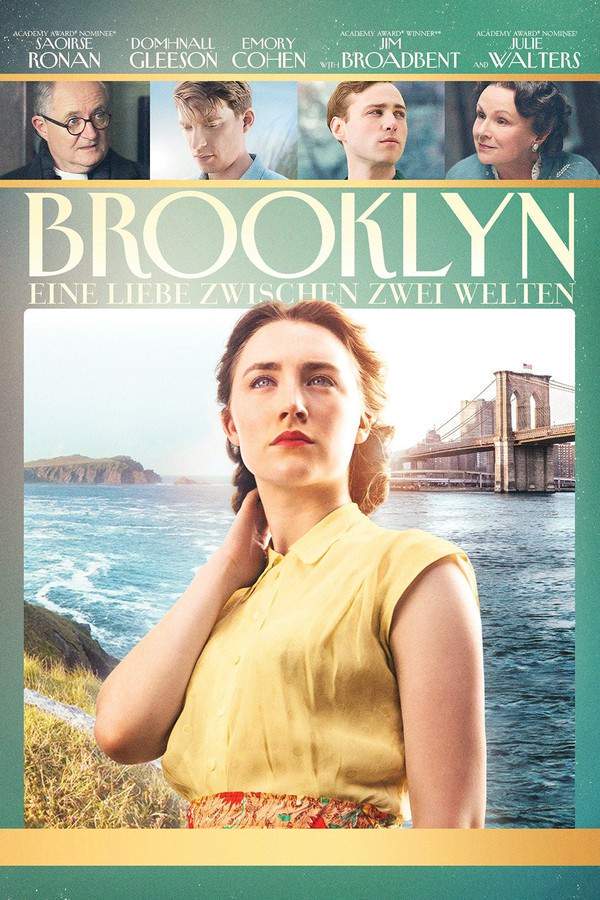
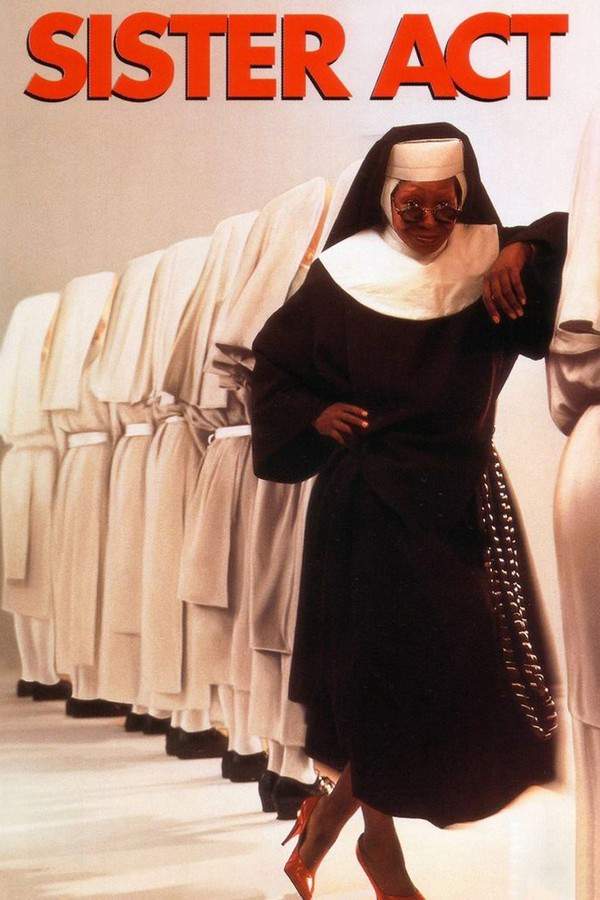
Uncover films that echo the narrative beats, emotional arcs, or dramatic twists of the one you're exploring. These recommendations are handpicked based on story depth, thematic resonance, and spoiler-worthy moments — perfect for fans who crave more of the same intrigue.



Featured on this page

What's After the Movie?
Not sure whether to stay after the credits? Find out!
Check out our other apps:

SAT Sphere
Build confidence for the Digital SAT.

Mori Atlas
Discover wild places worth protecting.

Luntero
Search smarter for a home in Amsterdam.

Plot Explained
Unravel movie endings and hidden clues.

Pokechamp
Dive into Pokémon data and battle logic.

Driving Theory
Get ready for your European theory test.

Movie Dust
Plan your next cinema trip with ease.

Musemap
Find art and culture as you travel.

Selkobase
Compare credentials before committing.

Local Manual
Turn an unfamiliar country into practical next steps.

Lernavi
Compare school systems before your next move.

GymRoam
Find a workout stop wherever your plans take you.
Explore Our Movie Platform
New Movie Releases (2026)
Famous Movie Actors
Top Film Production Studios
Movie Plot Summaries & Endings
Major Movie Awards & Winners
Best Concert Films & Music Documentaries
Movie Collections and Curated Lists
© 2026 What's After the Movie. All rights reserved.
Privacy Policy