What Is Brutalist About?
The premise of Brutalist in 257 words, with nothing given away. The full story follows below.
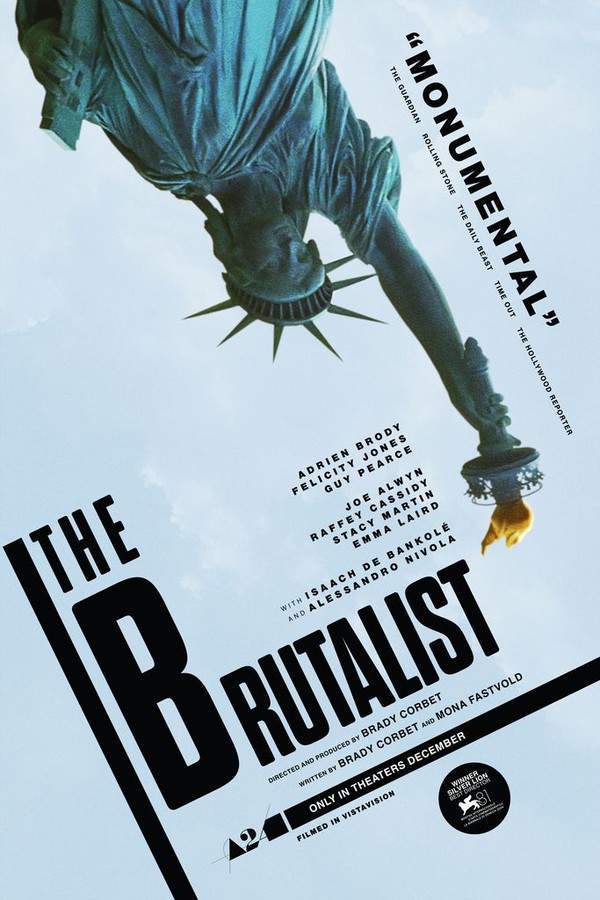
László Tóth, a Hungarian-Jewish Holocaust survivor and Bauhaus-trained architect, arrives in the United States carrying the weight of a homeland destroyed and a family torn apart. Separated from his wife, Erzsébet, and orphaned niece, Zsófia, he sees America through the idealism of the Statue of Liberty, though its promises feel fragile against the realities of displacement, prejudice, and assimilation.
In Philadelphia, László stays with his cousin Attila, whose rapid anglicization and embrace of Catholic America reveal how sharply their shared history can divide two lives. An unexpected introduction to wealthy industrialist Harrison Lee Van Buren gives László a foothold in the postwar building boom. His work on a modern library establishes his singular vision, but professional ambition brings him into an uneasy world of budgets, patronage, and competing definitions of American success.
The project expands into the ambitious Van Buren Institute, a sprawling complex intended to serve an entire community. László’s modernist designs clash with contractors, consultants, and an institution more interested in cost than principles. With Gordon, an African-American laborer and single father, among the workers who become his closest allies on site, László begins to build not only structures but a fragile sense of belonging.
Presented in a monumental, austere style, the film explores architecture as both aspiration and burden. László’s pursuit of a place in his adopted country becomes entangled with his family’s fate, his estrangement from a world that both needs and misunderstands him, and the question of whether a new life can be built without abandoning the wounds of the old one.
What Happens in Brutalist?
The complete story of Brutalist, from the first scene to the last, in 279 words (about 1 minute). Spoilers throughout.
Spoilers ahead
László Tóth, a Bauhaus-trained architect and survivor of the Hungarian-Jewish Holocaust, arrives in the United States seeking a new beginning after being separated from his wife, Erzsébet, and niece, Zsófia. In 1947, he settles in Philadelphia with his cousin Attila, but the relationship quickly sours. After a failed library renovation for the wealthy industrialist Harrison Lee Van Buren and a false accusation of misconduct, László is cast out, eventually spiraling into heroin addiction while working as a laborer alongside his friend Gordon.
Years later, Harrison discovers László’s true architectural pedigree and commissions him to design the Van Buren Institute, a grand community center. This project allows László to finally reunite with Erzsébet and Zsófia in 1953, though he discovers they are deeply scarred by the war; Erzsébet is confined to a wheelchair and Zsófia is initially mute. Despite the professional triumph, the project is plagued by budget disputes and the cruelty of Harrison’s son, Harry.
The narrative takes a dark turn when Harrison rapes an intoxicated László during a trip to Italy, leaving the architect psychologically broken. Struggling with resentment and addiction, László nearly kills Erzsébet with drugs before agreeing to move to Jerusalem to be with Zsófia. Before leaving, Erzsébet publicly confronts Harrison about his crimes.
By 1980, at a retrospective of his work, it is revealed that the completed institute was more than a building. Zsófia reveals that László intentionally designed spaces within the structure to mirror the Buchenwald and Dachau concentration camps as a way to process his immense trauma. She concludes the tribute by recalling his words of encouragement:
“No matter what the others try and sell you, it is the destination, not the journey.”
Brutalist Timeline: Every Key Event in Order
15 key events in the order they happen, from “Arrival in New York Harbor” to “Venice Biennale Retrospective”. 10 events name a place, across 7 locations.
- 1
Arrival in New York Harbor
Hungarian-Jewish Holocaust survivor and Bauhaus-trained architect László Tóth arrives in the United States after being forcibly separated from his wife Erzsébet and orphaned niece Zsófia. As his ship enters the harbor, László is greeted by the iconic sight of the Statue of Liberty.
Where:New York Harbor
- 2
Staying with Cousin Attila
In 1947, László travels to Philadelphia and moves in with his cousin Attila, discovering that his relative has fully assimilated into American life by anglicizing his name and converting to Catholicism. Attila offers László work at his furniture business.
When:1947 Where:Philadelphia
- 3
News of Survival
Attila reveals to a relieved László that his wife Erzsébet and niece Zsófia are still alive, though stuck in Europe. Despite their continued separation, the news gives László hope of one day reuniting with his family.
Where:Philadelphia
- 4
The Van Buren Library Commission
Harry Lee Van Buren approaches László and Attila's furniture business with a plan to renovate the library at his father's mansion as a surprise for the wealthy industrialist Harrison Lee Van Buren. The cousins take on the job at the Van Buren estate near Doylestown, Pennsylvania.
Where:Doylestown, Pennsylvania
- 5
The Failed Renovation and Eviction
At the mansion, Harrison is enraged by the surprise library renovation and fires both men, while Harry refuses to pay them. Tensions worsen after a drunken night of merriment in which Audrey, Attila's wife, voices her disdain for László and suggests he live elsewhere. Attila then blames László for the failed project, falsely accuses him of making a pass at Audrey, and demands he leave their home.
- 6
Rock Bottom in Philadelphia
Three years after the failed renovation, László has become a heroin addict working as a laborer loading coal. He lives in charity housing with his friend Gordon, an African-American single father, struggling to get by.
When:circa 1950 Where:Philadelphia
- 7
The Van Buren Institute Commission
Harrison turns up to tell László that the architectural community has lauded his modern library renovation and that he has discovered his accomplished past as an architect in Europe. After paying the money owed, Harrison invites László to a party, where he commissions a grand project in tribute to his late mother: the Van Buren Institute, a community center with a library, theater, gymnasium, and chapel. Work begins immediately, with László living on site and employing Gordon.
- 8
Reunion with Erzsébet and Zsófia
László's wife Erzsébet and niece Zsófia finally reunite with him in Philadelphia after Harrison's personal lawyer expedites their immigration. He discovers the toll of their wartime suffering: Erzsébet is now a full-time wheelchair user due to osteoporosis, and Zsófia is unable to speak.
When:1953 Where:Philadelphia
- 9
Construction Clashes
During construction, László clashes with contractors and consultants hired by Harrison, who depart from his design in an attempt to stay on budget, forcing László to agree to work unpaid to make up for additional costs. Meanwhile, Harry derides László as merely being 'tolerated' and makes lewd remarks about Zsófia.
- 10
Derailment and Abandonment
After a train carrying construction materials derails, the project becomes burdened with heavy legal costs. A furious Harrison abandons the Institute and fires the workers, leaving László's grand vision unfinished.
Show the other 5 events of Brutalist Hide the last 5 events
- 11
A New Life in New York
László and Erzsébet have moved to New York City, where he works as a draftsman at an architecture firm and she writes for a newspaper. Zsófia, having recovered her ability to speak, is expecting a child with her husband Binyamin, and the couple announces they are making Aliyah and moving to Jerusalem, much to the chagrin of László and Erzsébet.
When:1958 Where:New York City
- 12
The Assault in Carrara
Harrison restarts the stalled Institute project and rehires László to resume work. While visiting Carrara to purchase marble, Harrison rapes an intoxicated László, calling him a societal leech whose people invite their own persecution.
Where:Carrara, Italy
- 13
László Unravels
Deeply shaken by the assault, László becomes more belligerent and impulsively fires his friend Gordon during an argument back on site. Recalling the contempt he has received, he laments to Erzsébet that they are not welcome in America. After László nearly kills Erzsébet by giving her heroin to soothe her pain, she proposes they move to Jerusalem to live with Zsófia, and he agrees.
- 14
Erzsébet Confronts Harrison
Shortly after their decision, Erzsébet confronts Harrison at his home and calls him a rapist in front of his family and associates. An enraged Harry violently drags her out, before his sister Maggie intervenes and helps her leave. Unable to find his father in the aftermath, Harry organizes a search party and tries to locate Harrison within the Institute.
Where:Harrison's home
- 15
Venice Biennale Retrospective
In 1980, with Erzsébet having died, a retrospective of László's work is held at the first Venice Biennale of Architecture, showcasing projects built around the world, including the Van Buren Institute, finally completed in 1973. Zsófia, accompanied by her young adult daughter and the aging, incapacitated László, gives a revelatory speech asserting that László designed spaces in the structure to resemble the Buchenwald and Dachau concentration camps as a way of processing trauma. She ends with the phrase László used to tell her: 'No matter what the others try and sell you, it is the destination, not the journey.'
When:1980 Where:Venice, Italy
What Kind of Film Is Brutalist?
Dark in tone, with variable pacing and a complex story, going by the plot summary.
- Tone
- Dark
- Pacing
- Variable
- Story
- Complex
- Intensity
- High
- Ending
- Ambiguous
A monumental, relentlessly somber drama where architectural ambition becomes an avenue for confronting exile, addiction, sexual violation, and the long shadow of wartime trauma.
- oppressive
- isolating
- somber
- unsettling
- melancholic
- psychologically intense
- postwar trauma
- architecture and memory
- exile and immigration
- addiction
Content notes: rape and sexual assault, strong sexual content, Holocaust survivor trauma, concentration camp references, heroin addiction, attempted murder.
Quiz
How well do you remember Brutalist? Test yourself on the story.